
| Weight | 0.190 kg |
|---|---|
| Dimensions | 24 × 17 cm |
| Binding | Paperback |
| ISBN | 9789960740492 |
| Pages | 64 |
| Publisher | Darussalam |
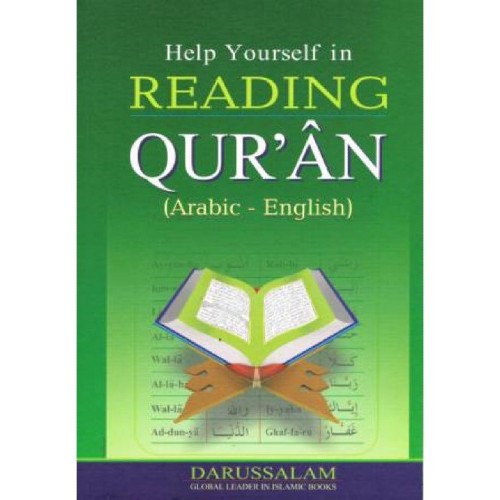
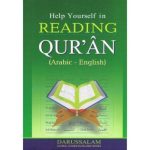
Help Yourself In Reading Qur’an
RM25.00
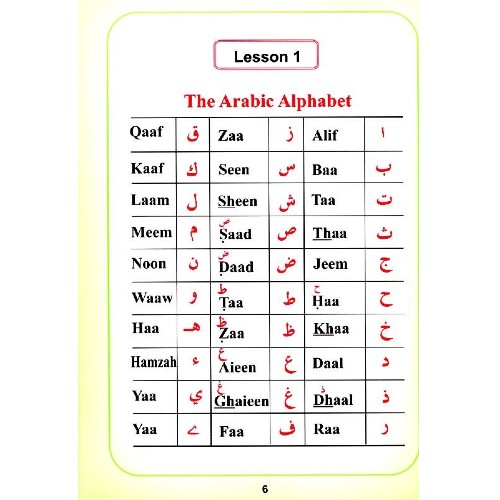
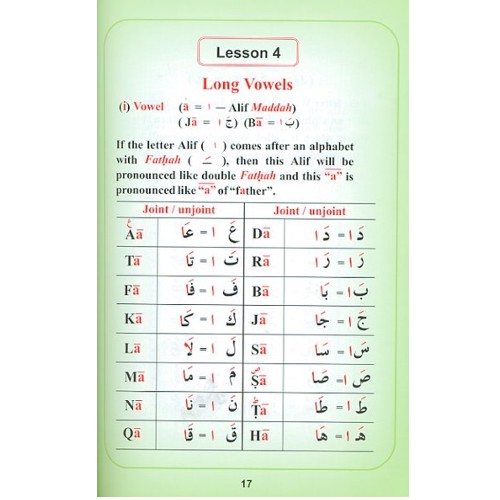
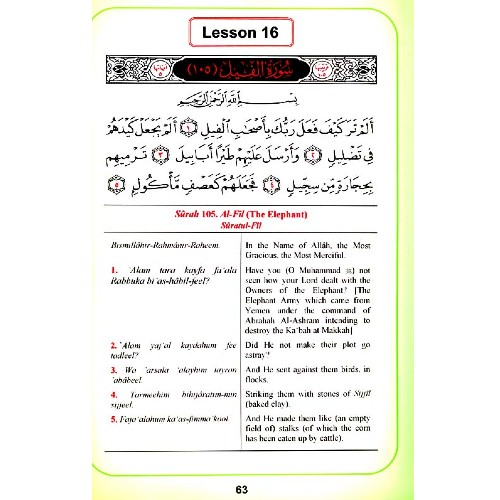
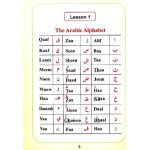
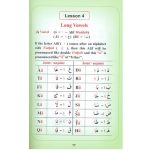
It is a guide for learning to read the Arabic of the Qur’an in a simple way through transliteration without a teacher. After mastering this guide , one will be able to read Qur’an without any difficulty. Insha-Allah.
Be the first to review “Help Yourself In Reading Qur’an” Cancel reply
You must be logged in to post a review.
Related Products
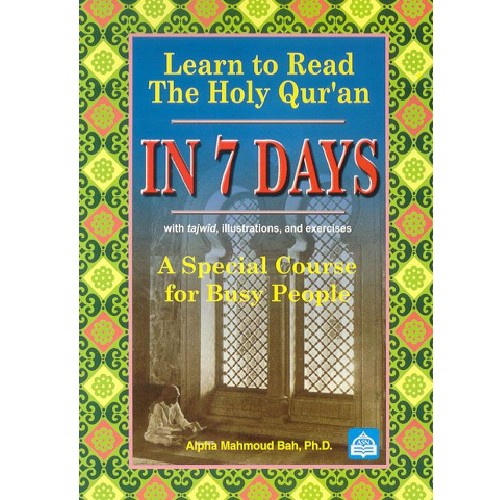
Learn to Read the Holy Qur’an in 7 Days (Alpha Mahmoud Bah)
If you are a university student, a businessperson, a homemaker, or any busy adult desiring to learn to read the Holy Qur’an, then this guidebook is exactly what you need. With it, you can study alone or with help of an aid.
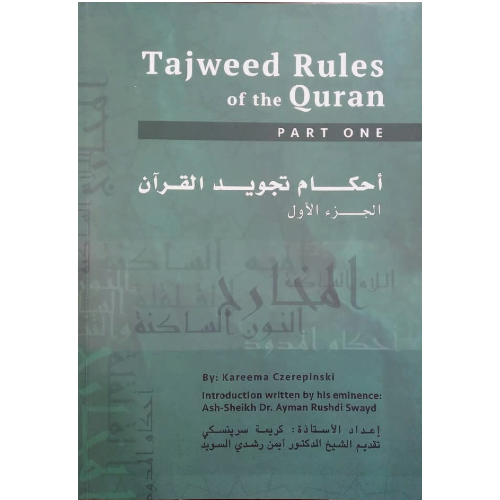
Tajweed Rules of the Quran (Part One)
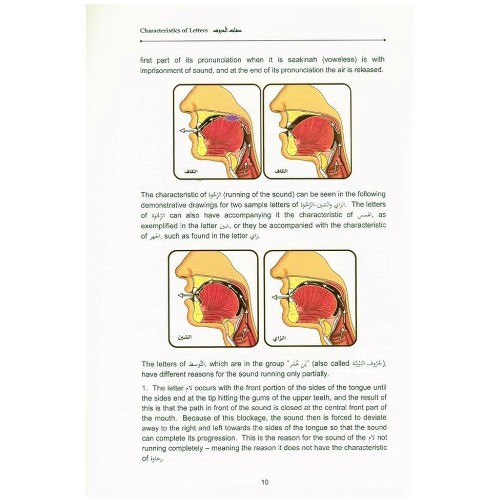
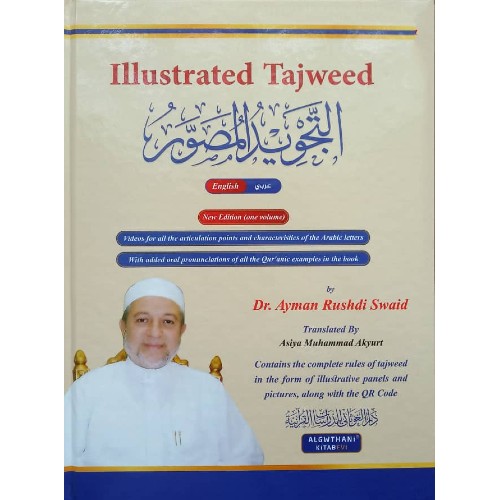
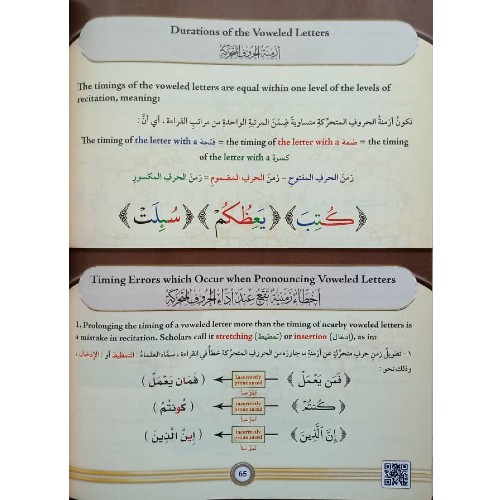
This is a guide for studying tajweed. The student who uses this book is expected to have a basic grasp of Arabic before starting this course. The student should know all the Arabic letters and vowels and be able to read at an elementary level.
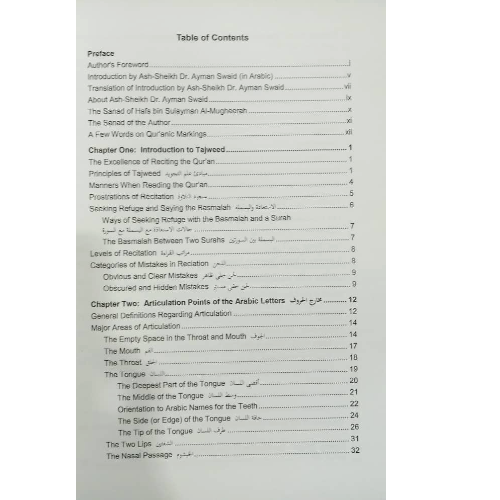
This book is either for an English-speaking student studying the Qur’an in an Arabic environment, but needing explanation of the Arabic terms in English, or a student studying the explanations of tajweed in English, but learning the basic concepts in Arabic so they may integrate into the Arabic terms and definitions throughout the book, since the science of tajweed is an Arabic science. This book explains the articulation points of the Arabic letters, the rules of noon saakinah, meem saakinah, and lam saakinah. It explains all of the different lengths (mudood), and how voweled, and non-voweled letters are formed. The qalaqah mechanism is explained in the last chapter. Terms are introduced in Arabic, and the translated into English. Explanations are done in English, but with integration of Arabic terms, as they are learned.
A student of the Qur’an cannot expert to learn tajweed simply by studying this book. The learning of proper Qur’anic recitation can only be done by listening to a qualified Qur’an teacher recite, then reciting to them and receiving corrections from the teacher.
Learners Handbook Tajweed (Intermediate) – Second Edition (Arabic 101 Series)
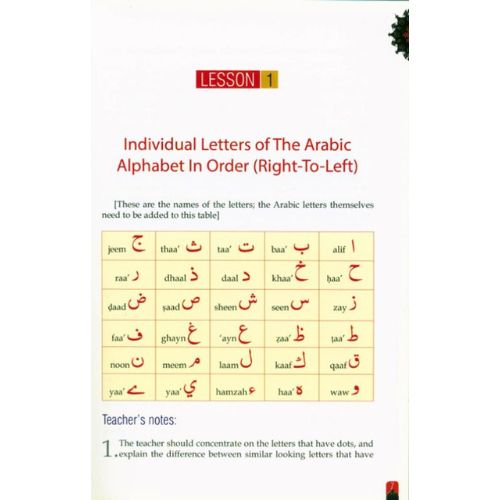
Al-Qaa’idah Al-Qur’aaniyah (An Introduction to Tajweed)
Learning to read the Qur’an properly is one of the many obligatory duties of a Muslim. Recitation gets better and more beautiful as one continues to read the Qur’an, meticulously following the rules and techniques Qur’anic recitation (tajweed).
If you want to learn the art of Qur’anic recitation in the most beautiful and sublime manner, then this is the book for you. Al-Qaaidah Al Quraaniyyah is a good book to learn tajweed easily with lessons, extensive notes, and exercises for the English-speaking students.
Tajweed Rules of the Quran (Part Two)
By Allah’s grace, this is the second part of a three part book on the rules of tajweed of the Qur’an, for the recitation of Hafs from ‘Aasim by the way of Ash-Shaatibiyyah. It is is intended to be a guide for nom-Arabs with a good grasp in English in studying tajweed.
This book explains the concept of the accent (an-nabr) in the recitation of the Glourious Qur’an and the conditions of its use, it is also defines and explains the important chapter on the characteristics of the letter, velarization and attenuation (tafkheem and tarqeeq) are covered in this part, as well as the concept of the two alike, the two similar, the two close, and the two far and the rules for merging (idghaam) and clarity (ith-haar) in these different relationships. A brief introductory to grammar term is made in this book to assist the student in understanding the last chapter, that of the connecting hamzah (hamzah al-wasl).
The explanation of the different subject are in English, and the Arabic terms are translated. This is to assist the student in understanding and encourage them to learn the Arabic definitions and terms. This book should facilitate non-Arabs studying tajweed in a classroom with explanations taught in Arabic or in English.
This book cannot replace the importance of reciting to and being corrected by a trained teacher of tajweed, instead it is a guide and an aid in understanding the concepts of tajweed, the application can only be refined by recitation and correction.
Tajweed Rules For Quranic Recitation [A Beginner Guide]
For every letter of the Qur’an that a Muslim recites, s/he is rewarded ten times over. This immense reward for such a seemingly simple task emphasizes the importance of learning how to recite the Qur’an. Tajweed Rules for Qur’anic Recitation: A Beginner’s Guide aims to give the reader the necessary tools to properly recite the Qur’an according to the manner in which the Prophet Muhammad (sa) recited it. To set the stage for learning the proper Qur’anic recitation, or tajweed, the history of the Qur’an is briefly discussed from its revelation to its compilation. In addition, the history of the Science of Tajweed is touched upon, in order to move the reader into the rules of Qur’anic recitation. With the beginning learner in mind, the rules are detailed in a simple yet clear manner. Each new rule is elucidated with examples from the Qur’an for learners to apply to their recitation.
Recently Viewed
Golden Stories of Accepted Prayers
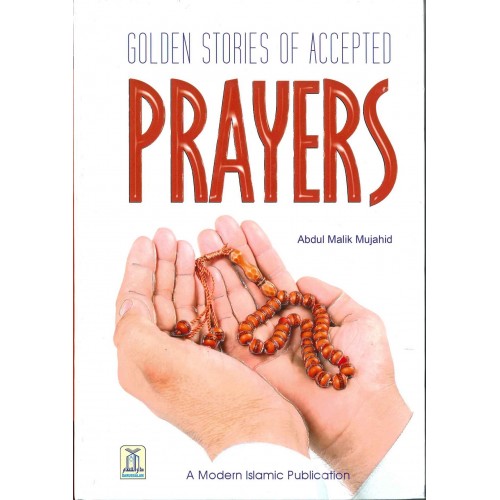
What are invocations? In a real sense these are requests which come from the bottom of our hearts to Allah Almighty. Allah is always ready and happy to receive prayers from anyone at any time.
If you’re facing any difficulties or trouble you should immediately turn to Allah for help. The best invocations are those narrated by the Prophet (S). If you don’t speak Arabic, you can pray in your mother tongue.
When we pray we should feel assured that Allah will accept our requests. We should do so with complete sincerity and devotion.
Prayers can be made at any time, but there is a greater possibility our prayers will be accepted if we do so at specific times.
Principles of Islamic Jurisprudence (2nd Revised Edition)
This book offers a detailed presentation of the theory of Muslim law (usul al-figh). Often regarded as the most sophisticated of the traditional Islamic disciplines, Muslim jurisprudence is concerned with the way in which the rituals and laws of religion are derived from the Qur’an and the Sunna – the precedent of the Prophet. Revelation, which is given to man to restore unity and help him achieve a just and devout order in society as well as in the soul, must be interpreted so as to render it practicable in every culture, while not betraying its spirit and immutable provisions. To achieve this, additional sources of legal authority are recognized, including consensus (ijma), analogical deduction (qiyas), public interest (maslaha) and local customary precedent (urf). In employing these, the jurist guards the five principles which it is the purpose of Islamic law to uphold, namely, the right to life, sound mind, property, lineage and religion.
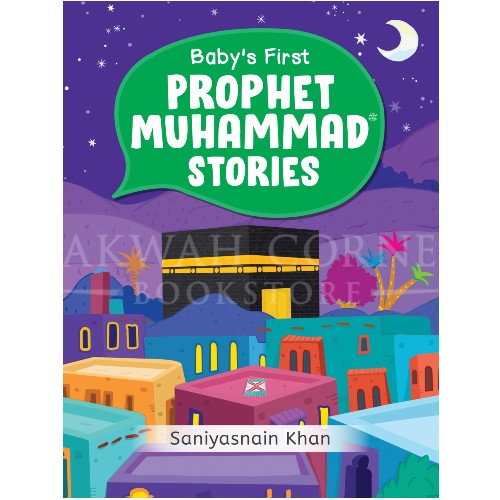
Baby’s First Prophet Muhammad Stories (H/B)
Baby’s First Prophet Muhammad Stories is a wonderful way to introduce your little ones to some of the best loved stories from the life of the Prophet Muhammad. These 20 easy-to-read stories, each accompanied with morals or prayers, are brought beautifully to life with bright, colourful illustrations, making the life of the Prophet more meaningful to young minds.
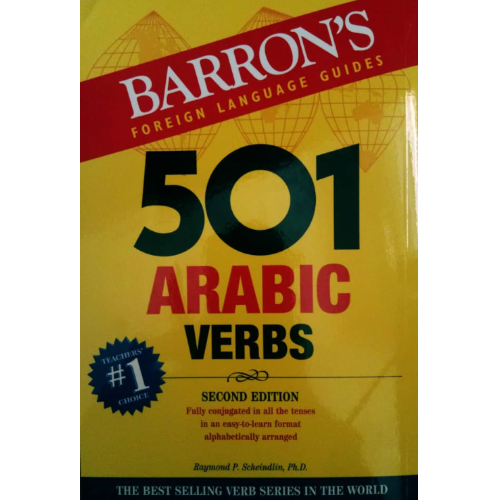
Arabic Verbs: Fully Conjugated All Forms Bilingual Edition
This update, easy-to-use reference book gives you:
- The 501 most common Arabic verbs in a table format
- Both the Arabic characters and their English infinitive form at the top of each page
- Exemplary essay that discusses Arabic verb formation and usage
- Common idioms with example sentences to demonstrate verb usage
- A grammar review and a pattern index
- Indexes that list verbs in both root order and strict alphabetical order
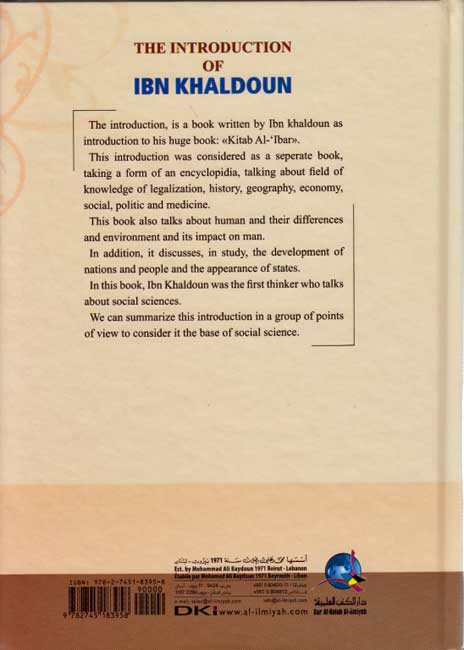
The Introduction of Ibn Khaldoun
This introduction was considered as a separate book, taking a form of an encyclopedia, talking about a field of knowledge of legalization, history, geography, economy, social, politic and medicine.


There are no reviews yet.