





| Weight | 0.11 kg |
|---|---|
| Dimensions | 17 × 10 × 0.6 cm |
| Product Type | Book |
| Author | |
| Pages | 110 |
| ISBN | 9789671256565 |
| Publisher | DCP |
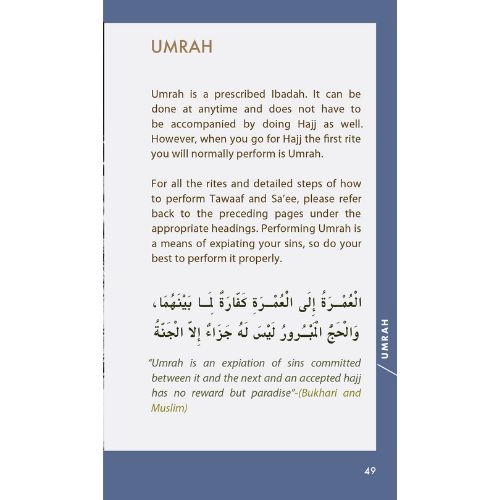
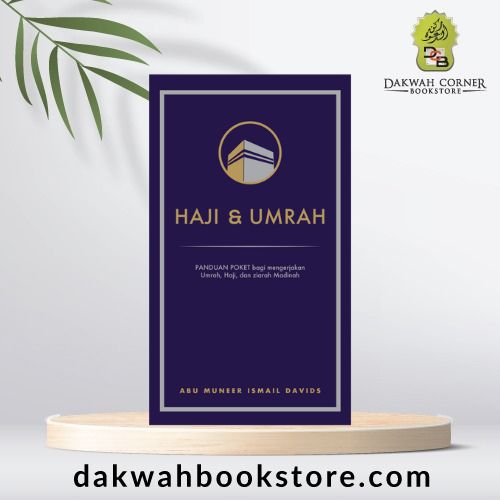
Hajj & Umrah (Pocket Guide) – English Version
Previous product
Hadith Course
RM27.00
5 ★
5 ★
2 Ratings
5 ★
2
4 ★
0
3 ★
0
2 ★
0
1 ★
0
RM14.00
In Stock

Highlights:
somdn_product_page
Compare
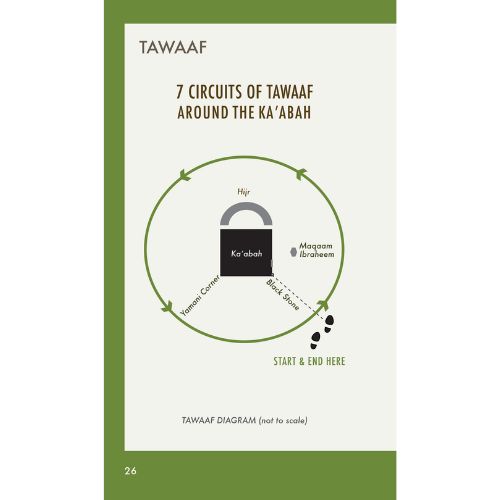
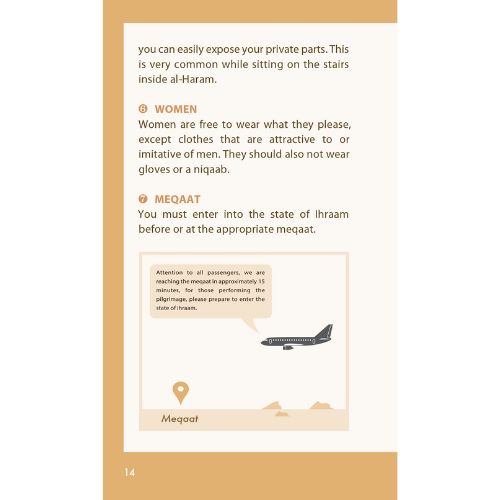
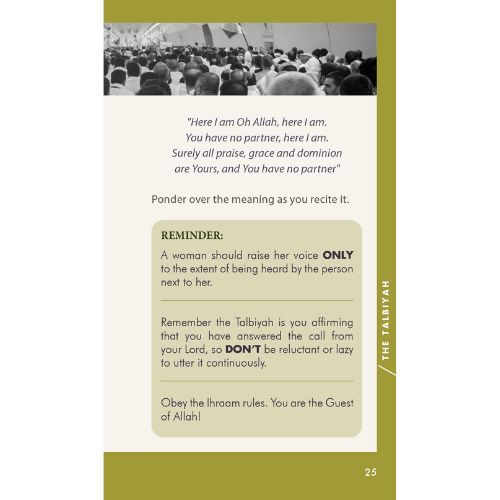
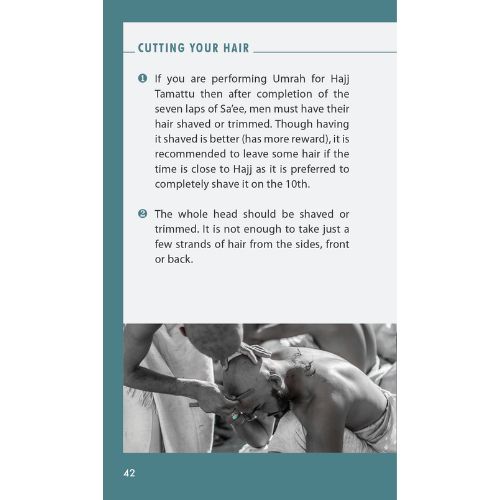
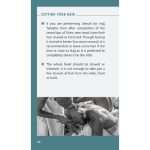
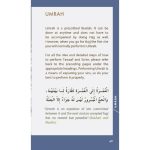
A useful pocket guide that includes the rites of Umrah,Hajj, and visiting Madinah.
SKU: SJ119
Categories: Best Seller, Dakwah Corner, Sharia, Fiqh and Jurisprudence
Brand: Dakwah Corner Bookstore (M) Sdn Bhd™ (DCB)
Frequently Bought Together

Hajj & Umrah (Pocket Guide) - English Version
5 ★
5 ★
2 Ratings
5 ★
2
4 ★
0
3 ★
0
2 ★
0
1 ★
0
1 Item
RM14.00
2 Add-Ons
RM59.00
Total
RM73.00
Additional information
Reviews (2)
5 ★
2 Ratings
5 ★
2
4 ★
0
3 ★
0
2 ★
0
1 ★
0
Add a review Cancel reply
You must be logged in to post a review.
Related Products


Having Fun The Halal Way Entertainment In Islam
5 ★
5 ★
1 Rating
5 ★
1
4 ★
0
3 ★
0
2 ★
0
1 ★
0
Highlights:
With the advent of technology, the entertainment industry has flourished and become immensely popular. Combine this with the exponential advances in technology, and the result is an increasing number of ways to amuse ourselves. As a result of such advances, Muslim react in a variety of manners towards entertainment. Some label entertainment as completely forbidden. This sometimes includes parents who say no to almost everything that their young ones deem to be ‘fun’, without providing them with suitable alternatives. Others, who do not want to take this extreme approach, fall into the trap of excessive use of – and even addiction to – various sources of entertainment, without any limits.
In Having Fun the Halal Way, Ismail Kamdar explores the teachings of Islam regarding entertainment. Drawing upon the Quran, the Sunnah and the understanding of the righteous scholars of Islam, he provides a detailed and balanced analysis of the topic. He not only explains the detriments of the current entertainment industry, but also suggests alternative means to have a good time with friends and family members.
RM18.00

Islamic Fatawa Regarding Women (H/B)
Highlights:
Women face a lot of special problems regarding their menses, postpartum bleeding, istihada, hijab, mixing with men, rights & duties with respect to their husband, husband’s household, children, inheritance, marriage, divorce, etc
More than 350 of such problems & issues have been answered in this book by Grand Mufti of Saudi Arabia Sheikh Ibn Baz, and the eminent scholars like Sheikh Ibn Uthaimin, Sheikh Ibn Jibreen and others.
.
RM56.00


Common Mistakes Regarding Prayer – IIPH
Highlights:
Formal prayer (salat) is the second pillar of Islam, and the most important of a Muslim’s acts of worship. Prophet Muhammad (PBUH) said: “The first of one’s actions for which a slave of Allah will be held accountable on the Day of Judgment will be one’s prayers. If they are correct and accounted for, then he (or she) will have succeeded (gained paradise); and if they are lacking, then he (or she) will have failed (lost paradise). If there is something defective in his (or her) obligatory prayers, the Lord will say: ‘See if my slave has any supererogatory prayers with which that which was defective in his (or her) obligatory prayers may be completed. Then the rest of his (or her) deeds will be judged in like manner.” (At-Tirmidhi and others) Shaykh Mashhur Hasan Salman has compiled a list of the most common errors that we make when we pray, discussing and explaining each one. This book is a valuable aid to Muslims hoping to perfect their prayers, so that their prayers may be free of defects and acceptable to Allah. This new and revised edition of the English translation of his work presents the text in a fluent, highly readable style.
RM38.00


Smoking Intoxicants & Narcotics (P/B)
Highlights:
This book deals with the epidemic of smoking, which enslaves many of today’s Muslims, and which is aggravated by that most victims belittle its dangers and deny its prohibition.
This book includes a discussions of intoxicants, establishing the prohibition of various practices associated with them, as well as penalties (in both lives) for those who partake in them.
This book also includes a discussion of narcotics, with an overview of marijuana and qaat (or khat). Based on their established effects and harms, we conclude that narcotics are strongly prohibited, except in very limited medical settings.
This book, we hope, will provide many Muslims with guidance toward a healthier, cleaner and worthies Islamic personality. My Allah grant us guidance and facilitation.
RM28.00

The Problems of the Illegitimate Child (P/B)
Highlights:
This book addresses the views of the Sunni scholars regarding the importance of genealogical relationship (nasab) in Islamic family law and examines the role of legitimacy on the basis of the legal maxim “al-walad li al-firash”, evidence (al-bayyinah), and doubtful intercourse (wat’ shubhah). It also elucidates the views of the Sunni schools of law on how to establish illegitimacy. For the Sunni jurists, there are several situations that determine the illegitimacy of the child. A child is considered illegitimate if its birth is the outcome of adultery (zina) or the result of legitimate union but accompanied with imprecation (li‘an). Other circumstances include the birth of the child taking place in less than six lunar months, the father of the child being categorized as one who is incapable of begetting, or the birth as a result of marital relationship considered unlawful because of consanguinity. The book also deals comprehensively with the moral, religious, legal and other aspects of the illegitimate child and the foundling in the works of the Sunni jurists. The status and rights of the illegitimate child and the foundling in the Islamic family law of Malaysia and Brunei are also discussed by referring to some provisions from Federal Territory Act 1984 (Act 303) and Brunei law.
RM49.00

Preservation of Health in Islamic Law (P/B)
Highlights:
Preservation of health (hifz al-sihhah) is the most important branch of Islamic medicine since it is primarily concerned with the prevention of illness rather than cure. This book represents one of the few attempts to introduce the role of Islamic medicine, although Chapter One provides information about a historical background of the preservation of helath in Islam, its aim is to provide fresh ant timely overview of the major aspects of legal, ritual and spiritual structures of teh Islamic law (shariah). These include the laws related to Ibadah, Islamic family laws, foods and drinks as well as environmental laws, for maintaning and preserving human health. Findings indicated that prevention of any diseases from Islamic medical law presentive cannot attain any real success unless it emanates from an Islamic fundamental teaching, namely: the pillars of Islam. Iman and observance of the Islamic rituals such as Salah, zakah, Sawm and Hajj, have played an important role in shaping the attitude, behavior and model personality of the Muslim, in boosting the spiritual motivation or attitude change, and in disseminating the message of prevention. This indicates that bodily and spiritual health goes hand in hand and that pyscho-spritual balance and health is a primary consideration whereas physical health is a secondary one.
RM47.00

Istihsan (P/B)
Highlights:
This work constitutes a critical analysis of classical and modern aspects of the concept of istihsan (juristic preference), an important principle in Islamic legal legislation throughout history. Although there has been many research works on the subject, it still requires further investigation on the role and nature of istihsan with regard to a combination of classical and modern approaches. Consisting of four chapters, the author begins by introducing some general principles of Islamic law, before discussing the history of istihsan during the time of the Prophet and his Companions. He also analyses the validity of istihsan as a source of law and discusses the differences among scholars on its method of implementation.
RM57.00

The Pillars of Islam Made Easy – II Salah & Its Essential Conditions (H/B)
Highlights:
Salah is one of the five pillars on which the edifice of Islam rests. Most of us feel that we already know all there is about salah – the formal prayers of a Muslim. However, very few individuals actually do justice to it or derive any worldly or spiritual benefits from it.
Salah & Its Essential Conditions is an effort to detail the essential prerequiires of salah. Moreever, it takes a detailed look at its importance along with the different types of obligatory and voluntary prayers. It alsa presents an illustrated guide to help those who wish to learn or correct the performance of their prayers.
Inshallah, all those who wish to improve their salah will find plenty of help in this book whether they are looking for information on cleanliness and purify, locating the direction of qibla, improving their congregation during salah, making up for the missed salah, or joining acongregation when the imam has already sarted the salah, or joining a congregation when the imam has already started the salah. All in all, it is a relevant handbook on what the Prophet (saw) has described as the coolness of his eyes.
RM50.00

A Guide to Male-Female Interaction
Highlights:
Are Muslim men allowed to interact with female students, and vice versa, in a virtual classroom? Can a Muslim woman pursue a professional career that necessitates her interaction with men? Is it appropriate for a woman to serve her husband’s guests? Do mixed wedding ceremonies comply with the Sharia? Read this bilingual book to find the answers and more!
RM56.00

The Right to Education, Work and Welfare in Islam (P/B)
Highlights:
In The Right to Education, Work and Welfare in Islam Professor M.H. Kamali develops an Islamic perspective on three connected and complementary areas of rights and liberties. He urges that education is often a necessary ingredient of professional work even more so now than in earlier times when the range and variety of specialised knowledge were relatively limited. A person who acquires education, whether generally or at advanced levels of specialisation, is more likely to stand in a better position to enter the workforce and thus to contribute to the welfare of the community.
The author commences his discussions on education, work and welfare in Islam by focusing on how each is treated in the Qur’an; and follows this by the example of the Prophet and, after him, the Pious Caliphs who gave prominence to the education and welfare needs of people at times both of scarcity and affluence. Professor Kamali then moves forward to our time and discusses the right to education, the education of children, institutionalisation of learning, academic freedom and the debate between science and religion.
The section on work elaborates on the value of work, work ethics, workers’ and employers’ rights and responsibilities, and the role and responsibility of governments.
Finally, the section on welfare focuses on the importance in Islam of caring for those who are in need and the different forms of provision that can be made available by individuals, the state and charities.
RM63.00


Getting the Best Out of Hajj
Highlights:
The book provides a realistic view of Hajj as it is today, with detailed explanations of all the rites. It provides Figh related issues about Hajj, Salah and personal behaviour according to the Quran and Sunnah, to enable you to obtain the best value for your time spent in the holy cities. It also provides information and suggestions about planning for the journey, what to expect and how to survive, so you can depart with full confidence. This is a must have for all those planning to go on Hajj!
RM75.00


Fast According to the Quran & Sunnah
Highlights:
Saum (Fast) is a third Pillar of Islam. Allah’s Messenger said, Allah says: “Every deed of the son of Adam is for him, except Saum (fasting). It is for Me and I shall reward for it.”
As the status of this act of worship is so high it is essential to learn the pilings pertaining to this month of fasting so that Muslims will know what is obligatory in order to do it, what is forbidden to avoid it, and what is permissible so that they do not unnecessarily subject themselves to any hardship by depriving themselves from it.
This book consists of all the main issues of Fast. The main objective of this work is to serve an easy and authentic reference to the reader.
RM35.00
Recently Viewed
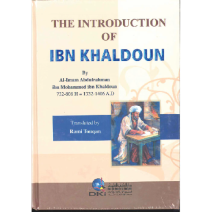
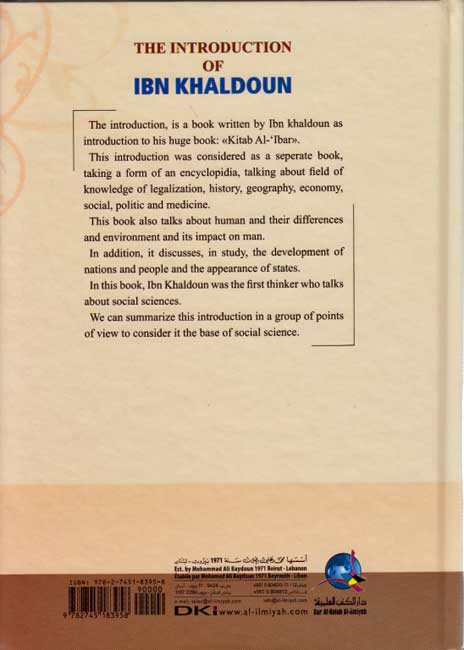
The Introduction of Ibn Khaldoun
Highlights:
This introduction was considered as a separate book, taking a form of an encyclopedia, talking about a field of knowledge of legalization, history, geography, economy, social, politic and medicine.
RM160.00
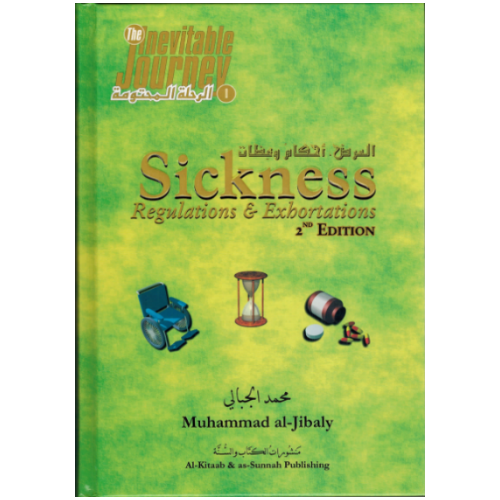
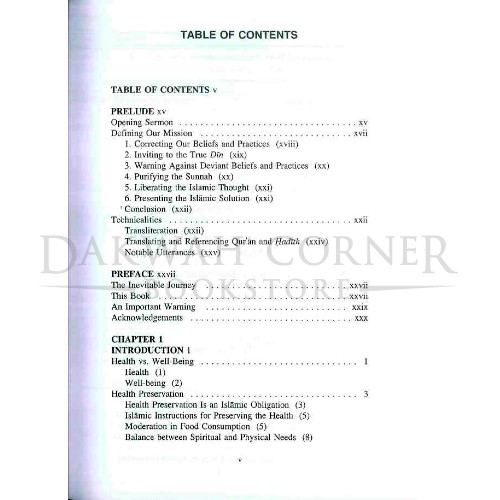
Sickness Regulations & Exhortations
Highlights:
This book is the first in the series. It deals with sickness, which continues to afflict human beings from birth until death. Sickness strikes as light as a simple cold or allergy, and as hard as a plague or cancer. It keeps the human being under check, reminding him of his weakness and giving him a chance to turn to the One who possesses to afflict and cure. This book deals with sickness, its regulations, and lessons associated with it. It presents the Islamic stand toward a number of modern medical issues, and also discusses important regulations relating to those with disabilities.
RM67.00
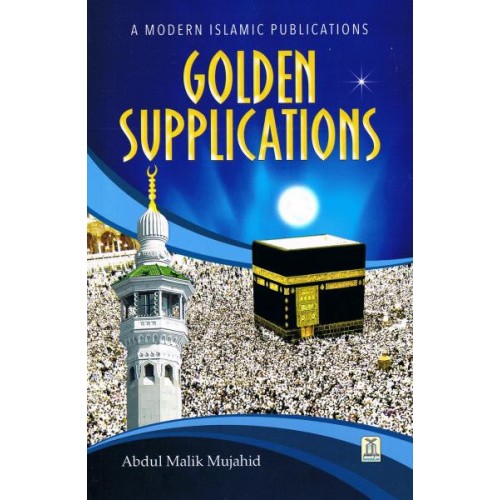
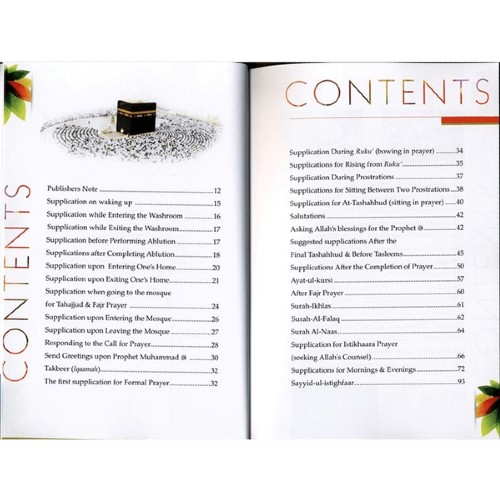
Golden Supplications (P/B)
Highlights:
For this book, ‘ Golden Supplications’ I have chosen only the most important supplications, so that our common people are able to memorize them with ease from one single book. It has been the ardent desire of the management at Darussalam for quite some time to publish this book with a beautiful design and loyout, thus making it attractive and assissting common people learning. Furthermore, I have also added some instrustions and manners related to the supplications in order to assist the readers in understanding and implementing the duas. It is important that parents also memorize these supplications themselves as it will greaty help their children in memorizing them too.
RM26.00
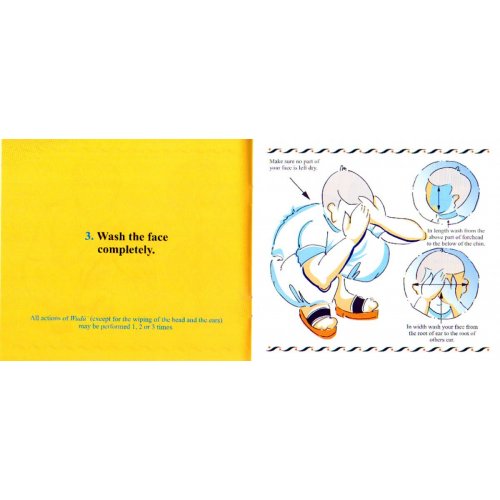
My Wudu Book
Highlights:
A step by step guide to perfecting your child’s Wudu according to the Quran and the Sunnah.
RM15.00
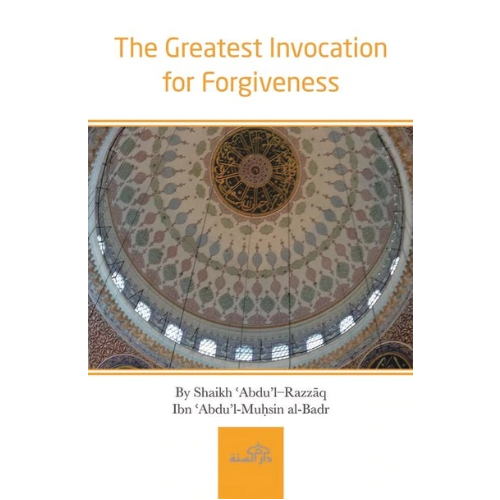
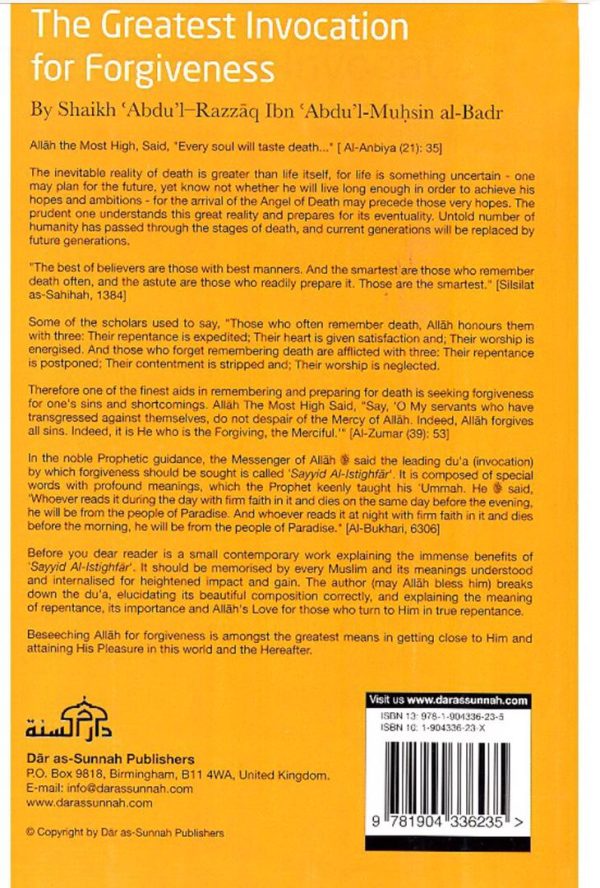
The Greatest Invocation for Forgiveness (Dar-as-Sunnah)
Highlights:
Allah the Most High, Said, “Every soul will taste death…” [ Al-Anbiya (21): 35] The inevitable reality of death is greater than life itself, for life is something uncertain – one may plan for the future, yet know not whether he will live long enough in order to achieve his hopes and ambitions – for the arrival of the Angel of Death may precede those very hopes. The prudent one understands this great reality and prepares for its eventuality.
Untold number of humanity has passed through the stages of death, and current generations will be replaced by future generations. “The best of believers are those with best manners. And the smartest are those who remember death often, and the astute are those who readily prepare it. Those are the smartest.” [Silsilat as-Sahihah, 1384] Some of the scholars used to say, “Those who often remember death, Allah honours them with three: Their repentance is expedited; Their heart is given satisfaction and; Their worship is energised. And those who forget remembering death are afflicted with three: Their repentance is postponed; Their contentment is stripped and; Their worship is neglected. Therefore one of the finest aids in remembering and preparing for death is seeking forgiveness for one’s sins and shortcomings. Allah The Most High Said, “Say, ‘O My servants who have transgressed against themselves, do not despair of the Mercy of Allah. Indeed, Allah forgives all sins. Indeed, it is He who is the Forgiving, the Merciful.'” [Al-Zumar (39): 53] In the noble Prophetic guidance, the Messenger of Allah (saw) said the leading du’a (invocation) by which forgiveness should be sought is called ‘Sayyid Al-Istighfār’.
It is composed of special words with profound meanings, which the Prophet keenly taught his ‘Ummah. He (saw) said, ‘Whoever reads it during the day with firm faith in it and dies on the same day before the evening, he will be from the people of Paradise. And whoever reads it at night with firm faith in it and dies before the morning, he will be from the people of Paradise.” [Al-Bukhari, 6306] Before you dear reader is a small contemporary work explaining the immense benefits of ‘Sayyid Al-Istighfar’. It should be memorised by every Muslim and its meanings understood and internalised for heightened impact and gain.
The author (may Allah bless him) breaks down the du’a, elucidating its beautiful composition correctly, and explaining the meaning of repentance, its importance and Allah’s Love for those who turn to Him in true repentance. Beseeching Allah for forgiveness is amongst the greatest means in getting close to Him and attaining His Pleasure in this world and the Hereafter.
RM35.00
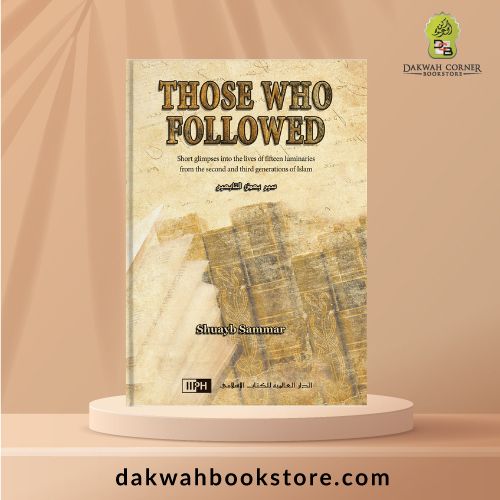
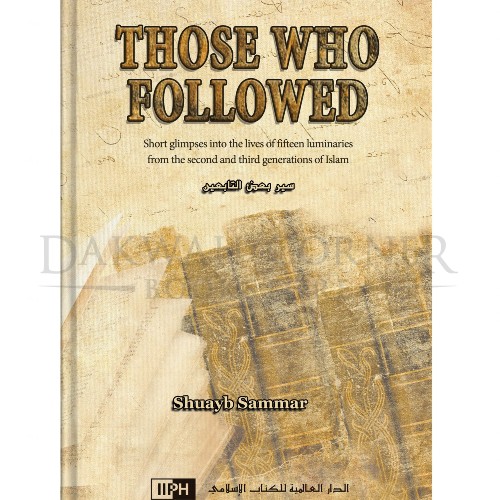
Those Who Followed by IIPH
Highlights:
Those Who Followed is a collection of interesting and inspiring short biographies of the selected torchbearers of Islam from the generations that followed the Companions of the Messenger of Allah (blessings and peace be upon him). Lessons from how they dealt with civil strife and their appraisal of the life in this world and the hereafter hold a lot of relevance today. This book is a must-have for every family library. It can be used by parents and teachers effectively to introduce role models like Imam Bukhari, Imam Ahmad ibn Hanbal, Abdullâh ibn al-Mubârak, Imam Abu Haneefah, and many others to preteens and teenagers.
RM56.00
Hajj & Umrah (Pocket Guide) – English Version
5 ★
5 ★
2 Ratings
5 ★
2
4 ★
0
3 ★
0
2 ★
0
1 ★
0
Highlights:
A useful pocket guide that includes the rites of Umrah,Hajj, and visiting Madinah.
RM14.00
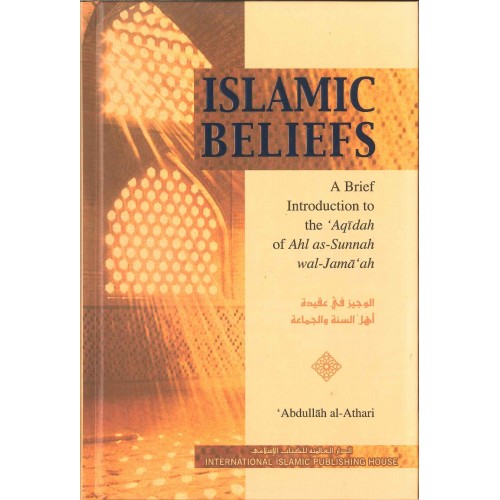
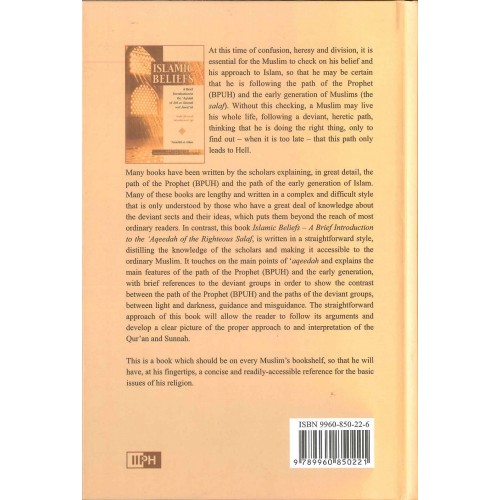
Islamic Beliefs
Highlights:
In this era of confusion, innovation, and division, it is essential for Muslims to monitor their beliefs and their approach to Islam, so that they may be certain that they are following the path of the Prophet (blessings and peace of Allah be upon him) and the early generation of pious Muslims (the salaf). Without careful attention, a Muslim may live his or her whole life following a deviant path filled with innovation, thinking that he or she is doing the right thing, only to find out – when it is too late – that this path only leads to hell. Islamic Beliefs: A Brief Introduction to the ‘Aqeedah of Ahl as-Sunnah wal-Jamâ‘ah is written in a straightforward style, distilling the knowledge of the scholars and making it accessible to the ordinary Muslim. It touches on the main points of ‘aqeedah (fundamental Islamic beliefs or creed) and explains the main features of the path of the Prophet (peace be upon him) and the early generation, with brief references to deviant groups in order to show the contrast between the path of the Prophet (peace be upon him) and the paths of the deviant groups, between light and darkness, guidance and misguidance. The straightforward approach of this book will allow the reader to follow its arguments and develop a clear picture of the proper approach to and interpretation of the Qur’an and the Sunnah. This is a book which should be on every Muslim’s bookshelf, so that they will have at their fingertips a concise and readily-accessible reference for the basic issues of their religion.
RM45.00
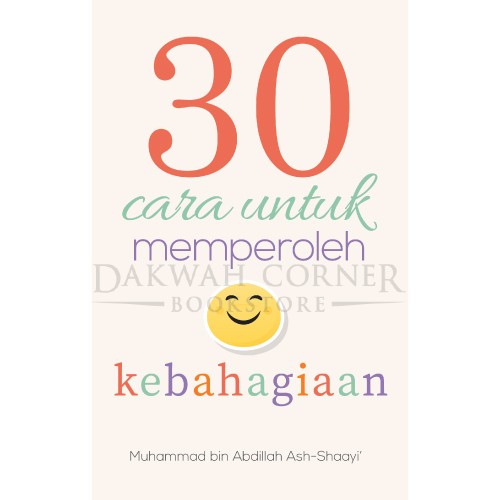
30 Cara Untuk Memperoleh Kebahagiaan
Highlights:
Buku yang hebat ini adalah panduan bogi semua masyarakat Islam terutamanya dalam kehidupan seharian kita kerana ia menyajikan cara-cara menghadapi kitaran hidup seharian, menerima masa lalu dan bersiap menghadapi hari esok berdasarkan pengajaran Al-Quran & Sunnah.
RM10.00 RM15.00
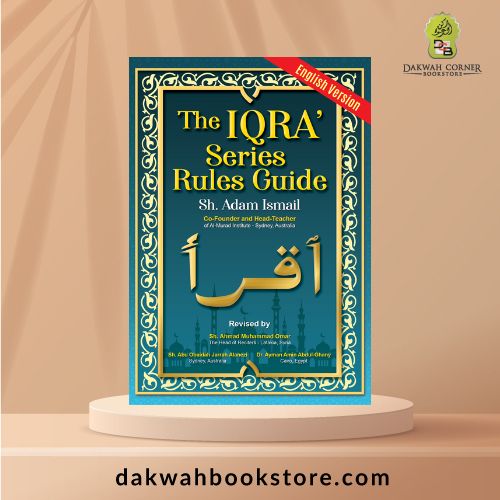
The Iqra’ Series Rules Guide
Highlights:
- This guide is a must for anyone studying or teaching from the IQRA’ Series! Aimed at children and adults to be used by schools, mosques and learning centres.
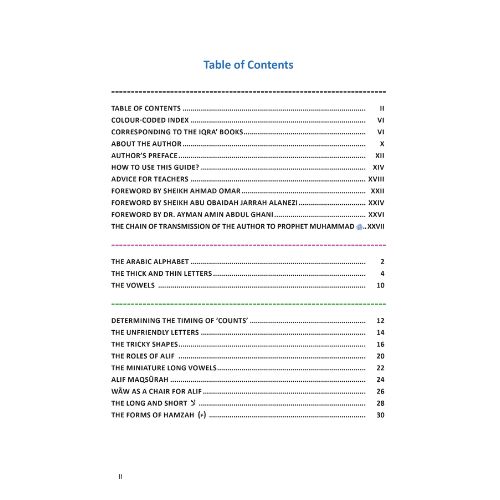
- This guide contains all the Tajwīd rules needed throughout the IQRA’ series. It introduces each rule based on the same structure and patterns of the IQRA’ Series.
- This guide has been designed to make it as easy as possible to achieve a beautiful and elegant recitation, whilst also having a firm grasp of all the required theory.
RM30.00
au.mu.smj –
Great book! Very details and easy to use. MashaAllah. May Allah reward you! I bought this for my hajj in 2018. I had bought a few handbooks to help my preparations and be accessible for use during the hajj. This was the one I used throughout my hajj …pages so easy to turn, all the information is explained in simplistic terms which is what one needs during the intensity of hajj, and has useful safety and travel tips to for hajj
Jazaka-Allah Khair
kfl141121 (verified owner) –
Great customer service – shipping was fast! The book itself is very comprehensive and the definitive guide for going to Umrah/Hajj. A must have for any Muslim