

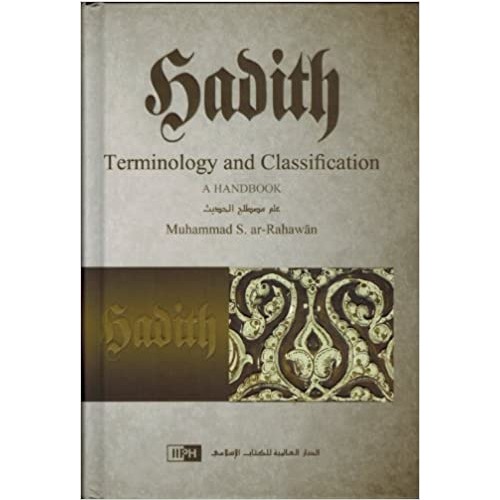
Hadith Terminology and Classification is a concise handbook that aims to facilitate independent seekers of knowledge and students of Hadith Science. It seeks to acquaint them with the commendable endeavours of the early Muslim scholars in sifting through the immense treasure of hadiths and recognising the authentic gems that form the words and acts of the Prophet (blessings and peace be upon him).This is a complete guide that introduces the origin, provenance and development of the science of Hadith. It also provides taxonomy of hadiths according to different criteria, including the number of its narrators, authenticity of reports and efficacy in law. Furthermore, it classifies weak hadiths and details the means of eliminating their effect.This handbook is an excellent, in-depth study that significantly elaborates hadith terminology and criticism, making it easier for the reader to understand the regulations that authenticate a hadith.
Hadith Terminology and Classification (H/B)
RM65.00
Islam is a complete way of life that enlightens through the Qur’an and the Sunnah, the true path of guidance and success in this world and the hereafter. However, one must accurately comprehend what has been ordained through the Sunnah and identify the authentic hadiths of the Prophet (blessings and peace be upon him). To do that, it is imperative to understand the rules that govern the classification and definitions of hadith methodology and criticism.
| Weight | 0.450 kg |
|---|---|
| Dimensions | 2 × 16 × 22 cm |
| Binding | Hardcover |
| ISBN | 9786035011976 |
| Pages | 288 |
| Publisher | IIPH |
Be the first to review “Hadith Terminology and Classification (H/B)” Cancel reply
You must be logged in to post a review.
Related Products
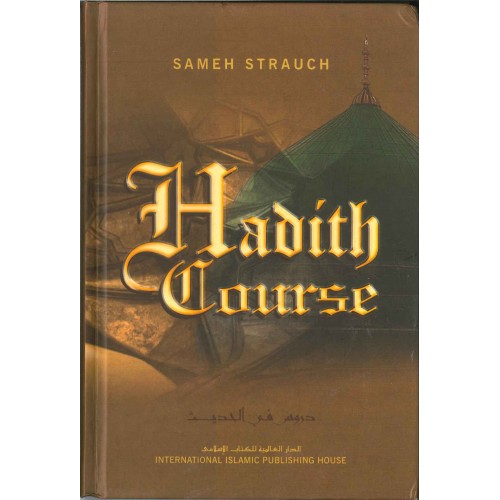
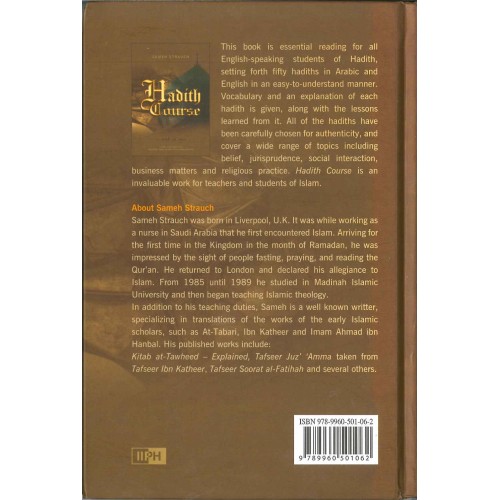
Hadith Course
Hadith Course is essential reading for all English speaking students of Hadith, presenting fifty hadiths in Arabic and English in an easy-to-understand manner. Vocabulary and an explanation of each hadith are given, along with the lessons learned from it. All of the hadiths have been carefully chosen for authenticity and cover a wide range of topics, including belief, jurisprudence, social matters, business and much more. This book is an invaluable handbook for schools and self-learners.
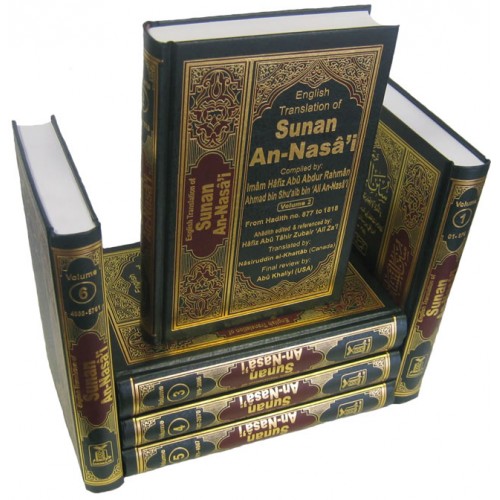
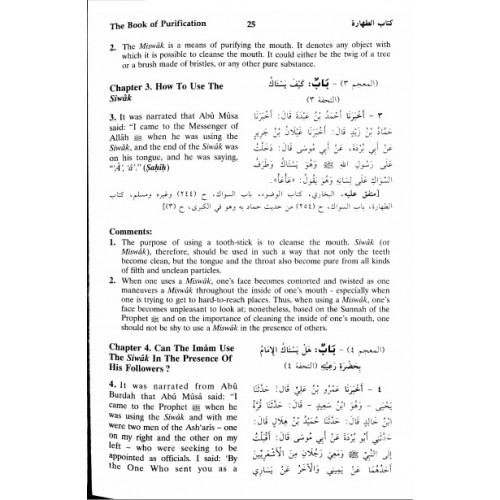
Sunan An-Nasa’i (6 Vol) (H/B)
Sunan An-Nasai has the fewest weak ahadith after the two Sahih collections. This Sunan is one of the six is al-Mujtaba or as-Sunan as-Sughara, which is a synopsis of a large collection of ahadith which he considered to be fairly reliable. In the smaller collection, only those ahadith which he considered to be reliable have been included.
It was compiled by the great scholar of hadith, Abu Abdur-Rahman Ahmad bin Shu’aib bin Bahr An-Nasae (Nasa’ of Khurasan) (214-303AH). Imam An-Nesai, like other great scholars of hadith traveled to Baghdad, Ash-Sham, Egypt, Mecca, and many other cities to seek knowledge. He received the praises of many scholars including Ad-Daraqutni who said about him: “He is given preference over all others who are mentioned with this knowledge from the people of his time”. Some scholars consider his compilation to have the least number of defective or weak narrations among the four Sunan. This great book of his contains 5761 ahadith, making it as an invaluable addition to anyone’s library.
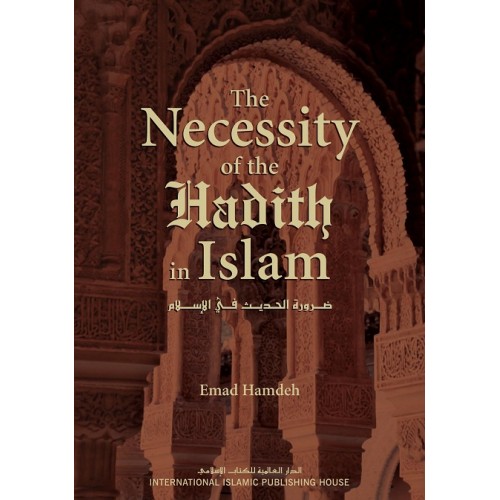
The Necessity of the Hadith in Islam (H/B)
There was a time when the notion of Hadith rejection was inconceivable. Sad to say, it is now becoming a widespread phenomenon in many countries. The educated and the ignorant, veteran Muslims and reverts, the middle class as well as the elite are falling prey to the misleading ideas projected by the Hadith rejecters through books and other forms of publication. The Internet has, unfortunately, given them a new and effective platform. Emad Hamdeh has taken up the task of replying to these Hadith rejecters with sound and convincing arguments. The Necessity of the Hadith in Islam not only explains the need for the Hadith and the Sunnah at all times, but also presents and refutes the main arguments put forward by Hadith rejecters. Furthermore, Hamdeh has profiled the top few Hadith rejecters and summarized their ideas. This is a well-researched, well-referenced and comprehensive work, which provides useful information to those seeking more knowledge on the subject. It will also sufficiently answer many different questions which come to mind after reading some of the arguments of the Hadith rejecters. Muslims today need to read works such as these to ensure that they are not misled, especially through the Internet.

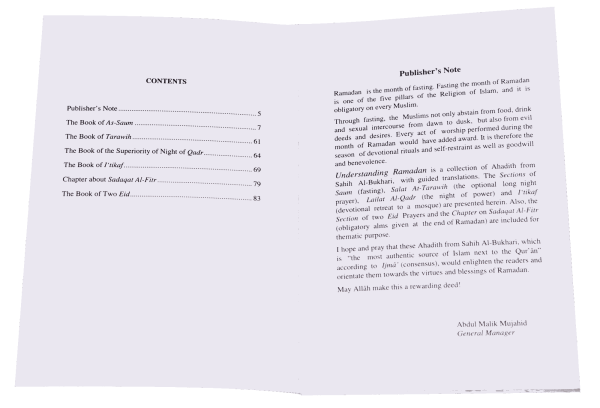
Understanding Ramadan
This book covers important aspects regarding Ramadan. The book is a collection of Ahadith from Sahih Al-Bukhari, with guided translations. The topics which are covered are Fasting, Salat at-Tarawih, Lailat Al-Qadr and Itikaf. Also, the section of two Eid Prayers and the chapter on Sadaqat Al-Fitr are included for the thematic purpose. This book is a must-read for all.
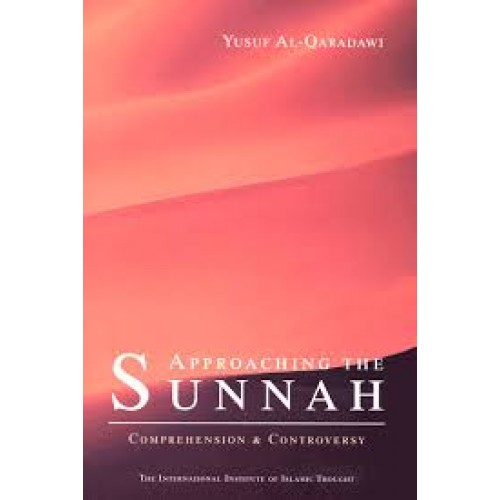
Approaching the Sunnah: Comprehension & Controversy (P/B)
The Sunnah still provides the stable moral framework – the grammar – that enables Muslims, by formal rules and inward sense, to know right from wrong. However, separation from the mainstream of life puts the Sunnah in danger of becoming rigid – an archaism. Addressing that danger, this book explains how the Sunnah can function as the grammar of a living, adaptive language, capable of guiding (and not shying from) the mainstream.
The first chapter sets out the qualities that characterize authentic application of the Sunnah: universality, coherence (so that different spheres of human responsibility are not split), compassionate realism, moderation, and humility. The second explains standards and procedures for determining the Sunnah in the fields of jurisprudence and moral instruction. The third chapter illustrates through detailed examples common errors in understanding the Sunnah – reading hadiths singly without sufficient context, confusing legal and moral injunctions, means and ends, figurative and literal meanings…–and it proposes remedies for these errors.
YUSUF AL-QARADAWI is one of the Islamic world’s most widely respected and prolific scholars. His works have remained popular over many decades. Among the best known of his books to appear in English is The Lawful and the Prohibited in Islam (first edition 1994).
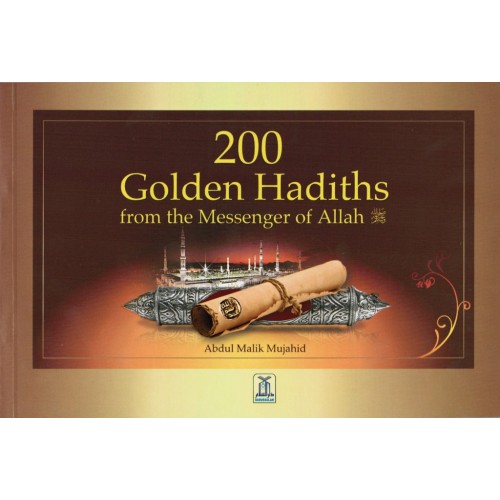
200 Golden Hadiths from the Messenger of Allah swt (P/B)
Islam is based on two major souces : the Quran and the Sunnah, and the latter is available to us in the form of hadiths. The Prophet said, “Whoever comes to know one hadith of mine should spread it.”
I have come to the realization that many youth from among the Muslims have not memorized even one hadith of the Prophet. For this reason I have chosen smaller hadiths so that they can be easily memorized by them and they can spread them to others.
I supplicate to Allah to make this book a source of light on the Day of Judgment for us.

Usool Al-Hadeeth (H/B)
Dr. Bilal Philips writes: “The Prophet’s sayings and actions were primarily based on revelation from Allah and, as such, must be considered a fundamental source of guidance second only to the Qur’an.” According to Dr. Philips, the Hadith, the record of these sayings and actions, plays a vital role in that it transmits revelation, tafseer (exegesis of the Qur’an), Islamic law, and the Islamic moral ideal. For instance, the Prophet’s “…character and social interactions became prime examples of moral conduct for Muslims. Consequently, the daily life of the Prophet (blessings and peace of Allah be upon him) as recorded in the hadith represents an ideal code of conduct. It is largely due to the science of hadith that the final message of Islam has been preserved in its original purity for all times.” In Usool al-Hadeeth, the reader will embark on a course of study that will, Allah willing, enable him or her to make critical and intelligent use of the body of Hadith literature in his or her daily life.
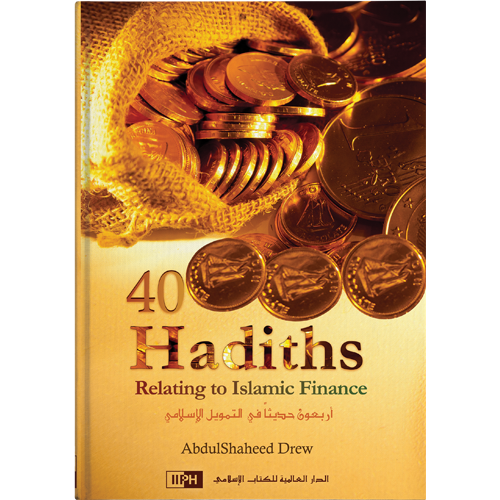
40 Hadiths Relating to Islamic Finance
A comprehensive guide that every Muslim should possess, 40 Hadiths Relating to Islamic Finance by AbdulShaheed Drew untangles some of the intricacies of finance and economics, bringing forth a Sharia-compliant solution to earning and using wealth. This collection presents authentic hadiths and clear explanations, showing how they relate to contemporary circumstances. Read and study it to be empowered with general knowledge relating to wealth in Islam, so that you can earn and spend your money the halal way.

Scholars of Hadith (P/B)
This book presents an extensive, in-depth analysis of great Muhaddithun (scholars of the science of Hadith). Each chapter presents detailed biographies of Malik b. Anas, Ibn Hanbal, al-Bukhari, Muslim, al-Tirmidhi, Abu Dawud, an-Nasai, Ibn Majah, ad-Darimi and al-Bayhaqi along with the methods they used in Hadith collection and classification. This work is especially important in today’s world where many Muslims have a dire need to connect with the great corpus of work that was produced by the scholars or traditional Islam. A work such as Scholars of Hadith has been long overdue in the English language and it will certainly make for productive reading for all interested in deepening their knowledge of Islam.
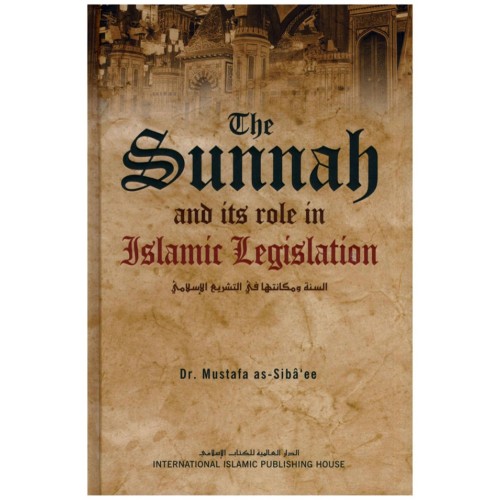
The Sunnah And Its Role In Islamic Legislation (H/B)
The Sunnah and its Role in Islamic Legislation is a groundbreaking effort by Dr. Mustafa as-Siba’ee, for it has a completeness to it in two regards: first, the author manages to cover all topics related to the Sunnah—its status, its legislative force, the stages that led to its recording, just to mention a few—in a comprehensive and organized manner. Second, he presents the views of those that have attacked the Sunnah throughout history, detailing their arguments and then refuting them. Among those groups from the past were the Shi’aa and the Mu’tazilah; today, they are mainly the Orientalists and those that are influenced by them.
Sheikh as-Siba’ee takes us through the historical development of the Sunnah, from the early stages of revelation to the recording of the Sunnah during the era of the great Imams of Hadith. Throughout that account, he highlights the contributions of the scholars in preserving the Sunnah and cleansing it from fabrications and lies. Shaykh as-Siba’ee gives a clear account of the revolutionary methods and scholarly principles that were established in order to authenticate historical reports and narrations. The author shows us that the fruits of that endeavour were the preservation of the authentic Sunnah and the birth of the Hadith sciences.
This book has been a perennial source of knowledge for Arabic-speaking students of Islam, for its clarity, readability, and insightful research. New English-speaking students too have available to them this authoritative treatise on the Sunnah of our beloved Prophet Muhammad) may the peace and blessings of ALLAH be upon him).
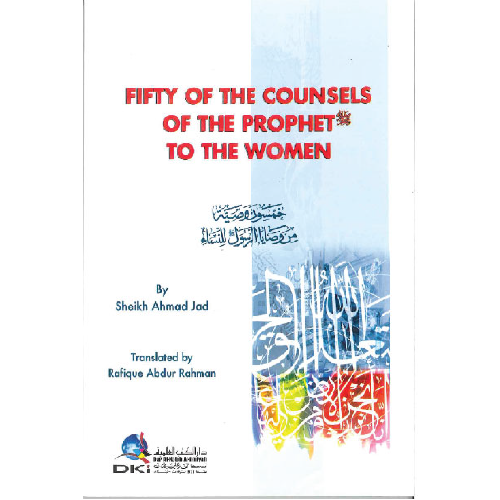
Fifty of the Counsels of the Prophet to the Women
Islam is very kind to women. The Prophet was very careful to respect their rights. Women \, in his times, possessed the religious knowledge, narrated ahadith. Nursed the sick and wounded on the battlefield and acquired knowledge. The home is the first madrasah of a child. This book shows women the path of Islam as shown by the prophet. The ahadith are explained on the pattern of great scholars like Ibn Hajar, Nawawi, Khattabi, Mubarakpuri, and others. A careful perusal will help the reader to understand the real message of Islam and to pattern her own life and her children’s on the right path.
Recently Viewed

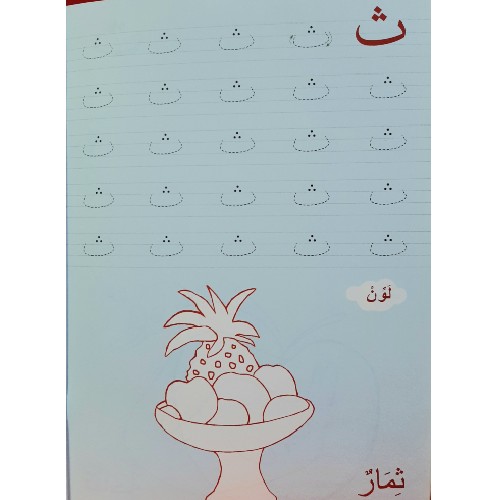
Learning Arabic Alphabet
Fun activities for kids to learn the Arabic alphabet!


33 Ways of Developing Al-Khushoo`: Humility and Devotion in Prayer
Shaykh Muhammad Salih al-Munajjid’s little book is perhaps one of the most widely-circulated among Muslims today. This is because the topic touches worshippers where it hurts—we know that we often lapse into an automatic sort of prayer when we lose concentration. The Shaykh points out that this loss of concentration really stems from a lack of humility and devotion—in Arabic, khushoo‘. His aim in writing this book is to help us to get back that khushoo‘. His step-by-step approach makes it simple. He gives practical advice and uses the excellent example of the prayer of the Messenger of Allah (blessings and peace be upon him) to guide us, so that as worshippers, we can truly return to a state of humility and devotion before the Lord.


Devotion in Prayer P/B
The lack of reverence [khushi] in prayer has become a widespread phenomenon. Despite the well-known methods of achieving khushu methods in the Sunnah of the Prophet, rarely do we find a Muslim who is satisfied with his khushi in his prayer. In this book, we present a new theory, the theory of the pyramid of khushů, which consists of five levels, and which aims to gradually elevate the worshiper until he reaches a complete peace of mind in his prayer. This theory is implementable, practical, and based on the Qur’an and the Sunnah.
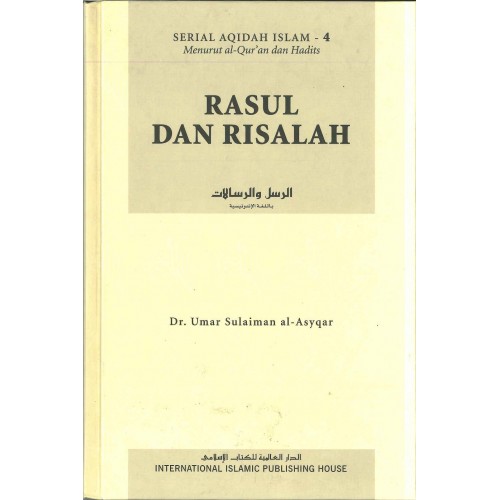
Rasul dan Risalah ; Serial Aqidah Islam – 4
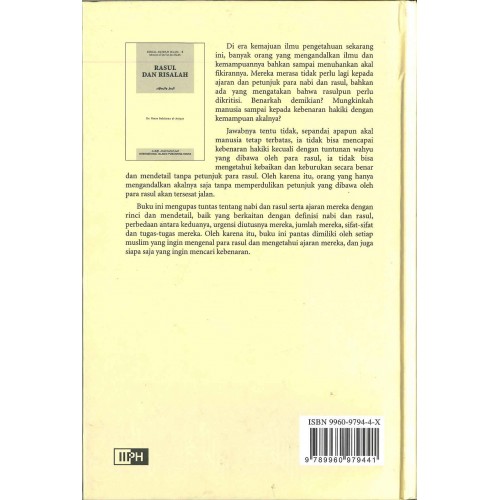
Rasul Dan Risalah: menurut al-Qurán dan hadits – Serial Aqidah Islam 4/ Dr. Umar Sulaiman al-Asyqar. Di era kemajuan ilmu pengetahuan sekarang ini, banyak orang yang mengandalkan ilmu dan kemampuannya bahkan sampai menuhankan akal fikirannya. Mereka merasa tidak perlu lagi kepada ajaran dan petunjuk para nabi dan rasul, bahkan ada yang mengatakan bahawa rasul pun perlu dikritisi. Benarkah demikian? Mungkinkah manusia sampai kepada kebenaran hakiki dengan kemampuan akalnya. Jawabnya tentu tidak, sepandai apapun akal manusia tetap terbatas, ia tidak bisa mencapai kebenaran hakik kecuali dengan tuntunan wahyu yang dibawa oleh para rasul, ia tidak bisa mengetahui kebaikan dan keburukan secara benar dan mendetail tanpa petunjuk para rasul. Oleh karena itu, orang yang hanya mengandalkan akalnya saja tanpa memperdulikan petunjuk yang dibawa oleh para rasul akan tersesat jalan. Buku ini mengupas tuntas tentang nabi dan rasul serta ajaran mereka dengan rinci dan mendetail, baik yang berkaitan dengan definisi nabi dan rasul, perbedaan antara keduanya, urgensi diutusnya mereka, jumlah mereka, sifat-sifat dan tugas-tugas mereka. Oleh karena itu, buku ini pantas dimilikioleh setiap muslim yang ingin mengenal para rasul dan mengetahui ajaran mereka, dan juga siapa saja yang ingin mencari kebenaran.
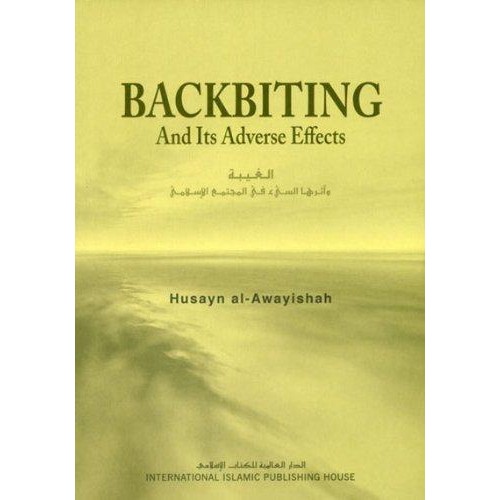
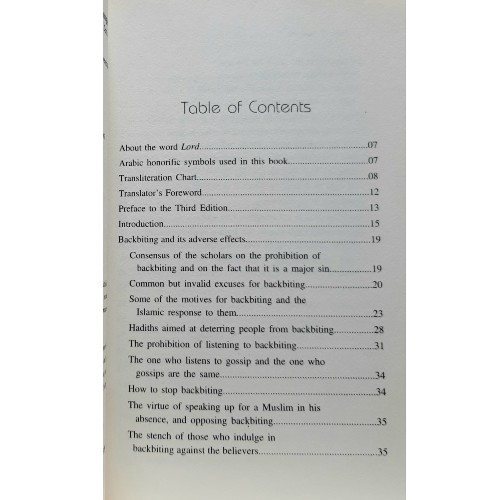
Backbiting and Its Adverse Effects
This is a revised and updated edition of Backbiting (formerly entitled Gossip and its Adverse Effects). The translator, Huda Khattab, explains: The Qur’an states: {…nor speak ill of each other behind their backs. Would any of you like to eat the flesh of his dead brother? No, you would abhor it…} (Qur’an 49: 12) We cannot escape the fact that backbiting affects us all. We have all been victims and, we must be honest, we have all been guilty of this sin. But it is not a matter to be taken lightly; backbiting can wreck lives and shatter communities. Islam is a practical faith that recognizes the human condition and offers achievable remedies to the problems that beset us. Every human society faces the problem of backbiting, and Islam shows us how to tackle it in a sensible and humane manner. Husayn al-Awayishah has researched this topic in depth, and has presented a concise guide to the evils of backbiting and what can be done about it. This book may make for uncomfortable reading, but the topic is one that every one of us has to face up to.
Hadith Course
Hadith Course is essential reading for all English speaking students of Hadith, presenting fifty hadiths in Arabic and English in an easy-to-understand manner. Vocabulary and an explanation of each hadith are given, along with the lessons learned from it. All of the hadiths have been carefully chosen for authenticity and cover a wide range of topics, including belief, jurisprudence, social matters, business and much more. This book is an invaluable handbook for schools and self-learners.
There are no reviews yet.