


| Weight | 0.40 kg |
|---|---|
| Product Type | Book |
| Author | |
| Publisher | IIPH |
| ISBN | 978-603-501-242-3 |
A Guide to Male-Female Interaction
RM56.00
In Stock
Highlights:
somdn_product_page
Compare
Are Muslim men allowed to interact with female students, and vice versa, in a virtual classroom? Can a Muslim woman pursue a professional career that necessitates her interaction with men? Is it appropriate for a woman to serve her husband’s guests? Do mixed wedding ceremonies comply with the Sharia? Read this bilingual book to find the answers and more!
SKU: SJ167
Category: Sharia, Fiqh and Jurisprudence
Additional information
Reviews (0)
Be the first to review “A Guide to Male-Female Interaction” Cancel reply
You must be logged in to post a review.
Related Products


Al-Jumu’ah: The Day of Congregation
Highlights:
In our busy lives, Friday comes around once a week. It often comes and goes without our being really aware of it. For many Muslim men, it may be punctuated by the congregational prayer that they make special efforts to attend. For many Muslim women, it may go by just like any other day. This ought not to be the case. In this unique book, Dr. Gowher Yusuf gives us reason to stop and think about how special Friday (al-Jumu‘ah) really is, and what we should be doing to achieve the many bounteous blessings it holds for those who observe it. Drawing constantly from the Qur`an and the Sunnah and the great works of the scholars of Islam, Dr. Gowher Yusuf explores this topic in depth and presents it to the reader in simple language for them to understand and ponder over. This book travels through the various issues pertaining to the Friday prayer and its Khutbah, or sermon. These issues are explained within the Islamic framework, thus abolishing any myths and misunderstandings and clarifying the topic for the reader. Dr. Yusuf writes: The day of the week known as al-Jumu‘ah, or simply Jumu‘ah, is Friday, and it is special. Compared to the other days of the week, Friday has been accorded the largest amount of merit, so much so that the father of all humankind, Prophet Âdam (peace be upon him), was created on this day and a particular prayer was ordered for this day. It was from the guidance given to Prophet Muhammad (blessings and peace of Allah be upon him) to magnify this day, honour it, and designate it for acts of worship. …On a Friday, we all will be gathered and will stand congregated in front of Allah, the Exalted, on the Day of Resurrection, also called the Day of Accountability or the Day of Judgement.
RM38.00


Principles of Islamic Jurisprudence (2nd Revised Edition)
Highlights:
This book offers a detailed presentation of the theory of Muslim law (usul al-figh). Often regarded as the most sophisticated of the traditional Islamic disciplines, Muslim jurisprudence is concerned with the way in which the rituals and laws of religion are derived from the Qur’an and the Sunna – the precedent of the Prophet. Revelation, which is given to man to restore unity and help him achieve a just and devout order in society as well as in the soul, must be interpreted so as to render it practicable in every culture, while not betraying its spirit and immutable provisions. To achieve this, additional sources of legal authority are recognized, including consensus (ijma), analogical deduction (qiyas), public interest (maslaha) and local customary precedent (urf). In employing these, the jurist guards the five principles which it is the purpose of Islamic law to uphold, namely, the right to life, sound mind, property, lineage and religion.
RM75.00


The Ultimate Guide to Umrah by Darussalam
Highlights:
Based on the famous book ‘Getting the Best out of Hajj’ With special chapters on Umrah in Ramadaan & Visiting Madinah After Hajj, a Muslim considers Umrah to be the most significant worship that brings the opportunity of rewards and the blessings of visiting Ka’bah and the Prophet’s Mosque along with other sacred places one wishes to visit and try to feel the atmosphere present at the time of Allah’s Messenger (peace be upon him) and the hardships he had to bear while preaching Islam. During such a visit, a newcomer has to face many difficulties because of a lack of knowledge about the rites and places. To provide complete details about everything, a pilgrim wants to know, the first time this book has been compiled with the utmost care and research so as to make it useful in every respect.
RM55.00


Funerals Regulations and Exhortations (H/B)
Highlights:
Our soul inevitably follows a route starting from birth, passing through death, and ending with our resurrection in the next life. The inevitable journey discusses over a sequence of titles: sickness, inheritance, funerals, Life in Barzakh and so on…
RM75.00

Istihsan (P/B)
Highlights:
This work constitutes a critical analysis of classical and modern aspects of the concept of istihsan (juristic preference), an important principle in Islamic legal legislation throughout history. Although there has been many research works on the subject, it still requires further investigation on the role and nature of istihsan with regard to a combination of classical and modern approaches. Consisting of four chapters, the author begins by introducing some general principles of Islamic law, before discussing the history of istihsan during the time of the Prophet and his Companions. He also analyses the validity of istihsan as a source of law and discusses the differences among scholars on its method of implementation.
RM57.00


Common Mistakes Regarding Prayer – IIPH
Highlights:
Formal prayer (salat) is the second pillar of Islam, and the most important of a Muslim’s acts of worship. Prophet Muhammad (PBUH) said: “The first of one’s actions for which a slave of Allah will be held accountable on the Day of Judgment will be one’s prayers. If they are correct and accounted for, then he (or she) will have succeeded (gained paradise); and if they are lacking, then he (or she) will have failed (lost paradise). If there is something defective in his (or her) obligatory prayers, the Lord will say: ‘See if my slave has any supererogatory prayers with which that which was defective in his (or her) obligatory prayers may be completed. Then the rest of his (or her) deeds will be judged in like manner.” (At-Tirmidhi and others) Shaykh Mashhur Hasan Salman has compiled a list of the most common errors that we make when we pray, discussing and explaining each one. This book is a valuable aid to Muslims hoping to perfect their prayers, so that their prayers may be free of defects and acceptable to Allah. This new and revised edition of the English translation of his work presents the text in a fluent, highly readable style.
RM38.00

Islamic Fatawa Regarding Women (H/B)
Highlights:
Women face a lot of special problems regarding their menses, postpartum bleeding, istihada, hijab, mixing with men, rights & duties with respect to their husband, husband’s household, children, inheritance, marriage, divorce, etc
More than 350 of such problems & issues have been answered in this book by Grand Mufti of Saudi Arabia Sheikh Ibn Baz, and the eminent scholars like Sheikh Ibn Uthaimin, Sheikh Ibn Jibreen and others.
.
RM56.00

The Problems of the Illegitimate Child (P/B)
Highlights:
This book addresses the views of the Sunni scholars regarding the importance of genealogical relationship (nasab) in Islamic family law and examines the role of legitimacy on the basis of the legal maxim “al-walad li al-firash”, evidence (al-bayyinah), and doubtful intercourse (wat’ shubhah). It also elucidates the views of the Sunni schools of law on how to establish illegitimacy. For the Sunni jurists, there are several situations that determine the illegitimacy of the child. A child is considered illegitimate if its birth is the outcome of adultery (zina) or the result of legitimate union but accompanied with imprecation (li‘an). Other circumstances include the birth of the child taking place in less than six lunar months, the father of the child being categorized as one who is incapable of begetting, or the birth as a result of marital relationship considered unlawful because of consanguinity. The book also deals comprehensively with the moral, religious, legal and other aspects of the illegitimate child and the foundling in the works of the Sunni jurists. The status and rights of the illegitimate child and the foundling in the Islamic family law of Malaysia and Brunei are also discussed by referring to some provisions from Federal Territory Act 1984 (Act 303) and Brunei law.
RM49.00

Forensic Psychiatry In Islamic Jurisprudence (P/B) (IBT)
Highlights:
This is the first book in Forensic Psychiatry that focuses on the application of psychiatry to legal issues connected to Islamic jurisprudence. It gives contemporary psychiatry in any Islamic country a broad spectrum of tools to work with, enabling the utilization of options specific to particular societal and cultural norms. This book will appeal to both the general as well as the academic reader.
RM40.00

The Pillars of Islam Made Easy – II Salah & Its Essential Conditions (H/B)
Highlights:
Salah is one of the five pillars on which the edifice of Islam rests. Most of us feel that we already know all there is about salah – the formal prayers of a Muslim. However, very few individuals actually do justice to it or derive any worldly or spiritual benefits from it.
Salah & Its Essential Conditions is an effort to detail the essential prerequiires of salah. Moreever, it takes a detailed look at its importance along with the different types of obligatory and voluntary prayers. It alsa presents an illustrated guide to help those who wish to learn or correct the performance of their prayers.
Inshallah, all those who wish to improve their salah will find plenty of help in this book whether they are looking for information on cleanliness and purify, locating the direction of qibla, improving their congregation during salah, making up for the missed salah, or joining acongregation when the imam has already sarted the salah, or joining a congregation when the imam has already started the salah. All in all, it is a relevant handbook on what the Prophet (saw) has described as the coolness of his eyes.
RM50.00

Worship In Islam: An In-depth Study of Ibadah, Salah and Sawm (P/B)
Highlights:
Worship in Islam is in-depth study of the nature and significance of Islamic spirituality by Abul A‘la Mawdudi (1903–79), one of the leading Muslim intellectuals of the twentieth century, with special reference to the concepts of God’s Oneness (tawhid), the finality of Prophethood (risalah) and the Islamic system of worship (‘ibadah) with a focus upon prayer (salah) and fasting (sawm) and their role in the development of the Islamic personality and Islam’s social order. The distinguishing feature of Mawdudi’s approach is his elaboration of the social dimension of worship, which extends the traditional approach found in Islamic jurisprudence, with its focus upon ritual and self-purification, to consider worship’s transformative role in social life. Presenting a holistic view of the Islamic system, Mawdudi highlights Islam’s social, economic and political dimensions, which he argues has the capacity to resolve emergent issues and problems that humankind faces.
This historic text should be of wider interest to both students and specialists in contemporary Islamic thought, and includes an introduction by Professor Anis Ahmad.
Edited and translated into accessible English by Ahmad Imam Shafaq Hashemi, this book is an authoritative compilation by a leading Islamic twentieth-century revivalist on the central matter of worship’s role in Islam.
RM84.00


Zakah According to the Quran & Sunnah (Darussalam)
Highlights:
Zakah, the third Pillar of Islam, is probably the first Pillar of its economic system. It represents the first and most important mechanism to implement economic justice and to provide sustenance to the economically unfortunate, two issues for which Islam is especially sensitive. These two issues are the essence of this book. This book consists of all the main issues of Zakat (i-e, Zakah on Gold, Silver, Paper Money, Livestock, Fruits, Grains, Rented Land, Buried treasures, Minerals, Trade, Shares, Stocks, and Exploited Assets etc). The main objective of this work is to serve an easy and authentic reference to the reader.
RM65.00
Recently Viewed
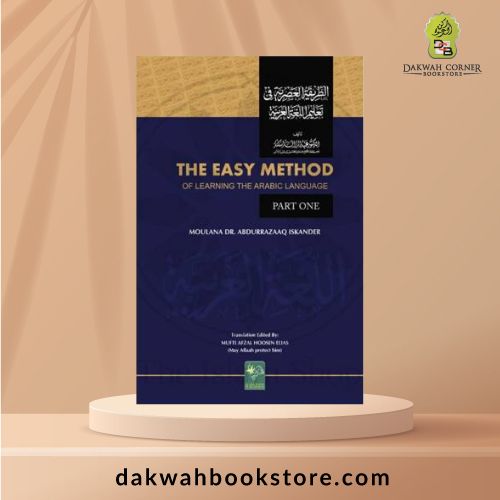
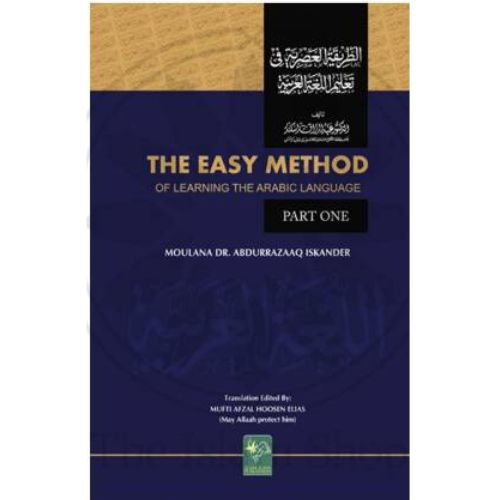
The Easy Method of Learning the Arabic Language Part One
Highlights:
The book covers all the essentials of Arabic language, including basic grammar, vocabulary, and pronunciation. The authors have included exercises and quizzes throughout the book to help learners reinforce their understanding of the material. Additionally, the book includes useful tips and tricks for memorizing Arabic vocabulary, understanding Arabic grammar rules, and developing proper pronunciation.
RM30.00
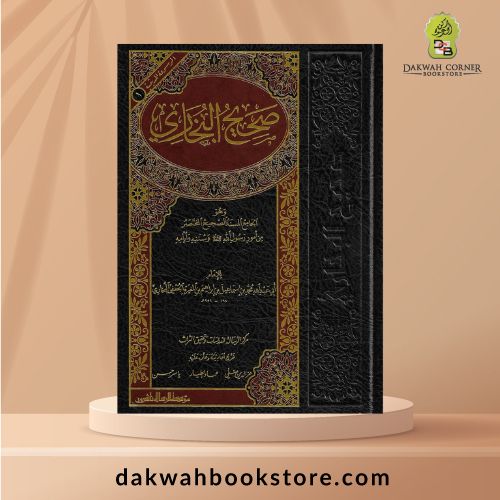
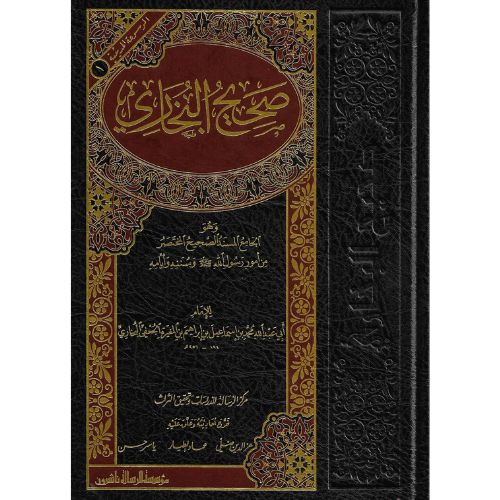
[HH] Sahih Al Bukhari (Ar Risalah Naashirun) / صحيح البخاري
Highlights:
يعد هذا الكتاب من أوّل كتاب مصنّف في الحديث الصحيح المجرّد، وهو أهم و أشهر كتب الحديث الشريف، واستغرق مصنّفه في تحريره ستة عشر عاماً، وقد انتقى أحاديثه من ستمائة ألف حديث جمعها.
RM200.00
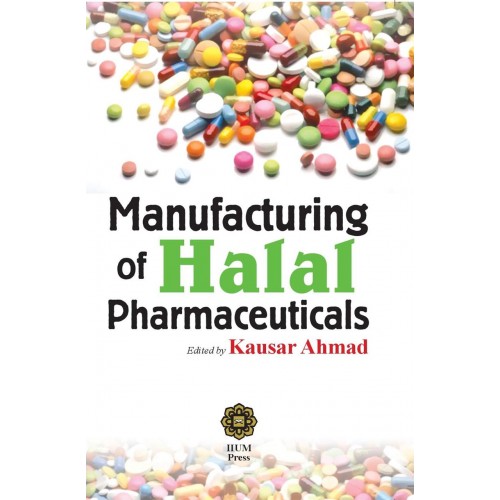
Manufacturing of Halal Pharmaceuticals (P/B)
Highlights:
This book aims to cover the fundamental aspects of pharmaceutical manufacturing from the Islamic worldview to inspire students that whatever they do including very mundane routine work such as checking pH can be an ‘ibādah – if they work within the sphere of Islamic teachings and in shā’ Allah all the time and effort will be rewarded by Allah SWT. The first chapter describes the Islamic perspectives towards the safeguarding of life vis-à-vis the use of medicines or pharmaceuticals and can be considered as an overview for the Islamic manufacturing practices. Although this book is about the manufacturing of pharmaceuticals, other industries may benefit from the discourse and examples given. As much as possible, processes and regulations are described in the book so that it covers the syllabus of industrial pharmacy for undergraduate use and still can be referred for postgraduate studies.
RM70.00
Abraham – The Friend Of God
Highlights:
Abraham, as a prophet and patriarch, is called “the friend of God” in Jewish, Christian, and Islamic scriptures, and has a place of eminence in the shared scriptures and histories of each of these three monotheistic, prophetic, and Middle Eastern religions.
In Abraham: The Friend of God, Dr. Dirks provides Jewish, Christian, and Muslim readers with a unique and original presentation of the life of Abraham. In constructing a chronological biography of Abraham, the author integrated and synthesized information from a wide range of Judaeo-Christian and Islamic traditions, including the Bible, the Pseudeigrapha (I.e. Jubilees and the Genesis Apocryphon), the Qur’an, the authenticated sayings (Sahih Ahadith) of Prophet Muhammad, and the classic books of ancient history authored by Josephus and Al-Tabari. This integrated biographical sketch is embedded in a framework drawn from the various historical and geographical contexts dealing with different aspects of Abraham’s life.
RM95.00 RM105.00
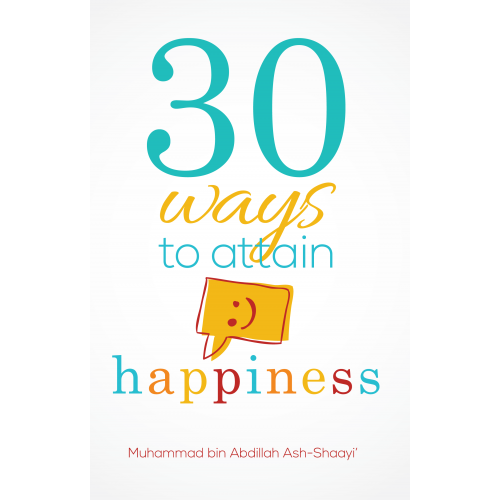
30 Ways To Attain Happiness (3rd Edition)
5 ★
5 ★
1 Rating
5 ★
1
4 ★
0
3 ★
0
2 ★
0
1 ★
0
Highlights:
This great book is guidance for all especially the Muslims society in our daily life as it present the ways of dealing with the daily life cycle, accepting the pasts and bracing for tomorrows based on the teaching of the Qur’an and Sunnah
RM15.00
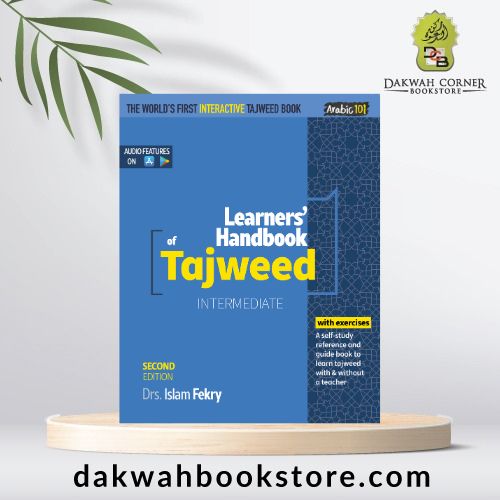
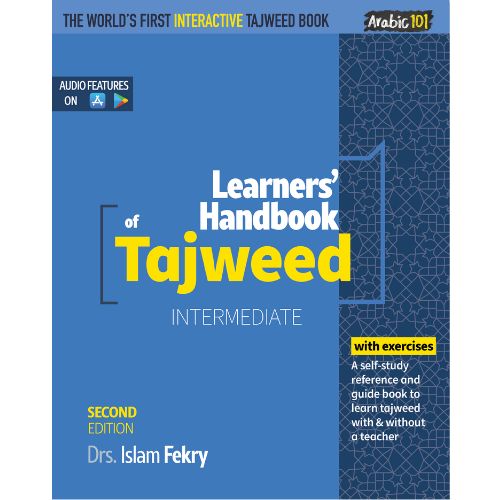
Learners Handbook Tajweed (Intermediate) – Second Edition (Arabic 101 Series)
Highlights:
Learners’ Handbook of Tajweed
Intermediate
Learners’ Handbook of Tajweed is designed as a self-study handbook, yet it is equally suitable for classroom settings. It stands as the world’s first Tajweed book that goes beyond presenting just rules; it is an interactive experience that will change the way you think about learning Tajweed. This book has been uniquely designed to offer an unparalleled learning experience that seamlessly blends enjoyment with information.
RM55.00
The Biography Of ‘Umar (2 Volumes) – Darussalam
Highlights:
This book describes, among other things, the principles based upon which ‘Umar ibn al-khattab governed the Muslims during his caliphate; among those principles were mutual consultation, justice, equality among people, and honoring of freedoms.
With the turn of every page, the reader will come to appreciate the fact that Umar was exceptional in his faith, distinguished in his knowledge, profoundly wise in his thinking, remarkable in his eloquence, noble in his manners and great in the contributions he made to this nation.
RM112.00
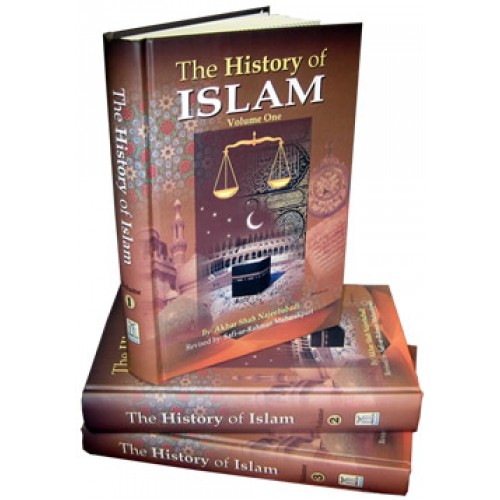
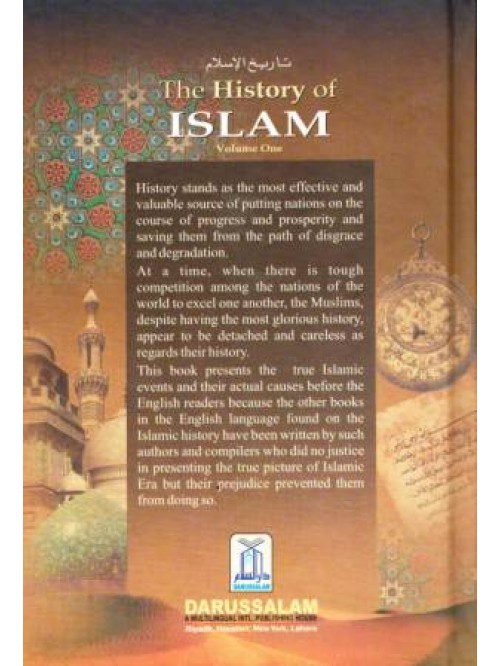
The History of Islam 3 Vol (H/B)
Highlights:
History stands as the most effective and valuable source of putting nation on the course of progress and prosperity and saving them from the path of disgrace and degradation.
At a time, when there is tough competition among the nations of the world to excel one another, the Muslim, despite having the most glorious history, appear to be detached and careless as regards their history.
This book presents the true Islamic events and their actual causes before the English readers because the other books in the English language found on the Islamic history have been written by such authors and compilers who did no justice in presenting the true picture of Islamic Era but their prejudice prevented them from doing so.
RM250.00
Al-Jumu’ah: The Day of Congregation
Highlights:
In our busy lives, Friday comes around once a week. It often comes and goes without our being really aware of it. For many Muslim men, it may be punctuated by the congregational prayer that they make special efforts to attend. For many Muslim women, it may go by just like any other day. This ought not to be the case. In this unique book, Dr. Gowher Yusuf gives us reason to stop and think about how special Friday (al-Jumu‘ah) really is, and what we should be doing to achieve the many bounteous blessings it holds for those who observe it. Drawing constantly from the Qur`an and the Sunnah and the great works of the scholars of Islam, Dr. Gowher Yusuf explores this topic in depth and presents it to the reader in simple language for them to understand and ponder over. This book travels through the various issues pertaining to the Friday prayer and its Khutbah, or sermon. These issues are explained within the Islamic framework, thus abolishing any myths and misunderstandings and clarifying the topic for the reader. Dr. Yusuf writes: The day of the week known as al-Jumu‘ah, or simply Jumu‘ah, is Friday, and it is special. Compared to the other days of the week, Friday has been accorded the largest amount of merit, so much so that the father of all humankind, Prophet Âdam (peace be upon him), was created on this day and a particular prayer was ordered for this day. It was from the guidance given to Prophet Muhammad (blessings and peace of Allah be upon him) to magnify this day, honour it, and designate it for acts of worship. …On a Friday, we all will be gathered and will stand congregated in front of Allah, the Exalted, on the Day of Resurrection, also called the Day of Accountability or the Day of Judgement.
RM38.00
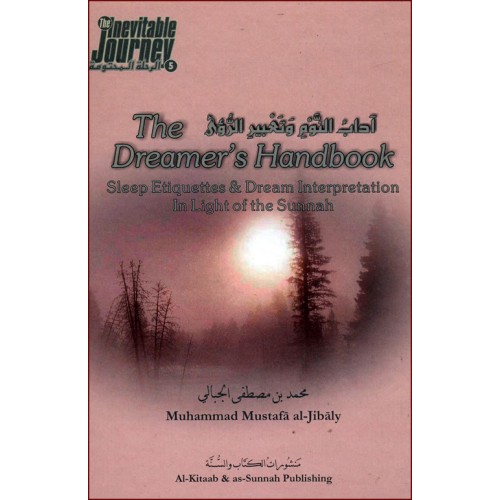
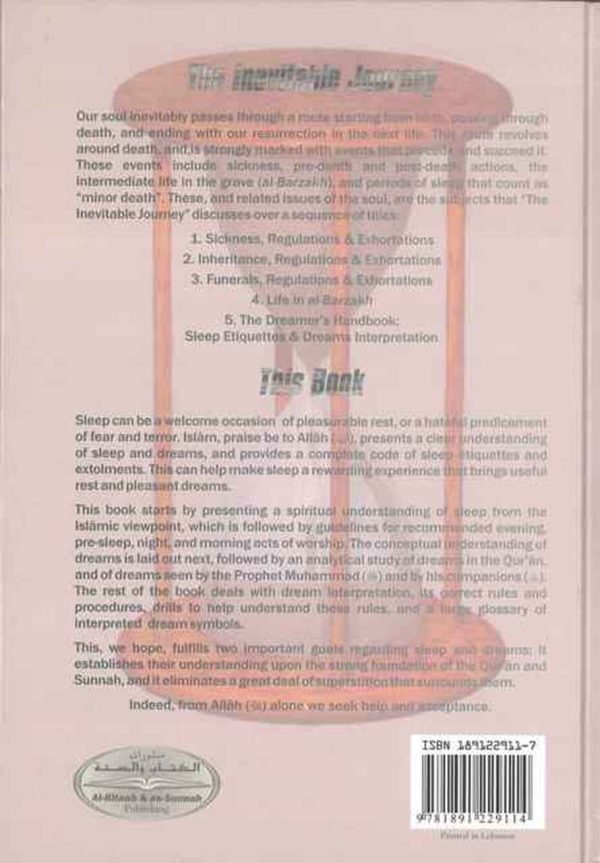
The Dreamer’s Handbook (H/B)
Highlights:
This book starts by presenting a spiritual understanding of sleep from the Islamic viewpoint, which is followed by guidelines for recommended evening, pre-sleep, night, and morning acts of worship. The conceptual understanding of dreams is laid out next, followed by an analytical study of dreams in the Quran, and of dreams seen by the Prophet Muhammad (PBUH) and by his companions (R). The rest of the book deals with dream interpretation, its correct rules and procedures, drills to help understand these rules, and a large glossary of interpreted dream symbols. This, we hope, fulfills two important goals regarding sleep and dreams: It establishes their understanding upon the strong foundation of the Quran and Sunnah, and it eliminates a great deal of superstition that surrounds them. Indeed, from Allah (SWT) alone we seek help and acceptance.
RM68.00
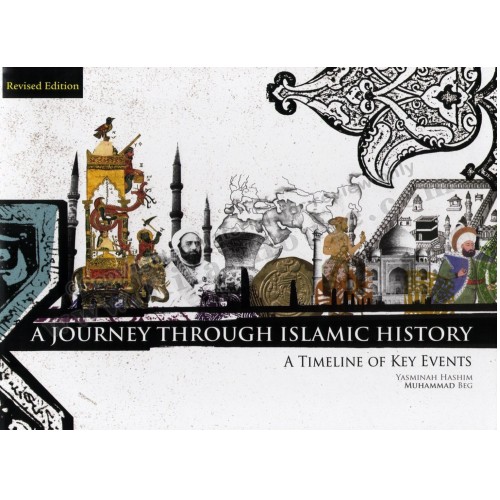
A Journey Through Islamic History (H/B)
Highlights:
A Journey Through Islamic History tells you all you ever wanted to know about the history of the Muslim world from the Prophet Muhammad to the Arab Spring in a short, accessible and lavishly-illustrated format. Suitable for students of all ages. Includes eight chronological essays covering 1500 years of history, with over 175 photographs and illustrations. A comprehensive timeline with over 500 entries, text boxes featuring important personalities, key events and major ideas, as well as several maps.
RM160.00
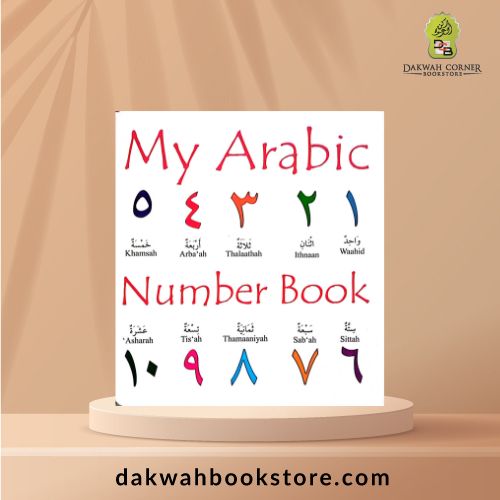
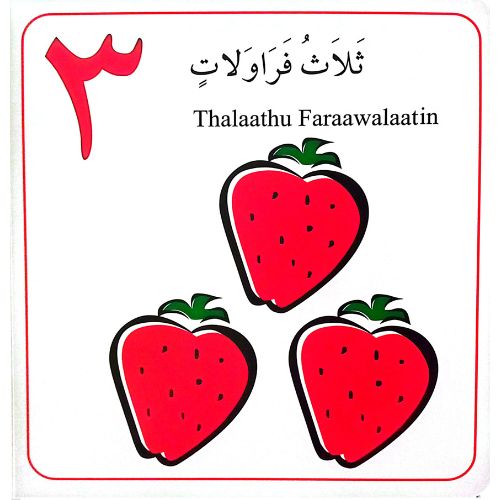
My Arabic Number Book (Boardbook)
Highlights:
Discover Arabic numbers with our colorful and fun book designed for young learners.
RM25.00
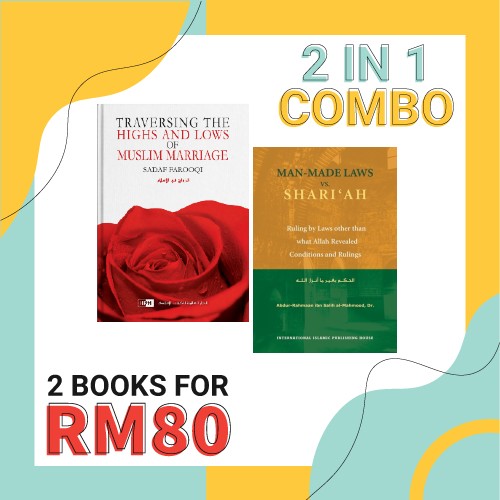
2IN1 Combo P02
Highlights:
1. Man Made Laws Vs. Shari‘ah (384 pages)
2. Traversing the Highs and Lows of Muslim Marriage (195 pages)
RM73.00 RM86.00
There are no reviews yet.