





| Weight | 0.31 kg |
|---|---|
| Product Type | Book |
| Author | |
| Publisher | IIPH |
| Pages | 160 |
| ISBN | 9786035010375 |
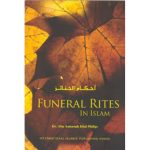
Funeral Rites In Islam (H/B)
RM35.00
Hurry up, Only 3 left.
Highlights:
somdn_product_page
Compare
The purpose of this book is to provide English speaking Muslims a concise and authentic compilation of the instructions regarding funeral rites in Islam.
SKU: SJ99
Category: Sharia, Fiqh and Jurisprudence
Additional information
Reviews (0)
Be the first to review “Funeral Rites In Islam (H/B)” Cancel reply
You must be logged in to post a review.
Related Products

Worship In Islam: An In-depth Study of Ibadah, Salah and Sawm (P/B)
Highlights:
Worship in Islam is in-depth study of the nature and significance of Islamic spirituality by Abul A‘la Mawdudi (1903–79), one of the leading Muslim intellectuals of the twentieth century, with special reference to the concepts of God’s Oneness (tawhid), the finality of Prophethood (risalah) and the Islamic system of worship (‘ibadah) with a focus upon prayer (salah) and fasting (sawm) and their role in the development of the Islamic personality and Islam’s social order. The distinguishing feature of Mawdudi’s approach is his elaboration of the social dimension of worship, which extends the traditional approach found in Islamic jurisprudence, with its focus upon ritual and self-purification, to consider worship’s transformative role in social life. Presenting a holistic view of the Islamic system, Mawdudi highlights Islam’s social, economic and political dimensions, which he argues has the capacity to resolve emergent issues and problems that humankind faces.
This historic text should be of wider interest to both students and specialists in contemporary Islamic thought, and includes an introduction by Professor Anis Ahmad.
Edited and translated into accessible English by Ahmad Imam Shafaq Hashemi, this book is an authoritative compilation by a leading Islamic twentieth-century revivalist on the central matter of worship’s role in Islam.
RM84.00


Ibn Ashur Treatise on Maqasid al-Shariah (P/B)
Highlights:
Ibn Khaldun, the fourteenth century Arab historiographer and historian, is viewed as a founder of modern historiography, sociology and economics. He lived during a turbulent part of history, and out of his experiences, he ?conceived and created a philosophy of history that was undoubtedly the greatest work ever created by a man of intelligence…?. This work tells of the period of unrest in Ibn Khaldun?s life marked by political rivalries. It is during this turbulent period which provided him with the opportunity to write the Muqaddimah (or Prolegomena), earning him an immortal place among historians, sociologists and philosophe
RM72.00

Funerals Regulations and Exhortations (H/B)
Highlights:
Our soul inevitably follows a route starting from birth, passing through death, and ending with our resurrection in the next life. The inevitable journey discusses over a sequence of titles: sickness, inheritance, funerals, Life in Barzakh and so on…
RM75.00

Hajj & Umrah And Visitors (H/B)
Highlights:
Rites and Selected Etiquettes for those intending to Perfom Hajj & Umrah and Visitors In this book the author calls attention to the most important things that those who intend to perform Hajj, Umrah or Visiting the Prophets Mosque in Medinah must have as provisions. The author has made his work brief and arranged its topics according to their priorities. the author mentions a considerable number of sayings of the people of knowledge and calling the attention of the reader to some important matters.
RM45.00

The Pillars of Islam Made Easy – II Salah & Its Essential Conditions (H/B)
Highlights:
Salah is one of the five pillars on which the edifice of Islam rests. Most of us feel that we already know all there is about salah – the formal prayers of a Muslim. However, very few individuals actually do justice to it or derive any worldly or spiritual benefits from it.
Salah & Its Essential Conditions is an effort to detail the essential prerequiires of salah. Moreever, it takes a detailed look at its importance along with the different types of obligatory and voluntary prayers. It alsa presents an illustrated guide to help those who wish to learn or correct the performance of their prayers.
Inshallah, all those who wish to improve their salah will find plenty of help in this book whether they are looking for information on cleanliness and purify, locating the direction of qibla, improving their congregation during salah, making up for the missed salah, or joining acongregation when the imam has already sarted the salah, or joining a congregation when the imam has already started the salah. All in all, it is a relevant handbook on what the Prophet (saw) has described as the coolness of his eyes.
RM50.00


Smoking Intoxicants & Narcotics (P/B)
Highlights:
This book deals with the epidemic of smoking, which enslaves many of today’s Muslims, and which is aggravated by that most victims belittle its dangers and deny its prohibition.
This book includes a discussions of intoxicants, establishing the prohibition of various practices associated with them, as well as penalties (in both lives) for those who partake in them.
This book also includes a discussion of narcotics, with an overview of marijuana and qaat (or khat). Based on their established effects and harms, we conclude that narcotics are strongly prohibited, except in very limited medical settings.
This book, we hope, will provide many Muslims with guidance toward a healthier, cleaner and worthies Islamic personality. My Allah grant us guidance and facilitation.
RM28.00


Common Mistakes Regarding Prayer – IIPH
Highlights:
Formal prayer (salat) is the second pillar of Islam, and the most important of a Muslim’s acts of worship. Prophet Muhammad (PBUH) said: “The first of one’s actions for which a slave of Allah will be held accountable on the Day of Judgment will be one’s prayers. If they are correct and accounted for, then he (or she) will have succeeded (gained paradise); and if they are lacking, then he (or she) will have failed (lost paradise). If there is something defective in his (or her) obligatory prayers, the Lord will say: ‘See if my slave has any supererogatory prayers with which that which was defective in his (or her) obligatory prayers may be completed. Then the rest of his (or her) deeds will be judged in like manner.” (At-Tirmidhi and others) Shaykh Mashhur Hasan Salman has compiled a list of the most common errors that we make when we pray, discussing and explaining each one. This book is a valuable aid to Muslims hoping to perfect their prayers, so that their prayers may be free of defects and acceptable to Allah. This new and revised edition of the English translation of his work presents the text in a fluent, highly readable style.
RM38.00


Having Fun The Halal Way Entertainment In Islam
5 ★
5 ★
1 Rating
5 ★
1
4 ★
0
3 ★
0
2 ★
0
1 ★
0
Highlights:
With the advent of technology, the entertainment industry has flourished and become immensely popular. Combine this with the exponential advances in technology, and the result is an increasing number of ways to amuse ourselves. As a result of such advances, Muslim react in a variety of manners towards entertainment. Some label entertainment as completely forbidden. This sometimes includes parents who say no to almost everything that their young ones deem to be ‘fun’, without providing them with suitable alternatives. Others, who do not want to take this extreme approach, fall into the trap of excessive use of – and even addiction to – various sources of entertainment, without any limits.
In Having Fun the Halal Way, Ismail Kamdar explores the teachings of Islam regarding entertainment. Drawing upon the Quran, the Sunnah and the understanding of the righteous scholars of Islam, he provides a detailed and balanced analysis of the topic. He not only explains the detriments of the current entertainment industry, but also suggests alternative means to have a good time with friends and family members.
RM18.00

A Guide to Male-Female Interaction
Highlights:
Are Muslim men allowed to interact with female students, and vice versa, in a virtual classroom? Can a Muslim woman pursue a professional career that necessitates her interaction with men? Is it appropriate for a woman to serve her husband’s guests? Do mixed wedding ceremonies comply with the Sharia? Read this bilingual book to find the answers and more!
RM56.00


Principles of Islamic Jurisprudence (2nd Revised Edition)
Highlights:
This book offers a detailed presentation of the theory of Muslim law (usul al-figh). Often regarded as the most sophisticated of the traditional Islamic disciplines, Muslim jurisprudence is concerned with the way in which the rituals and laws of religion are derived from the Qur’an and the Sunna – the precedent of the Prophet. Revelation, which is given to man to restore unity and help him achieve a just and devout order in society as well as in the soul, must be interpreted so as to render it practicable in every culture, while not betraying its spirit and immutable provisions. To achieve this, additional sources of legal authority are recognized, including consensus (ijma), analogical deduction (qiyas), public interest (maslaha) and local customary precedent (urf). In employing these, the jurist guards the five principles which it is the purpose of Islamic law to uphold, namely, the right to life, sound mind, property, lineage and religion.
RM75.00

Preservation of Health in Islamic Law (P/B)
Highlights:
Preservation of health (hifz al-sihhah) is the most important branch of Islamic medicine since it is primarily concerned with the prevention of illness rather than cure. This book represents one of the few attempts to introduce the role of Islamic medicine, although Chapter One provides information about a historical background of the preservation of helath in Islam, its aim is to provide fresh ant timely overview of the major aspects of legal, ritual and spiritual structures of teh Islamic law (shariah). These include the laws related to Ibadah, Islamic family laws, foods and drinks as well as environmental laws, for maintaning and preserving human health. Findings indicated that prevention of any diseases from Islamic medical law presentive cannot attain any real success unless it emanates from an Islamic fundamental teaching, namely: the pillars of Islam. Iman and observance of the Islamic rituals such as Salah, zakah, Sawm and Hajj, have played an important role in shaping the attitude, behavior and model personality of the Muslim, in boosting the spiritual motivation or attitude change, and in disseminating the message of prevention. This indicates that bodily and spiritual health goes hand in hand and that pyscho-spritual balance and health is a primary consideration whereas physical health is a secondary one.
RM47.00


Should A Muslim Follow A Particular Madhhab?
Highlights:
In this book, the author has widely described the main principle of Taqleed. He says that Allah and Prophet Mohammed (SAW) has not ordered us to follow any opinions and interpretations. So there’s a possibility of being correct or incorrect in the opinions because there are many issues on which the Imams had different views and they explain them according to their own reasons and speculations, but the real and true Islam is based on the book (Quran) and Prophet’s Sunnah.
Allah says: “But no, by your Lord, they can have no Faith until they make you judge in all disputed matters between them, and find in themselves no resistance against your decision, and accept them with full submission.” And the prophet said: “I leave you with two things as long as you hold them tightly, you never go astray: they are the book of Allah and my Sunnah.” In this sense, the author has described the difference between different Madhahib (madhabs/mazhabs), and their views and urged to follow only the Quran and Sunnah.
RM11.00
Recently Viewed
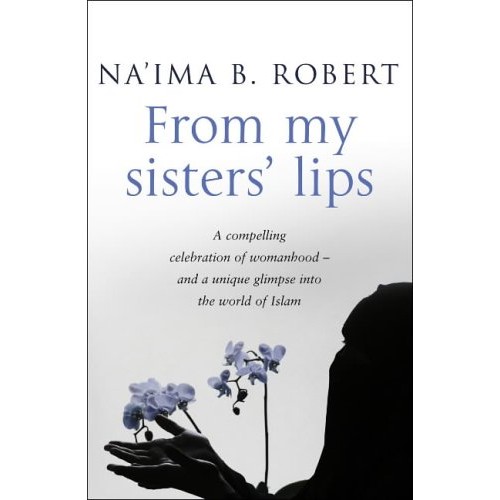
From my sisters’ lips
5 ★
5 ★
1 Rating
5 ★
1
4 ★
0
3 ★
0
2 ★
0
1 ★
0
Highlights:
Covered from head to toe with only her eyes visible, the sight of a Muslim woman on a western city street rarely fails to provoke a strong reaction. Feelings of shock, horror, repulsion, pity or even fear are not uncommon. But have you ever wondered who it is behind the veil and what makes her tick? Ever wondered what her life is really like and whether her dreams, hopes and aspirations differ from yours? From My Sisters’ Lips offers a rare glimpse into the lives of a community of women, most of whom are converts to Islam, and invites you to share their joys, sorrows, convictions and faith.
When Na’ima B Robert abandoned her western lifestyle and embraced Islam six years ago, it was not a decision taken lightly. Yet soon after she took her first tentative steps towards covering, she felt empowered; no longer judged on physical appearances alone, no longer seeking the approval to feel beautiful – or using her looks to wield power over men – the experience effected her greatly. Before long she grew in confidence and courage. As she says, ‘Something just clicked. I thought, “Good, don’t look; don’t compare me with your latest squeeze, don’t try and guess my measurements – my body is my own business!”‘
From My Sisters’ Lips offers a glimpse into the lives of just some of the extraordinary women who, like herself, have chosen to live behind the veil. What emerges is a vivid and intimate portrait of a sisterhood; as they speak candidly and with conviction on a diverse range of subjects ranging from marriage to motherhood, stereotypes, submission and self-image, we hear the strong, proud voices of those who are seldom heard.
RM67.00
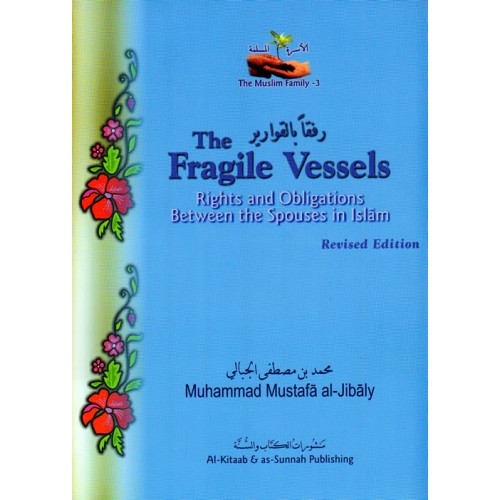
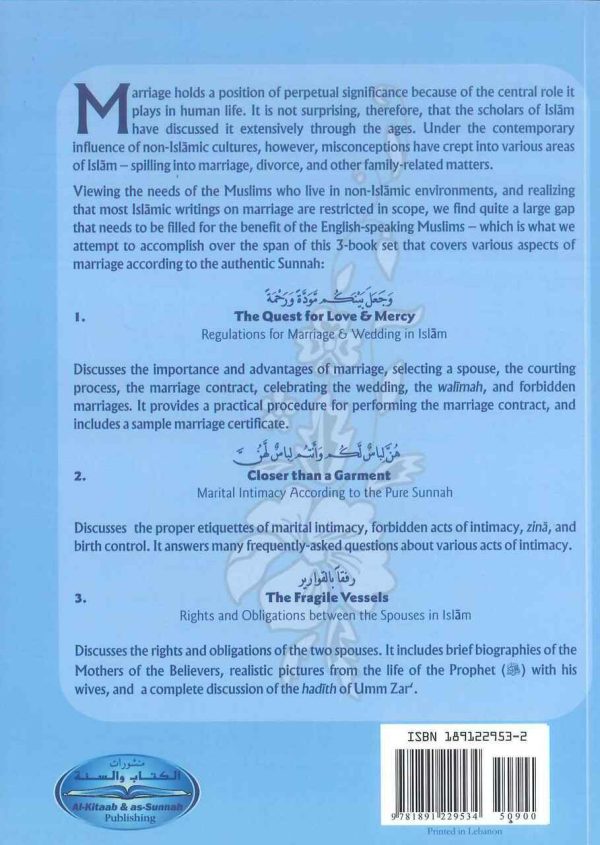
The Fragile Vessels (P/B)
4.5 ★
4.5 ★
2 Ratings
5 ★
1
4 ★
1
3 ★
0
2 ★
0
1 ★
0
Highlights:
This is one of a 3-book series covering various aspects of marriage according to the authentic Sunnah. Marriage plays a most central role in the human life, and has been largely discussed by the scholars of Islaam through the ages, resulting in numerous writings and treatises. Some of those writings, mostly by contemporary scholars, have been translated into English. However, we find them restricted in scope, addressing Muslims who live in predominantly Islaamic countries, or overlooking important real issues that have developed under modern civilization. This leaves quite a large gap that needs to be filled for the benefit of the Muslims in English-speaking countries, and this is what we attempt to fulfill over the span of three books.”
Covers the obligations of the two spouses, the wife’s rights, and the husband’s rights. Contains biographies of the Mothers of the Believers, paints a very realistic picture from the life of the Prophet (pbuh) with his wives, and presents a complete discussion of the hadeeth of Ummar Zar’.
RM41.00
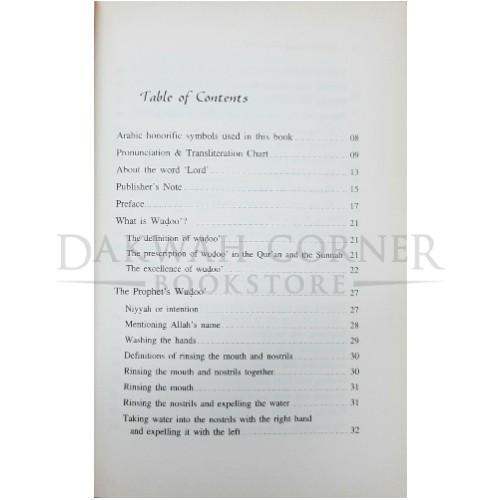
Wudoo’: The Prophet’s Ablution
Highlights:
Wudoo’: The Prophet’s Ablution is a small yet comprehensive book aimed at conveying authentic knowledge of the manner in which the Prophet purified himself for prayer. The attributes of the Prophet’s ablutions are detailed fully, such that the reader is given a clear mental picture, as if we were witnessing the Prophet actually making wudoo’. This book is based on sound narrations from the Messenger of Allah, and the author takes care to include differing opinions and their evidence. From leading us through the wudoo’ step by step, to addressing the things which nullify the wudoo’, the Prophet’s Ablution offers necessary guidance, so that by perfecting our ablution, this purification can truly “wipe away our sins.”
RM10.00
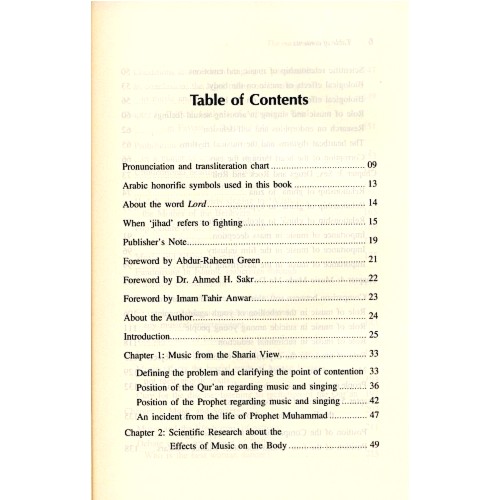
The Music Made Me Do It (H/B)
Highlights:
By Dr. Gohar Mushtaq
Is the issue of music a controversial one in Islam? With the prevalence of computers and various electronic devices today, music and singing seem to be everywhere, and contemporary Muslims may be confused about their status in Islamic teachings. The Music Made Me Do It: An In-Depth Study of Music through Islam and Science examines this topic in light of authentic Islamic sources, in order to clarify the prohibitions and allowances regarding music and singing. In addition, the author describes the social, psychological and physical effects of music on individuals, citing well-documented contemporary research in the fields of medical and behavioural sciences.
The interweaving of the two perspectives makes this book a valuable asset for anyone interested in exploring this pertinent Islamic issue.
RM50.00
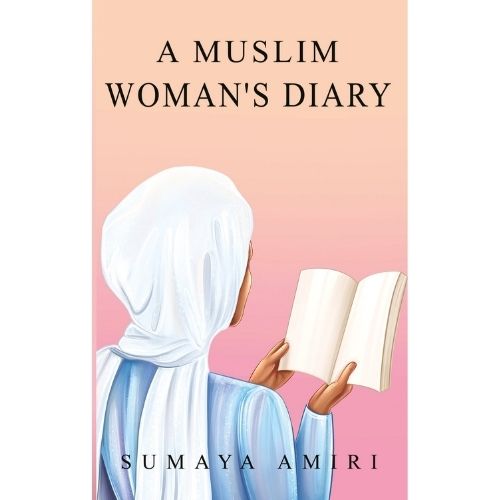
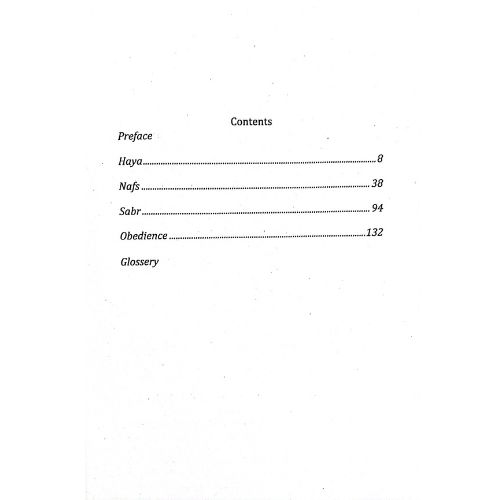
A Muslim Woman’s Diary
Highlights:
“When you are suffering
and feel like no help comes your way,
then perhaps Allah is using this
as means to expiate your sins.”
RM90.00
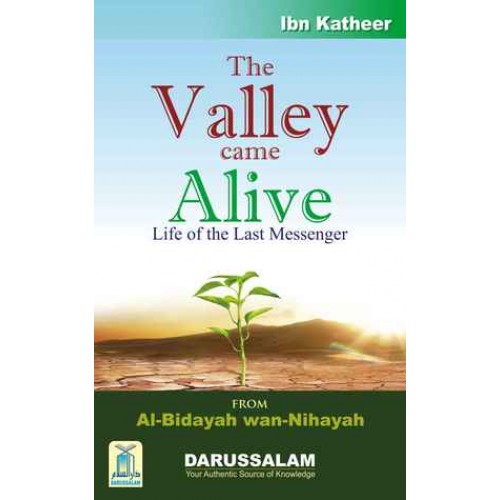
The Valley Came Alive (H/B)
Highlights:
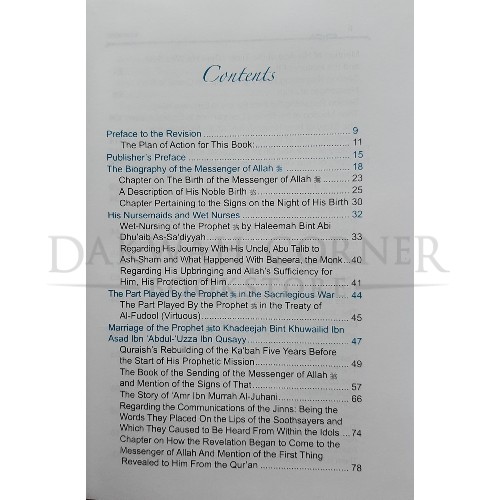
Darussalam is proud to present the abridged English translation of the classic work: Al-Bidayah wan Nihayah, focusing exclusively on the life of Prophet Muhammad (peace be upon him). This volume contains a detail account of the life and times of the Messenger of Allah taken from a number of historical and traditional sources. The book reports the events of his blessed life, his battles, military campaigns, the delegations that met him, and sheds light upon the unique exemplary qualities, virtues and signs of his Messengership that make him a guide and role-model for all of humanity until the end of time.
A1-Bidayah wan Nihayah (The Beginning and The End) by the renowned scholar Abu Al-Fida ‘Imad ad-Deen lsma’eel bin ‘Umar ibn Katheer, is considered one of the most authoritative sources on Islamic history.
RM60.00
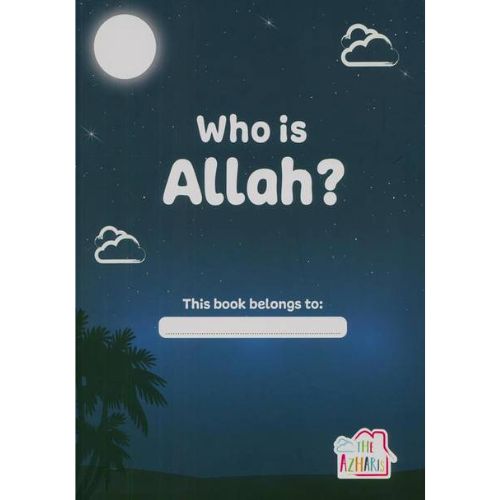
Who is Allah? (P/B)
Highlights:
The Who Is Allah workbook is packed with even more fun activities and brand new interactive elements, we’d love for you to get your hands on a copy to experience it.
RM80.00
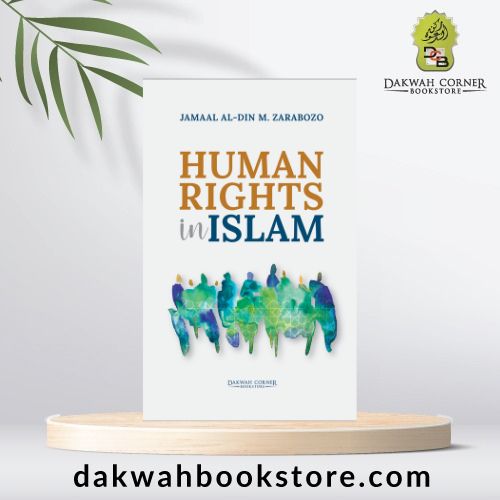
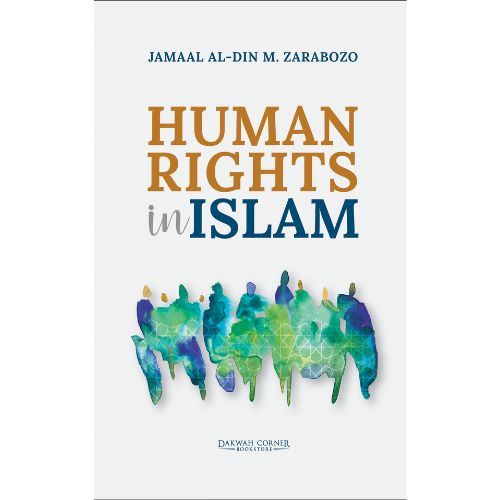
Human Right in Islam – DCB
Highlights:
This work argues that contemporary human rights schemes, especially the extreme and vocal branches, offer no convincing reasons for a Muslim to give up tenets of his faith to bend them to meet their demands. On the contrary, these schemes’ baseless claims should strengthen a Muslim’s conviction in Islam. Human Rights Advocates have a noble goal of bringing people the rights they deserve, but they are lost and confused, lacking a foundation for their claims. After examining the human rights paradigm, a Muslim should flee quickly and return to Allah, realizing that without the guidance of the Almighty, there is no hope for humanity.
RM65.00

Summarized Sahih Al Bukhari – Large Size
Highlights:
Sahih Al-Bukhari covers almost all aspects of life in providing proper guidance from the messenger of Allah. Translated into English in a very easy & simple language, so that all readers can understand it without difficulty. All Muslim Scholars agree that Sahih Al-Bukhari is the most authentic book after the Qur’an. The Summarized Bukhari is condensed into about 1000 pages by selecting a few Hadith from the original 9-Volume which has about 4000 pages. This book contains about 2220 Hadith.
RM100.00
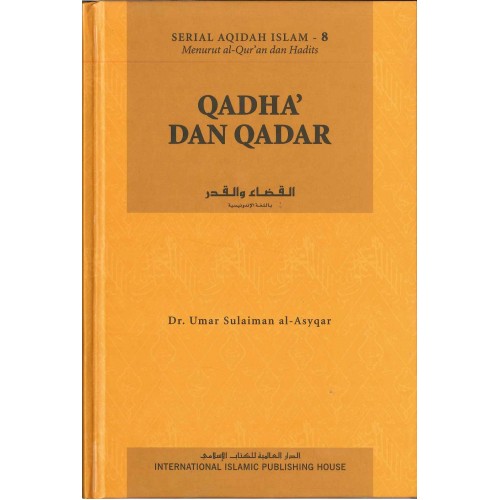
Qadha Dan Qadar ; Serial Aqidah Islam – 8
Highlights:
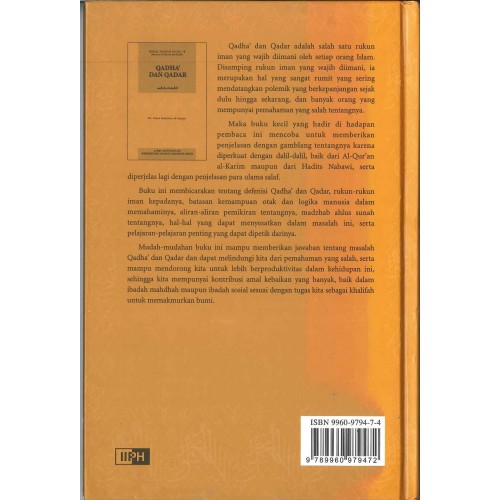
Qadha’ dan Qadar: menurut al-Qurán dan hadits – Serial Aqidah Islam 8/ Dr. Umar Sulaiman al-Asyqar. Selain merupakan salah satu rukun iman yang wajib diyakini oleh setiap muslim, Qadha’ dan Qadar merupakan hal yang sangat rumit yang sering mendatangkan polemik berkepanjangan sejak dulu hingga sekarang, dan banyak orang yang mempunyai pemahaman yang salah terhadapnya. Buku ini memberikan penjelasan dengan jelas dan gamblang tentangnya, dan diperkuat dengan dalil-dalil dari Al-Qur’an dan hadits-hadits nabawi, serta diperjelas lagi dengan perkataan para ulama salaf. Di dalam buku ini dibahas definisi Qadha’ dan Qadar, rukun iman kepadanya, batasan kemampuan akal manusia dalam memahaminya, aliran-aliran pemikiran tentangnya, dan pendapat ahlus sunnah dalam masalah ini.
RM40.00
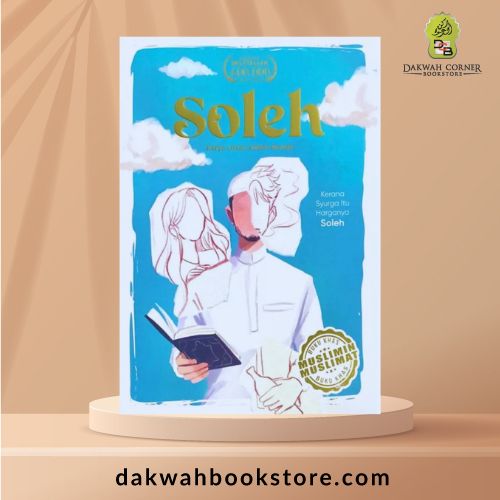
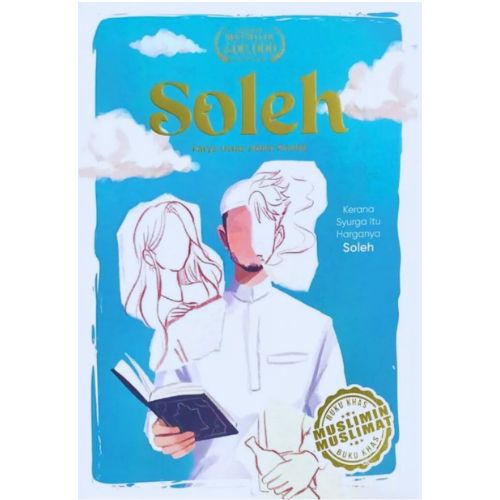
Soleh karya Ustaz Adnin
Highlights:
Soleh bukan buku untuk lelaki semata, ia istimewa untuk lelaki dan wanita menjadi soleh dan solehah. Ini buku untuk sesiapa saja yang sedang mujahadah nak jadi lebih baik, tapi masih terperangkap dalam dosa yang diam-diam membunuh iman. Dalam buku ini, kamu akan jumpa 100 dosa dan maksiat — yang selama ni kita pandang ringan, tapi rupanya itulah punca hati makin jauh dari Allah.
Tapi buku ni bukan sekadar nak bagi rasa bersalah. Ia bawa juga 70 kisah qudwah — insan-insan hebat dari zaman Nabi sampai zaman sekarang, yang pernah jatuh, tapi bangkit semula dan jadi cahaya pada orang lain. Daripada mereka, kita belajar bahawa jalan taubat sentiasa terbuka.
Dan paling menyentuh hati, buku ini senaraikan 7 langkah hijrah dan istiqamah yang boleh kamu ikut satu per satu. Mudah, jujur, dan berpijak di bumi nyata. Kalau kamu sedang rasa nak berubah tapi tak tahu dari mana nak mula — mungkin, Soleh ini jawapannya.
RM60.00
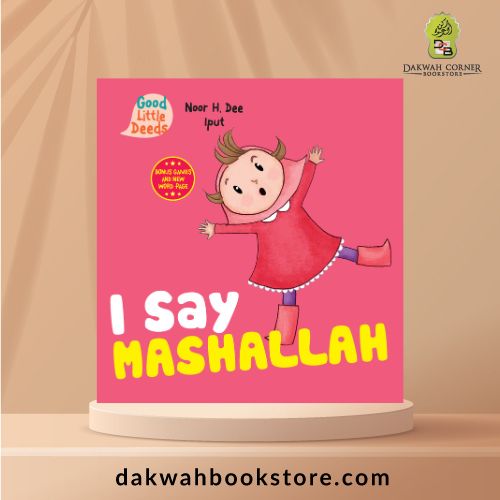
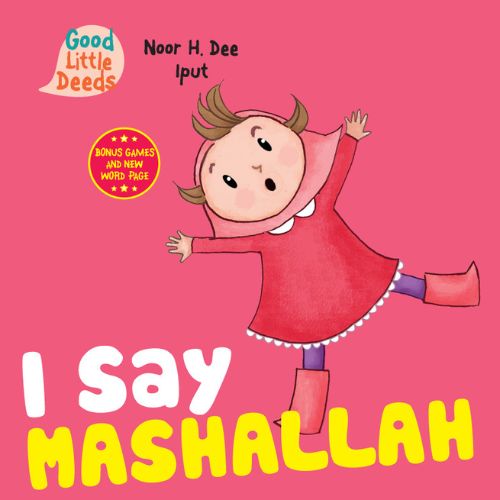
[CB]I Say Mashallah
Highlights:
Mashallah (مَا شَٓاءَ ٱللَّٰهُ) is an Arabic phrase meaning “God has willed it” or “What Allah has willed,” used to express admiration, appreciation, or gratitude for a person or event
Nabil and Noura have gone camping with their dad. WOW, the view is beautiful. When looking at beautiful things their dad tells them to say, ‘MASHALLAH!’
RM40.00
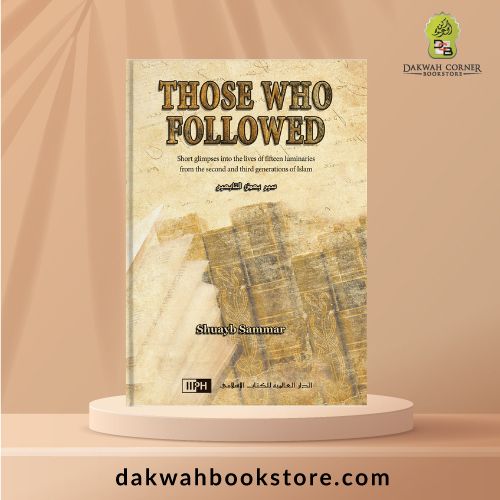
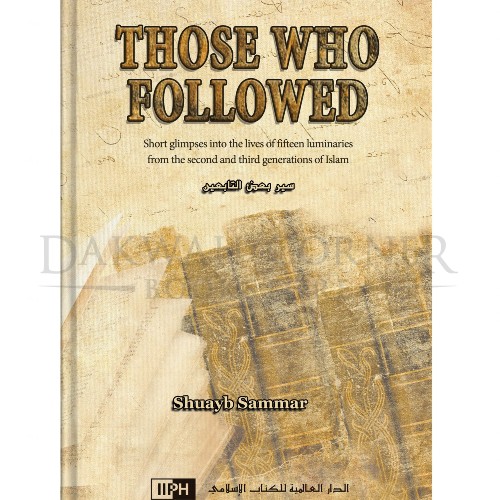
Those Who Followed by IIPH
Highlights:
Those Who Followed is a collection of interesting and inspiring short biographies of the selected torchbearers of Islam from the generations that followed the Companions of the Messenger of Allah (blessings and peace be upon him). Lessons from how they dealt with civil strife and their appraisal of the life in this world and the hereafter hold a lot of relevance today. This book is a must-have for every family library. It can be used by parents and teachers effectively to introduce role models like Imam Bukhari, Imam Ahmad ibn Hanbal, Abdullâh ibn al-Mubârak, Imam Abu Haneefah, and many others to preteens and teenagers.
RM56.00
There are no reviews yet.