| Weight | 0.15 kg |
|---|---|
| Product Type | Book |
| Author | |
| Publisher | The Islamic Foundation |
| Pages | 167 |
| ISBN | 9780860373759 |
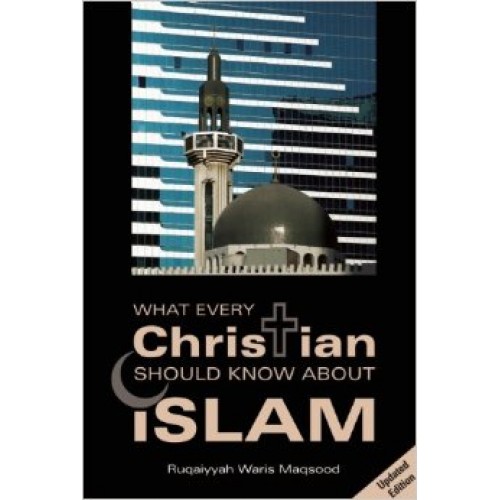
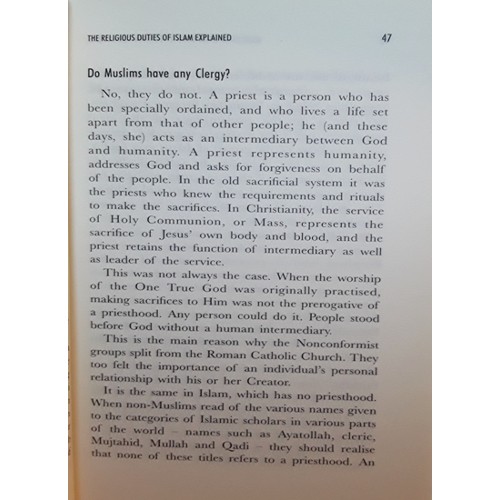
What Every Christian Should Know About Islam (P/B)
RM26.00
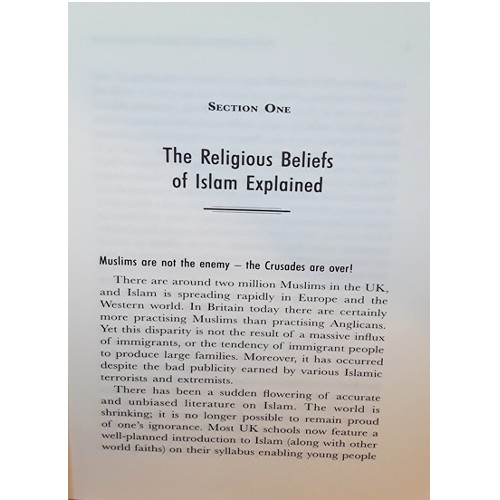
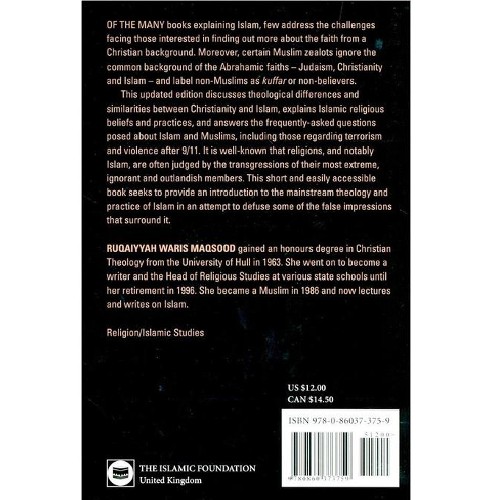
Of the many books explaining Islam, few specifically address the concerns and questions of those from a Christian background. Moreover, the commonalities between the Abrahamic faiths—Judaism, Christianity, and Islam—are too often ignored. Set out in an easy and informative question-and-answer format, the book addresses the specific theological points of agreement and difference between Christianity and Islam, explains the core religious beliefs and practices of Islam, and answers today’s most common questions of Islam and Muslims in an age when there is much conflict and misunderstanding. Islam is best judged not by the limitations and transgressions of its most extreme, ignorant, and outlandish followers, but by the example of its moderate majority, and Ruqaiyyah Waris Maqsood presents this introduction to the theology and practice of Islam in an attempt to explore some of the false impressions that surround it.
Table of Contents:
Section 1: The Religious Beliefs of Islam Explained
Section 2: the Religious Duties of Islam Explained
Section 3: Miscellaneous Questions
Section 4: Christianity and Islam
Ruqaiyyah Waris Maqsood gained an honors degree in Christian Theology from the University of Hull in 1963 and then taught religious studies at various state schools until her retirement in 1996. She converted to Islam in 1986 and now lectures and writes on Islam.
Be the first to review “What Every Christian Should Know About Islam (P/B)” Cancel reply
You must be logged in to post a review.
Related Products
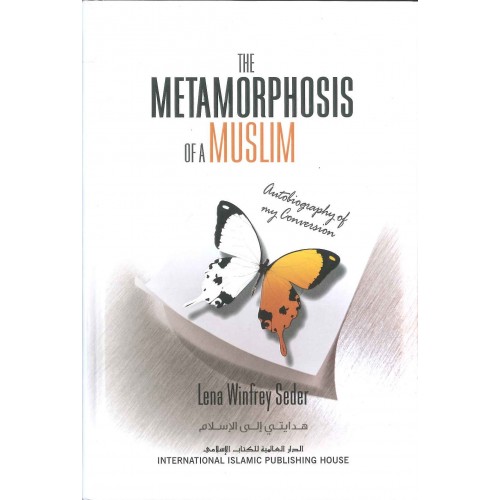
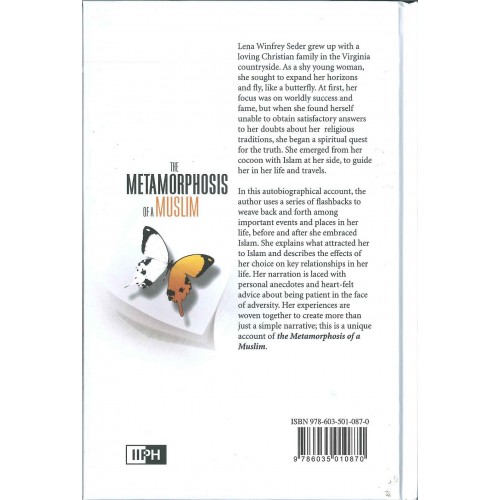
The Metamorphosis Of A Muslim (IIPH)
Lena Winfrey Seder grew up with a loving Christian family in the Virginia countryside. As a shy young woman, she sought to expand her horizons and fly, like a butterfly. At first, her focus was on worldly success and fame, but when she found herself unable to obtain satisfactory answers to her doubts about her religious traditions, she began a spiritual quest for the truth. She emerged from her cocoon with Islam at her side, to guide her in her life and travels. In this autobiographical account
, the author uses a series of flashbacks to weave back and forth among important events and places in her life, before and after she embraced Islam. She explains what attracted her to Islam and describes the effects of her choice on key relationships in her life. Her narration is laced with personal anecdotes and heart-felt advice about being patient in the face of adversity. Her experiences are woven together to create more than just a simple narrative; this is a unique account of the Metamorphosis of a Muslim.
Muhammad In World Scriptures: Volume II (IBT)
This is the second volume of the series on the Prophet Muhammad as found in world scriptures. While the first volume explores the Parsi, Hindu and Buddhist scriptures, this volume explores what the Bible says about the Holy Prophet of Islam. Written some hundred years ago by a Christian priest who converted to Islam, this book helps readers understand the absolute unity of God and the ultimate source of all revealed Scriptures.
The Reality of Sufism In Light of the Quraan and Sunnah (P/B)
In this book, the author discusses the beliefs and origins of Sufism. It has been written in a clear and uncomplicated style which makes it accessible for readers of all levels. The history of Sufism is traced as well as how sufism developed into what we have today. The author touches upon the beliefs of Sufism, and gives examples from personalities that are regarded highly by those who ascribe to Sufism. A scholarly criticism in light of the Qur’an and Sunnah.
From the Back Cover
You must be aware that there are a number of destructive calls which have been established amongst the ranks of the Muslims and which have shaken and damaged the belief held in there hearts. They have polluted the pure Islamic ‘aqeedah, and have grown by stages to reach such a dangerous level that they led to the splitting of the Muslims into sects and the parties, about which the Prophet (peace be upon him) said: “Indeed those who were before you, from the people of the book, split into seventy-two sects, and this religion will split seventy-three. Seventy-two in the fire and one in the paradise and it is the Jammaa’ah.”
Then there is no doubt that each one of these sects claims for itself that it is the saved sect, and that it is correct, and that it alone follows the Messenger. But the way of truth is a single way and it is the one which leads to salvation, and any other way is one of the ways of miss guidance which leads to destruction.
So the way of truth is to cling to the book of Allaah and the Sunnah of Allaah’s Messenger (S) as occurs in the hadeeth: I have left amongst you two things whith which you will not go astray: The Book of Allah and my Sunnah, and they will not be separated till they come to me at the Pond.
- A scholarly criticism of Sufism in the light of the Qur’an and Sunnah
- Written in an uncomplicated style, ideal for the layman
Izhar ul Haq (The Truth Revealed)
This is the thoroughly researched response to the Christian offensive against Islam in India. This book lucidly reviews the authenticity of the Bible and succinctly summarises the main errors, distortions, and contradictions in and between the Old and New Testaments of the King James Version. Furthermore, the doctrine of the Trinity is refuted; a doctrine that Isa (AS) never taught.
This book, internationally recognized as one of the most authoritative and objective studies of the Bible, was originally written in Arabic under the title Izhar-ul-Haq (Truth Revealed) by the distinguished 19th-century Indian scholar, Rahmatullah Kairanvi, and appeared in 1864. The book was subsequently translated into Urdu, and then from Urdu into English by Mohammad Wali Raazi.
This Book Contains among four Parts as Following:
Part 1
The Book of The Bible
Part 2
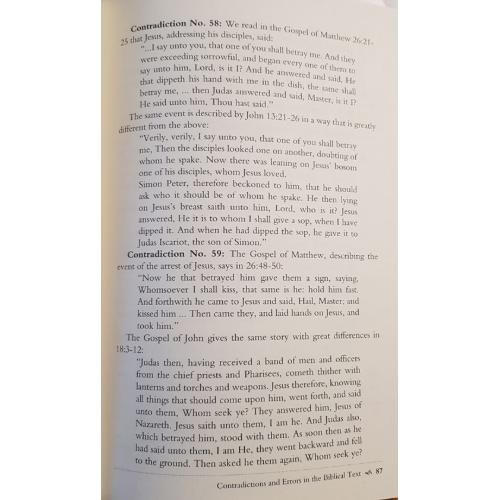
Contradictions and Errors in The Biblical Text
Part 3
Distortion and Abrogation in The Bible
The Trinity Refuted
Part 4
Proof of The Divine Origin of The Qur’an and The Authenticity of The Hadiths
Arabic Version of This Book is also available
Maulana Rahmatullah Kiranvi was born in India in 1818 CE. He was a great Sunni Hanafi scholar. He learned Arabic and Persian. Later he moved to Delhi where he studied different disciplines including mathematics and medicine. Working as a Mufti and Sharia teacher, he founded a religious school in Kariana.
In 1837 the Church Mission Society appointed Karl Gottlieb Pfander, described by Eugene Stock as “perhaps the greatest of all missionaries to Mohammedans”, to Agra in Northern India, where in 1854 he engaged in a famous public debate with leading Islamic scholars.
Maulana Kairanvi’s intention in his book (Izharul Haq) was first of all to show that the Bible cannot in any way be considered as a directly revealed book. He does this very effectively by means of his voluminous and authoritative knowledge of the Jewish and Christian scriptures. He demonstrates beyond doubt that the Books of the Old and New Testaments have been altered, almost beyond recognition, from their original forms. The work is even more notable in the light of subsequent Jewish and Christian scholarship and the various discoveries that have since been made in this field which all bear out the truth of Kairanvi’s thesis.
In the wake of the manifest inauthenticity of the Bible, Maulana Rahmatullah goes on to demonstrate by contrast the indisputable and absolute authenticity of the Qur’an and the Prophethood of Muhammad ibn ‘Abdullah, may peace and blessing of Allah be upon him.
Struggling to Surrender (P/B)
Struggling to Surrender: Some Impressions of an American Convert to Islam is a very personal account of one man’s search for God and meaning in the midst of a culture that places no value on such a quest. Dr. Lang was brought up as a Catholic and educated in a Catholic school. However, one day he found that his religious belief could no longer provide satisfactory answers to his questions.
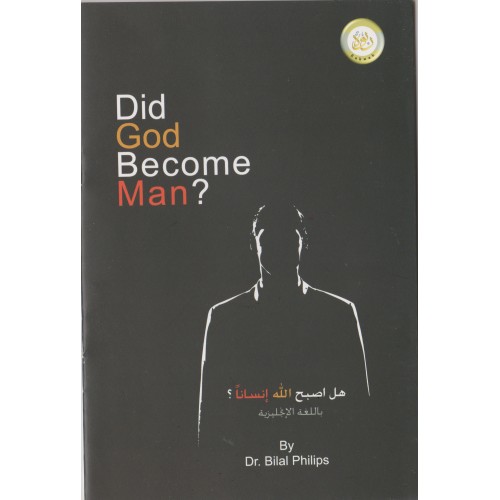
Did God Become Man? (P/B)
Table of Contens:
- Foreword
- Belief in God
- Man is Gods
- God Becomes His Creatures
- God Becomes One Man
- Men Becom God
- Why?
- Did God Become Man?
- Can Man Become God?
- Did God Have a Son?
- Bibliography
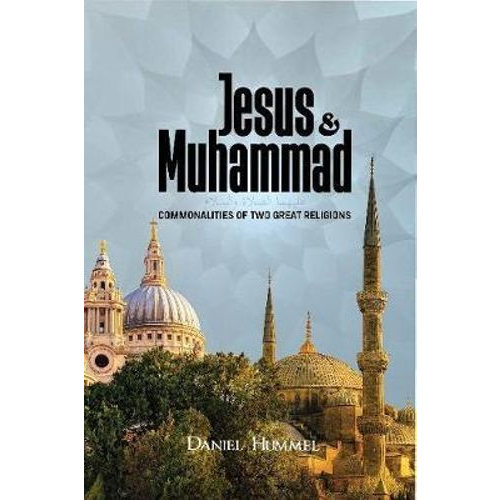
Jesus and Muhammad : Commonalities of Two Great Religions
Jesus and Muhammad lived in different times and in different contexts. An absolute comparison of the careers of these two men is not a satisfactory method in understanding the similarities and differences between their teachings. This book approaches this topic from a different perspective. The time that Muhammad preached in Mecca is compared to the time Jesus spent preaching throughout Palestine. This improves the similarities in contexts between them and makes a comparison more valid. The number of similarities outweighs the number of differences when looking at the four books of the Gospel and the chapters of the Qur’an revealed in Mecca. On issues related to prayer, the Oneness of God, charity, the Hereafter and forgiveness the teachings in these two books are practically the same. A number of core theological issues surfaced in the Book of John do clash with Qur anic teachings about the person of Jesus. These differences and the possible reasons for them are explored in this book. The conclusion of this book is that Muslims and Christians have more shared values and even theological similarities than differences. It is recommended that Muslims and Christians should spend more time understanding these commonalities.”
Most Common Questions Asked By Non-Muslims
Have You Discovered Its Real Beauty
PhD in Applied Linguistics (Michigan State University, USA)
Dr. Arfaj spent more than 20 years researching comparative religion. This book came about as a result of his extensive research and experience.
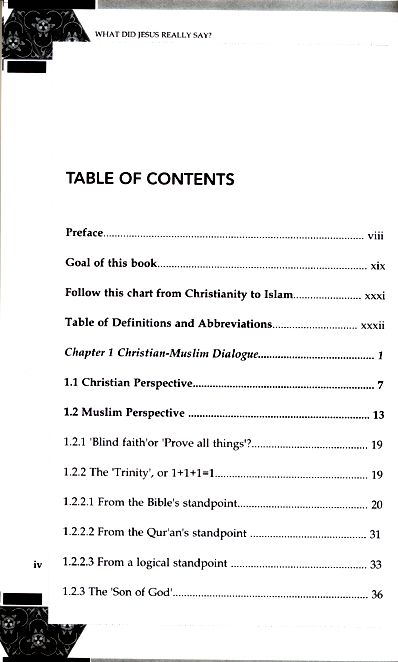
What Did Jesus Really Say?
The book contains detailed information and descriptions that show how the Bible was changed and tampered with over the past two millennia. The account and the discussions presented are based on, and collected from, the writings of Christian authors, the Church and the Bible.
Muhammad in the Hindu Scriptures (P/B)
God is One. Human nature is one. Human destiny is one. And God�s message to humanity vis-a-vis that destiny is one. However, the rebellious element in man�s nature has led him to disobey God on the one hand, and on the other, he has pushed on to distort the very message of God. But the message is never fully lost. It would be ludicrous and indeed heretical to think that the situation could have gone out of God’s control.
With every distortion, therefore, He has renewed the message to salvage humanity from self-ruin. More interesting than that is the fact
that He has inserted in every message a Pointer to the Final Guide and the message he would be entrusted with; a Pointer which shows the true
seeker where the uncorrupted message could be found – the message that no one would be able to distort any more. While the main body of the message has been corrupted, the Pointer contained within has not been destroyed. Muhammad in the Hindu Scriptures brings out the truth of this phenomenon.
In addition to the Vedas and the Puranas, the book has unearthed this Pointer in the Buddhist, Christian, Jewish and other Hindu scriptures. Each of these scriptures uses its own unique Pointer relevant to its own theological scheme and the religious mentality of its own people. Separately and jointly these Pointers lit up the road to Muhammad (blessings and peace be upon him) exclusively, without any iota of doubt.
By all accounts the Final Guru has been sent and the Last Testament is in our laps. Additionally, the existence of these Pointers in the earlier
scriptures is yet another dimension of God’s mechanism to guide mankind to the infallible Truth. Upon reading the book, the theist, the atheist and the agnostic will find a lot to think about.
Recently Viewed
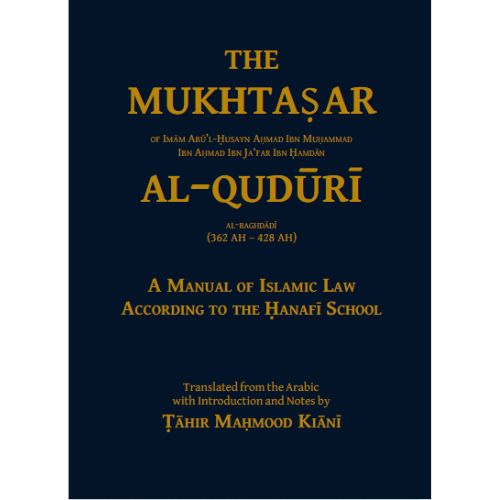
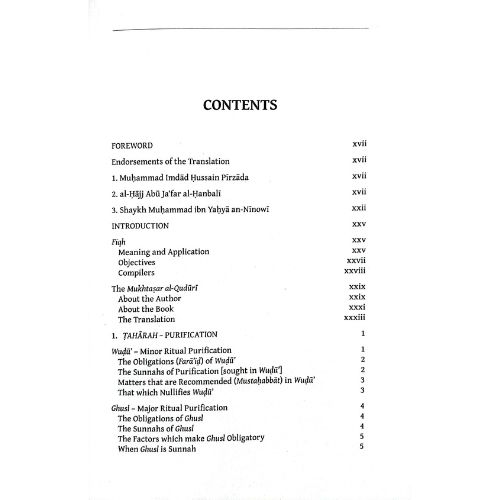
The Mukhtasar Al-Quduri
The Mukhtasar Al-Quduri is one of the most celebrated and influential treatises in any Muslim school of methodology and thought and is the foundation for the Hanafi school.
It is both the first source for scholars and a manual for the general reader.
This is its first ever complete translation in English.
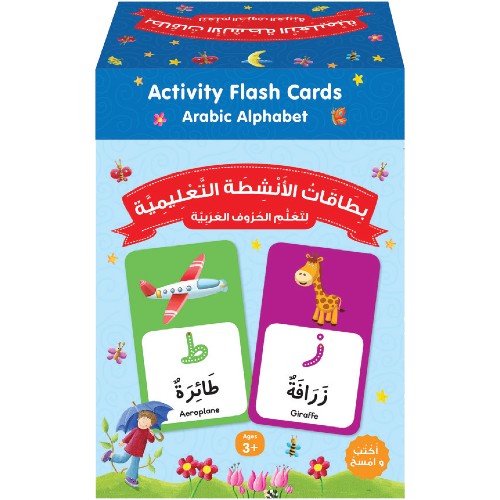
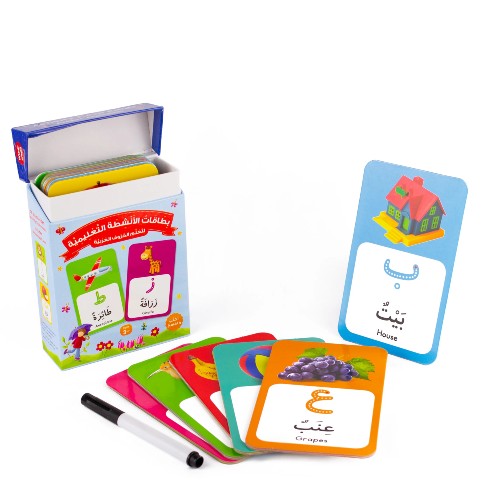
[GM] Activity Flash Cards Arabic Alphabet
28 double-sided cards help to teach both the alphabet and words!
Ages 3+
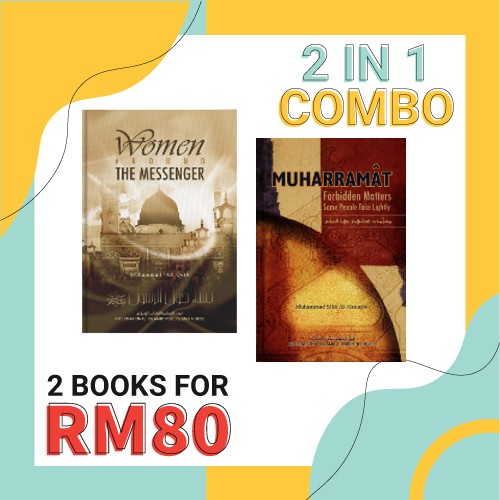
2IN1 Combo P05
1. Muharramat Forbidden Matters Some People Take Lightly (127 pages)
2. Women around the Messenger (364 pages)
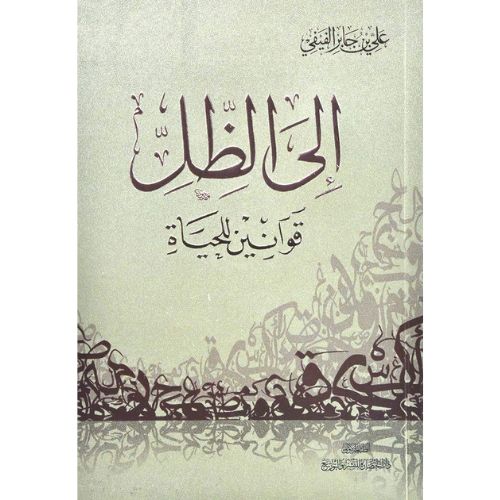
[MM] Ila Alzili (إلى الظل)
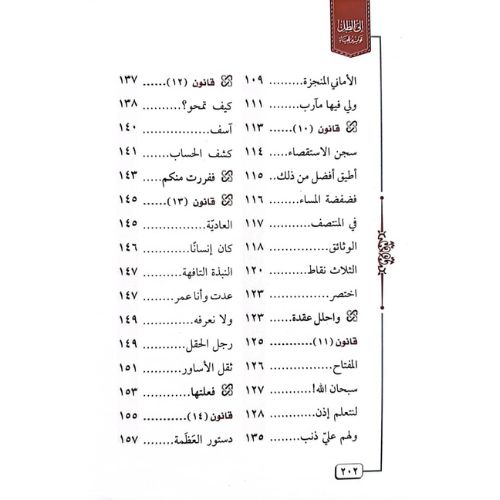
هذا الاقتباس يختصر القانون الثالث من هذا الكتاب، قانون: تولى إلى الظل ، فالكتاب يحتوي على 17 قانون من قوانين الحياة جميعها مستنبطة من قصة نبي الله موسى عليه السلام عندما قتل رجلاً من بني اسرائيل ففر خوفاً من فرعون إلى مَدين ، ثم باقي تفاصيل القصة حتى عاد إلى فرعون وسحرته في يوم الزينة.
Quranic Arabic With Basic Grammar
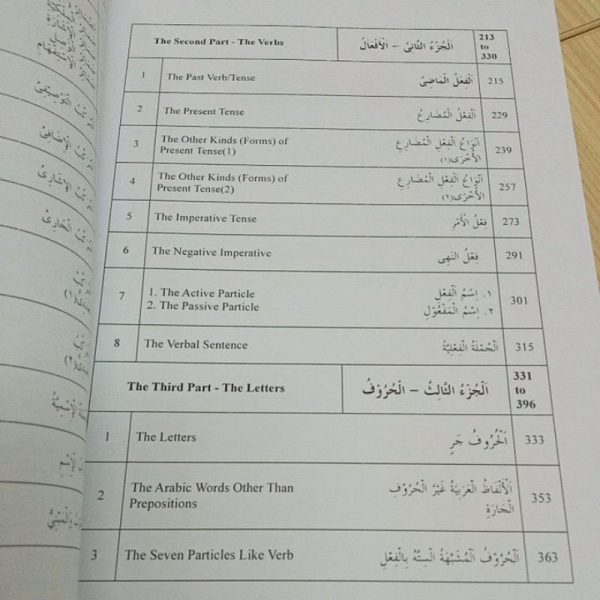
This book, which is a compilation of the author’s lectures in seminars during his post-doctoral research at the Centre for Islamic Development Management Studies, Universiti Sains Malaysia, dwells on Arabic language with a focus on Quranic grammar. It comprises of three parts, each part contains various units. The first part contains 15 unit which look into the nouns, pronouns, different types of compounds, the nominal sentence and punctuation. The second part consists of seven units which discuss the various types of tenses, sentences, the imperatives and the particles. The last part featuring five units covers prepositions and different types of words in Arabic.
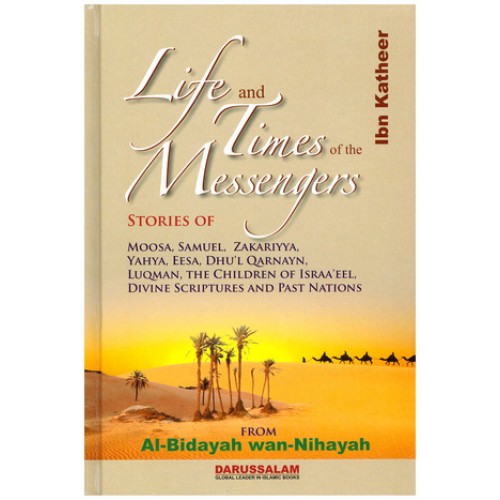
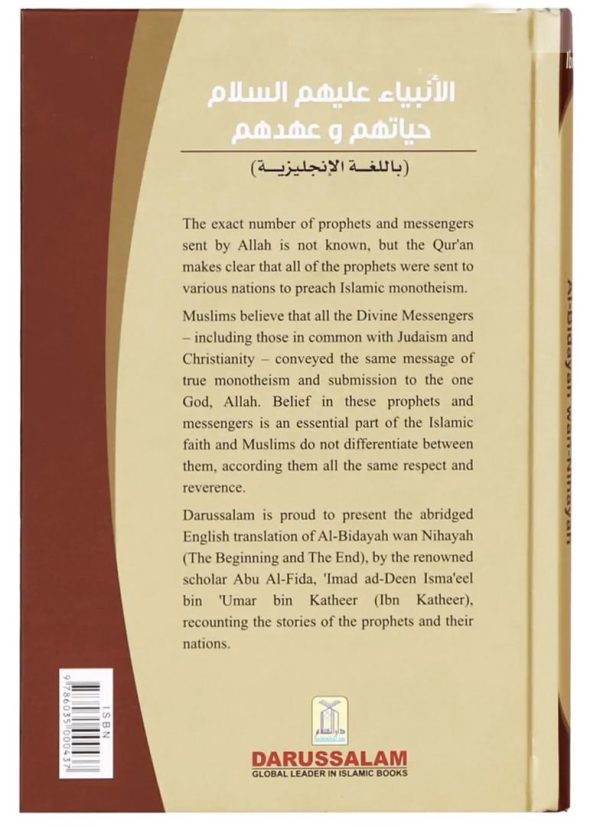
Life and the Times of the Messengers (H/B)
The exact number of prophets and messengers sent by Allah is not known, but the Qur’an makes clear that all of the prophets were sent to various nations to preach Islamic monotheism. Muslims believe that all the Divine Messengers ? including those in common with Judaism and Christianity ? conveyed the same message of true monotheism and submission to the one God, Allah. Belief in these prophets and messengers is an essential part of the Islamic faith and Muslims do not differentiate between them, according them all the same respect and reverence.
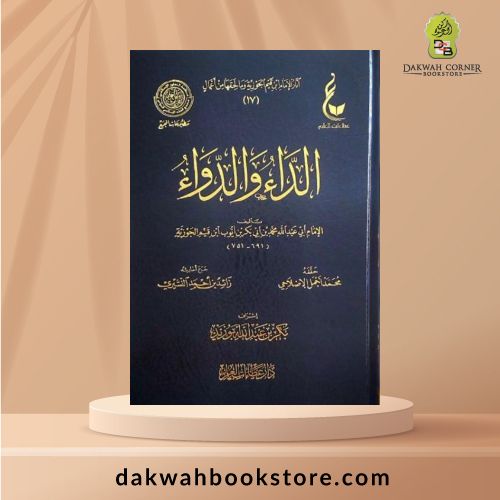
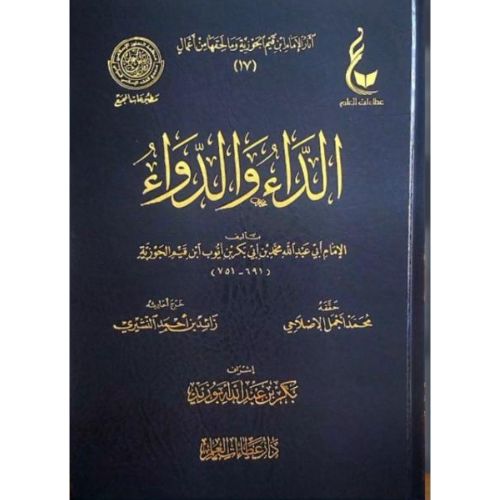
[MM] Adda Waddawa (Dar Attaat Ilm) / الداء والدواء
الداء والدواء
تأليف: الإمام أبي عبد الله محمد بن ابي بكر بن أيوب أبن قيم الجوزية مطبوعات الجمع (٦٩١ – ٧٥١)
حققه: محمد أجمل الإصلاحي
خرج أحاديثه: زائد بن أحمد النشيري
إشراف: بكر بن عبد اللانه موزيك
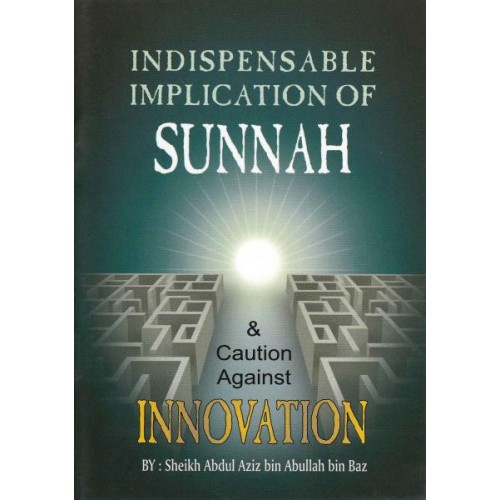
Indispensable Implication of Sunnah (P/B)
The author has discusses the topic of innovation in Islam. For example, he proves that celebrating the Prophet’s birthday is not right according to the Qur’an and Sunnah.
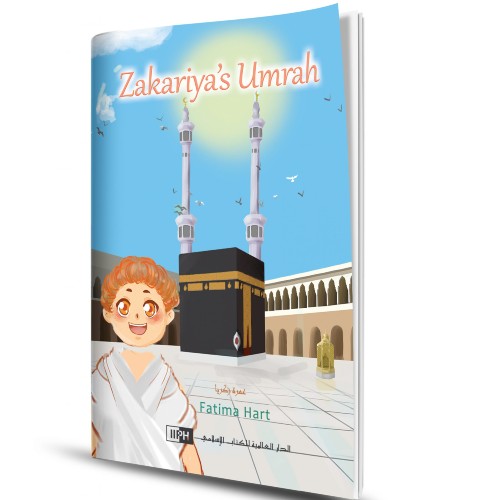
Zakariya’s Umrah
Zakariya’s Umrah by Fatima B. Hart is about a young boy on a trip to perform Umrah with his dad. Using repetition, rhyme, and rhythm, it describes what he observes at each vital stage of the trip and outlines the basic rituals of Umrah in a fun and engaging way. This book is recommended for children aged 0-5.
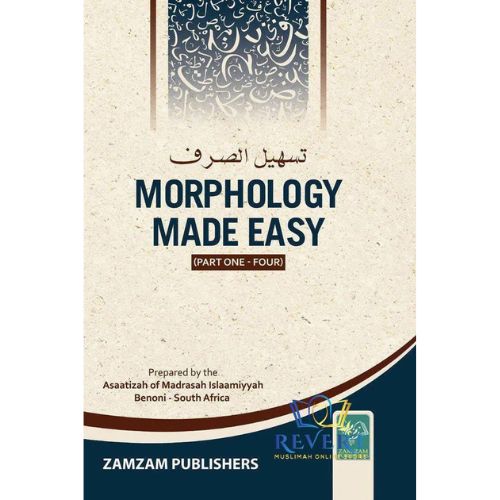
Morphology Made Easy P/B (Part 1-4)
Prepared by the teachers of Madrasa Islamiyah Benoni, South Africa.
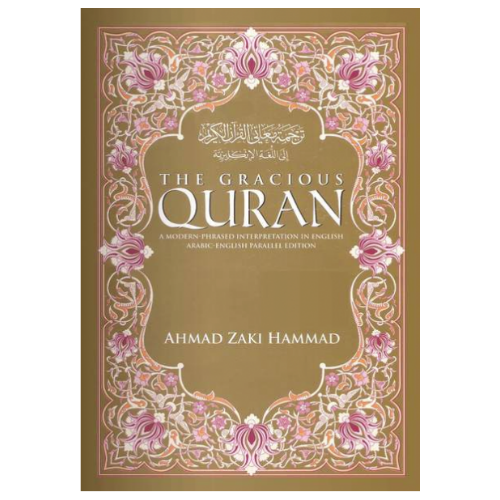
The Gracious Quran (H/B)
A modern-phrased interpretation in English (Arabic-English Parallel Edition)
This contemporary, authoritative translation interprets the Quran’s meaning for the English reader with unprecedented access to the Book that is the foundational source of Islam, its civilization and its peoples, who now comprise nearly one-fourth of humanity across the breadth of all the Earth’s continents and who form a crucial, contiguous community at the middle of the world.
Twenty years in the making, The Gracious Quran: A Modern-Phrased Interpretation of Its Meanings in English is both highly reliable and powerfully expressed. Where the Arabic of the Quran swells with important implication, that intent is conveyed in this rendering with a light hand in unobtrusive brackets, every effort having been expended to make its reading August, clear, accessible, and consistent while at the same time free of poetic pretension, philosophical complication, and lifeless literalisms. Its graceful layout and design augment the profound simplicity of the Quran’s message and give some semblance of resonance to its almost hypnotic power of literary expression.
The interpretation of The Gracious Quran is thoroughly guided by wide and deep experience with the civilizations of both luminous Islam and the enlightened west, while not unmindful of the light that infuses the world’s brilliant traditions. Fully four decades of scholarly expertise in Quranic studies and related disciplines are in its service, and the latest advances in the art of translation conspicuously benefit it.
About the translator:
Dr. Ahmad Zaki Hammad is an internationally known authority on Quran and Islamic Studies. He teaches Islamic Civilization and the Primary Disciplines of Quran Commentary, the Prophetic Traditions, and the Principles of Islamic Law at the foremost center of Islamic and Arabic learning in the Muslim world, AL-Azhar University (Faculty of Languages and Translations, Department of English). He is also a member of the Faculty of Shari’ah, Department of Juristic Studies.
He received his early Islamic and Arabic training at Al-Azhar University, Cairo, and was awarded the graduate degree of Alamiyyah from the Faculty of Theology. He holds a Ph.D., in Islamic Studies from the University of Chicago and is the author of a study of translation of Abu Hamid al-Ghazalis’s Al-Mustasfa min Ilm al-Usul, The Quintessence of the Science of the Principles of Islamic Law; and also Islamic Law: Understanding Juristic Differences, a Primer on the Science of al-Khulaf al Fiqhi in Light of the Shariah Sources.
He lived for many years in the United States, where he founded and served in numerous national and community Islamic institutions for American Muslims.


There are no reviews yet.