
| Weight | 0.34 kg |
|---|---|
| Author | |
| Publisher | Al Hidaayah UK |
| Pages | 240 |
| ISBN | 9781898649632 |
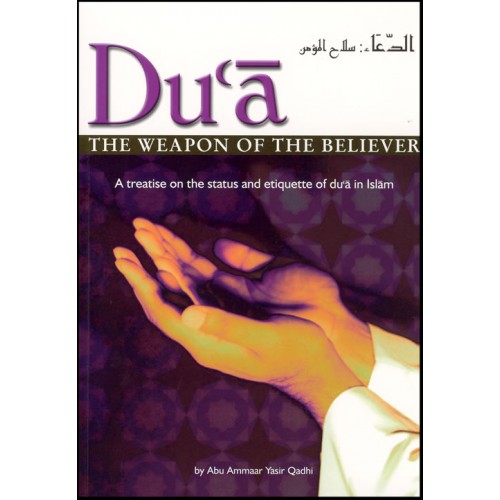
Du’a The Weapon of The Believer
RM65.00
The recommended etiquette of performing dua
The timings and situations in which the dua is more likely to be answered
The various factors that aid or prevent a dua from being accepted
The relationship of dua with the Divine Decree (qadr)
The wisdom behind a delayed response
This is a highly informative and essential book for every Muslim household. In this work, the author elaborates on the status, importance, and etiquette of du’a or prayer and supplications in Islam. In the most comprehensive work yet written in English on this topic, the author discusses, amongst other matters:
- The excellence and benefits of the dua
- The types of dua
- The pre-conditions that are needed in order for a dua to be accepted
- The recommended etiquette of performing dua
- The timings and situations in which the dua is more likely to be answered
- The various factors that aid or prevent a dua from being accepted
- The relationship of dua with the Divine Decree (qadr)
- The wisdom behind a delayed response
This is a highly informative and essential book for every Muslim household.
Be the first to review “Du’a The Weapon of The Believer” Cancel reply
You must be logged in to post a review.
Related Products
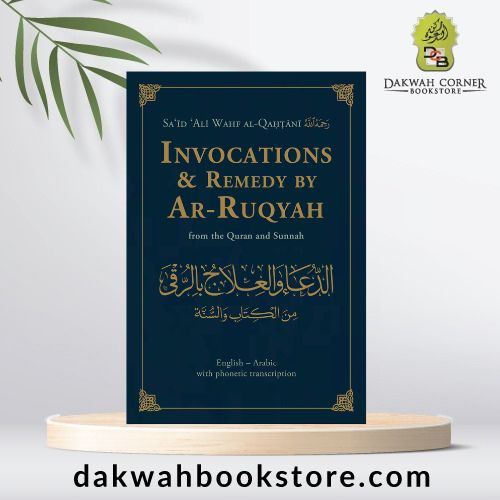
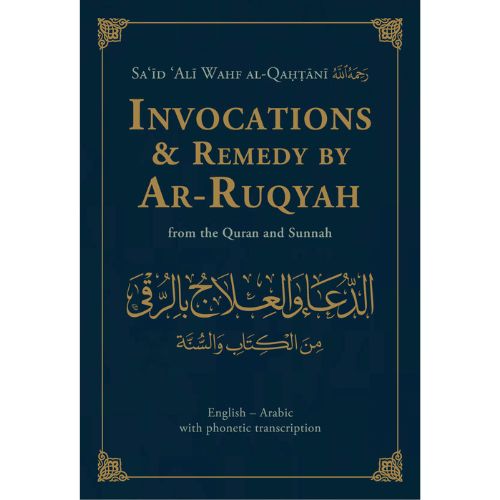
Invocations & Remedy By Ar Ruqyah From The Quran And Sunnah (Leather / Medium Size)
This is a medium-sized translation of the book, ‘INVOCATIONS AND REMEDY BY AR-RUQYAH’ by Shaykh SAID ‘ALI WAHF AL-QAHTANI رحمه الله .
In this work, the author meticulously compiled authentic invocations as well as remedies which pertain to Ar-Ruqyah from the Quran and Sunnah. He also discusses the best times and places for invocations to be accepted.
Shaykh Sa’id is highly regarded in this genre, with his famous book, ‘Fortress of the Muslim’ having been embraced by Muslims worldwide as a reliable source for daily invocations.
Remembrance of The Most Merciful ( Dar sa-Sunnah)
Imâm ibn Qayyim al Jawziyyah (d. 751M)
Allah, the Most High, Says: “Remember Me, and I shall remember you” Qur’an 2:152 Abu Hurayrah (radiy Allahu ‘anhu), said that the Prophet (if) said: ‘Allah the Almighty said:’ “I am as My servant thinks of Me. I am with him when he makes mention of Me. If he makes mention of Me to himself, I make mention of him to Myself; and if he makes mention of Me in an assembly, I make mention of him in an assembly better than it. And if he draws near to Me an arm’s length, I draw near to him a cubit, and if he draws near to Me a cubit, I draw near to him a fathom, if he comes to Me walking, I go to him at speed. (al-Bulkäri and Muslim)
A Statement Regarding Fiqh Of Du’aa (P/B)
He who reviews the Qur’aan will find that the Book of Allaah, the Mighty and Majestic, is replete with many verses and a number of texts indicating the virtue of Du’aa and the loftiness of its status. When you read the Qur’aan, you will find that the first Soorah with which the book of Allaah, the Mighty and Majestic, begins with it; Soorah Al-Faatihah contains this tremendous act of worship, and the last of the Qur’aan Soorah An-Naas as well, contains this tremendous act of worship.
So the Book of Allaah, the Mighty and Majestic, begins with Du’aa and ends with it. The Du’aa, which is within Al-Faatihah, is the greatest of supplications hands down. (It contains) asking Allaah, the Blessed and High, for guidance to the straight path and that the servant avoids the paths of those who are astray and those upon whom is the Anger of Allaah. The last of the Book of Allaah, the Mighty and Majestic, contains the Du’aa of seeking refuge with Him, Glorified and Exalted be He, from the evil of the one who whispers and withdraws; the one who whispers into the hearts of mankind; from the Jinn as well as men, in order to make them deviate from the straight path of Allaah and the upright way.
Allaah informs us that Shaytaan says:
Then I will come to them from before them, and behind them, from their right and their left, and You will not find most of them as thankful ones (i.e., they will not be dutiful to You).[1]
So there is no firmness upon the straight path of Allaah, nor safety from the accursed Shaytaan-who calls mankind to deviation from the straight path-except by way of Du’aa and seeking refuge with Allaah, the Majestic and High; and a good manner of taking refuge with Him. This beginning and ending contain an indication of the importance of Du’aa from different perspectives; and the need of mankind for Du’aa to be firm upon the straight path of Allaah. When you reflect upon the other verses of the Qur’aan, you find the great status of Du’aa and lofty station of it within the Qur’aan.
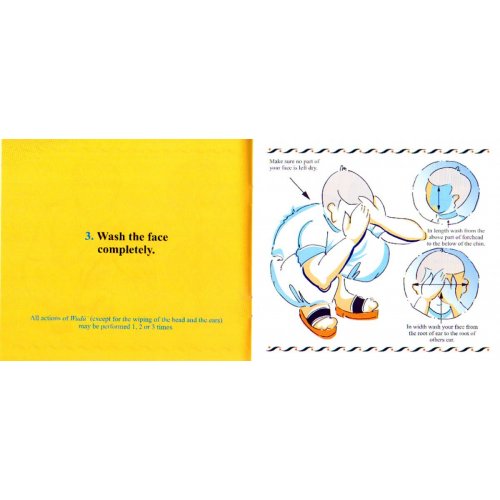
My Wudu Book
A step by step guide to perfecting your child’s Wudu according to the Quran and the Sunnah.
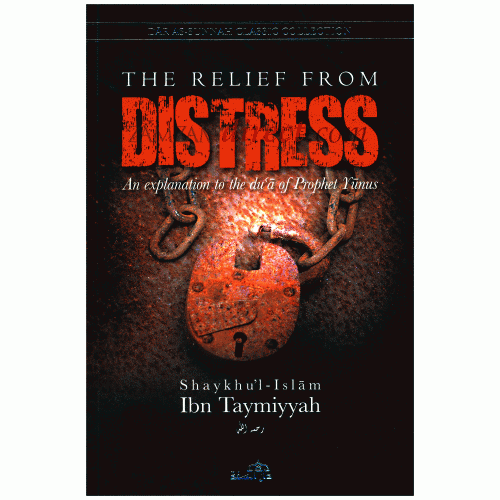
The Relief From Distress : An Explanation to the dua of Prophet Yunus (P/B)
Shaykh al-Islam Ibn Taymiyyah, may Allah sanctify his soul, was asked about the saying of the Prophet (pbuh),
The invocation of my brother Yunus, “none has the right to be worshipped save You; glory be to You, far removed are You from any imperfection; I have been amongst the wrong-doers,” none who is experiencing difficulty employs it except that Allah would relieve him of his difficulty.
What is the meaning of this du’a (prayer, supplication)?
Are their any unstated conditions that have to be met when one articulates it?
What is the connection between belief in the heart and the meaning of this supplication such that it leads to the removal of difficulty?
Why did he explicitly confess, ‘I have been amongst the wrong-doers’ when it is known that tawhid in itself leads to the removal of difficulty?
Is it sufficient to acknowledge ones’ sin alone, or must this be accompanied by repentance and the firm resolve not to repeat that sin in the future?
Why is it that difficulty and harm is removed only when a person relinquishes any hope, reliance and dependency upon the creation?
How can the heart relinquish the characteristic of putting hope in the creation and depending on them, and instead put its hope in Allah, Exalted is He, and turn to Him in its entirety?
What are the methods that would aid the heart in doing this?
The author replies to these questions in the form of this book.
Selected Invocations (Pocket Size) (P/B)
This small booklet has many excellent invocations to read during prostration, witr prayer, and at the end of Qur’anic recitation.
My Prayer Book
My Prayer Book A step by step guide to perfect your child’s obligatory prayer according to the Quran and the Sunnah
Zikr Morning, Evening & After Obligatory Prayers (Pocket Size) (REVISED)
Selected Surahs and Supplications Pocket Size (P/B)
Selected Surahs & Supplications for the Morning & Evening
From Quran & Their Virtues
Compiled by Sheikh Safiur-Rehman al-Mubrakpuri
Recently Viewed
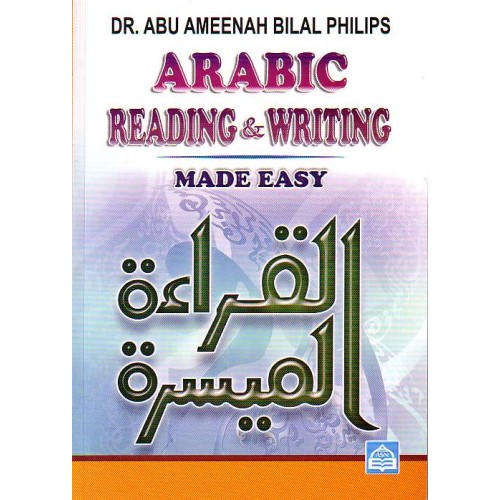
Arabic Reading & Writing Made Easy
The learner does not need to have memorized all the 28 Arabic alphabets and the 112 variations before learning to read and write.
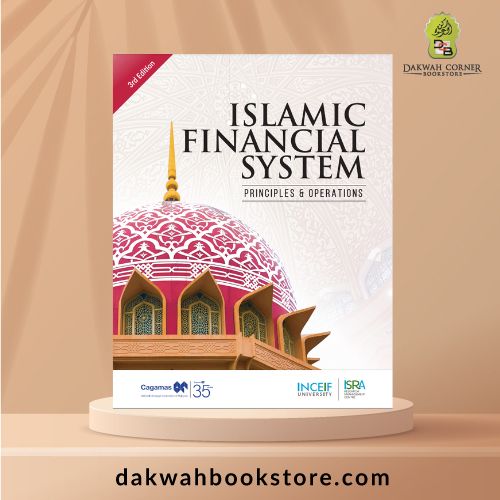
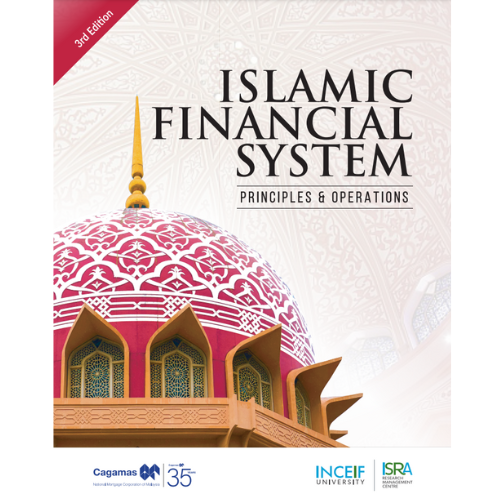
Islamic Financial System: Principles & Operations
This second edition of the book marks another milestone of a collaborative effort between prominent scholars and practitioners of the Islamic finance industry. It sheds light on the front line issues faced by the Islamic finance industry with academic rigor. Each chapter in the book is complete with figures, diagrams, tables, case studies, a set of review questions and problems and a list of references for further reading. It offers invigorating discussion on a comprehensive range of topics related to Islamic finance, combining both theoretical foundations and operational aspects.
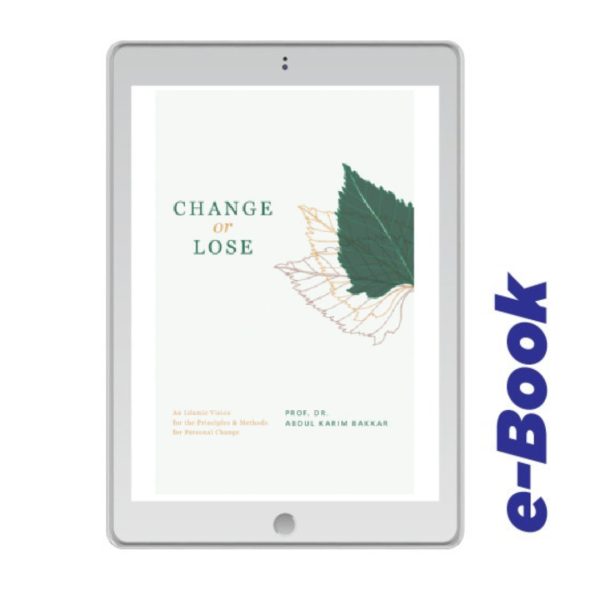
(E-Book) Change Or Lose
Change is not an easy and insignificant issue. It needs a deep insight and vision as much as will and determination. It is important here to realize that we can’t achieve all that we want and desire. Furthermore, getting what need and desire may not always be in our interest. This, of course, requires two things.
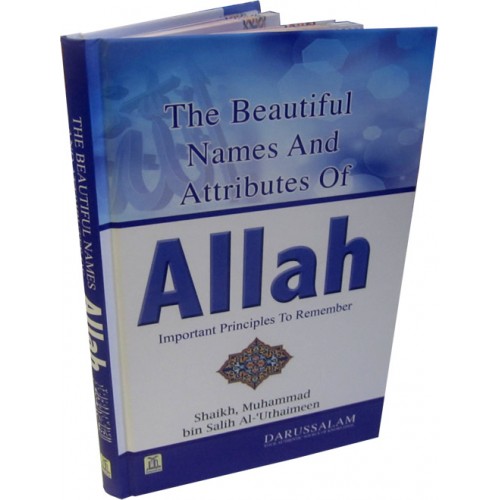
The Beautiful Names and Attributes of Allah- Important Principles To Remember
The pristine beliefs of the early Muslims are preserved in this vitally important masterpiece written by one of the most outstanding scholars of our time, Shaykh Muhammad Ibn Saalih al Uthaymeen. This new revised edition by Dar-us-Salam has been printed in full color with hardback bounding for an excellent presentation.
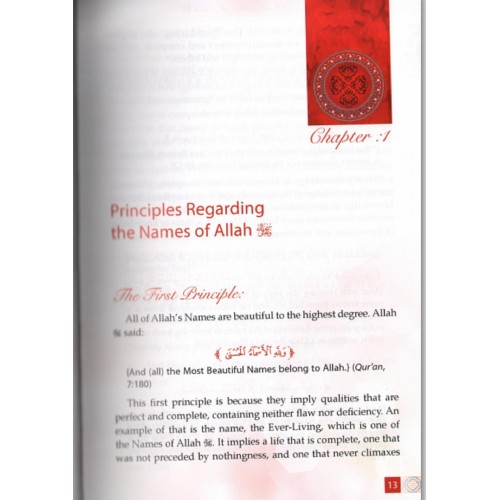
Seven clear principles and their evidences from the Book and the Sunnah guide the reader through the confusion and false claims of the ignorant to the clarity of belief in Allah’s Names accomplished by the righteous early scholars of Islam. Principle 6 contains the shaikh’s compilation of the ninety-nine (99) names of Allah. The names have been compiled into 2 categories: first from the Book of Allah & second from the Sunnah of the Prophet (S). All the names have been printed in Arabic with transliteration and English translation. Each name is printed beautifully in a square box with 6 boxes on a page.
Seven more principles and their evidences follow, giving the reader firm understanding of the correct beliefs about Allah’s Attributes. Four more principles outline the correct approach in studying the related proofs and evidences.
All of this leads the reader into an enthralling series of refutations of the false notions of the Ash’aree sect, a text-by-text breakdown of how and why they went wrong in a careful and precise study of fifteen texts from the Book and the Sunnah. The beliefs of the Ash’aree sect are destroyed and the origins of their deviation are exposed for all to see.
‘A magnificent book a clarification of the creed of the righteous Salaf concerning the Names and Attributes great principles and collective benefits concerning the topic’ – Shaykh Ibn Baaz
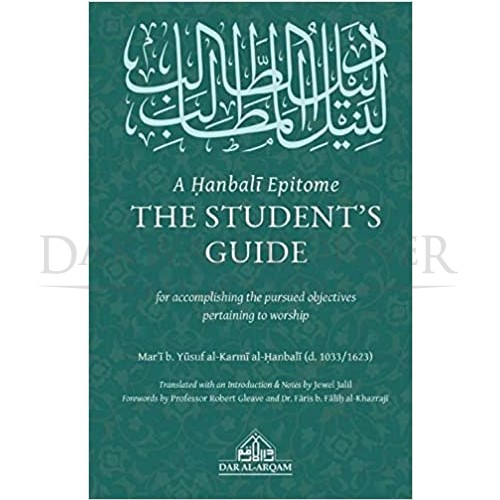
A Hanbali Epitome: A Student’s Guide
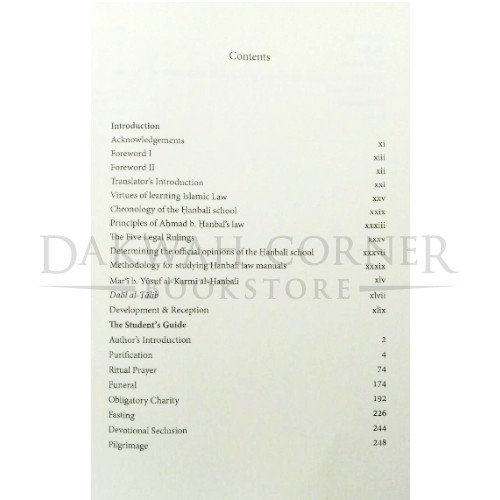
The present work focuses on the Muslim community requires for purification, prayer, charity, fasting, pilgrimage, and warfare. A lengthy introduction to Islamic law and the Hanbali’ school has been included to prepare the readers. The language employed in the translation has been kept simple, straightforward, and modern to make the work accessible to everyone who speaks English – law student or otherwise. This bilingual edition, with its parallel Arabic text, will allow readers to access the original Arabic and hopefully help with vocabulary building, oracy, and future translation. Muslims for many centuries have turned to Dalil al-Talib for study, and ultimately to be informed of their religious practices. It is hoped the translation, The Student’s Guide, will produce a similar response and convey the spirit and manner of the original owing to its style and simplicity.
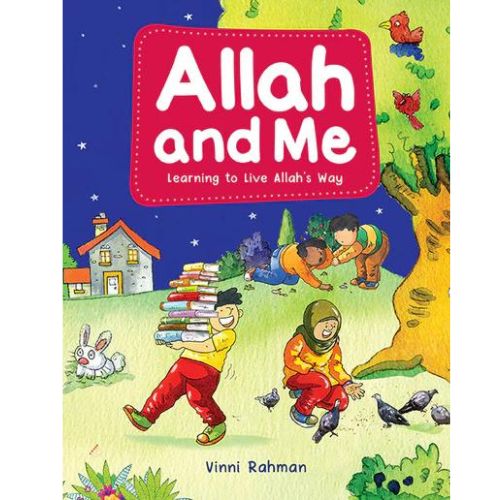
Allah And Me Learning To Live Allah’s Way (P/B)
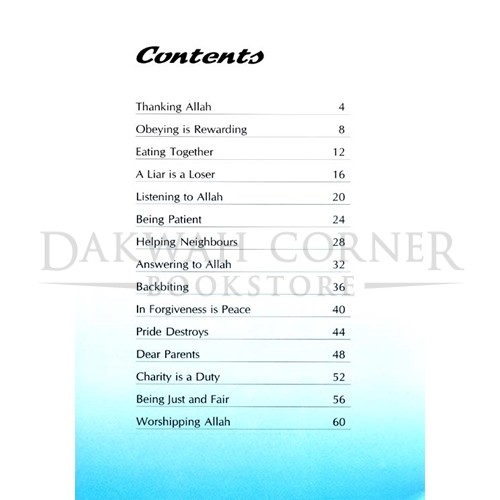
Allah knows what is best for us. Read this book to know what He expects from us and what He likes and dislikes. Allah and Me is a book which discusses some Islamic virtues which we should practice in our daily life in order to live according to Allah’s will and become candidates for Paradise. A Muslim does everything for Allah. Every Little Talk in this book includes some questions to make children think, especially about their own behaviour in context of the virtue discussed in that Talk. Each Talk ends with some Quranic verses and Hadith quotes to stress and highlight the Islamic teaching discussed in that Talk.
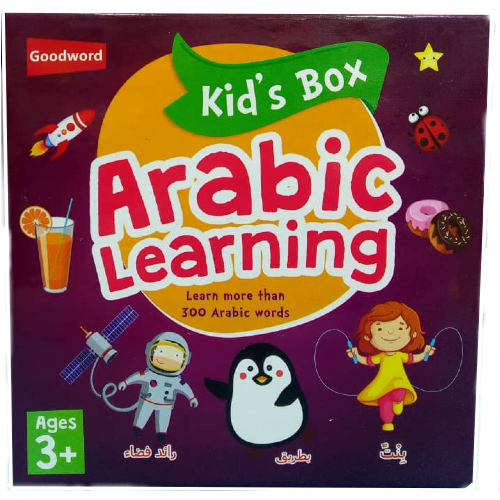
Kid’s Box: Arabic Learning
Learn Arabic Words & Develop Observation Skills
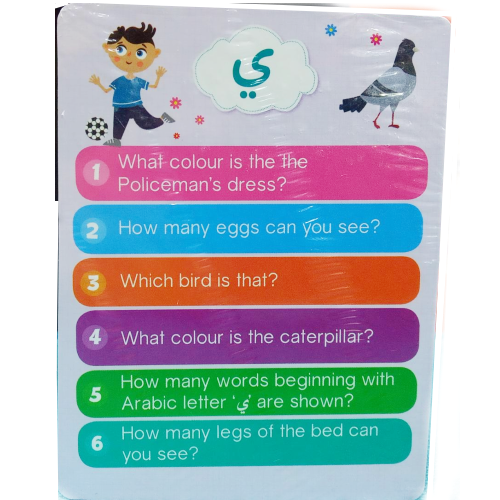
- A card game for 2 and more players
- Suitable for children 3 years and above
- Learn more than 300 Arabic words
- Improves memory and concentration skills
- A simple, fun-filled and educational game
- Challenge your brain in just 15 minutes
- Full of fun illustrations
- A perfect boredom buster for children
- Includes words from topics such as animals, home, school, fruits, and transport.
Suitable for 3+ years old
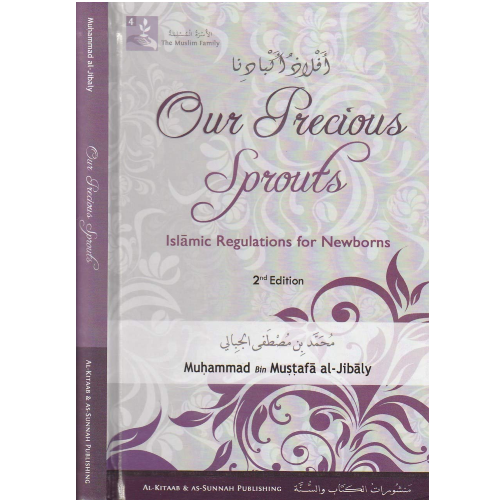
Our Precious Sprouts (H/B)
This sequel deals with the normal fruit of marriage: babies. It covers the Islamic regulations relating to a newborn. This includes welcoming the baby, naming it, shaving its hair, circumcising it, and slaughtering the sacrificial ‘aqiqah.
Islam A Total Beginners Guide – Part Three (P/B)
In present era we are facing lot of questions:
• What is status of women in Islam?
• Who is superior – man or women?
• What does Islam say about inter-religious marriages, man’s treatment towards his wife and privacy in homes?
• What does Islam say about dress, veil, clothing and ornaments, perfumes and the wisdom of banning gold and silk for men?
This beginner’s guide to Islam answers all such questions.
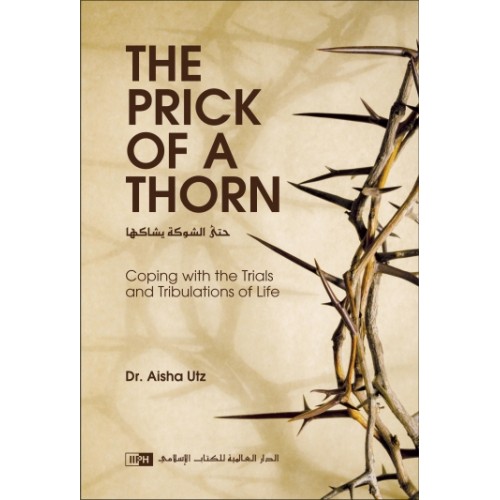
The Prick Of A Thorn (H/B)
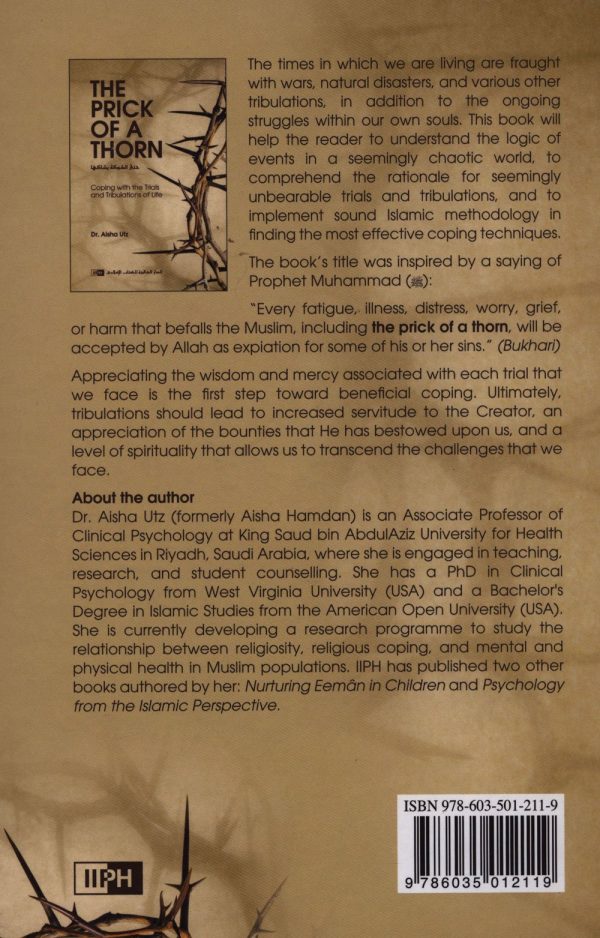
The book’s title was inspired by a saying of Prophet Muhammad (pbuh):
“Every fatigue, illness, distress, worry, grief, or harm that befalls the Muslim, including the prick of a thorn, will be accepted by Allah as expiation for some of his or her sins.’ (Bukhari)
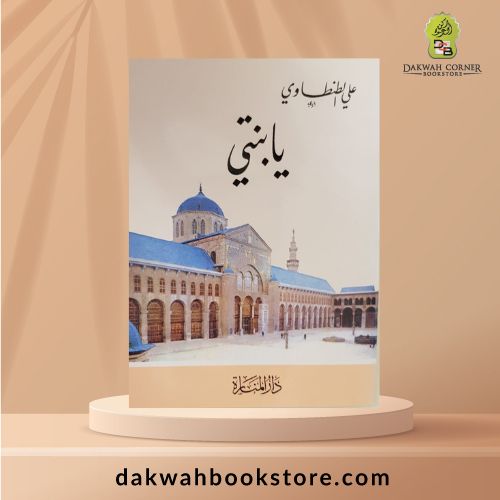
[SB] Ya Ibnati (Pocket Size) /يا بنتي
كتيب به مقالة موجهة للشابات المسلمات.. ينصح بها الشيخ علي الطنطاوي بنات دينه نصايح أبوية
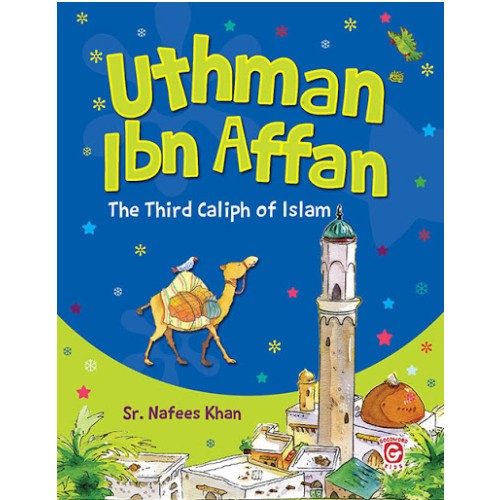
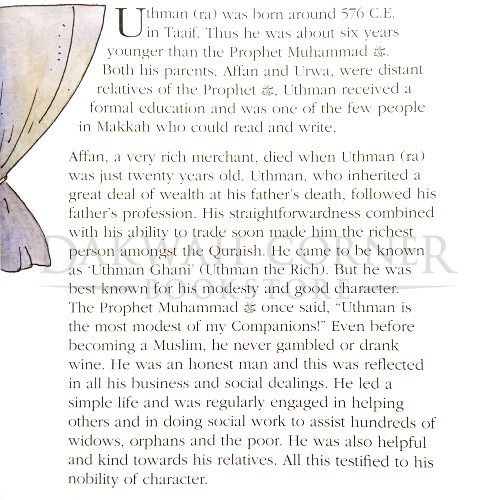
Uthman Ibn Affan: The Third Caliph of Islam
This book is about the life and teachings of Uthman Ibn Affan (may Allah be pleased with Him), TheThird Caliph of Islam.


There are no reviews yet.