
| Weight | 0.31 kg |
|---|---|
| Product Type | Book |
| Author | |
| Publisher | IIUM Press |
| ISBN | 9789674182366 |
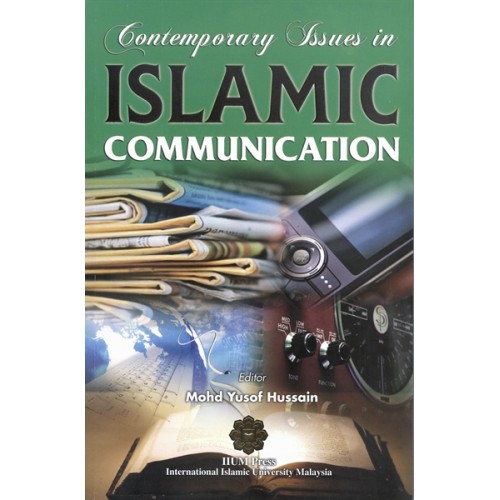
Contemporary Issues In Islamic Communication
RM37.00
The book contains a collection of essays on issues that are of concern to Muslim media and scholars and practitioners. The issues are those that are constantly highlighted in the mass media in the Muslim world. All the issues are discussed from the Islamic perspective. The main purpose of the book is to give readers a clear understanding of how Muslims view contemporary issues that are reported and discussed in present day mass media. The book is written for students majoring in communication at the International Islamic University Malaysia. It is also useful for students taking courses on communication issues in other universities.
Be the first to review “Contemporary Issues In Islamic Communication” Cancel reply
You must be logged in to post a review.
Related Products
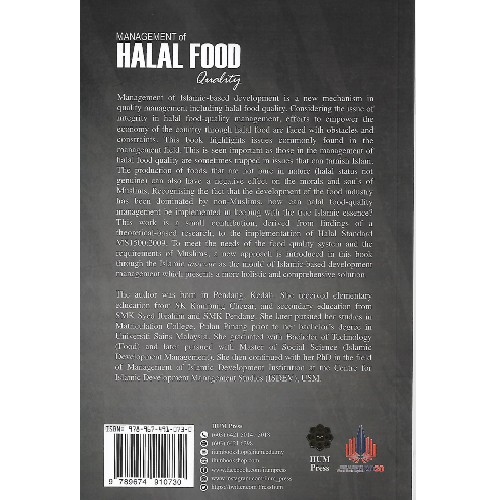
Management of Halal Food Quality
Management of Islamic-based development is a new mechanism in quality management including halal food quality. Considering the issue of integrity in halal food-quality management, efforts to empower the economy of the country through halal food are faced with obstacles and constraints. This book highlights issues commonly found in the management field. This is seen important as those in the management of halal food quality are sometimes trapped in issues that can tarnish Islam. The production of foods that are not pure in nature (halal status not genuine) can also have a negative effect on the morals and souls of Muslims.
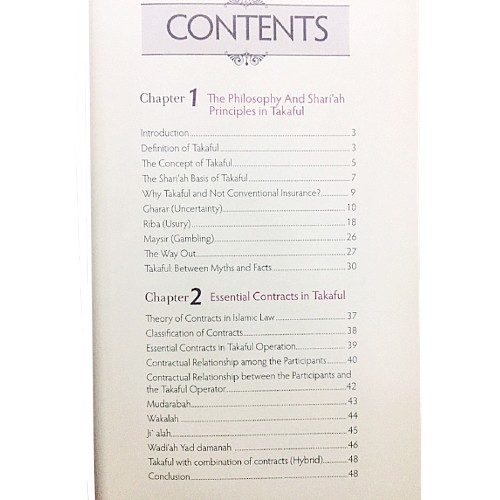
A Mini Guide to Takaful (Islamic Insurance)
This Mini Guide will prove useful and constructive to readers who want a better understanding of the takaful industry in contemporary Islamic finance.
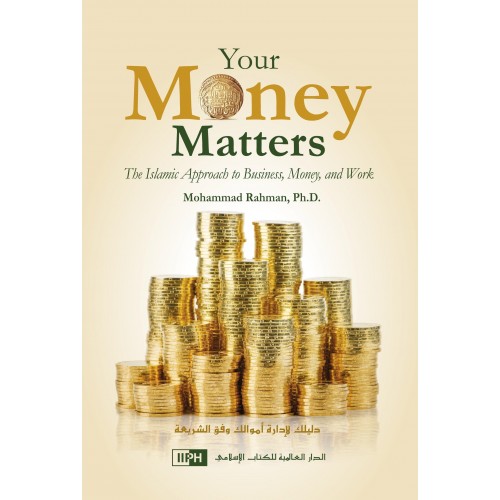
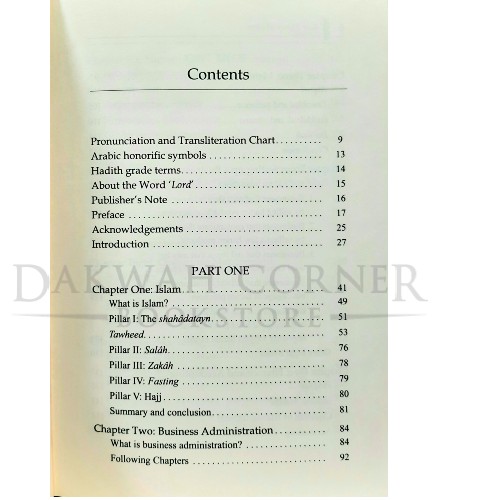
Your Money Matters (H/B)
This book highlights issues that are important and relevant to Muslims when they engage in tasks related to personal finances, business administration, investment, and work. Readers will find an overview of relevant excerpts from the Qur’an and the authentic Sunnah. Non-Muslims as well can gain valuable insights from this book that should prove useful in today’s multi-cultural business landscapes.
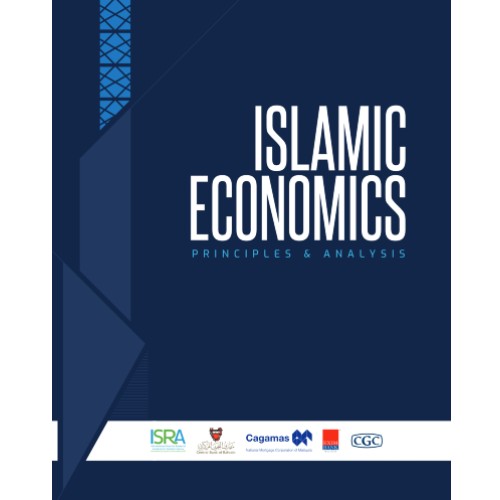
Islamic Economics : Principles & Analysis (P/B)
Economics is a social science that studies the behaviour and interactions of economic agents and analyses how economies work at the macro- and micro-levels. It studies production, distribution and consumption of goods and services, identifies economic problems and phenomena, and addresses economic questions from a positive perspective (what is) as well as a normative (how it should be) perspective. Islamic economics examines the same areas as its conventional counterpart. However, it involves the application of Sharīʿah to the different economic functions and issues. It is postulated that Islam offers a better approach compared to conventional economics in managing economic activities and solving economic and social issues.
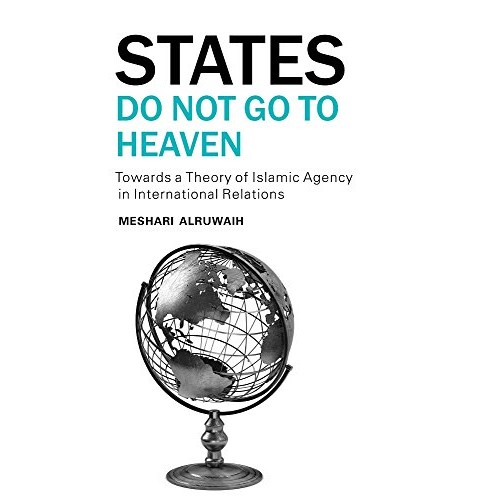
States Do Not Go to Heaven: Towards a Theory of Islamic Agency in International Relations
This book compares and contrasts Islamic world views and Western theoretical perspectives on international relations to suggest that a combination of the two could lead to a mutually beneficial redefinition of contemporary international relations utilizing Western theoretical tools and incorporating an Islamic perspective. Particular focus is given to the Islamic concept of istikhlaf as an ontological and normative foundation. The reasoning being that all man-made social arrangements on “earth”, as well as international society, should be considered a realm of istikhlaf. This allows for return to an eternal and critical first principle, linking all social roles to this principle, which is that man as designated by the Qur’an, is God’s khalifah or Vicegerent on earth. It’s a statement of great magnitude.
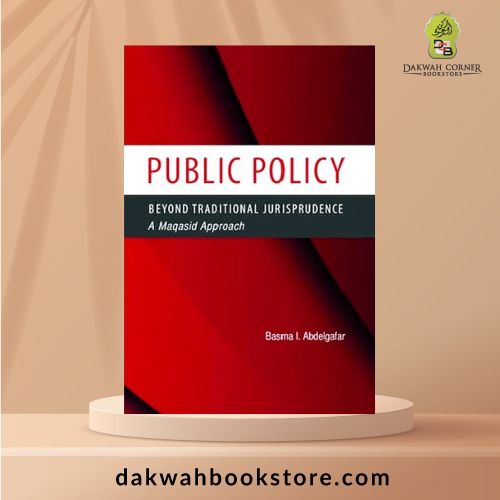
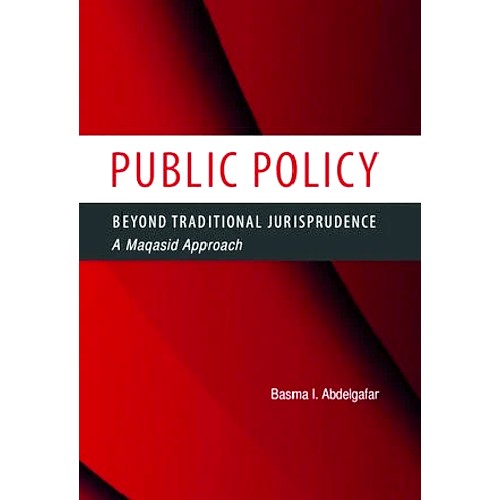
Public Policy: Beyond Traditional Jurisprudence A Maqasid Approach (IIIT)
This work charts new territory in Islamic scholarship by attempting to address the field of public policy from a maqasid (higher objectives of the Shariah) perspective. Public Policy is an independent discipline from both law and politics. Thus, Public Policy in Islam is introduced here as a qualitatively different enterprise from both fiqh (Islamic jurisprudence) and siyasah shar’iyyah (Shariah-oriented politics). The book deals with a number of critical topics that include methodology, governance, human rights, ethics, political power, and reform and renewal. It highlights how the maqasid approach is indispensable to the theory and practice of public policy in Islam, how it could resolve some of the most persistent governance dilemmas throughout Muslim history, but more significantly, how it forces a re-conceptualization of the wealth of knowledge available in Islam s primary sources to introduce Public Policy in Islam to mainstream policy studies.
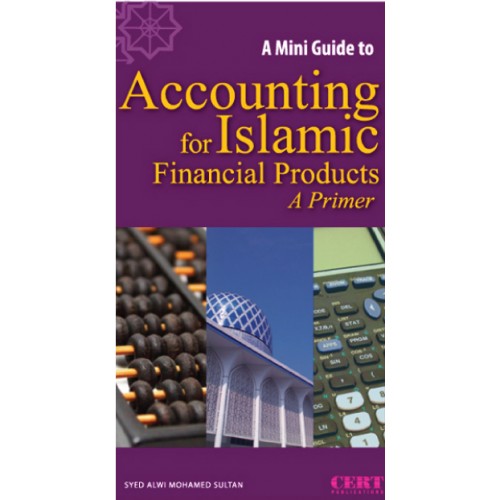
A Mini Guide to Accounting for Islamic Financial Products – A Primer (Pocket size) (P/B)
This “A Mini Guide to Accounting for Islamic Financial Products” starts with the development of Islamic finance as well as accounting standards and development of AAOIFI which aims to develop standards on accounting, auditing, ethics and governance and disseminate them on the target market.
The guide also highlights selected accounting issues addressed by AAOIFI : substance over form, prudence, mudarabah investment accounts and asset valuation. This is followed by how information of financial statement of an Islamic bank helps its major users, like equity holders, holders of investment accounts, regulatory agencies and others.
The guide also points out the main differences in the presentation of financial statements of Islamic Financial Institutions. Among them are: how assets are defined and inclusion of equity of unrestricted investment account holders. The differences arise as a result of utilizing a Shari’ah compliant contract to bring into effect a particular product.
The last section discusses some of the more popular contracts such as murabahah, istisna’, ijarah, mudarabah and musharakah. A few case studies are also incorporated for different contracts to give more understanding on the topic to the readers.
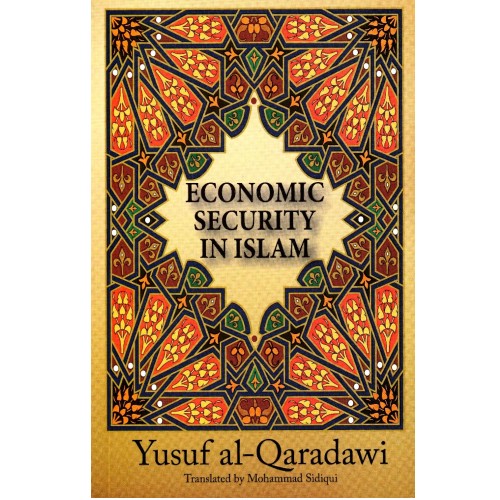
Economic Security In Islam
This book is an English rendering of a popular Arabic book entitled Mushkala al-Faqr wa Kaifa ‘Aljiha al-Islam by the renowned Muslim Scholar ‘Yusuf al-Qaradawi. The author depicts the basic principles of the Islamic Economic System in the light of the Holy Qur’an and the Sunnah.
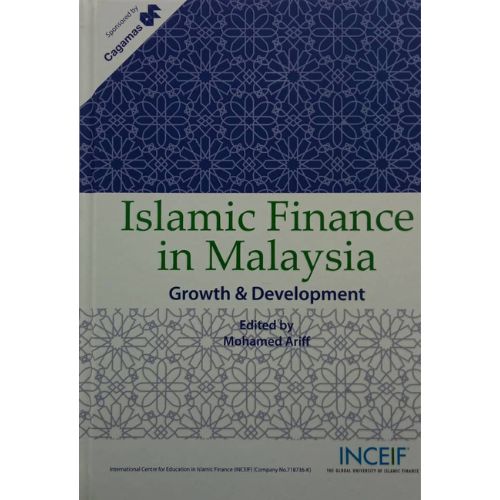
Islamic Finance in Malaysia: Growth & Development
This modern history of Islamic finance is pretty short spanning a period of roughly five decades, compared to conventional finance which goes back to more than four centuries earlier. Islamic finance has spread rapidly across the globe, reminiscent of Lao-Tzu’s famous saying “A journey of a thousand miles begins with a single step”. Malaysia, a pioneer in the development of the Islamic finance industry, has emerged as one of the major hubs for global Islamic finance.
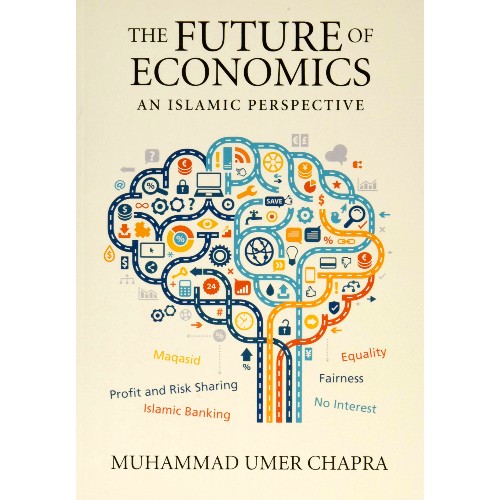
The Future of Economics An Islamic Perpective
This profound book is a powerful yet balanced critique of mainstream economics that makes a forceful plea for taking economics out of its secular and occident-centered cocoon. It presents an innovative and formidable case to re-link economics with moral and egalitarian concerns so as to harness the discipline in the service of humanity
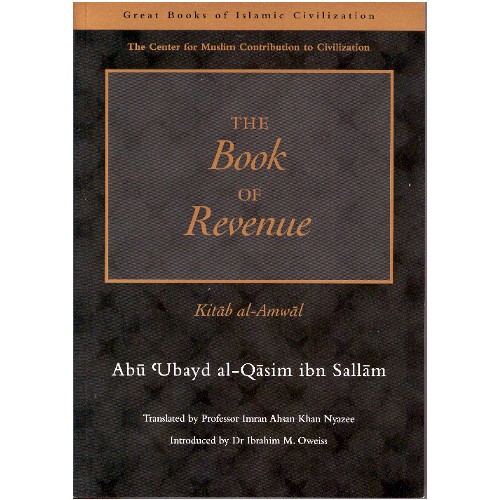
The Book Of Revenue
Kitab al-Amwal (The Book of Revenue) is the work of a brilliant legal mind. Abu Ubayd al-Qasim ibn Sallam provides us with an accurate record of legal precedents laid down in the first two centuries of Islam, in particular those pertaining to the sources of revenue and the avenues of public expenditure. The power of the book, however, lies in the method of the author and the analysis undertaken by him. He gathers together the traditions of the Prophet (pbuh), the opinions of his companions, and the views of eminent jurists, and then subjects them to legal analysis that is unparalleled in Islamic legal literature. The book is essential for every student of Islamic law, especially those who wish to master the art of interpreting and analyzing legal traditions and early precedents. In the discipline known as fiqh al-sunnah, there is no book or manual that can compete with this outstanding work.
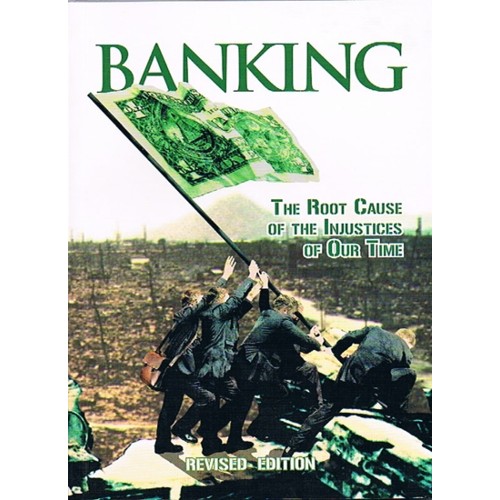
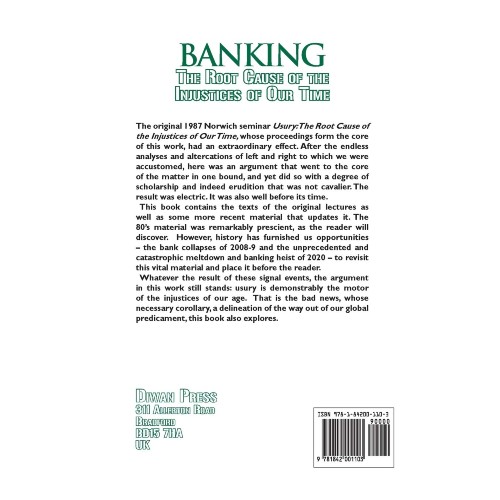
Banking: The Root Cause Of The Injustices Of Our Time (Revised Ed.)
The original 1987 Norwich seminar Usury: The Root Cause of the Injustices of Our Time, whose proceedings form the core of this work, had an extraordinary effect.
After the endless analyses and altercations of left and right to which we were accustomed, here was an argument that went to the core of the matter in one bound, and yet did so with a degree of scholarship and indeed erudition that was not cavalier. The result was electric. It was also well before its time.
Recently Viewed
The Third Caliph of Islam: Uthman bin Affan (P/B)
Uthman bin Affan (R) was one of the early men who accepted Islam in Makkah. From the first moment he became a Muslim, he put all his wealth under the service of Islam. He spent most of his resources to satisfy the needs of poor Muslims. Recognizing his generosity and devotion to Islam, the Prophet (S) told him that his place would be in Paradise on the Hereafter. He married Ruqayah (R),the Prophet’s daughter. After she died, he married her sister Um Kulthum ;for that, the people at that time called him Dhun Nurain, “The Man with the Two Lights.”
The Second Caliph of Islam: ‘Umar bin Al-Khattab (P/B)
Uthman bin Affan (R) was one of the early men who accepted Islam in Makkah. From the first moment he became a Muslim, he put all his wealth under the service of Islam. He spent most of his resources to satisfy the needs of poor Muslims. Recognizing his generosity and devotion to Islam, the Prophet (S) told him that his place would be in Paradise on the Hereafter. He married Ruqayah (R),the Prophet’s daughter. After she died, he married her sister Um Kulthum ;for that, the people at that time called him Dhun Nurain, “The Man with the Two Lights.”


There are no reviews yet.