




![[SJ] Tahzib Kitab Alibanah 'An Shariah Alfurqah / تهذيب كتاب الإبانة عن شريعة الفرقة](https://shop.dakwahbookstore.com/wp-content/uploads/2024/01/website-500x500-46.jpg)
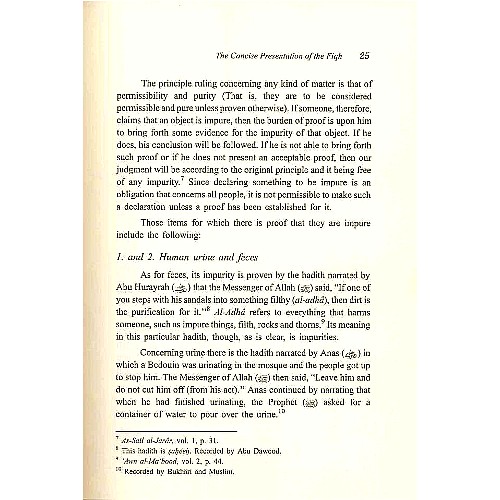
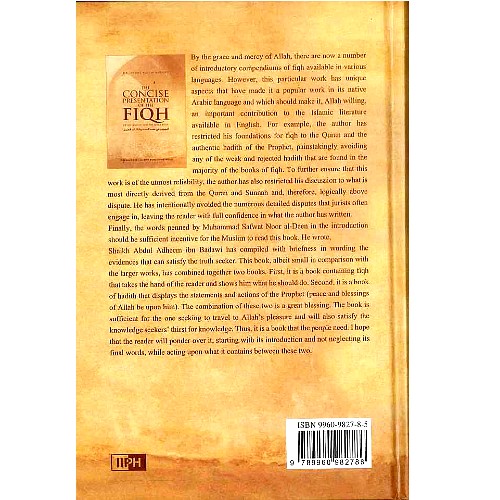
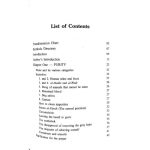
Although there are a number of introductory compilations of fiqh (Islamic jurisprudence) issues available, this particular work is unique in several ways. First, the author has restricted his bases for fiqh to the Qur’an and the authentic Hadith of the Prophet (blessings and peace of Allah be upon him). Dr. Abdul-Azeem Badawi has avoided using any of the weak or rejected hadiths that are so often included in other books of fiqh. The author has also restricted his discussion to what is most directly derived from the Qur’an and the Sunnah and, therefore, above dispute. This book is thus valuable both as a work of fiqh and as a collection of sound hadiths. The topics which are dealt with include purity, prayer, fasting, zakah, pilgrimage, marriage, business transactions, permissible and impermissible foods, inheritance, criminal offenses, and jihad — covering all the major fiqh issues in a Muslim’s life. Jamal al-Din M. Zarabozo has translated this important work into English for the benefit of English-speaking Muslims and students of Islam.
The Concise Presentation of the Fiqh of the Sunnah and the Noble Book
RM90.00

Written by Dr. Abdul-Azeem Badawi and translated by Jamal al-Din M. Zarabozo, The Concise Presentation of the Fiqh of the Sunnah and the Noble Book covers the fiqh of diverse topics like purity, prayer, fasting, zakah, pilgrimage, marriage, business transactions, foods, inheritance, criminal offenses, and jihad. Dr. Badawi relies only on the Quran and the Sunnah, making it an authentic Islamic book on fiqh and a collection of sound hadiths.
| Weight | 0.91 kg |
|---|---|
| Product Type | Book |
| Publisher | IIPH |
| Pages | 704 |
| ISBN | 9789960982786 |
Be the first to review “The Concise Presentation of the Fiqh of the Sunnah and the Noble Book” Cancel reply
You must be logged in to post a review.
Related Products


Funerals Regulations and Exhortations (H/B)
Our soul inevitably follows a route starting from birth, passing through death, and ending with our resurrection in the next life. The inevitable journey discusses over a sequence of titles: sickness, inheritance, funerals, Life in Barzakh and so on…


Smoking Intoxicants & Narcotics (P/B)
This book deals with the epidemic of smoking, which enslaves many of today’s Muslims, and which is aggravated by that most victims belittle its dangers and deny its prohibition.
This book includes a discussions of intoxicants, establishing the prohibition of various practices associated with them, as well as penalties (in both lives) for those who partake in them.
This book also includes a discussion of narcotics, with an overview of marijuana and qaat (or khat). Based on their established effects and harms, we conclude that narcotics are strongly prohibited, except in very limited medical settings.
This book, we hope, will provide many Muslims with guidance toward a healthier, cleaner and worthies Islamic personality. My Allah grant us guidance and facilitation.

Hajj & Umrah And Visitors (H/B)
Rites and Selected Etiquettes for those intending to Perfom Hajj & Umrah and Visitors In this book the author calls attention to the most important things that those who intend to perform Hajj, Umrah or Visiting the Prophets Mosque in Medinah must have as provisions. The author has made his work brief and arranged its topics according to their priorities. the author mentions a considerable number of sayings of the people of knowledge and calling the attention of the reader to some important matters.

Islamic Rules of Order (P/B)
Organizations must have rules of order to facilitate their debate and to fill in the procedures not detailed by their constitutional documents. While most American organizations are content to operate by Robert’s Rules of Order, Muslim organizations have often wrestled with questions over whether the rules of order systemized by a Western military figure are in accord with the Qur’an and the Sunnah.
This book tackles the matter directly and takes into account the Qur’an, the sunnah, Islamic manners and the history of Islamic consultation and leadership to provide a simple, practical guide to organizational procedure that can be incorporated into the governance of Muslim organizations. The book includes advice on writing bylaws and on complying with the best practices of the U.S. Dept. of Justice in a way that is Islamically authentic, transparent, and accountable. It provides a basic starting point for any Muslim organization while allowing for flexibility so that organizations may make any variations they require within their own bylaws and constitution, so that it can accommodate differing schools of thought on Islamic law. In its discursive approach it is an essential primer for understanding the value of rules of order and the Islamic context for their application. The Islamic Rules of Order has been adopted as the rules of order of the Association of Muslims Social Scientists.

Shatibi’s Philosophy of Islamic Law (P/B)
Abu Ishaq al-Shatibi, who died in 1888, had sought an answer to the challenge posed by modernisation and change to Islamic law, by introducing maslahah, which forms the basis of his philosophy of Islamic law. In a fascinating way, the author leads us step by step to what he considers the true import of Shatibi’s views concerning jurisprudence.


Should A Muslim Follow A Particular Madhhab?
In this book, the author has widely described the main principle of Taqleed. He says that Allah and Prophet Mohammed (SAW) has not ordered us to follow any opinions and interpretations. So there’s a possibility of being correct or incorrect in the opinions because there are many issues on which the Imams had different views and they explain them according to their own reasons and speculations, but the real and true Islam is based on the book (Quran) and Prophet’s Sunnah.
Allah says: “But no, by your Lord, they can have no Faith until they make you judge in all disputed matters between them, and find in themselves no resistance against your decision, and accept them with full submission.” And the prophet said: “I leave you with two things as long as you hold them tightly, you never go astray: they are the book of Allah and my Sunnah.” In this sense, the author has described the difference between different Madhahib (madhabs/mazhabs), and their views and urged to follow only the Quran and Sunnah.


Fast According to the Quran & Sunnah
Saum (Fast) is a third Pillar of Islam. Allah’s Messenger said, Allah says: “Every deed of the son of Adam is for him, except Saum (fasting). It is for Me and I shall reward for it.”
As the status of this act of worship is so high it is essential to learn the pilings pertaining to this month of fasting so that Muslims will know what is obligatory in order to do it, what is forbidden to avoid it, and what is permissible so that they do not unnecessarily subject themselves to any hardship by depriving themselves from it.
This book consists of all the main issues of Fast. The main objective of this work is to serve an easy and authentic reference to the reader.


Fiqh According To The Quran & Sunnah (2 vol)
The complete set, ‘Al-Lubab Fee Fiqh As-Sunnah Wal-Kitab,’ contains all of the books of Islamic Fiqh and its chapters, accompanied by evidence and is presented in a clear and simple manner, in order that they may be understood by the young and the old, without blindly following any of the schools of Jurisprudence, but rather being subject to authentic proofs and following the most authoritative opinions, without fanatical adherence to any particular group. Rather the author agrees with each group when the truth is with them and contradicts them when they veer from that which is correct.
Fiqh is to achieve access to knowledge of that which is unclear through knowledge of that which is proven, so it is more specific than mere knowledge or learning. And fiqh is knowledge of the juristic law. It is said Faquha -A man has acquired understanding and so he has become a Faqeeh (A scholar of Islamic Jurisprudence); and it is said Faqiha – He has understood it, i.e he has attained understanding of it, and it is said Tafaqqaha – he has devoted himself to the acquisition of (Islamic) Knowledge and specialized in it. Fiqh has been a subject of contention among the scholars as well as layman throughout the history of Islam.

Islamic Fatawa Regarding Women (H/B)
Women face a lot of special problems regarding their menses, postpartum bleeding, istihada, hijab, mixing with men, rights & duties with respect to their husband, husband’s household, children, inheritance, marriage, divorce, etc
More than 350 of such problems & issues have been answered in this book by Grand Mufti of Saudi Arabia Sheikh Ibn Baz, and the eminent scholars like Sheikh Ibn Uthaimin, Sheikh Ibn Jibreen and others.
.


Fiqh Course: Tahaarah, Salaah & Janaa’iz
This course was compiled for English-speaking Muslims and is especially beneficial for new Muslims. It covers tahârah (purification), salâh (prayer) and janâ‘iz (funerals). It is set out in an easy-to-understand manner, citing evidence from the Qur’an and authentic hadiths. The aim of this book is to provide the reader with a correct, yet uncomplicated guide to the performance of the aforementioned acts of worship. Allah willing, it is the first in a series which will cover all aspects of worship and Islamic jurisprudence.


Principles of Islamic Jurisprudence (2nd Revised Edition)
This book offers a detailed presentation of the theory of Muslim law (usul al-figh). Often regarded as the most sophisticated of the traditional Islamic disciplines, Muslim jurisprudence is concerned with the way in which the rituals and laws of religion are derived from the Qur’an and the Sunna – the precedent of the Prophet. Revelation, which is given to man to restore unity and help him achieve a just and devout order in society as well as in the soul, must be interpreted so as to render it practicable in every culture, while not betraying its spirit and immutable provisions. To achieve this, additional sources of legal authority are recognized, including consensus (ijma), analogical deduction (qiyas), public interest (maslaha) and local customary precedent (urf). In employing these, the jurist guards the five principles which it is the purpose of Islamic law to uphold, namely, the right to life, sound mind, property, lineage and religion.


Funeral Rites In Islam (H/B)
The purpose of this book is to provide English speaking Muslims a concise and authentic compilation of the instructions regarding funeral rites in Islam.
Recently Viewed
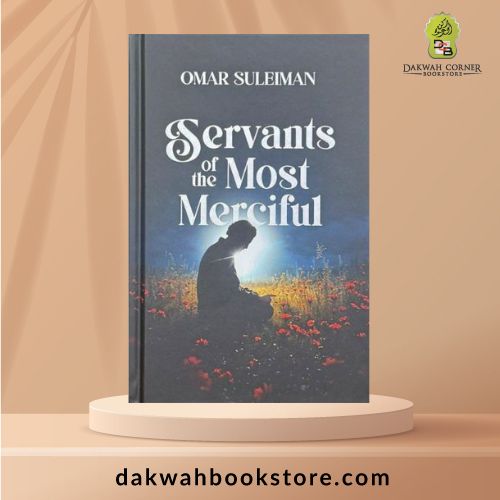
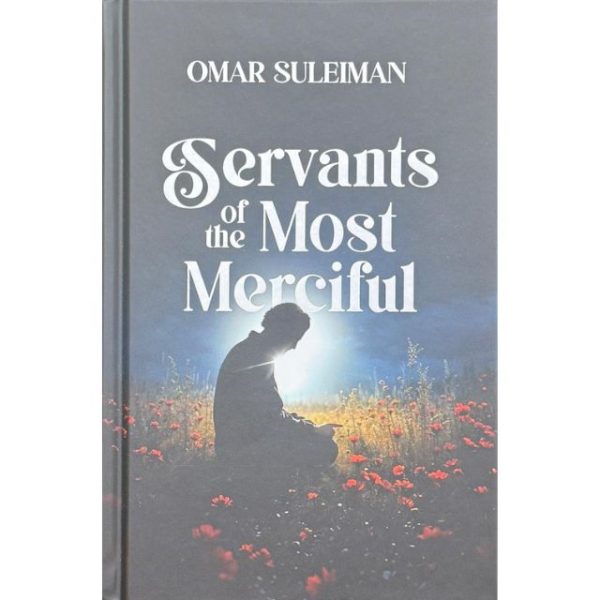
Servants of the Most Merciful (H/B)
One of the most beautiful portions of the Qur’an describes a detailed manual for how a believer should live their life. How one becomes Ibadur Rahman, the servant of the most Merciful. It encompasses multiple elements and dimensions of worship, family life, character, reflection, and living as a community.
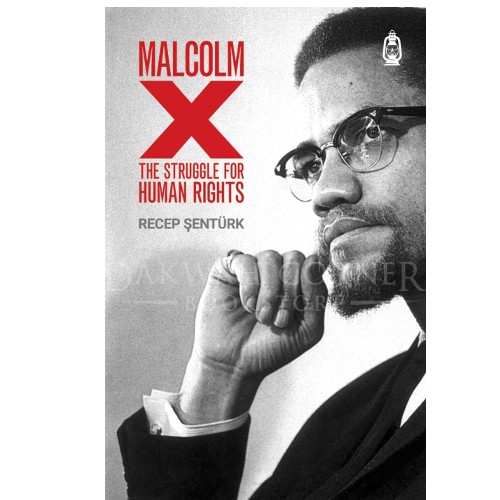
Malcolm X: The Struggle For Human Rights
One of the twentieth century’s most influential Muslims, Malcolm X – El-Hajj Malik Al-Shabazz – led a dynamic life and passed through many phases of thought. But one aspect of his thought remained constant – to never remain silent in the face of oppression.
In Malcolm X: The Struggle for Human Rights, Recep Şentürk offers more than a biography of a beloved figure in American history: he explores the concept of universal human rights in Islam using the life of Malcolm X as an example of a human rights struggle.
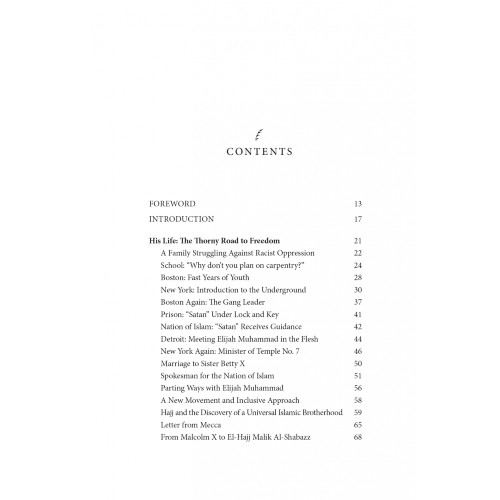
Engaging and innovative, the book is divided into three sections, dealing with Malcolm X’s life, beliefs and struggle in turn. In the first part, we learn about his early years, his time in prison and his hajj. In a section on his evolving faith, we learn about his youth as a Christian, his time with the Nation of Islam and his discovery of mainstream Islam. In the final section, Şentürk offers a new perspective: how we can relate slavery, abolition, civil rights and voting rights to Malcolm X’s struggle
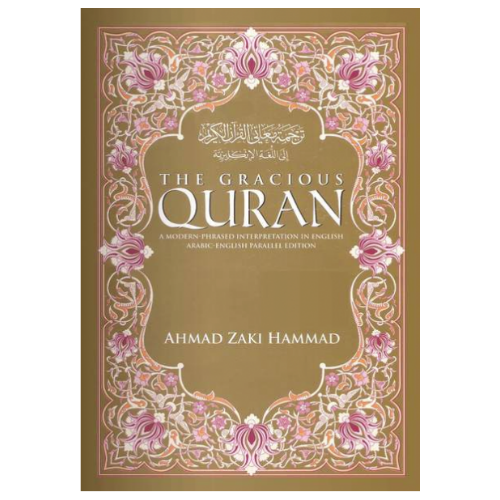
The Gracious Quran (H/B)
A modern-phrased interpretation in English (Arabic-English Parallel Edition)
This contemporary, authoritative translation interprets the Quran’s meaning for the English reader with unprecedented access to the Book that is the foundational source of Islam, its civilization and its peoples, who now comprise nearly one-fourth of humanity across the breadth of all the Earth’s continents and who form a crucial, contiguous community at the middle of the world.
Twenty years in the making, The Gracious Quran: A Modern-Phrased Interpretation of Its Meanings in English is both highly reliable and powerfully expressed. Where the Arabic of the Quran swells with important implication, that intent is conveyed in this rendering with a light hand in unobtrusive brackets, every effort having been expended to make its reading August, clear, accessible, and consistent while at the same time free of poetic pretension, philosophical complication, and lifeless literalisms. Its graceful layout and design augment the profound simplicity of the Quran’s message and give some semblance of resonance to its almost hypnotic power of literary expression.
The interpretation of The Gracious Quran is thoroughly guided by wide and deep experience with the civilizations of both luminous Islam and the enlightened west, while not unmindful of the light that infuses the world’s brilliant traditions. Fully four decades of scholarly expertise in Quranic studies and related disciplines are in its service, and the latest advances in the art of translation conspicuously benefit it.
About the translator:
Dr. Ahmad Zaki Hammad is an internationally known authority on Quran and Islamic Studies. He teaches Islamic Civilization and the Primary Disciplines of Quran Commentary, the Prophetic Traditions, and the Principles of Islamic Law at the foremost center of Islamic and Arabic learning in the Muslim world, AL-Azhar University (Faculty of Languages and Translations, Department of English). He is also a member of the Faculty of Shari’ah, Department of Juristic Studies.
He received his early Islamic and Arabic training at Al-Azhar University, Cairo, and was awarded the graduate degree of Alamiyyah from the Faculty of Theology. He holds a Ph.D., in Islamic Studies from the University of Chicago and is the author of a study of translation of Abu Hamid al-Ghazalis’s Al-Mustasfa min Ilm al-Usul, The Quintessence of the Science of the Principles of Islamic Law; and also Islamic Law: Understanding Juristic Differences, a Primer on the Science of al-Khulaf al Fiqhi in Light of the Shariah Sources.
He lived for many years in the United States, where he founded and served in numerous national and community Islamic institutions for American Muslims.
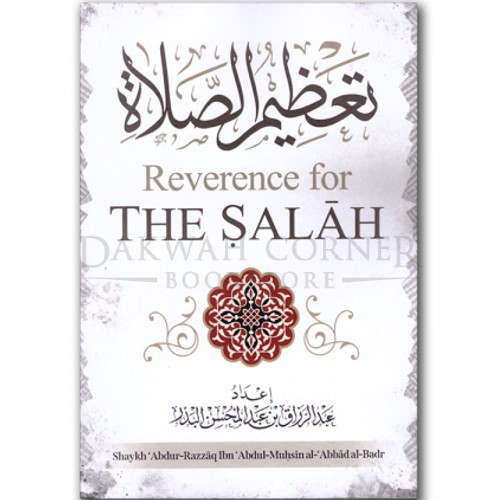
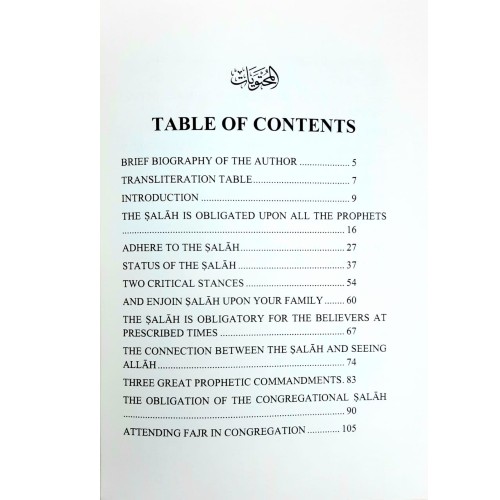
Reverence for The Salah (Maktabatulirshad Publication)
The Salah is the most crucial affair in a Muslim’s life. To preserve one’s religion, one has to observe it consistently; otherwise, one would be negligent of the Salah, let alone other acts of worship. It is the pillar of Islam, as it is soundly reported from the Prophet (May Allah elevate his rank & grant him peace). At the same time, the remaining deeds serve as the axis of support. Similarly, a tent without a pillar is useless. The Salah is the criterion for accepting all other deeds; if it is rejected [by Allah], all other deeds will be rejected. It is the first obligation ever in Islam and the last act of worship to wither. So, if one is negligent to the first and the last thing in Islam, then one will lose everything in-between.
Inadequate observance of the Salah that lacks adherence to its prescribed form in the manner performed by the Messenger of Allah (May Allah elevate his rank & grant him peace) will derail one’s religion. It will invalidate all deeds, cause misconduct in one’s religious and worldly affairs.

Indispensable Implication of Sunnah (P/B)
The author has discusses the topic of innovation in Islam. For example, he proves that celebrating the Prophet’s birthday is not right according to the Qur’an and Sunnah.
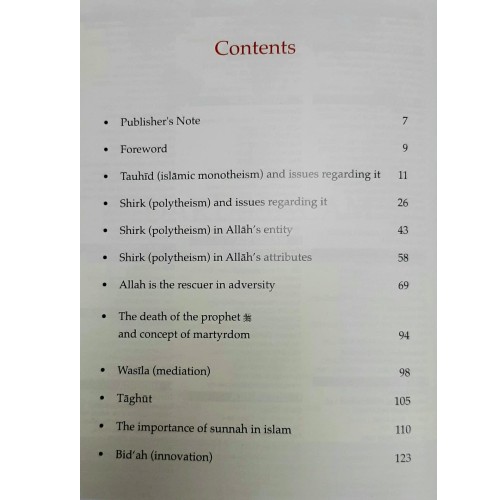
Islam Salvation for Mankind
The most important issue, for every Muslim, is to know the proper creed of beliefs. The obligation of having correct Faith and its fundamental pillars have been addressed in the Qur`an and authentic Ahadith at numerous places. It is the requirement of every Muslim, male or female, regardless of their nationality or age, to know the correct beliefs.
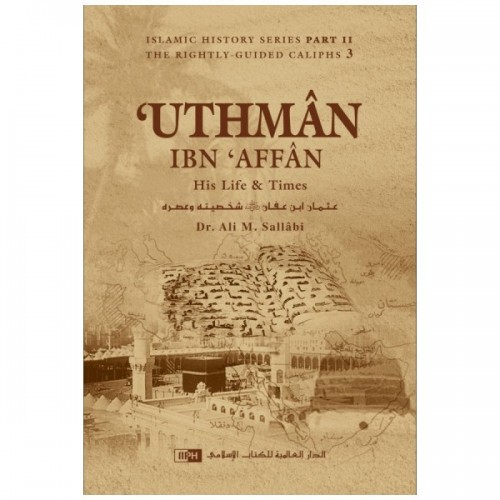
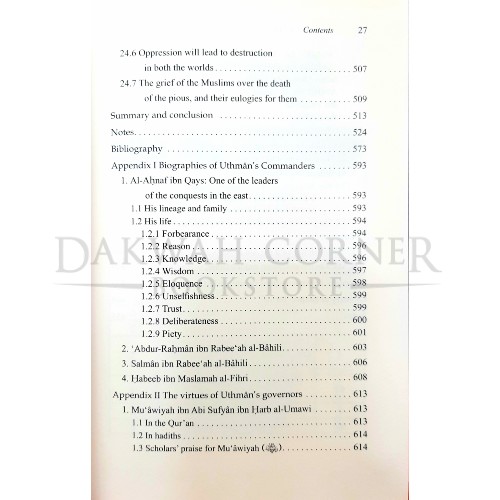
Uthman Ibn Affan His Life and Times (IIPH)
By Dr. Ali Muhammad As-Sallabi
In today’s crisis-ridden world, amidst the numerous internal and external forces striking at the roots of Islam, Muslims are truly hard pressed to find strong and competent leaders. This has not always been the case, though. Examples of first-rate leaders are plentiful in Islamic history.
The life and times of Uthmân ibn Affân, as detailed in this book by Dr. Ali M. Sallâbi, truly illustrate the characteristics of exemplary leaders along with the commendable qualities of those under them. This account of how Uthmân ibn Affân, the third Rightly-Guided Caliph, expanded the Islamic state, compiled the Qur’an into a single edition, and, finally, dealt with the turmoil that engulfed the Ummah, makes for a very enlightening read. The author has also given us insight into the life of Dhun-Noorayn (Uthmân, the ‘Possessor of the Two Lights’) before he became the caliph. Readers discover his attachment to the Prophet (sa), his relationship with the Qur’an and his generous financial contributions towards the founding of the Islamic state. All in all, this book will prove to be a valuable resource on Islamic history.
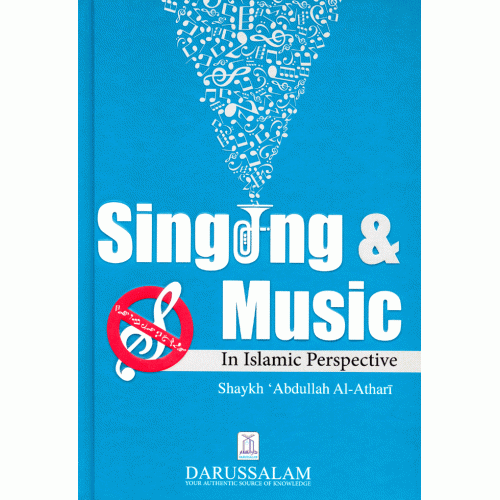
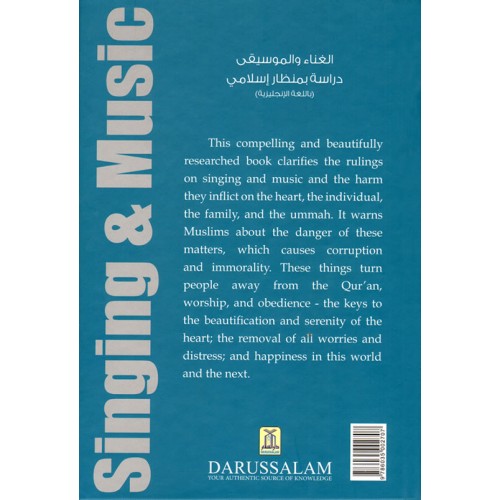
Singing and Music In Islamic Perspective (H/B)
This compelling and beautifully researched book clarifies the rulings on singing and music and the harm they inflict on the heart, the individual, the family, and the ummah. It warns Muslims about the danger of these matters, which causes corruption and immorality. These things turn people away from the Qur’an, worship, and obedience – the keys to the beautification and serenity of the heart; the removal of all worries and distress; and happiness in this world and the next.
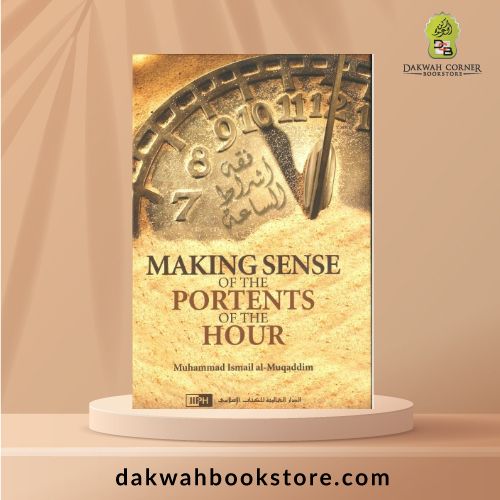
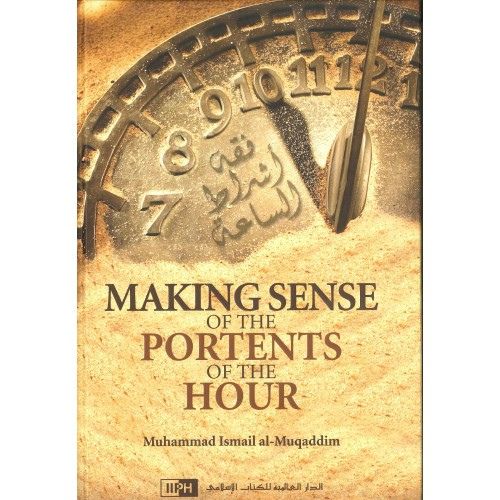
Making Sense of the Portents of the Hour (H/B) – IIPH
Are things inevitably getting worse and worse, year after year, century after century, with no way to alter the course of events? Is the Muslim Ummah doomed to experience failure and humiliation until the Mahdi arrives? Will he restore its former glory and bring victory over all its enemies? Are all our efforts to support Islam destined to end in failure? Instead of taking action, should we simply wait for the return of Jesus (peace be upon him) towards the end of time? Is the Dajjâl (Antichrist) alive today? Does he have secret connections with some prominent world figures? Is the hour very close? Could it come upon us at any moment, on any day? If so, what is the point of striving to improve our situation?
Using evidence from the Qur’an and the Sunnah, the author explains the true Islamic teachings on the portents of the hour, clearing up some of the misconceptions about them and giving advice on how Muslims should respond to them. The book is an interesting and informative read that will leave the reader empowered with knowledge.
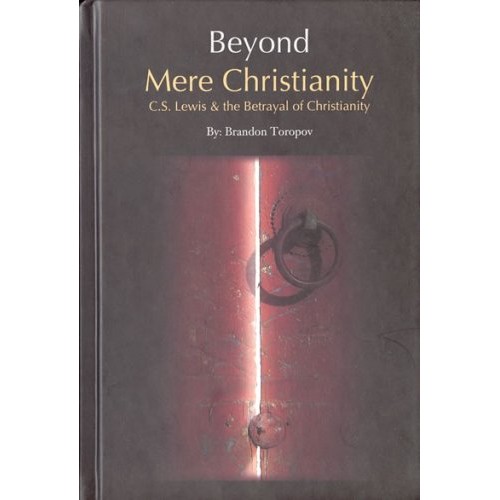
Beyond Mere Christianity (H/B)
The book is called Beyond Mere Christianity for two reasons. First, in response to C.S. Lewis’ influential 1952 work, Mere Christianity, which stands as a masterpiece of Christian apologetics. The second reason, perhaps less obvious, is that a case can be made, based on current, responsible Gospel scholarship, that Jesus was calling his people to the Salvation that lies beyond the worship of the merely created, the Salvation that relies instead on the direct worship of the Creator. I believe emphatically that the authentic words of Jesus invite us to move beyond what is conventionally understood as Christianity for this Salvation.

There are no reviews yet.