

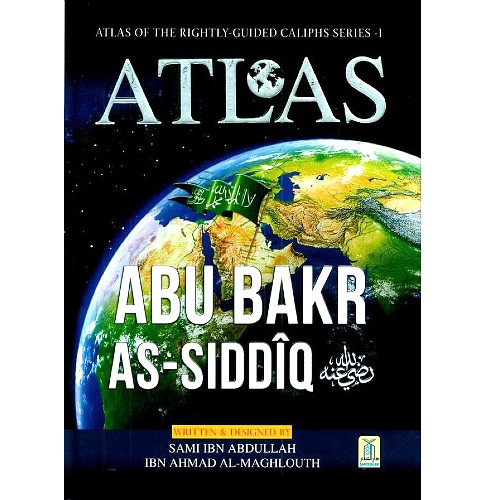

| Weight | 0.28 kg |
|---|---|
| Dimensions | 18 × 7 cm |
| Author | |
| Binding | Softcover |
| Pages | 686 |
| Publisher | Darussalam |
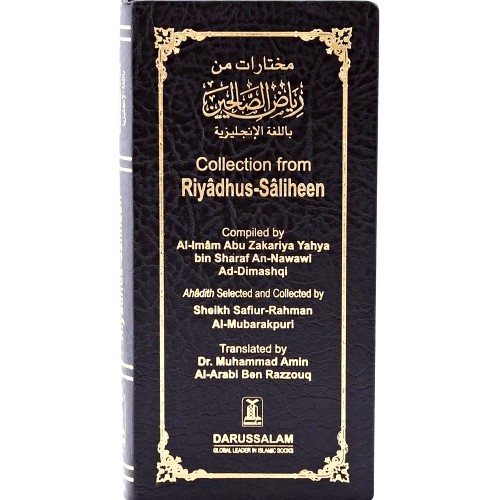
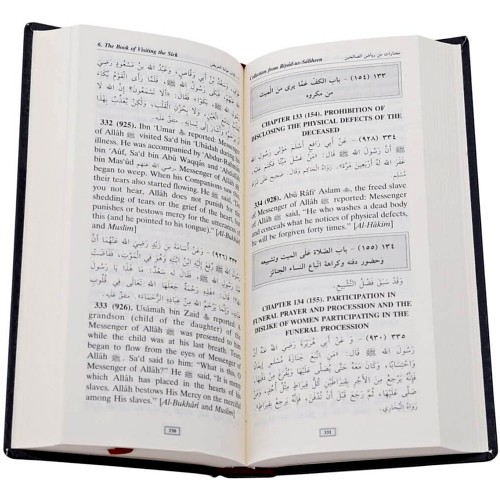
Collection from Riyadhus Saliheen (Tall Edition)
RM50.00
Hurry up, Only 2 left.

Highlights:
somdn_product_page
Compare
Imam Nawawi the great Hadith and Fiqh scholar compiled Riyad-us-Saliheen which acclaimed an important position in the Hadith Collections.
Additional information
Reviews (0)
Be the first to review “Collection from Riyadhus Saliheen (Tall Edition)” Cancel reply
You must be logged in to post a review.
Related Products
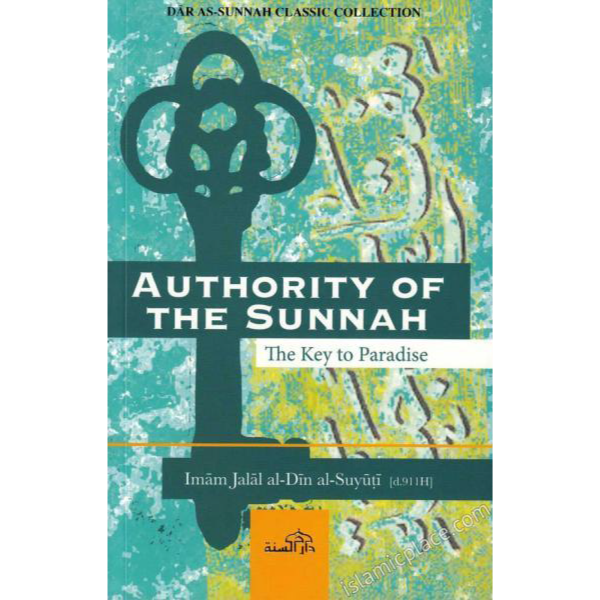
Authority of The Sunnah the Key to Paradise
Highlights:
Allah Most High Said, “And whatever the Messenger has given you, take it; and what he has forbidden you, refrain from it.” [Al-Hashr (59):7]
The Prophet said, “I have not left out anything of which Allah, The Most High has Commanded you with except I have apprised you of it. Likewise, I have not left out anything of which Allah has Prohibited you from it, except I have apprised you of it…” [Al Bayhaqi, 7/76 & others]
Together with the Qur’an, the Sunnah is the pivotal foundation and primary source of the Islamic faith. Following both of them is mandated by Allah Himself and obligated upon Muslims to adhere and live accordingly. Muslim theology is established upon them and remains defective and incomplete should either be forsaken for they both explain and interpret each other.
During his time, Imam al-Suyuṭi felt a genuine need to pen this compelling book in confuting those who either rejected the Sunnah altogether or did not grant it the status and respect it deserves in the religion. He primarily compiled from the works of Imam Al-Bayhaqi elucidating the position of Imam Shafi’i, and firmly laid out the arguments supporting the Sunnah of the Prophet by outlining its critical importance, its authority, and implication to one’s life.
Salvation, therefore, lies in embracing the Sunnah fully, for indeed it is the key to facilitating our worldly lives and thereafter, unlocking the doors of Paradise, as Shadh ibn Yaḥya said perfectly, “There is no better way to Paradise than the way of those who have followed the Sunnah.”
RM60.00
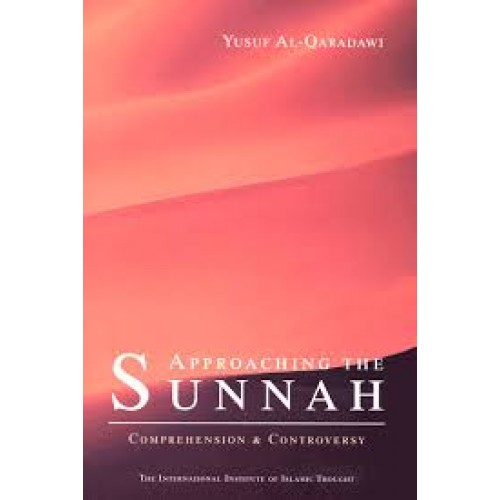
Approaching the Sunnah: Comprehension & Controversy (P/B)
Highlights:
The Sunnah still provides the stable moral framework – the grammar – that enables Muslims, by formal rules and inward sense, to know right from wrong. However, separation from the mainstream of life puts the Sunnah in danger of becoming rigid – an archaism. Addressing that danger, this book explains how the Sunnah can function as the grammar of a living, adaptive language, capable of guiding (and not shying from) the mainstream.
The first chapter sets out the qualities that characterize authentic application of the Sunnah: universality, coherence (so that different spheres of human responsibility are not split), compassionate realism, moderation, and humility. The second explains standards and procedures for determining the Sunnah in the fields of jurisprudence and moral instruction. The third chapter illustrates through detailed examples common errors in understanding the Sunnah – reading hadiths singly without sufficient context, confusing legal and moral injunctions, means and ends, figurative and literal meanings…–and it proposes remedies for these errors.
YUSUF AL-QARADAWI is one of the Islamic world’s most widely respected and prolific scholars. His works have remained popular over many decades. Among the best known of his books to appear in English is The Lawful and the Prohibited in Islam (first edition 1994).
RM75.00

The Necessity of the Hadith in Islam (H/B)
Highlights:
There was a time when the notion of Hadith rejection was inconceivable. Sad to say, it is now becoming a widespread phenomenon in many countries. The educated and the ignorant, veteran Muslims and reverts, the middle class as well as the elite are falling prey to the misleading ideas projected by the Hadith rejecters through books and other forms of publication. The Internet has, unfortunately, given them a new and effective platform. Emad Hamdeh has taken up the task of replying to these Hadith rejecters with sound and convincing arguments. The Necessity of the Hadith in Islam not only explains the need for the Hadith and the Sunnah at all times, but also presents and refutes the main arguments put forward by Hadith rejecters. Furthermore, Hamdeh has profiled the top few Hadith rejecters and summarized their ideas. This is a well-researched, well-referenced and comprehensive work, which provides useful information to those seeking more knowledge on the subject. It will also sufficiently answer many different questions which come to mind after reading some of the arguments of the Hadith rejecters. Muslims today need to read works such as these to ensure that they are not misled, especially through the Internet.
RM45.00
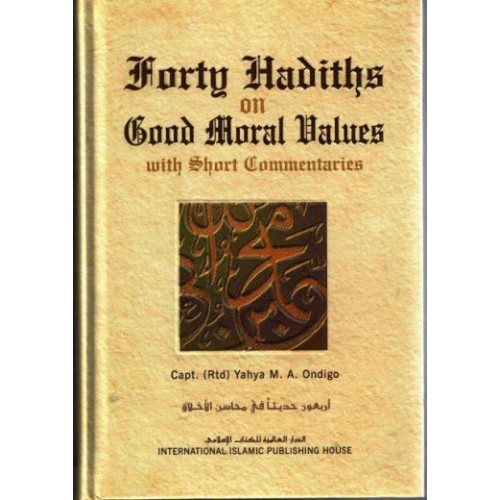
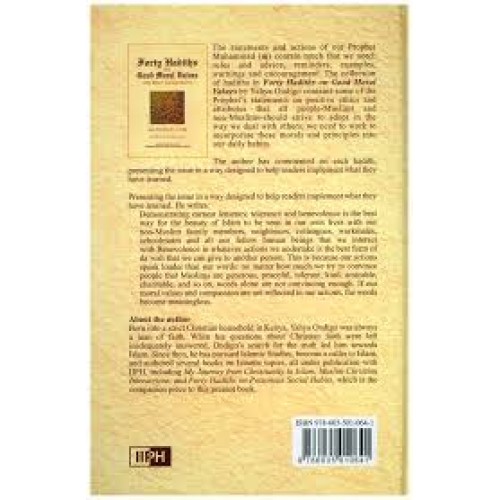
Forty Hadiths On Good Moral Values (H/B)
Highlights:
The statements and actions of our Prophet Muhammad (s) contain much that we need: rules and advice, reminders, examples, warnings and encouragement. The collection of hadiths in Forty Hadiths on Good Moral
Values by Yahya Ondigo contains some of the Prophet?s statements on positive ethics and attributes that all people-Muslims and non-Muslims-should strive to adopt in the way we deal with others; we need to work to incorporate these morals and principles into our daily habits.
RM65.00
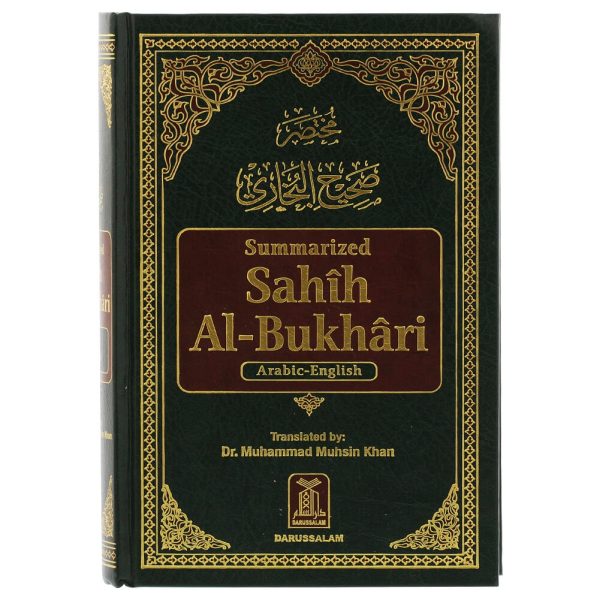
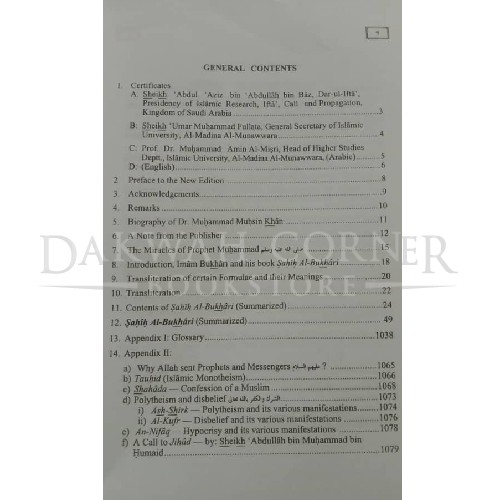
Summarized Sahih Al-Bukhari (Medium)
Highlights:
Noble Hadith and Hadith Sciences
RM90.00

Scholars of Hadith (P/B)
Highlights:
This book presents an extensive, in-depth analysis of great Muhaddithun (scholars of the science of Hadith). Each chapter presents detailed biographies of Malik b. Anas, Ibn Hanbal, al-Bukhari, Muslim, al-Tirmidhi, Abu Dawud, an-Nasai, Ibn Majah, ad-Darimi and al-Bayhaqi along with the methods they used in Hadith collection and classification. This work is especially important in today’s world where many Muslims have a dire need to connect with the great corpus of work that was produced by the scholars or traditional Islam. A work such as Scholars of Hadith has been long overdue in the English language and it will certainly make for productive reading for all interested in deepening their knowledge of Islam.
RM24.00
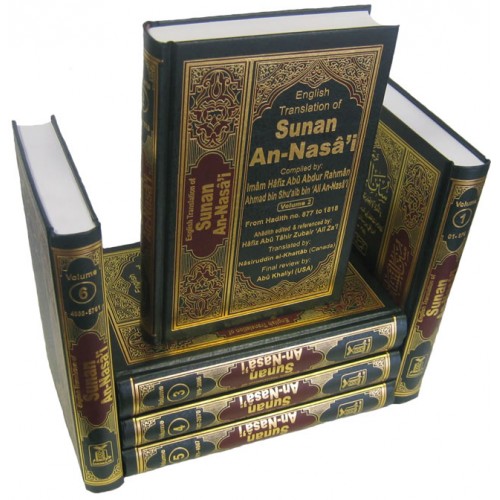
Sunan An-Nasa’i (6 Vol) (H/B)
Highlights:
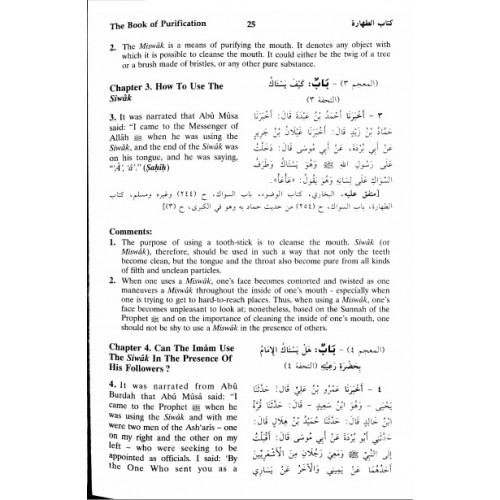
Sunan An-Nasai has the fewest weak ahadith after the two Sahih collections. This Sunan is one of the six is al-Mujtaba or as-Sunan as-Sughara, which is a synopsis of a large collection of ahadith which he considered to be fairly reliable. In the smaller collection, only those ahadith which he considered to be reliable have been included.
It was compiled by the great scholar of hadith, Abu Abdur-Rahman Ahmad bin Shu’aib bin Bahr An-Nasae (Nasa’ of Khurasan) (214-303AH). Imam An-Nesai, like other great scholars of hadith traveled to Baghdad, Ash-Sham, Egypt, Mecca, and many other cities to seek knowledge. He received the praises of many scholars including Ad-Daraqutni who said about him: “He is given preference over all others who are mentioned with this knowledge from the people of his time”. Some scholars consider his compilation to have the least number of defective or weak narrations among the four Sunan. This great book of his contains 5761 ahadith, making it as an invaluable addition to anyone’s library.
RM460.00
Sunan Abu Dawud (5 Volumes) H/B
Highlights:
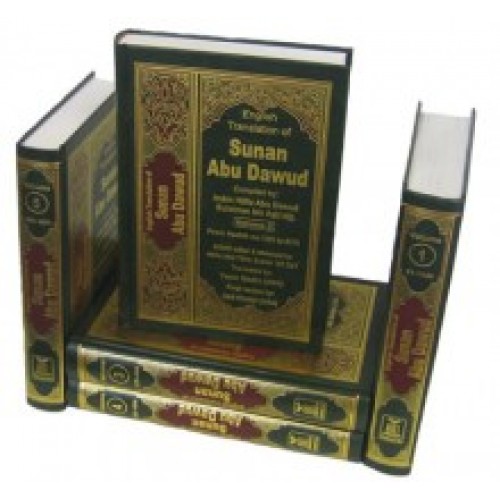
New edition of Sunan Abu Dawood in 5 volumes by Dar-us-Salam with commentary after each hadith. Unlike other prints, this edition has crisp and clear printing in deluxe 6×9″ bounding. Like the other translations of the six books of hadith, Dar-us-Salam Publications, has taken great care in correct translation, simple and clear modern English language, and high quality publishing.
Ahadith in the book are followed by comments to explain issues and to help readers derive lessons. To aid readers further, Dar-us-Salam, has added several features like section on how to benefit from Sunan Abi Dawud, about the Arabic and technical terms used, information about the hadith compilations and a glossary of Islamic terms in the last volume.
Each hadith is also followed by its status in regards to the authenticity. The status is explained more in detail in the Arabic text. The chain is also complete in the Arabic text while it is removed from the English to reduce the length and not being of much benefit to the English readers.
RM315.00
Sahih Muslim (7 Volumes)
Highlights:
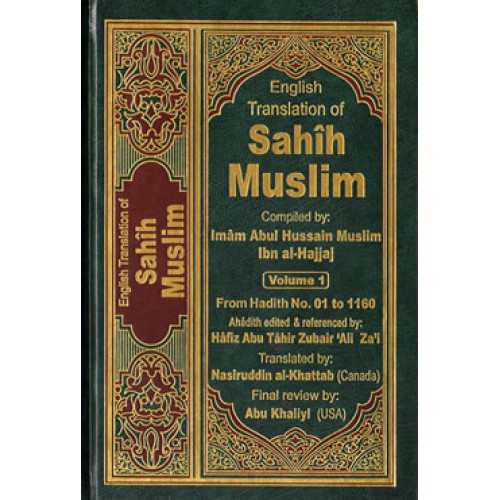
The authentic hadith collections of Bukhari and Muslim are excellent in respect to both chain of transmissions and the texts as well as their general utility in that they gave guidance in almost all walks of life. The collections won the praise and acclaim of of Hadith scholars so much that they themselves produced works containing the same Ahadith as found in the collection of both Bukhari and Muslim but with their own independent chains consisting of a lesser # of sub-narrators and called their works Mustakhraj.
Imam Muslim is one of the foremost preservers of ahadith of the Prophet. His book comes second only to Sahih al Bukhari in terms of authenticity according to majority of scholars. It is considered to be better than Sahih Bukhari in terms of organization and repetition according to some scholars of Islam. It is the second in the collection of 6 books called “Sihah Sittah” or “6 most authentic books”. Imam Muslim took painstaking efforts in preserving the words/actions/sayings & approvals of the Prophet. He has mostly used 4-5 narrators in the chain of transmission although there are a couple of hadith containing 3 narrators. Imam Muslim was a very good student of Imam Bukhari and some of his Shuyukhs, although he did not narrate from Imam Bukhari too much, thus reducing the # of narrators.
RM405.00
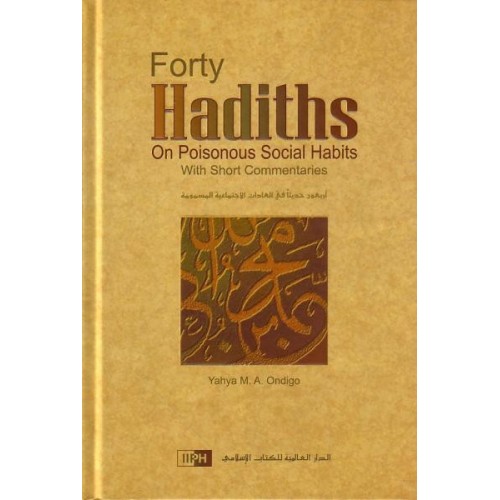
Forty Hadiths On Poisonous Social Habits With Short Commentaries
Highlights:
In this unique collection of Forty Hadiths on Poisonous Social Habits, Yahya Ondigo emulates the tradition of Imam an-Nawawi and other great scholars. He has compiled hadiths (records of the guidance) of the Messenger of Allah (peace and blessings of Allah be upon him) and briefly commented on each.
This well-researched and thoroughly documented book offers both Muslim and non-Muslim readers a clear understanding of how the divinely-inspired words and actions of Prophet Muhammad (peace and blessings be upon him) apply to our contemporary societies. Such social ills as lying, greed, corruption, smoking, gambling and others have been discussed along with their social implications.
After elaborating each issue, the author has offered wise and insightful advice to get rid of that particular social habit. In this beautifully-worded piece, his deep faith in Islam shines through along with his love and concern for humanity.
This compilation is meant to awaken our realization of the causes and effects of these poisonous habits so that perhaps we may be reminded, take admonition, and try to change our situations. As is the rule, Allah will not change the condition of a people either from bad to good, or vice versa, until the people change what is in them selves.
RM65.00
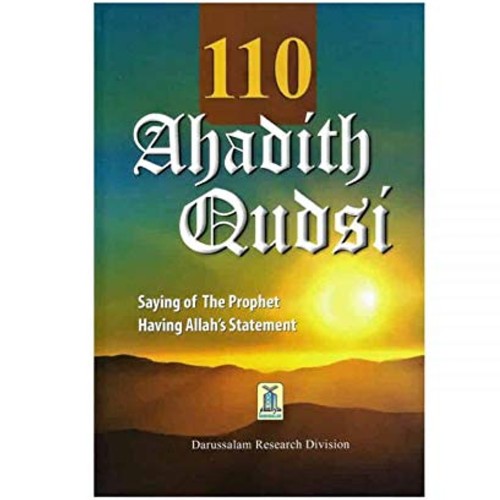
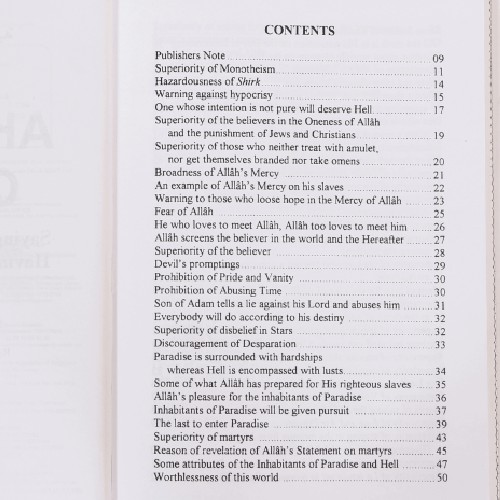
110 Ahadith Qudsi (3rd Edition)
Highlights:
Ahadith are the sayingd, deeds and approvals of the Prophet SAW under Divine guidance and are generally traced back to the Prophet SAW as regards their authority. But some Ahadith hold a distinct place and are termed as Ahadith Qudsi (Sacres Ahadith) and the authority in these Ahadith is attributed to Allah through the Prophet SAW. It is a collection of 110 such Ahadith relating to the important aspects of daily life so that the readers may get benefited from it for the success in this life as well as in the Hereafter.
RM35.00
Recently Viewed
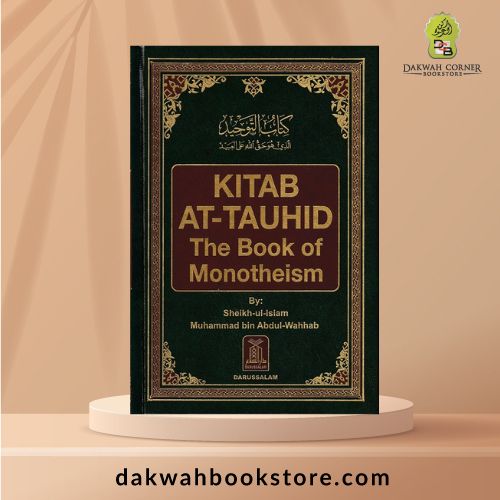
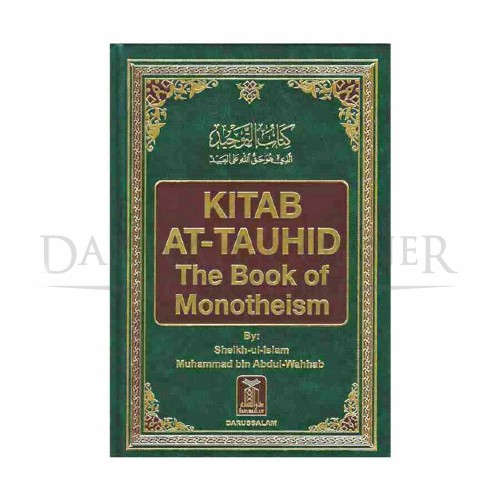
Kitab At-Tauhid The Book Of Monotheism
Highlights:
In this book, all the relevant Verses have been discussed reasonably, rationally and sincerely; and the essence of the Qur’an and Sunnah is placed in a very simple and appealing manner. This is the reason that the upright persons, beyond group ism and prejudices, have been adopting the correct Islamic path – the path of the Qur’an and Sunnah – under the influence of the basic facts and proofs produced herein. Kitab At- Tauhid is one of the best books on the subject of Tauhid (Monotheism) and ranks high in authenticity. Till date it has been published many times. It has been a means of guidance for millions of people throughout the world, by taking them out of the darkness of polytheism, heresy and error. If Allah wills, this book would also undoubtedly prove beneficial in all the times to come.
RM40.00
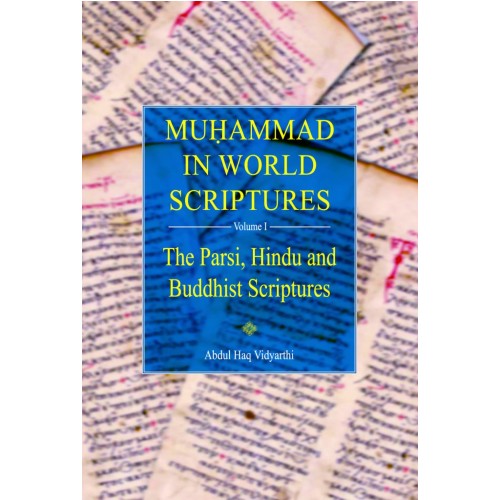
Muhammad in World Scriptures: Volume I (IBT)
Highlights:
This is the first volume of the series on the Prophet Muhammad as found in world scriptures. The author, a scholar of the Vedas and comparative religion, argues that numerous prophecies of the coming of the Holy Prophet are found in the Parsi (Zoroastrian), Hindu and Buddhist scriptures. He attempts to illuminate these prophecies and explains the rationale of his conclusions.
RM34.00
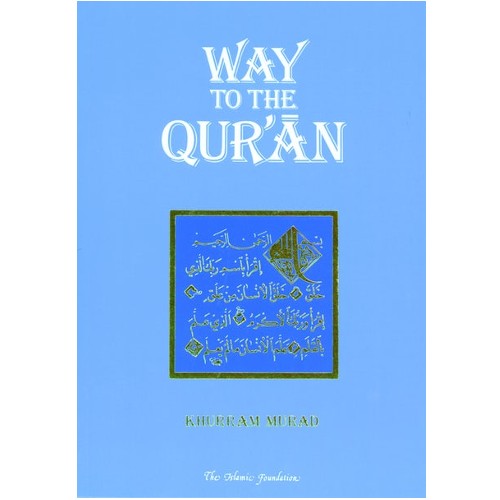

Way To The Quran
Highlights:
An authoritative and accessible study guide that covers what the Book means to the believers and sets out the essential prerequisites of body, mind, and heart that serve to light up the inner life with the Qur’anic worldview; the etiquette of reciting, reading, and understanding the Qur’an; how to study the Qur’an collectively; and how to live by its teachings.
RM45.00
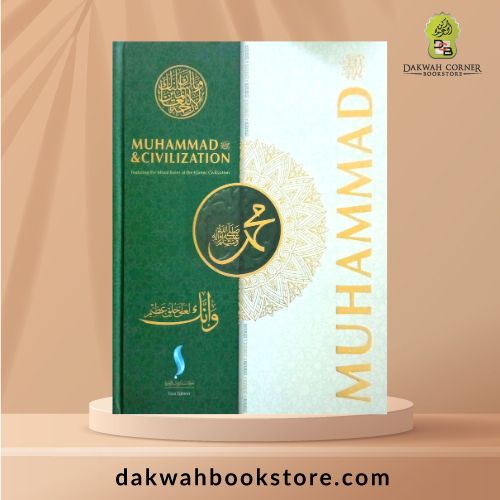
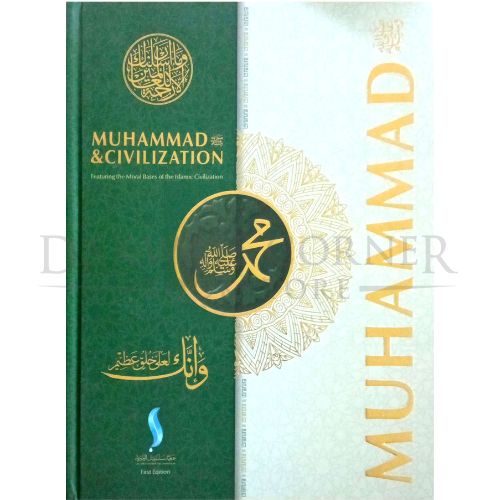
Muhammad & Civilization (H/B)
Highlights:
“My choice of Muhammad to lead the list of the world’s most influential persons may surprise some readers and may be questioned by others, but he was the only man in history who was supremely successful on both the religious and secular levels.”
– Michael H. Hart
Author of “The 100: A Ranking of the Most Influential Persons in History”
“If the grandeur of the aim, the smallness of the means, the immensity of the result are the three measures of a man’s genius, who would dare humanly compare a great man of modern history with Muhammad?”
– Alphonse de Lamartine
A French poet, writer and politician.
Author of “Histoire de la Turquie”
RM200.00
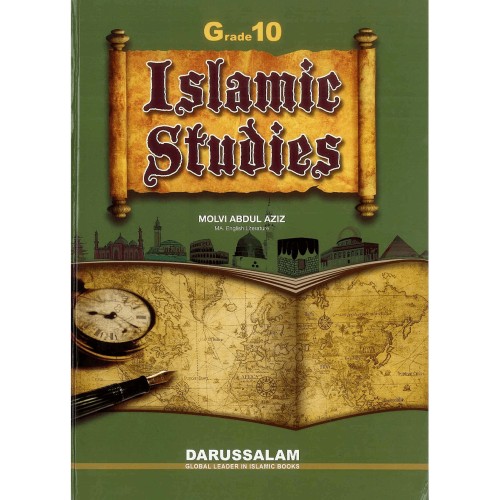
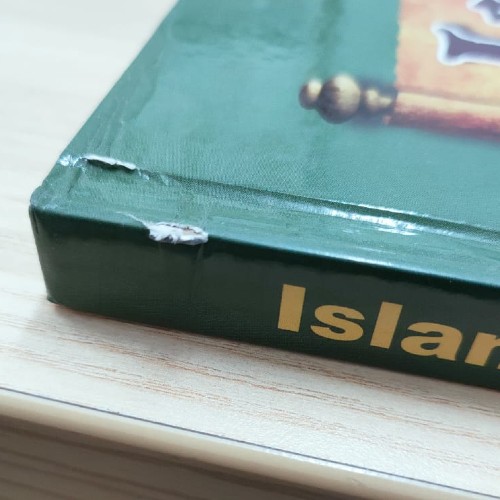
Islamic Studies Grade 10 by Molvi Abdul Aziz
Highlights:
Damaged book cover (as images)
RM64.00
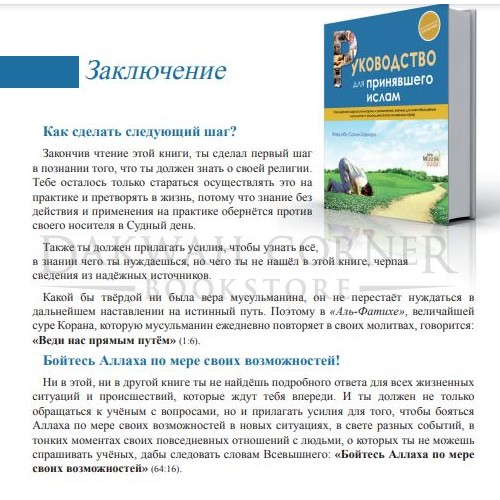
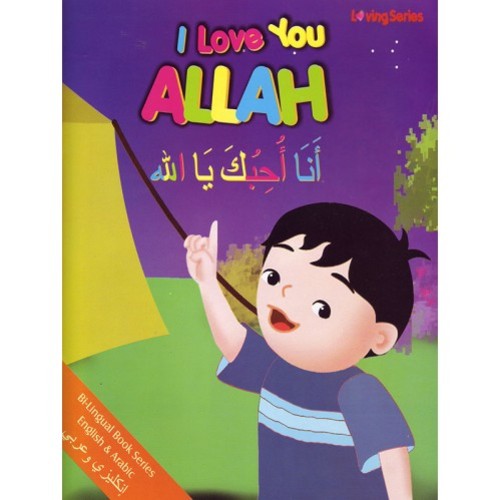
I Love You Allah (ARABIC/ENGLISH) (Loving Series)
Highlights:
This bilingual English & Arabic book series teaches children about Allah and the important people in their lives.
The first book in this Loving Series, I Love You Allah was initially sold out, but has now been reprinted & updated.
This book develops
– Arabic word recognition
– Allah (God) consciousness
– Connection to the Arabic language
– An appreciation of what Allah (God) has given us
Includes a transliteration table to assist non-Arabic readers.
There are 2 other books in the Loving Series.
RM25.00

Dream Interpretation According to the Qur’an and Sunnah (P/B)
Highlights:
Separates the authentic Islamic teachings on dream interpretation from the myths, superstitions and fabrications being circulated on the subject. It also provides a guide for dream interpretation according to references found in the Quran and authentic hadeeths.
Since the English publication of Muhammad Al-Akili’s 508 page work entitled, Ibn Seerin’s Dictionary of Dreams: According to Islamic Inner Traditions in 1992, followed shortly thereafter by Dreams and Interpretations by Ibn Seereen, there has been an explosion of dream interpretation and interpreters among English-speaking Muslim communities in the West. On the other hand, dream interpretation has been a long established tradition in the Muslim East. However, it has become so mixed up with superstition, myths and fortunetelling, that most educated Muslims shun this area. The fact of the matter is that dream interpretation is mentioned in the Quran and was regularly practised by the Prophet (pbuh), himself. Consequently, there is a real need to understand this subject, especially, considering that humans spend about a third of their lives sleeping.
RM16.50
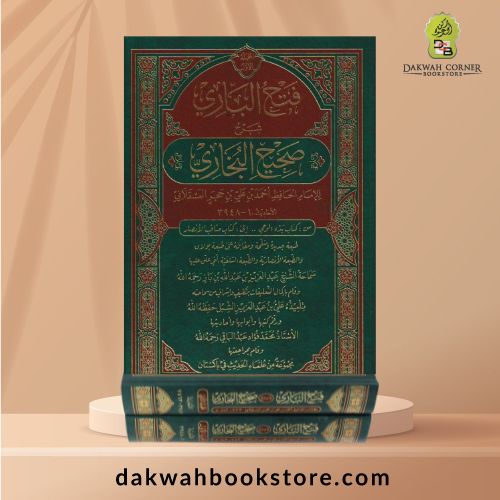
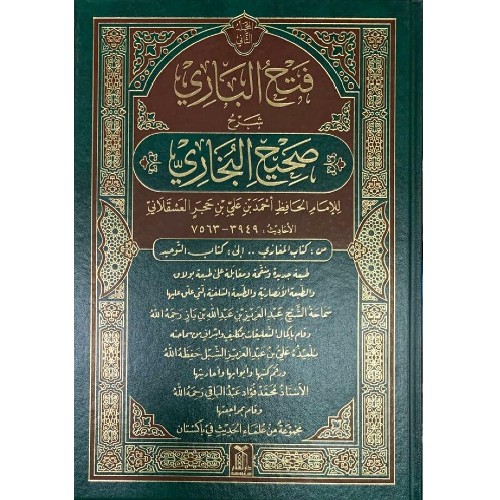
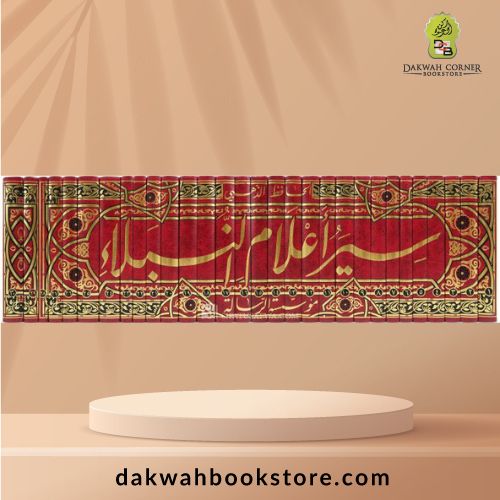
[AH] Fathul-Bari Sharah Sahi Al- Bukhari (2 vols) – فتح الباری شرح صحیح البخاری
Highlights:
Fathul-Bari Sharah Sahi Al- Bukhari vol 1&2
RM400.00
RM2,600.00 RM2,800.00

The Cross and The Crescent (IIPH)
Highlights:
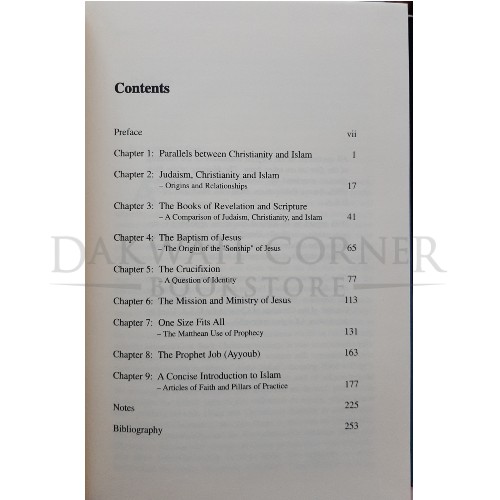
In The Cross and The Crescent, Dr. Dirks, a former ordained minister (deacon) in the United Methodist Church, a graduate of Harvard Divinity School and with a doctorate in clinical psychology, reaches out to the Christians and the Muslims for an interfaith dialogue. Drawing on his seminary education and thirty years of interaction with Muslims in America and overseas, the author digs deep into the roots of Christianity to bring out obscure information that highlights what was once common between Christianity and Islam. He envisioned that, “In writing this book, I would like to touch the lives of those Christians who have not been given the knowledge that I have gained both about Islam, from my direct contact with Muslims, and about Christianity from my seminary education. I want to share with those Christians, who are willing to listen, what is so often known by their clergy and church leaders, but seldom finds its way into their knowledge of their own religion. Likewise, I would like to reach out to the Muslims, in order to help them understand the religious commonality that they share with Christians”.
RM43.00
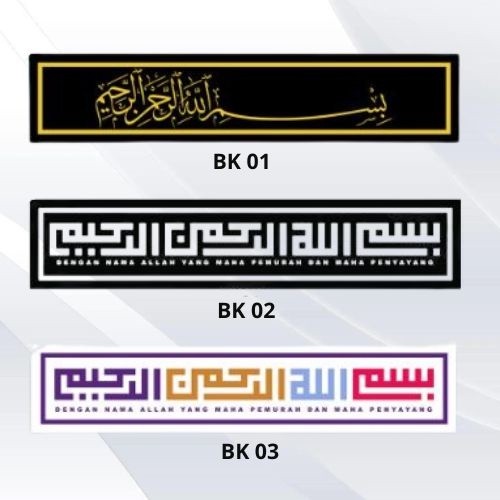
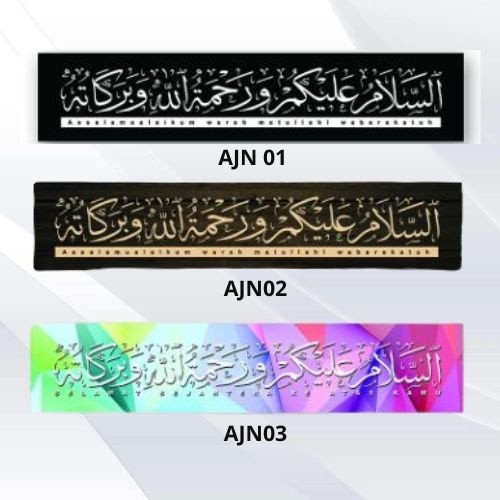
Frame Khat BISMILLAH dan ASSALAMUALAIKUM
Highlights:
FRAME KHAT: ASSALAMUALAIKUM DAN BISMILLAH.
✔1 panel frame
✔Material : 440gsm Tarpaulin dengan kemasan frame kayu
✔High Quality Printing : 1200dpi
✔UV Ink untuk image yang lebih kemas
✔Warna yang menyerlah dan tahan lama
✔Kalis air dan mudah dibersihkan
✔2pcs hook dipasang di bahagian belakang
✔Frame Saiz : 24 X 5inci
Collection from Riyadhus Saliheen (Tall Edition)
Highlights:
Imam Nawawi the great Hadith and Fiqh scholar compiled Riyad-us-Saliheen which acclaimed an important position in the Hadith Collections.
RM50.00
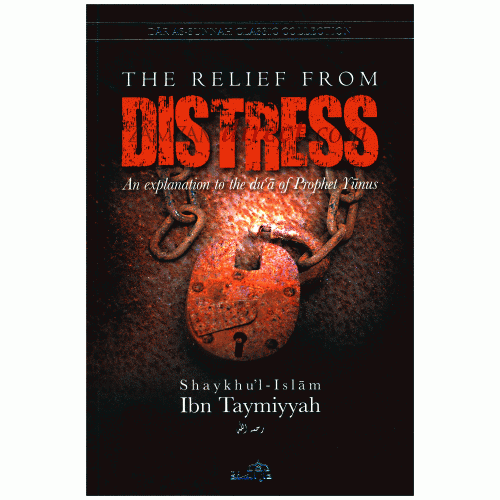
The Relief From Distress : An Explanation to the dua of Prophet Yunus (P/B)
Highlights:
Shaykh al-Islam Ibn Taymiyyah, may Allah sanctify his soul, was asked about the saying of the Prophet (pbuh),
The invocation of my brother Yunus, “none has the right to be worshipped save You; glory be to You, far removed are You from any imperfection; I have been amongst the wrong-doers,” none who is experiencing difficulty employs it except that Allah would relieve him of his difficulty.
What is the meaning of this du’a (prayer, supplication)?
Are their any unstated conditions that have to be met when one articulates it?
What is the connection between belief in the heart and the meaning of this supplication such that it leads to the removal of difficulty?
Why did he explicitly confess, ‘I have been amongst the wrong-doers’ when it is known that tawhid in itself leads to the removal of difficulty?
Is it sufficient to acknowledge ones’ sin alone, or must this be accompanied by repentance and the firm resolve not to repeat that sin in the future?
Why is it that difficulty and harm is removed only when a person relinquishes any hope, reliance and dependency upon the creation?
How can the heart relinquish the characteristic of putting hope in the creation and depending on them, and instead put its hope in Allah, Exalted is He, and turn to Him in its entirety?
What are the methods that would aid the heart in doing this?
The author replies to these questions in the form of this book.
RM117.00
There are no reviews yet.