
| Weight | 0.55 kg |
|---|---|
| Dimensions | 22.5 × 15.5 × 2 cm |
| Author | |
| Binding | Paperback |
| ISBN | 9781565644489 |
| Pages | 215 |
| Publisher | International Institute of Islamic Thought (IIIT) |
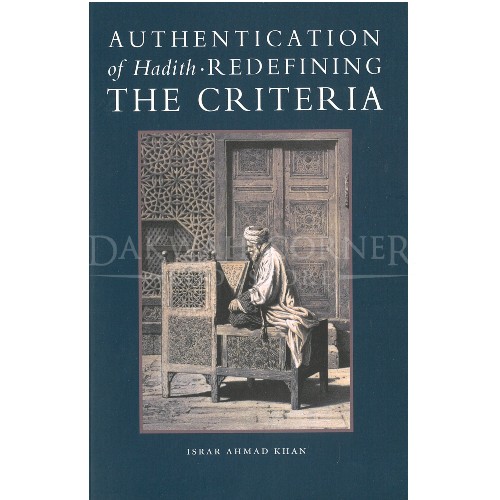
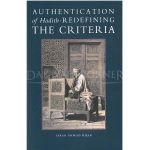
Authentication of Hadith: Redefining the Criteria (IIIT)
RM75.00
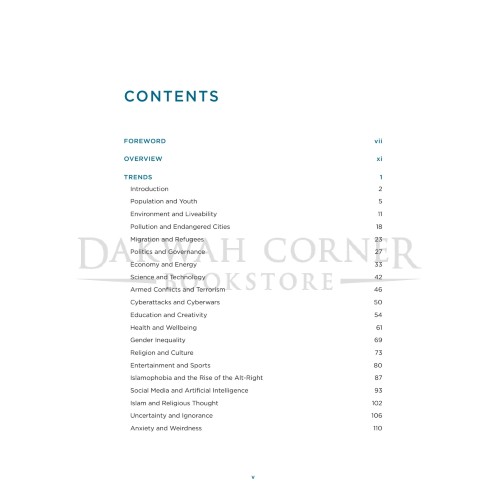
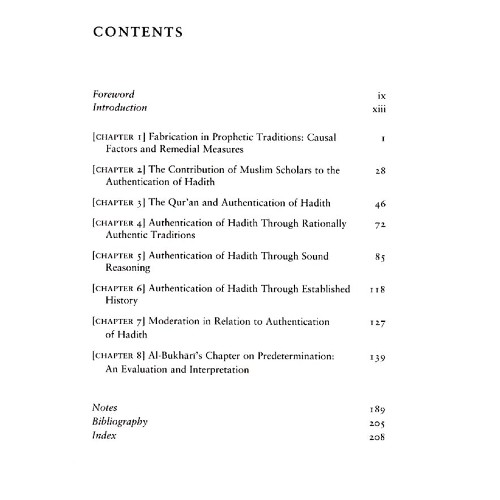
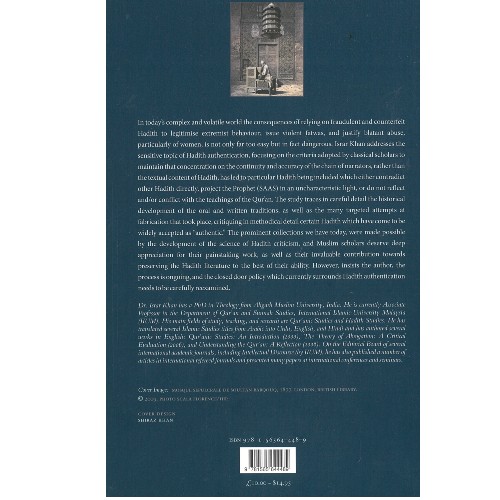
In today’s complex and volatile world the consequences of relying on fraudulent and counterfeit Hadith to legitimise extremist behaviour, issue violent fatwas, and justify blatant abuse, particularly of women, is not only far too easy but in fact dangerous. Israr Khan addresses the sensitive topic of Hadith authentication, focusing on the criteria adopted by classical scholars to maintain that concentration on the continuity and accuracy of the chain of narrators, rather than the textual content of Hadith, has led to particular Hadith being included which either contradict other Hadith directly, project the Prophet (SAAS) in an uncharacteristic light, or do not reflect and/or conflict with the teachings of the Qur an. The study traces in careful detail the historical development of the oral and written traditions, as well as the many targeted attempts at fabrication that took place, critiquing in methodical detail certain Hadith which have come to be widely accepted as authentic. The prominent collections we have today, were made possible by the development of the science of Hadith criticism, and Muslim scholars deserve deep appreciation for their painstaking work, as well as their invaluable contribution towards preserving the Hadith literature to the best of their ability. However, insists the author, the process is ongoing, and the closed door policy which currently surrounds Hadith authentication needs to be carefully reexamined.
Frequently Bought Together
Authentication of Hadith: Redefining the Criteria (IIIT)
Add a review Cancel reply
You must be logged in to post a review.
You may also like…
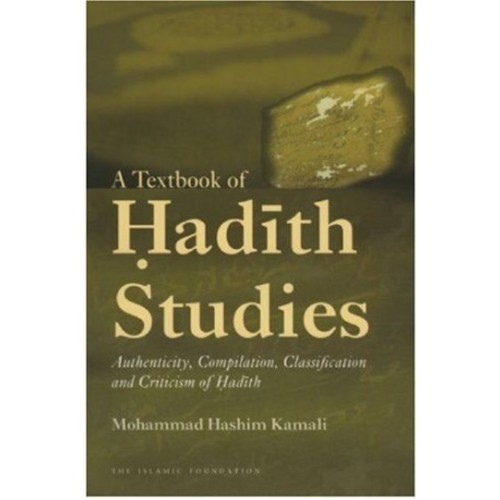
A Textbook Of Hadith Studies (P/B)
Mohammad Hashim Kamali, born in Afghanistan in 1944, was a professor of Islamic Law and Jurisprudence at the International Islamic University in Malaysia, and dean of the International Institute of Islamic Thought and Civilization (ISTAC) from 1985 2007. He is currently chairman and CEO of the International Institute of Advanced Islamic Studies, Malaysia. He is also on the international advisory boards of eleven academic journals published in Malaysia, the United States, Canada, Kuwait, India, Australia, and Pakistan. Professor Kamali has addressed over 120 national and international conferences, and has published sixteen books and over 110 academic articles. His books include The Principles of Islamic Jurisprudence, Freedom of Expression in Islam, and Islamic Commercial Law: An Analysis of Futures and Options. “
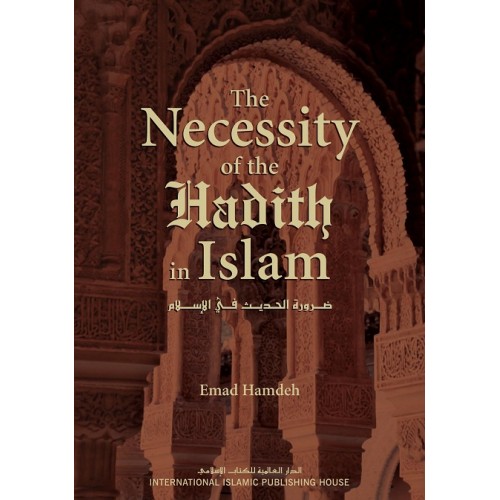
The Necessity of the Hadith in Islam (H/B)
There was a time when the notion of Hadith rejection was inconceivable. Sad to say, it is now becoming a widespread phenomenon in many countries. The educated and the ignorant, veteran Muslims and reverts, the middle class as well as the elite are falling prey to the misleading ideas projected by the Hadith rejecters through books and other forms of publication. The Internet has, unfortunately, given them a new and effective platform. Emad Hamdeh has taken up the task of replying to these Hadith rejecters with sound and convincing arguments. The Necessity of the Hadith in Islam not only explains the need for the Hadith and the Sunnah at all times, but also presents and refutes the main arguments put forward by Hadith rejecters. Furthermore, Hamdeh has profiled the top few Hadith rejecters and summarized their ideas. This is a well-researched, well-referenced and comprehensive work, which provides useful information to those seeking more knowledge on the subject. It will also sufficiently answer many different questions which come to mind after reading some of the arguments of the Hadith rejecters. Muslims today need to read works such as these to ensure that they are not misled, especially through the Internet.
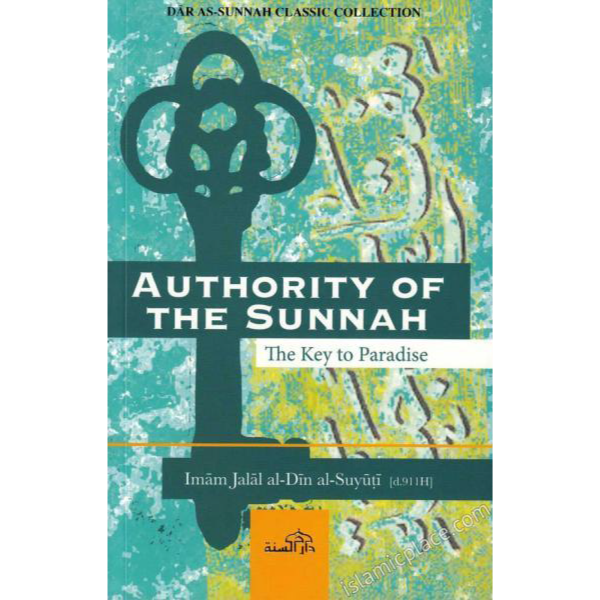
Authority of The Sunnah the Key to Paradise
Allah Most High Said, “And whatever the Messenger has given you, take it; and what he has forbidden you, refrain from it.” [Al-Hashr (59):7]
The Prophet said, “I have not left out anything of which Allah, The Most High has Commanded you with except I have apprised you of it. Likewise, I have not left out anything of which Allah has Prohibited you from it, except I have apprised you of it…” [Al Bayhaqi, 7/76 & others]
Together with the Qur’an, the Sunnah is the pivotal foundation and primary source of the Islamic faith. Following both of them is mandated by Allah Himself and obligated upon Muslims to adhere and live accordingly. Muslim theology is established upon them and remains defective and incomplete should either be forsaken for they both explain and interpret each other.
During his time, Imam al-Suyuṭi felt a genuine need to pen this compelling book in confuting those who either rejected the Sunnah altogether or did not grant it the status and respect it deserves in the religion. He primarily compiled from the works of Imam Al-Bayhaqi elucidating the position of Imam Shafi’i, and firmly laid out the arguments supporting the Sunnah of the Prophet by outlining its critical importance, its authority, and implication to one’s life.
Salvation, therefore, lies in embracing the Sunnah fully, for indeed it is the key to facilitating our worldly lives and thereafter, unlocking the doors of Paradise, as Shadh ibn Yaḥya said perfectly, “There is no better way to Paradise than the way of those who have followed the Sunnah.”
Related Products
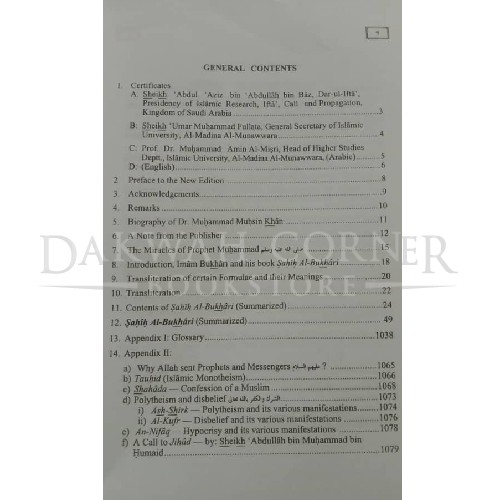
Summarized Sahih Al-Bukhari (Medium)
Noble Hadith and Hadith Sciences
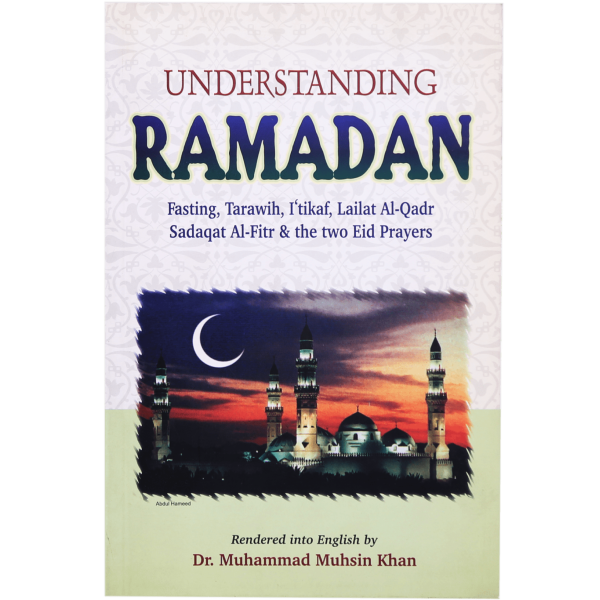
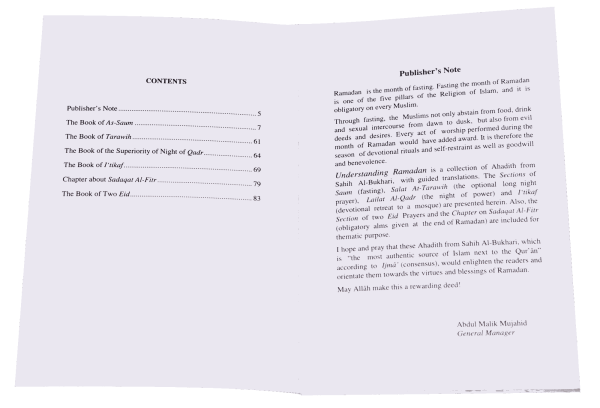
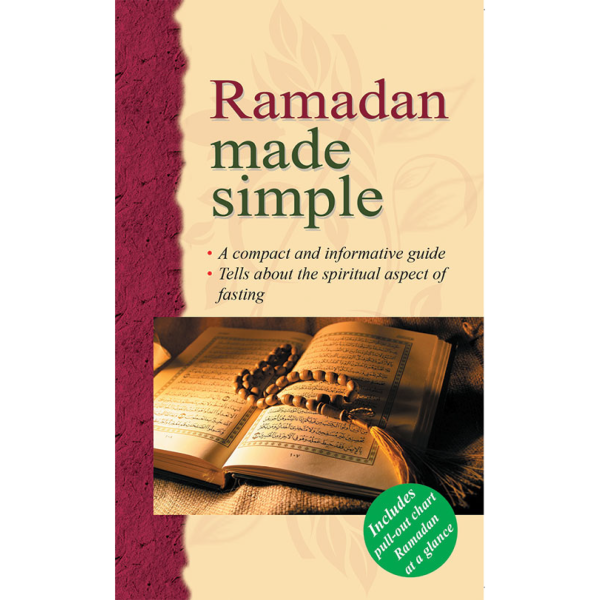
Understanding Ramadan
This book covers important aspects regarding Ramadan. The book is a collection of Ahadith from Sahih Al-Bukhari, with guided translations. The topics which are covered are Fasting, Salat at-Tarawih, Lailat Al-Qadr and Itikaf. Also, the section of two Eid Prayers and the chapter on Sadaqat Al-Fitr are included for the thematic purpose. This book is a must-read for all.
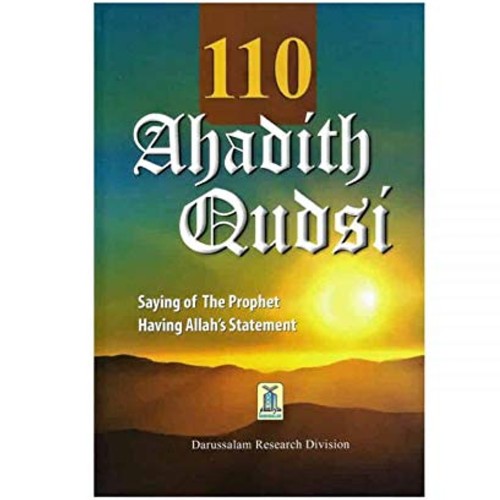
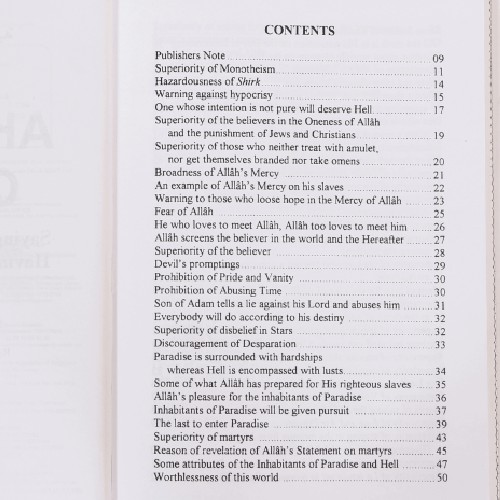
110 Ahadith Qudsi (3rd Edition)
Ahadith are the sayingd, deeds and approvals of the Prophet SAW under Divine guidance and are generally traced back to the Prophet SAW as regards their authority. But some Ahadith hold a distinct place and are termed as Ahadith Qudsi (Sacres Ahadith) and the authority in these Ahadith is attributed to Allah through the Prophet SAW. It is a collection of 110 such Ahadith relating to the important aspects of daily life so that the readers may get benefited from it for the success in this life as well as in the Hereafter.
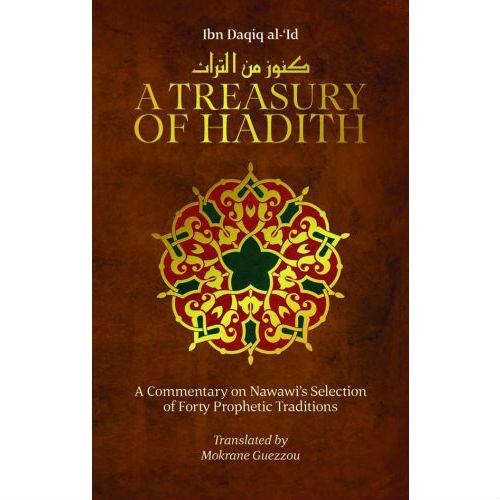
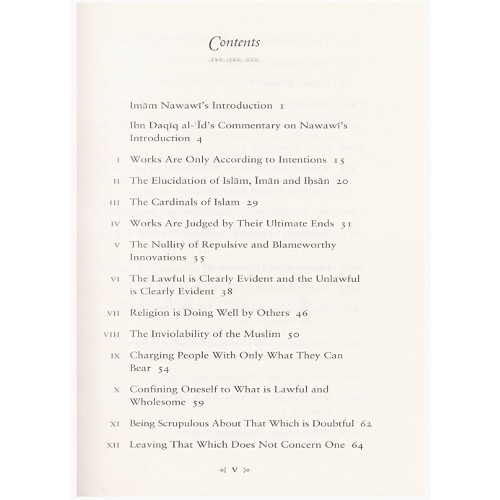
A Treasury of Hadith
This classical short commentary on Imam Nawawi’s famous collection of forty-two traditions of the Prophet Muhammad, may Allah bless him and give him peace, is an authoritative introduction to key Islamic principles and teachings, Accounted as hadith master, in this collection Imam Nawawi collected together those traditions that he considered were axial to the entire Islamic faith. As the first title in Kube’s new Treasury Series in Islamic Thought and Civilization, this accessible translation is presented in a beautiful gift format.
Ibn Daqiq al-‘Id (d.1302) was a Shafi’i mujtahid imam, who was educated in Damascus, Alexandria, and Egypt. Accounted as one of the greatest scholars in Islam in the fundamentals of law and belief, he wrote extensively in the areas of law, principles of jurisprudence, hadith, and tenets of faith. Imam Nawawi (d.1277) was accounted as an Imam of the later Shafi’i school and was known for his piety and knowledge.
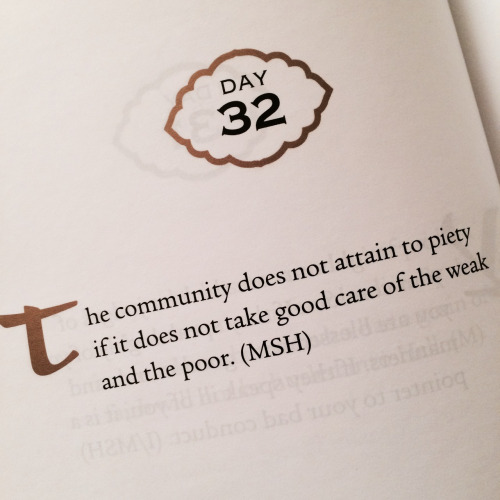
Daily Wisdom: Sayings of the Prophet Muhammad (H/B)
This beautiful presentation of the Prophet Muhammad’s (s) teachings engages the reader in a moment of daily reflection. With 365 traditions covering the whole year, this is a must for every home. Apart from setting out the Islamic worldview, as reflected in the Prophet’s sayings, it is hoped that this work will serve as a useful volume for reflection, for soul-searching and for self -development as a single hadith appears on each of its pages, it has been designed to engage readers in a few moments of daily self-reflection throughout the year.
Abdur Raheem Kidwai is Professor of English at the Aligarh Muslim University in India and the well-known author of many works on the Qur’an and Islam.
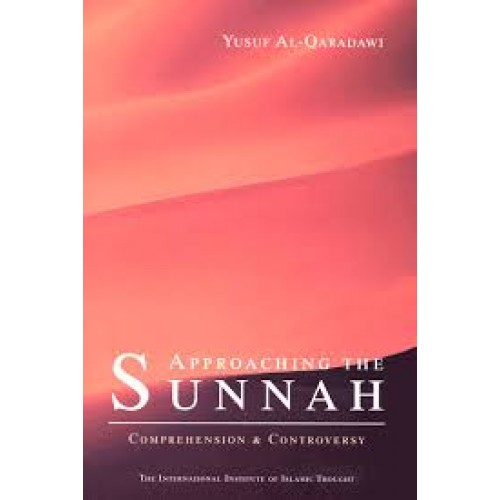
Approaching the Sunnah: Comprehension & Controversy (P/B)
The Sunnah still provides the stable moral framework – the grammar – that enables Muslims, by formal rules and inward sense, to know right from wrong. However, separation from the mainstream of life puts the Sunnah in danger of becoming rigid – an archaism. Addressing that danger, this book explains how the Sunnah can function as the grammar of a living, adaptive language, capable of guiding (and not shying from) the mainstream.
The first chapter sets out the qualities that characterize authentic application of the Sunnah: universality, coherence (so that different spheres of human responsibility are not split), compassionate realism, moderation, and humility. The second explains standards and procedures for determining the Sunnah in the fields of jurisprudence and moral instruction. The third chapter illustrates through detailed examples common errors in understanding the Sunnah – reading hadiths singly without sufficient context, confusing legal and moral injunctions, means and ends, figurative and literal meanings…–and it proposes remedies for these errors.
YUSUF AL-QARADAWI is one of the Islamic world’s most widely respected and prolific scholars. His works have remained popular over many decades. Among the best known of his books to appear in English is The Lawful and the Prohibited in Islam (first edition 1994).
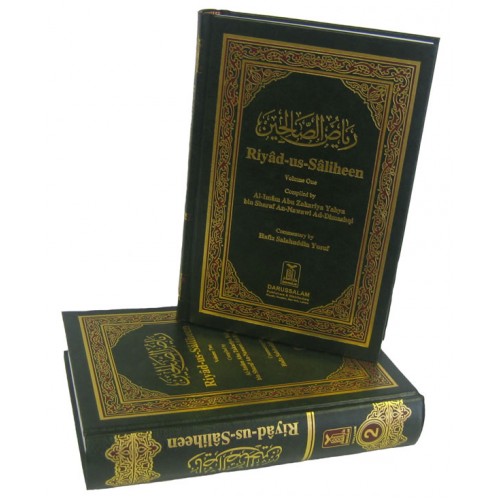
Riyad-us-Saliheen (2 volumes)
Noble Hadith and Hadith Sciences
Usool Al-Hadeeth (H/B)
Dr. Bilal Philips writes: “The Prophet’s sayings and actions were primarily based on revelation from Allah and, as such, must be considered a fundamental source of guidance second only to the Qur’an.” According to Dr. Philips, the Hadith, the record of these sayings and actions, plays a vital role in that it transmits revelation, tafseer (exegesis of the Qur’an), Islamic law, and the Islamic moral ideal. For instance, the Prophet’s “…character and social interactions became prime examples of moral conduct for Muslims. Consequently, the daily life of the Prophet (blessings and peace of Allah be upon him) as recorded in the hadith represents an ideal code of conduct. It is largely due to the science of hadith that the final message of Islam has been preserved in its original purity for all times.” In Usool al-Hadeeth, the reader will embark on a course of study that will, Allah willing, enable him or her to make critical and intelligent use of the body of Hadith literature in his or her daily life.
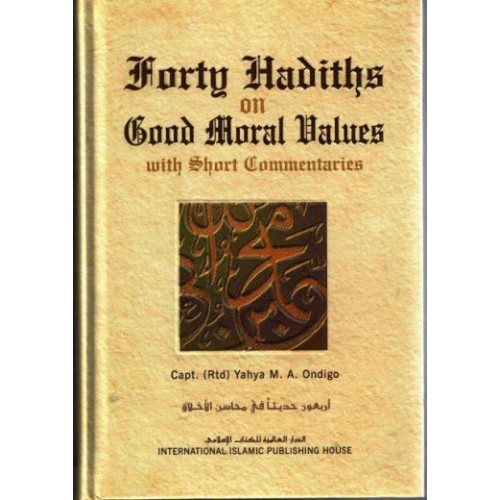
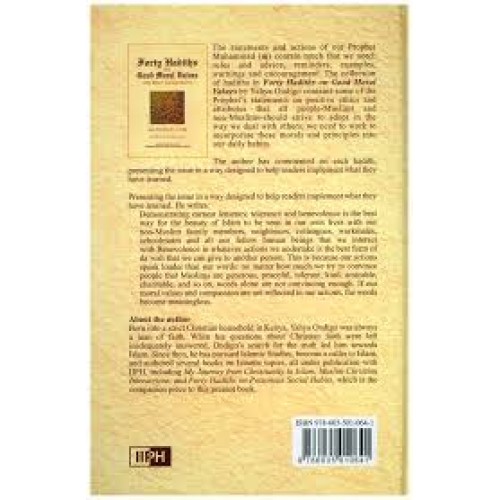
Forty Hadiths On Good Moral Values (H/B)
The statements and actions of our Prophet Muhammad (s) contain much that we need: rules and advice, reminders, examples, warnings and encouragement. The collection of hadiths in Forty Hadiths on Good Moral
Values by Yahya Ondigo contains some of the Prophet?s statements on positive ethics and attributes that all people-Muslims and non-Muslims-should strive to adopt in the way we deal with others; we need to work to incorporate these morals and principles into our daily habits.


Nazhim –
Yes, I am interested.