

| Weight | 0.97 kg |
|---|---|
| Dimensions | 25.5 × 18 × 3 cm |
| Binding | Hardcover |
| ISBN | 9789834334406 |
| Pages | 615 |
| Publisher | Karya Bestari Sdn Bhd |
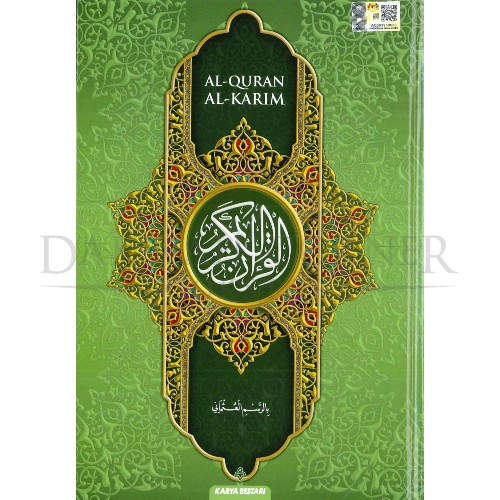
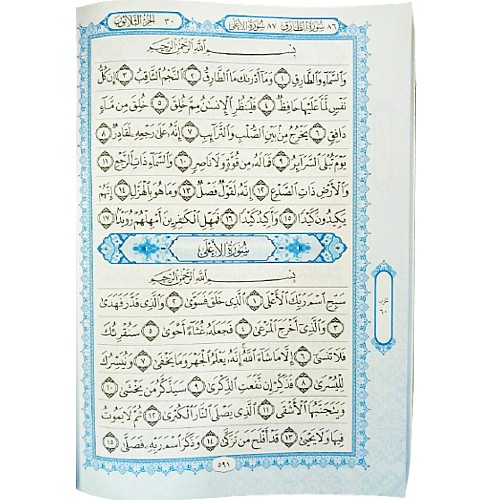
Al-Quran Al-Karim Mushaf (Simili)
RM23.00
Hurry up, Only 2 left.
somdn_product_page
Compare
SKU: QQ457
Categories: Arabic Quran (Mushaf), Holy Quran and Quranic Sciences
Additional information
Reviews (0)
Be the first to review “Al-Quran Al-Karim Mushaf (Simili)” Cancel reply
You must be logged in to post a review.
Related Products
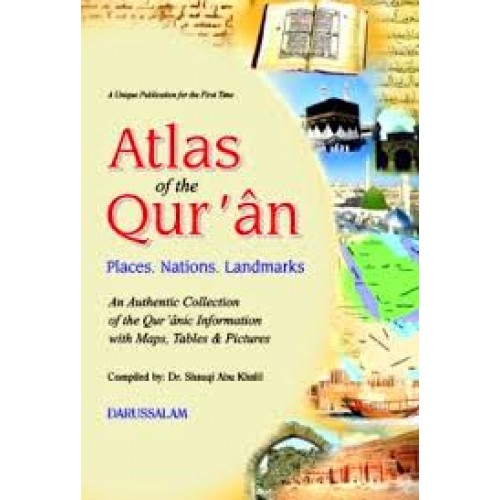
Atlas of the Qur’an (Darussalam)
Highlights:
This Atlas is new in its subject, a subject that has not been touched before. It helps whoever recites the Qur’an or studies it to specify the locations mentioned by the Noble Verses, and to mark those places of ancient people mentioned in the Qur’Gn. This is besides locating areas where the incidents of the prophetic Seerah occurred.
Eventually the diligent reader will easily recognize those places, learn about them, and take heed of them while reciting.
Eventually the diligent reader will easily recognize those places, learn about them, and take heed of them while reciting. The Atlas has also revealed obscure places we used to pass through inattentively, like the site where Nuh’s Ark settled, the site of the curved Sand-hills {Al Ahqah}, the cave of the young faithful men, the houses of median, the site of Sodom and other places determined by the Atlas depending on reliable sources.
Thus the Atlas eliminates all the guessing and the fantasies we used to encounter when reciting the Noble Quran, and takes us to the specific place.
RM80.00


The Sources of the Qur’an
Highlights:
“Who is the author of the Qur’an?” On this subject scholars have flagrantly contradicted each other. This work attempts to make a critical review of the major ‘authorship’ theories by pressing into service logical arguments, historical evidence, textual analysis and scientific data. Probably, the only point of agreement about the Qur’an is that it was uttered for the first time by a man who was born in Makkah (Mecca), a city of Arabia, in the sixth century—a man by the name of Muhammad (blessings and peace be upon him). As to the source of the Qur’an, scholars are divided into three main groups: those who believe that Muhammad (blessings and peace be upon him) himself was the author; those who believe that he was not the author himself but learned it from another human author or authors; and those who believe that the Qur’an has no human author but is rather a word-for-word revelation from God. Hamza Njozi examines the three theories and comes to a firm and logical conclusion.
RM14.00
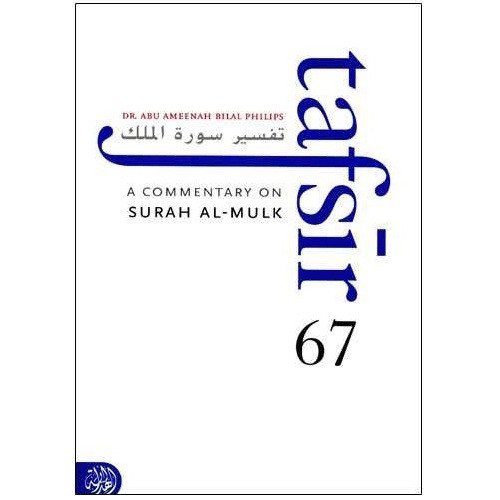
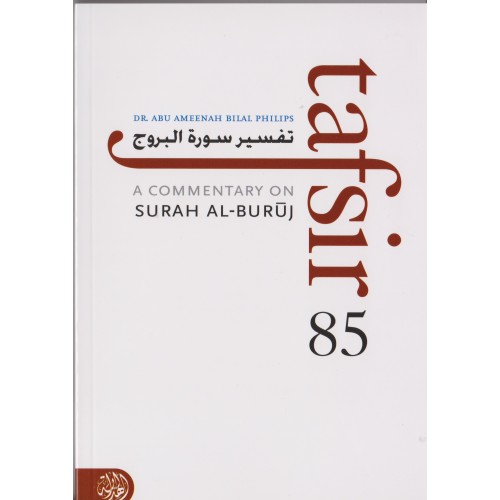
Tafsir 67 : A Commentary on Surah al Mulk (P/B)
Highlights:
The beauty of the Qur’an is such that its miracles cannot truly be understood until one contemplates every verse of every surah; this alone makes tafsir one of the most amazing sciences of Islam. Surah Al-Mulk is a chapter of the Quran which would be recited every night by the Prophet (peace be upon him), in its midst are deep meanings which highlight the purpose of our creation, as well as entailing the message of Islam. In this book, the author takes the reader on a wonderful journey through the gardens of the first surah in the 29th Juzz of the Qur’an.
About the Author: Dr. Philips was born in 1947 in Jamaica, but grew up in Canada, where he converted to Islam in 1972. He completed a diploma in Arabic language and a B.A. degree in 1979 from the College of Islamic Disciplines at the Islamic University of Madinah, an Islamic university in Saudi Arabia. At the University of Riyadh College of Education he completed his M.A. in Islamic Theology in 1985, and in 1994 he completed his Ph.D in Islamic Theology in the department of Islamic studies at the University of Wales. He later taught Islamic education and Arabic language in private schools in Riyadh for over ten years. Because of his opposition to Saudi Arabia’s position in the Gulf War, he had to leave the country and for three years he lectured M.Ed. students in the Islamic Studies department of Shariff Kabunsuan College (SKC) in Cotabato City, Mindanao, the Philippines. Islamic Information Center Since 1994, he has founded and directed the Islamic Information Center (which is now known as Discover Islam) in Dubai, United Arab Emirates, and is known as a prolific speaker and author on topics relating to Islam, including audio lectures and books. Presently, he is a lecturer of Arabic language and Islamic Studies at the American University in Dubai and ‘Ajman University in Ajman, United Arab Emirates. He frequently appears at the Islamic Research Foundation in Mumbai, India, on lecture tours. He has also founded the Distance Learning Program called Islamic Online University, which offers a four year degree in Islamic Studies plus a variety of short courses. Dr. Philips is something of a pioneer as a person of Western origin achieving the status of a scholar of Islam inside the tradition.
RM63.00


Divine Speech
5 ★
5 ★
3 Ratings
5 ★
3
4 ★
0
3 ★
0
2 ★
0
1 ★
0
Highlights:
The Quran, the sacred scripture of Islam, is revered as the spoken word of God by approximately one-fifth of the world’s population. Since its inception, the power of the Quran has derived not only from its message, but also from the inimitable literary style and rhetorical impact that the Arabic scripture has on its audiences. Divine Speech: Exploring the Quran as Literature attempts to make some of the most recent Arabic and European-language scholarship on its literary features accessible to a wider, English-speaking audience. These features include its language and word choice, its use of figures of speech and other rhetorical devices, its manner of narrating parables and stories, and the structure, coherence, and the order of its “chapters”-aspects that typically remain mysterious to readers of English translations of the text. Divine Speech furnishes its readers with a better appreciation of the Quran from a literary perspective, and in the process stimulates interest in, and provides tools and resources for, further study of the scripture.
RM100.00
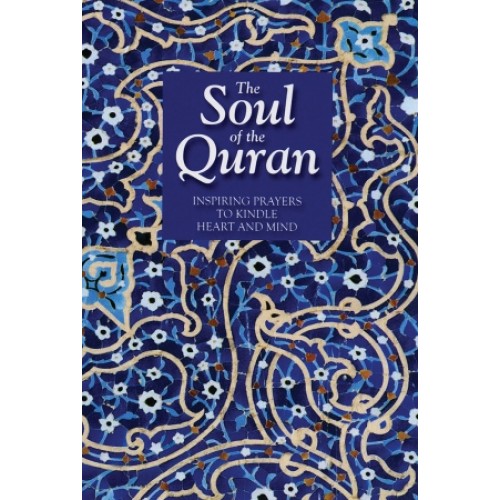
The Soul of the Quran (P/B)
Highlights:
This book is a unique collection of prayers and verses distilled from the Sacred Book. It contains one hundred and fifty four passages of exquisite beauty, majestic prose and breadth of vision. Lucid in style and rich in spiritual wisdom, they have been judiciously selected to inspire and uplift the soul.
RM14.00

Starting from Scratch – Tajweed Made Easy
Highlights:
Holy Quran and Quranic Sciences
RM10.00
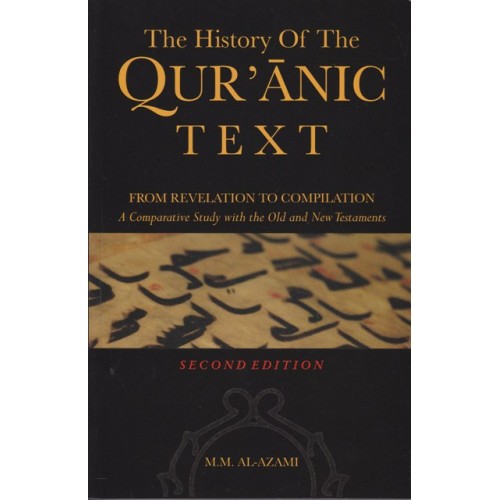
The History of the Qur’anic Text (P/B) (IBT)
Highlights:
The Qur’an reigns supreme in Muslim hearts as the most sacred of texts: a profusion of exalted ideas to rouse the mind, noble histories to stir the soul, universal truths to awaken the conscience and precise injunctions directing humanity to its own deliverance, all distilled into the melodious essence that is the Word of Allah. Through fourteen centuries Muslims have persevered in championing the text against corruption, memorising its every word and contemplating its every phrase, so that in our own times untold millions have enthusiastically committed each letter to heart.
Beginning with a catalogue of ancient and contemporary attacks on the Qur’an, this expansive book provides unique insights into the holy text’s immaculate preservation throughout its history, as well as exploring many of the accusations leveled against it. The reception of divine revelations, Prophet Muhammad’s role in teaching and disseminating these verses, the text’s compilation under his guidance and the setting of its final external shape shortly after his death, are meticulously and scientifically examined alongside such topics as the origins of Arabic, its paleography and orthography, the so-called Mushaf of Ibn Mas’ud, and the strict methodology employed in assembling textual fragments.
By way of comparison the author investigates the histories of the Old and New Testaments, relying entirely on Judaeo-Christian sources including the Dead Sea Scrolls and uncovers a startling range of alterations that touch almost every fact of the Biblical Scriptures. Using this as a springboard for assessing Western theories regarding the Qur’an, he makes a sophisticated yet passionate case for questioning the aims of Western scholarship in continuously undermining Islam’s holy book, and illustrates convincingly that such research, motivated by more than mere curiousity, has no scientific bearing on the Qur’an’s integrity.
This monumental effort, a scholarly work composed in an impassioned tone, provides a welcome foundation for sincere study at a time when assailing the Qur’an has become all too common.
A cornerstone addition to any personal library. A Truly monumental effort. This work presents a cogent and powerful argument for the Qur’an’s unique inviolability.
RM79.00
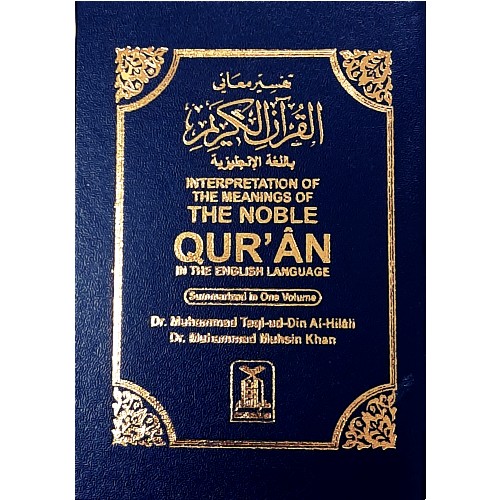
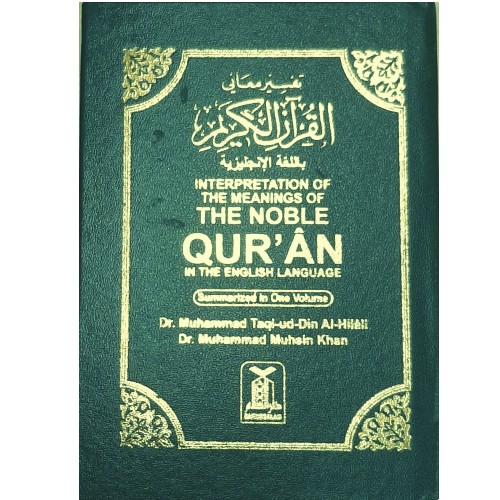
The Noble Qur’an pocket size H/B (Arabic/English)
Highlights:
The Noble Qur’an is a widely popular translation by Islamic University – Madina scholars Dr. Muhsin Khan and Dr. Taqi-ud-Din Hilali. It features frequent footnotes gleaned by the translators from Tafsir At-Tabari, Tafsir Ibn Kathir, and Sahih-al-Bukhari. Arabic-English format with detailed index.
Interpretation of the meanings of the Noble Qur’an with Arabic text in the modern English language. A summarized version of At-Tabari, Al-Qurtubi and Ibn Kathir with comments from Sahih Al-Bukhari.
This summarized 1 volume version offers brief commentary and Ahadith wherever necessary. This unique combination of commentary and relevant Ahadith makes this a very useful study reference tool. The Arabic text is taken from Mushaf al Madinah.
RM85.00

Quranic Wisdom
Highlights:
According to the Quran, a person’s life has been divided into two phases: the pre-death period and the post-death period.
The present life is only temporary and is meant as a test. Depending upon our performance in this test, we shall be judged in the eternal life after death. The Quran aims to make one aware of this reality and help one lead one’s life in this world in such a way that one is rewarded with Paradise in the life Hereafter
RM20.00
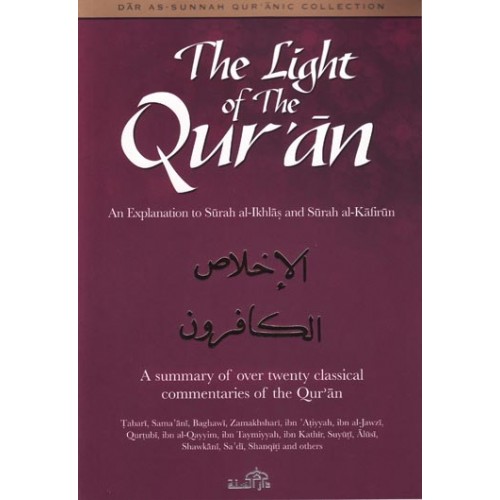
The Light of The Qur’an
Highlights:
The Prophet peace and blessings of Allah be upon him, passed by a person reciting Surah Al – Kafirun and remarked, “He has been saved from shirk”. He passed by another reciting Surah Al – Ikhlas and remarked. Paradise has become obligatory for him. Reported by Muslim.
These two chapters have both been given the title Al-Ikhlas, or purity of faith, because they deal with the topic of Tawhid in all its various aspects. Al – Ikhlas concentrates on the pure, essential faith in Allah that all mankind is required to have. Al – Kafirun deals with purity of deed and disavowal of disbelief and paganism. Both chapters lay out the parameters of mans relationship with his/her lord and creator, as well as his/her relationship those around him/her.
Pure, unblemished monotheism combined with sincerity in belief and deed defines the relationship with Allah. Hi is one and only true God, unique, without peer, equal or opposite, and nothing is like on to him. He is the one who stands in need of nothing whereas everything is in dire need of him.
Maintaining the essential Muslim identity and character defines the relationship between the Muslim and his fellow man. The Muslim is unambiguous about his religion, truthful and upright in speech, deed and his dealings with those around him. Hi is proud of his faith and has unshakable conviction in it. He loves his lord, his Messenger and the Muslims and is loyal to them. Because of this, the dearest thing to him is his religion and he will not compromise it, pleasing Allah comes before pleasing the people.
The prophet would frequently recite these two chapters in prayer because of the commonality of their theme and to stress that success is achieved, in this life and the next, by internalising their message and living by it.
RM41.00
Recently Viewed
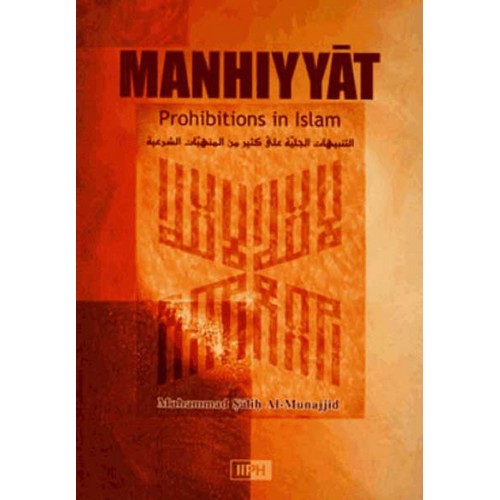
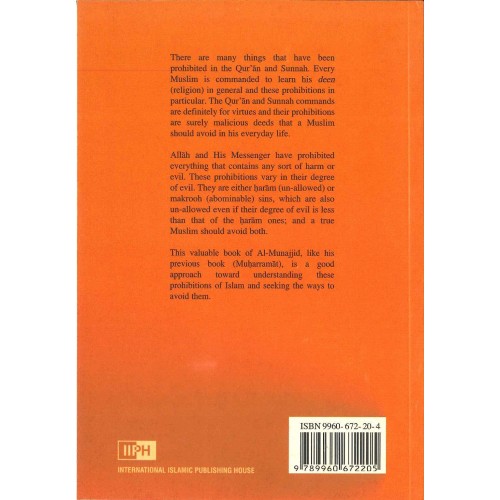
Manhiyyat Prohibitions in Islam (P/B) (IIPH)
Highlights:
Whatever has been prohibited in the Qur’an and the Sunnah is for a good reason. Every Muslim is commanded to learn his or her religion, and being aware of these prohibitions is part of that essential knowledge. The Qur’an and the Sunnah enjoin virtuous behaviour, and any actions they prohibit are destructive deeds that a Muslim should avoid. In Prohibitions in Islam, Shaykh Muhammad Sâlih al-Munajjid explains that Allah Almighty and His Messenger (blessings and peace be upon him) have prohibited everything that contains any sort of harm or evil. These prohibitions vary in their degree of evil: they are either forbidden or detestable, and a practicing Muslim should avoid both kinds.
RM11.00
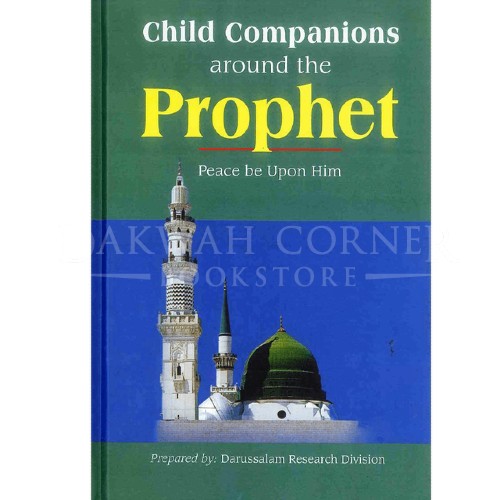
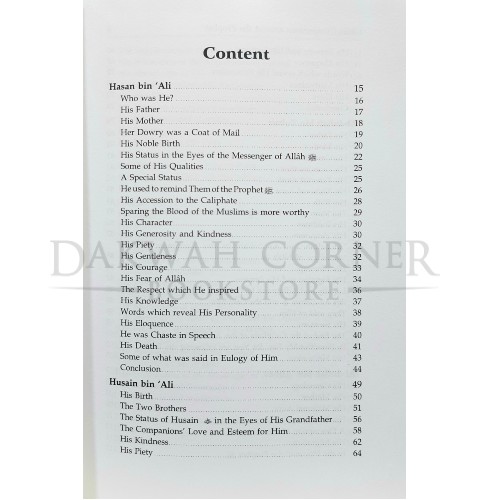
Child Companions around the Prophet pbuh (H/B)
Highlights:
Description from the publisher:
These 178 companions are those who accepted Islam in their childhood and spent it being around Prophet صلی الله علیه وآله وسلّم and getting benefits from his teachings and learning from his manners. The Prophet used to love the children and his behaviour with them is model to follow. He taught them the manners of eating, talking to theirs elders, behaving with other children, along with guiding them to the basic points of Islamic teachings.
It includes the biography of the following companions:
Hasan bin ‘Ali رضی الله عنه
Husain bin ‘Ali رضی الله عنه
Abdullah bin Zoubir رضی الله عنه
Abdullah bin ‘Abbas رضی الله عنه
Abdullah bin Ja’far رضی الله عنه
Abdullah bin ‘Umar رضی الله عنه
Abdullah bin ‘Amr رضی الله عنه
Usamah bin Zaid رضی الله عنه
Anas bin Malik رضی الله عنه
Sa’eed bin Al-‘Aasرضی الله عنه
RM70.00
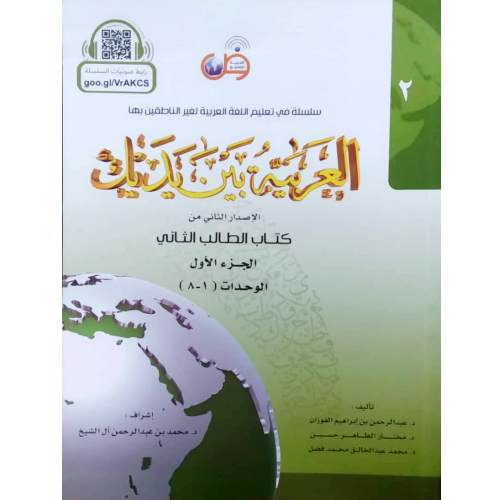
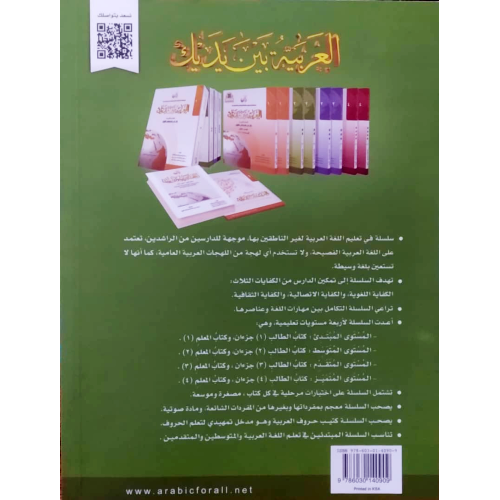
[AR] Al-Arabiyyah Bayna Yadayk Book 2 Part 1
Highlights:
Al-’Arabiyyah bayna yadayk Means Arabic Between Your Hands.
The great thing about these books is it covers a lot of vocabulary through pictures, Images, and using Arabic Only, introduces the students to grammar later and gradually rather than pushing them at the deep end before they can swim. Much like the Arabic Course for English Speaking Students 3 Vols Set, UKIA, it is more Islamic inclined and fulfills the desire for the student of knowledge to learn the language of the Qur’an.
Al-’Arabiyyah bayna yadayk series comes in 3 Basic Student Books and a further study Book 2 Parts 1 & Book 2 Part 2
RM85.00
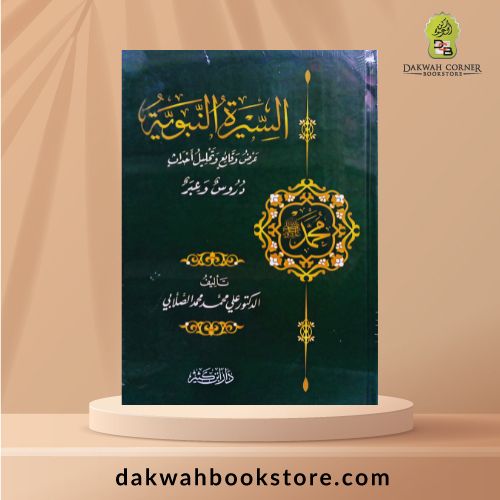
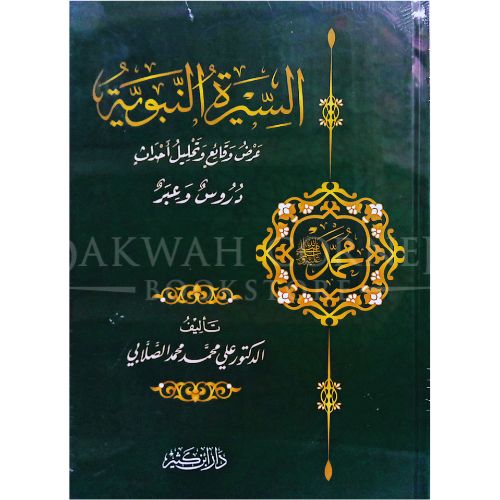
[SB] As Sallabi as Sirah an Nabawiyyah / الصلابي السيرة النبوية
Highlights:
As-Seerah an-Nabawiyah (Biography of the Prophet) by Ali Muhammad Sallabi.
In this biography book of the Prophet, may Allah’s Peace and Blessing be upon him, Dr. Ali Muhammad Al-Sallabi discusses the events prior to the Prophet’s mission; namely the prevailing civilizations, the political, economic, social, and moral conditions at the time of the mission, the important events before the birth of the Prophet, the sending of divine revelation, the stages of da’wah, the conceptual, moral, and devotional foundation in the Meccan era, the methods of the polytheists in fighting da’wah, the migration to Abyssinia, the tribulation in the city of at-Taif, the blessing of the Isra and Mi’raj (Prophet’s nocturnal journey), the round visit to the tribes, the caravans of goodwill, the welcome of the people of Yathrib for the Prophet’s migration, the Battles of Badr, Uhud, al-Ahzab and Banu al-Nadir, the Treaty of Hudaybiyah, and the invasion of Tabuk. The author explains the lessons learned in those battles, bearing in mind Allah’s Laws, governing both victory and defeat…
RM110.00
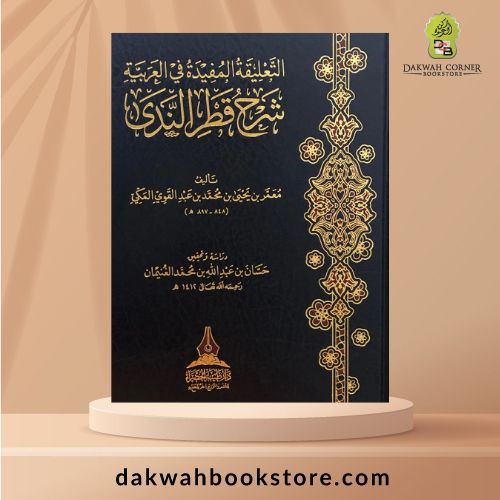
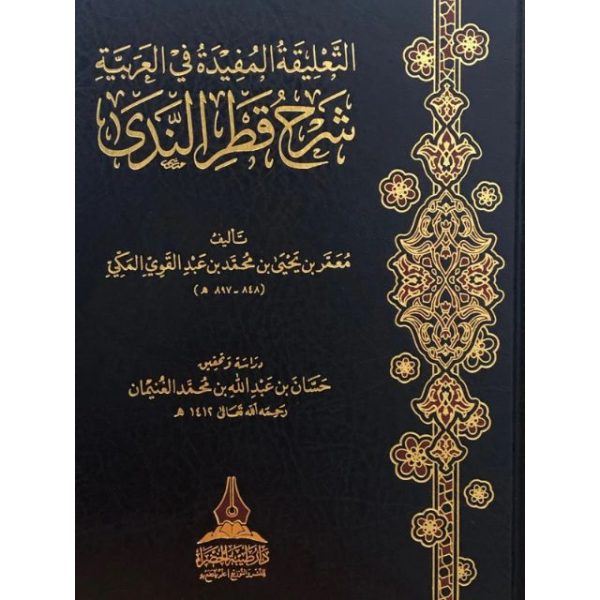
[ALA] Altaliqat Almufidah Fi Al Arabiyyah Sharh Qatar Alnadi / التعليقة المفيدة في العربية شرح قطر الندي
Highlights:
كتاب “التعليقة المفيدة في العربية شرح قطر الندى“ هو عمل لغوي ونحوي مهم يعود للعالم معمر بن يحيى بن محمد المكي (توفي 897 هـ)، وهو عبارة عن شرح وافٍ ومفصل لمتن النحو الشهير “قطر الندى وبل الصدى” لمؤلفه ابن هشام الأنصاري. [1]
RM90.00
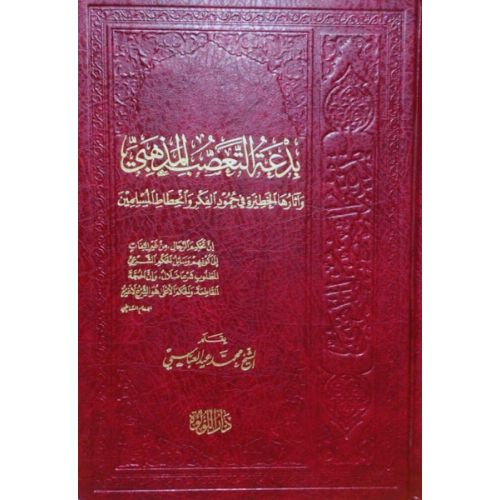
[AAC] Bidaah Al Taasub Al Madhhabi / بدعة التعصب المذهبي
Highlights:
بدعة التعصب المذهبي واثارها الخطيرة في جهود الفكر وانحطاط المسلمين
RM140.00
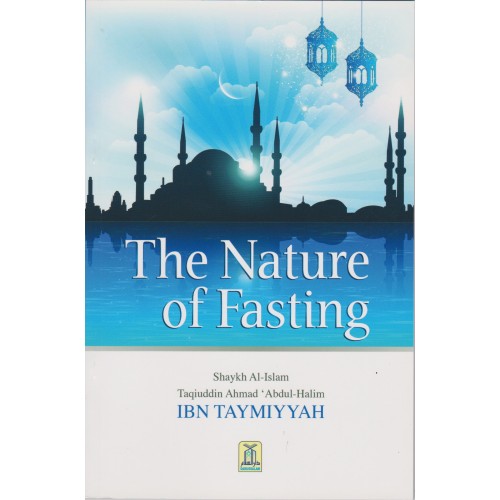
The Nature of Fasting
5 ★
5 ★
1 Rating
5 ★
1
4 ★
0
3 ★
0
2 ★
0
1 ★
0
Highlights:
This book will help the reader better understand the fine points about fasting. What is the nature of the things that break the fast? What are the rules by which one can know the difference between what breaks the fast and what does not?
These question are more answered by Shaykh Al-Islam Ibn Taymiyyah in his discussion of the Nature of Fasting.
Publishers Note All praise is due to Allah, and may He grant peace and blessings upon His Last Messenger Muhammad.
This is a translation one of the smaller publications from the works of Shaykh Al-Islam Taqiuddin Ahmad bin ‘Abdul-Halim Ibn Taymiyyah. It has been published in this form a variety of times with a number of minor additions to the text under the title, “Hagigatus-Siyam,” or, “The Nature of Fasting.” We have revised our version to meet the source section of Majmu’ AI-Fatawa (25:219) from where it appears that the original booklet – with the exception of the questions, of which most appear on earlier pages – has been taken. We have inserted brackets to signify the additions, which earlier publishers probably took from other sections of his writings. We have also added brief references to the text for the Hadiths. I would like to express gratitude to brother Ebrahim Aly Ma’rouf for the original translation of this booklet, and the Darussalam staff for their editing and layout work.
RM14.00
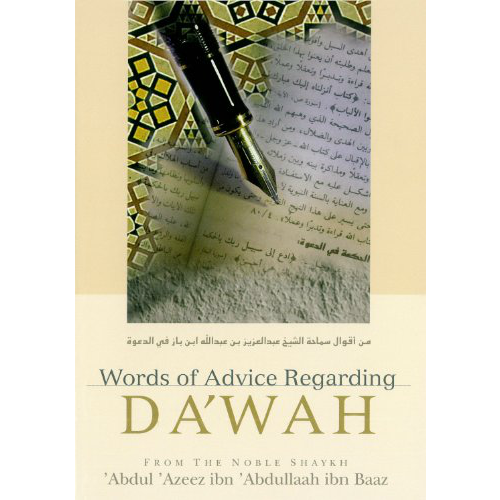
Words of Advice Regarding Da’wah
5 ★
5 ★
1 Rating
5 ★
1
4 ★
0
3 ★
0
2 ★
0
1 ★
0
Highlights:
A unique collection of fatawa (Islamic legal rulings) by the noble Shaikh Bin Baz (Former Grand Mufti of Saudi Arabia) on the subject of da’wah, calling to Islam. This book clearly illustrates the vast experience, the deep wisdom and the expansive knowledge of the author, particularly in the field of da’wah. This discourse should prove to be beneficial to every Muslim but indispensable for those engaged in da’wah. The reader will find that the book addresses many practical points and contains answers to questions that often arise concerning da’wah.
RM28.00

Scholars of Hadith (P/B)
Highlights:
This book presents an extensive, in-depth analysis of great Muhaddithun (scholars of the science of Hadith). Each chapter presents detailed biographies of Malik b. Anas, Ibn Hanbal, al-Bukhari, Muslim, al-Tirmidhi, Abu Dawud, an-Nasai, Ibn Majah, ad-Darimi and al-Bayhaqi along with the methods they used in Hadith collection and classification. This work is especially important in today’s world where many Muslims have a dire need to connect with the great corpus of work that was produced by the scholars or traditional Islam. A work such as Scholars of Hadith has been long overdue in the English language and it will certainly make for productive reading for all interested in deepening their knowledge of Islam.
RM24.00
There are no reviews yet.