| Weight | 0.36 kg |
|---|---|
| Product Type | Book |
| Author | |
| Publisher | IIPH |
| Pages | 192 |
| ISBN | 9786035010566 |
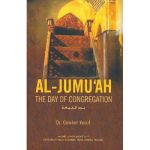
Al-Jumu’ah: The Day of Congregation
RM38.00
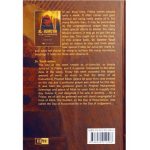
In our busy lives, Friday comes around once a week. It often comes and goes without our being really aware of it. For many Muslim men, it may be punctuated by the congregational prayer that they make special efforts to attend. For many Muslim women, it may go by just like any other day. This ought not to be the case. In this unique book, Dr. Gowher Yusuf gives us reason to stop and think about how special Friday (al-Jumu‘ah) really is, and what we should be doing to achieve the many bounteous blessings it holds for those who observe it. Drawing constantly from the Qur`an and the Sunnah and the great works of the scholars of Islam, Dr. Gowher Yusuf explores this topic in depth and presents it to the reader in simple language for them to understand and ponder over. This book travels through the various issues pertaining to the Friday prayer and its Khutbah, or sermon. These issues are explained within the Islamic framework, thus abolishing any myths and misunderstandings and clarifying the topic for the reader. Dr. Yusuf writes: The day of the week known as al-Jumu‘ah, or simply Jumu‘ah, is Friday, and it is special. Compared to the other days of the week, Friday has been accorded the largest amount of merit, so much so that the father of all humankind, Prophet Âdam (peace be upon him), was created on this day and a particular prayer was ordered for this day. It was from the guidance given to Prophet Muhammad (blessings and peace of Allah be upon him) to magnify this day, honour it, and designate it for acts of worship. …On a Friday, we all will be gathered and will stand congregated in front of Allah, the Exalted, on the Day of Resurrection, also called the Day of Accountability or the Day of Judgement.
Be the first to review “Al-Jumu’ah: The Day of Congregation” Cancel reply
You must be logged in to post a review.
Related Products
Shatibi’s Philosophy of Islamic Law (P/B)
Abu Ishaq al-Shatibi, who died in 1888, had sought an answer to the challenge posed by modernisation and change to Islamic law, by introducing maslahah, which forms the basis of his philosophy of Islamic law. In a fascinating way, the author leads us step by step to what he considers the true import of Shatibi’s views concerning jurisprudence.
Principles of Islamic Jurisprudence (2nd Revised Edition)
This book offers a detailed presentation of the theory of Muslim law (usul al-figh). Often regarded as the most sophisticated of the traditional Islamic disciplines, Muslim jurisprudence is concerned with the way in which the rituals and laws of religion are derived from the Qur’an and the Sunna – the precedent of the Prophet. Revelation, which is given to man to restore unity and help him achieve a just and devout order in society as well as in the soul, must be interpreted so as to render it practicable in every culture, while not betraying its spirit and immutable provisions. To achieve this, additional sources of legal authority are recognized, including consensus (ijma), analogical deduction (qiyas), public interest (maslaha) and local customary precedent (urf). In employing these, the jurist guards the five principles which it is the purpose of Islamic law to uphold, namely, the right to life, sound mind, property, lineage and religion.
Ibn Ashur Treatise on Maqasid al-Shariah (P/B)
Ibn Khaldun, the fourteenth century Arab historiographer and historian, is viewed as a founder of modern historiography, sociology and economics. He lived during a turbulent part of history, and out of his experiences, he ?conceived and created a philosophy of history that was undoubtedly the greatest work ever created by a man of intelligence…?. This work tells of the period of unrest in Ibn Khaldun?s life marked by political rivalries. It is during this turbulent period which provided him with the opportunity to write the Muqaddimah (or Prolegomena), earning him an immortal place among historians, sociologists and philosophe
The Ultimate Guide to Umrah by Darussalam
Islamic Rules of Order (P/B)
Organizations must have rules of order to facilitate their debate and to fill in the procedures not detailed by their constitutional documents. While most American organizations are content to operate by Robert’s Rules of Order, Muslim organizations have often wrestled with questions over whether the rules of order systemized by a Western military figure are in accord with the Qur’an and the Sunnah.
This book tackles the matter directly and takes into account the Qur’an, the sunnah, Islamic manners and the history of Islamic consultation and leadership to provide a simple, practical guide to organizational procedure that can be incorporated into the governance of Muslim organizations. The book includes advice on writing bylaws and on complying with the best practices of the U.S. Dept. of Justice in a way that is Islamically authentic, transparent, and accountable. It provides a basic starting point for any Muslim organization while allowing for flexibility so that organizations may make any variations they require within their own bylaws and constitution, so that it can accommodate differing schools of thought on Islamic law. In its discursive approach it is an essential primer for understanding the value of rules of order and the Islamic context for their application. The Islamic Rules of Order has been adopted as the rules of order of the Association of Muslims Social Scientists.
Fast According to the Quran & Sunnah
Saum (Fast) is a third Pillar of Islam. Allah’s Messenger said, Allah says: “Every deed of the son of Adam is for him, except Saum (fasting). It is for Me and I shall reward for it.”
As the status of this act of worship is so high it is essential to learn the pilings pertaining to this month of fasting so that Muslims will know what is obligatory in order to do it, what is forbidden to avoid it, and what is permissible so that they do not unnecessarily subject themselves to any hardship by depriving themselves from it.
This book consists of all the main issues of Fast. The main objective of this work is to serve an easy and authentic reference to the reader.
Common Mistakes Regarding Prayer – IIPH
Formal prayer (salat) is the second pillar of Islam, and the most important of a Muslim’s acts of worship. Prophet Muhammad (PBUH) said: “The first of one’s actions for which a slave of Allah will be held accountable on the Day of Judgment will be one’s prayers. If they are correct and accounted for, then he (or she) will have succeeded (gained paradise); and if they are lacking, then he (or she) will have failed (lost paradise). If there is something defective in his (or her) obligatory prayers, the Lord will say: ‘See if my slave has any supererogatory prayers with which that which was defective in his (or her) obligatory prayers may be completed. Then the rest of his (or her) deeds will be judged in like manner.” (At-Tirmidhi and others) Shaykh Mashhur Hasan Salman has compiled a list of the most common errors that we make when we pray, discussing and explaining each one. This book is a valuable aid to Muslims hoping to perfect their prayers, so that their prayers may be free of defects and acceptable to Allah. This new and revised edition of the English translation of his work presents the text in a fluent, highly readable style.
The Pillars of Islam Made Easy I- Shahadah (Testimony of Faith) & Its Essential Conditions (H/B)
For a Muslim, the testimony of faith is the affirmation that there is no god other than Allah and that Prophet Muhammad (saw) is His servant and messenger. This testimony is second nature to most Muslims; yet it is disappointing to note that many of them are not aware of the seven conditions attached to it.
The Pillars of Islam Made Easy – II Salah & Its Essential Conditions (H/B)
Salah is one of the five pillars on which the edifice of Islam rests. Most of us feel that we already know all there is about salah – the formal prayers of a Muslim. However, very few individuals actually do justice to it or derive any worldly or spiritual benefits from it.
Salah & Its Essential Conditions is an effort to detail the essential prerequiires of salah. Moreever, it takes a detailed look at its importance along with the different types of obligatory and voluntary prayers. It alsa presents an illustrated guide to help those who wish to learn or correct the performance of their prayers.
Inshallah, all those who wish to improve their salah will find plenty of help in this book whether they are looking for information on cleanliness and purify, locating the direction of qibla, improving their congregation during salah, making up for the missed salah, or joining acongregation when the imam has already sarted the salah, or joining a congregation when the imam has already started the salah. All in all, it is a relevant handbook on what the Prophet (saw) has described as the coolness of his eyes.
Zakah According to the Quran & Sunnah (Darussalam)
Zakah, the third Pillar of Islam, is probably the first Pillar of its economic system. It represents the first and most important mechanism to implement economic justice and to provide sustenance to the economically unfortunate, two issues for which Islam is especially sensitive. These two issues are the essence of this book. This book consists of all the main issues of Zakat (i-e, Zakah on Gold, Silver, Paper Money, Livestock, Fruits, Grains, Rented Land, Buried treasures, Minerals, Trade, Shares, Stocks, and Exploited Assets etc). The main objective of this work is to serve an easy and authentic reference to the reader.
Funerals Regulations and Exhortations (H/B)
Our soul inevitably follows a route starting from birth, passing through death, and ending with our resurrection in the next life. The inevitable journey discusses over a sequence of titles: sickness, inheritance, funerals, Life in Barzakh and so on…
Should A Muslim Follow A Particular Madhhab?
In this book, the author has widely described the main principle of Taqleed. He says that Allah and Prophet Mohammed (SAW) has not ordered us to follow any opinions and interpretations. So there’s a possibility of being correct or incorrect in the opinions because there are many issues on which the Imams had different views and they explain them according to their own reasons and speculations, but the real and true Islam is based on the book (Quran) and Prophet’s Sunnah.
Allah says: “But no, by your Lord, they can have no Faith until they make you judge in all disputed matters between them, and find in themselves no resistance against your decision, and accept them with full submission.” And the prophet said: “I leave you with two things as long as you hold them tightly, you never go astray: they are the book of Allah and my Sunnah.” In this sense, the author has described the difference between different Madhahib (madhabs/mazhabs), and their views and urged to follow only the Quran and Sunnah.
Recently Viewed
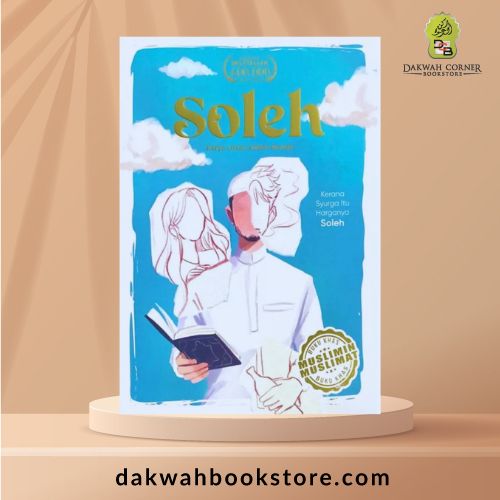
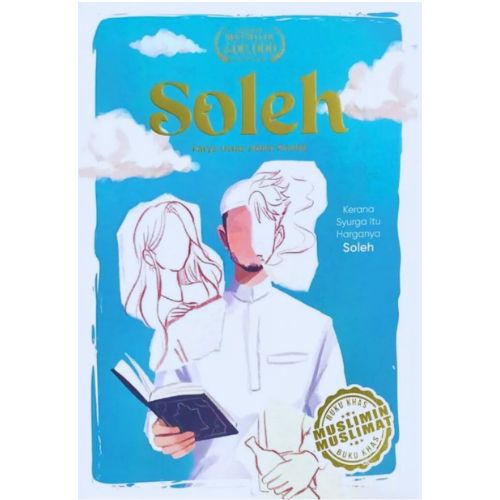
Soleh karya Ustaz Adnin
Soleh bukan buku untuk lelaki semata, ia istimewa untuk lelaki dan wanita menjadi soleh dan solehah. Ini buku untuk sesiapa saja yang sedang mujahadah nak jadi lebih baik, tapi masih terperangkap dalam dosa yang diam-diam membunuh iman. Dalam buku ini, kamu akan jumpa 100 dosa dan maksiat — yang selama ni kita pandang ringan, tapi rupanya itulah punca hati makin jauh dari Allah.
Tapi buku ni bukan sekadar nak bagi rasa bersalah. Ia bawa juga 70 kisah qudwah — insan-insan hebat dari zaman Nabi sampai zaman sekarang, yang pernah jatuh, tapi bangkit semula dan jadi cahaya pada orang lain. Daripada mereka, kita belajar bahawa jalan taubat sentiasa terbuka.
Dan paling menyentuh hati, buku ini senaraikan 7 langkah hijrah dan istiqamah yang boleh kamu ikut satu per satu. Mudah, jujur, dan berpijak di bumi nyata. Kalau kamu sedang rasa nak berubah tapi tak tahu dari mana nak mula — mungkin, Soleh ini jawapannya.
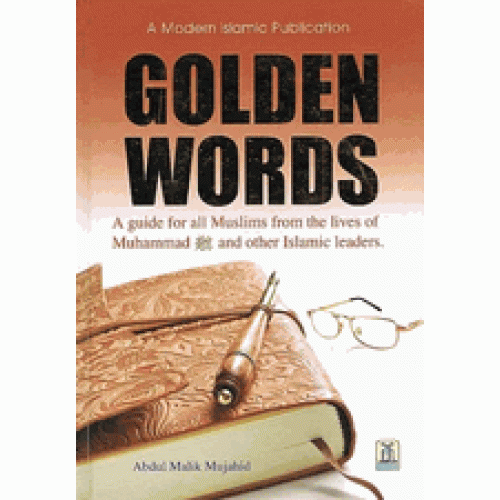
Golden Words (H/B)
Islam has declared this world and life as a test case for human beings. To live a successful life, Allah SWT has sent His Divine Teachings to help humans understand what to do and what not. This book “Golden Words (Golden Stories) consists of short stories and incidents that occurred during the life time of Prophet (Peace be upon him), Rightly Guided Caliphs, Salf-us-Saleheen, renowned kings/ rulers and other shining stars of the Islamic history. The purpose of these short stories is simple; providing real-life lessons to the readers.
The book provides a clear understanding of our ancestors, their thorough and firm knowledge, their intelligence, proper comprehension, modesty, sacrifices and their endeavors to elevate the truth. This is particularly rewarding book for youngsters that will find it a helping hand in living as per Islamic principles.
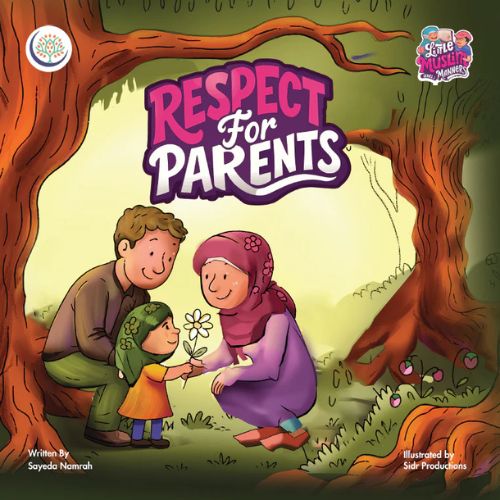
Respect For Parents (P/B)
Manners are part of our deen. The Little Muslim Manners Series helps toddlers (ages 1-4) learn everyday Islamic manners in fun and simple ways. From respect for parents and honesty, to kindness with neighbours and table manners, each book makes good behaviour easy to learn and love. Perfect for bedtime reading, circle time, or teaching first adab.
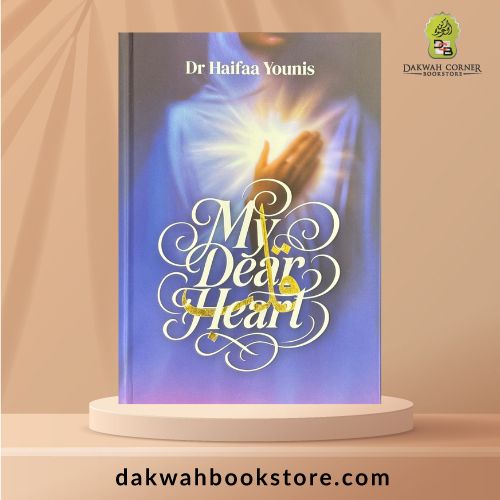
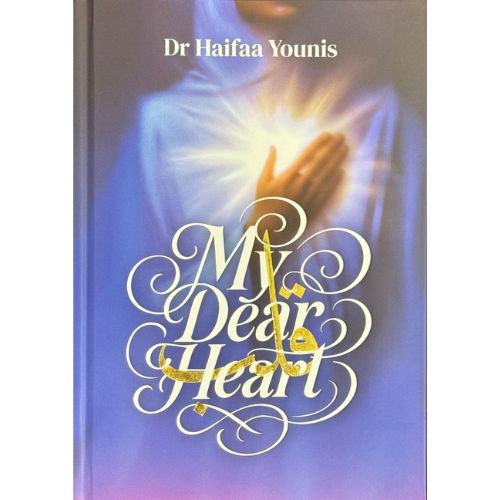
My Dear Heart (H/B)
How is your heart? This organ is a subtle creation of our Rabb, it is the seat of our faith and the only thing of true worth we will take with us to Allah. Yet how much time do we take to understand, nourish and protect it? Do we know what hinders and helps it?
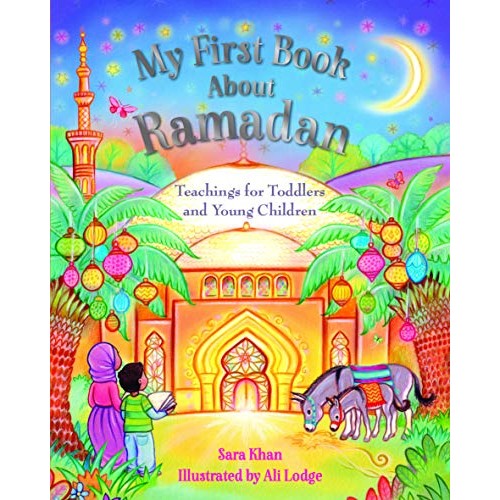
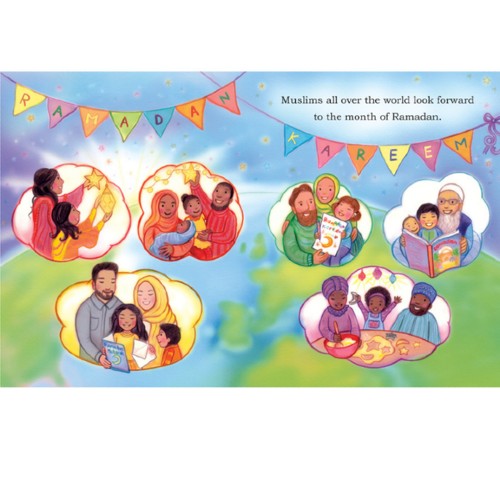
My First Book About Ramadhan
“The perfect book to introduce children to the month of Ramadan” This simple but beautiful board book presents children with some of the blessings of the month of Ramadan. It introduces the concept of fasting as one of the five pillars of Islam and explains how Muslims can make the most of this special month.
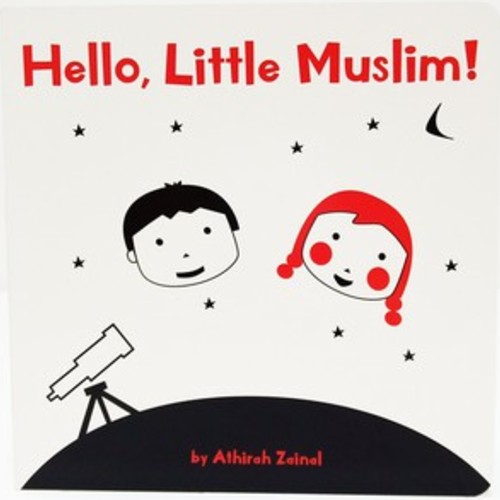
Hello, Little Muslim!
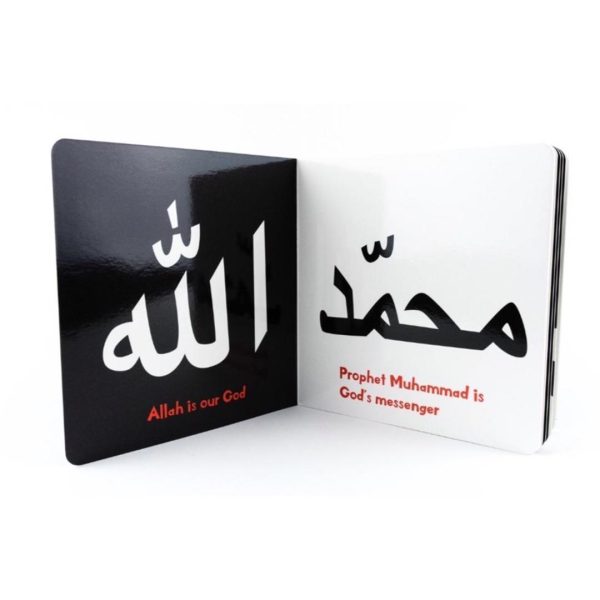
A high contrast book that is best for your baby. Babies positively respond to high contrasting colors and it improves brain growth and visual development.
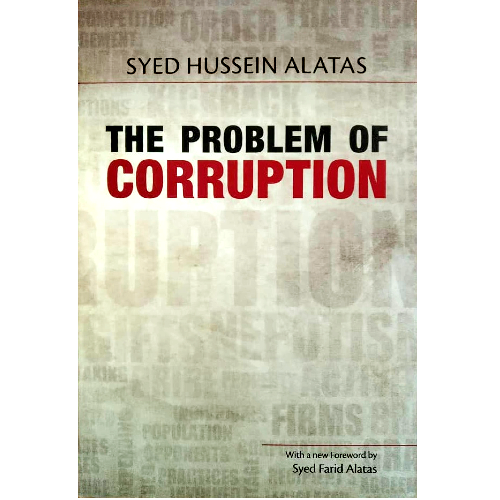
The Problem Of Corruption (P/B) (IBT)
“Corruption is a disease that can sweep through society like a tidal wave, leaving in its wake a trail of negligence, lethargy, inefficiency and callous disregard of man’s inhumanity to man. What is it like to live inside such a society? Why has it taken such strong root in so many countries? Is there no sense of outrage and shame against such a phenomenon among our elite? What can be done to stem the tide? Is it corruption as it is known in the West? These disturbing questions and more are answered in this book. Corruption in all its forms, bribery nepotism, and extortion, is shown for what it is – a major cause of the dehumanization and victimization of innocent people. The corrupt have no aspirations for the betterment of their societies. For this reason, all decent people must be gravely concerned with the problem and nurture the next generation to confront the corrupt and disrupt their way of life.”


There are no reviews yet.