

![Pondering Over the Qur'an Vol 1 [IBT]](https://shop.dakwahbookstore.com/wp-content/uploads/2020/03/QQ174-500X.png)
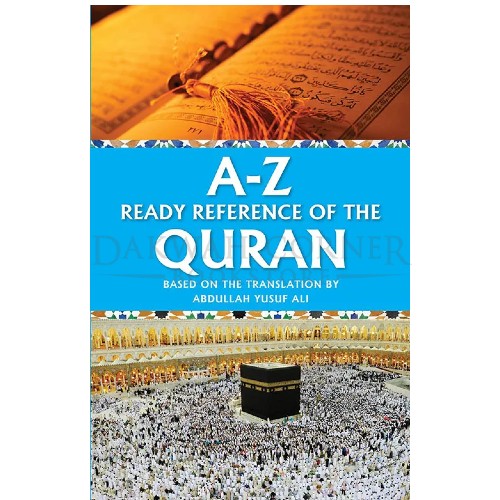
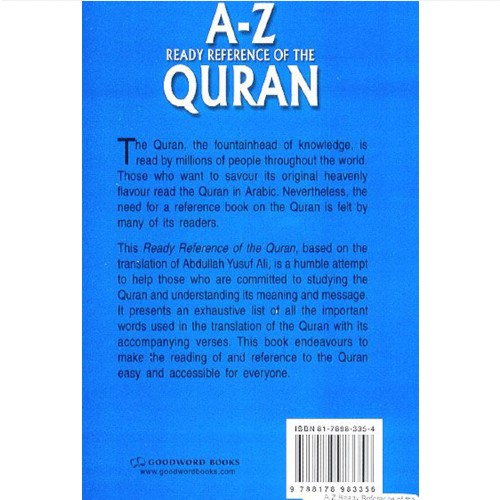
The Quran, the fountainhead of knowledge, is read by millions of people throughout the world. Those who want to savoir its original heavenly flavor read the Quran in Arabic. Nevertheless, the need for a reference book on the Quran is felt by many of its readers. This ready Reference of the Quran, based on the translation of Abdullah Yusuf Ali, is a humble attempt to help those who are committed to studying the Quran and understanding its meaning and message. It presents an exhaustive list of all the important words used in the translation of the Quran with its accompanying verses. This book endeavors to make the reading of and reference to the Quran easy and accessible for everyone.
A-Z Ready Reference of the Quran (Goodword)
RM46.00
Hurry up, Only 1 left.

Frequently Bought Together
1 Item
RM46.00
2 Add-Ons
RM285.00
Total
RM331.00
Additional information
| Weight | 0.95 kg |
|---|---|
| Dimensions | 21.5 × 14 × 3.2 cm |
| Author | |
| Binding | Paperback |
| ISBN | 9788178983356 |
| Pages | 829 |
| Publisher | Goodword |
Reviews (0)
Be the first to review “A-Z Ready Reference of the Quran (Goodword)” Cancel reply
You must be logged in to post a review.
You may also like…
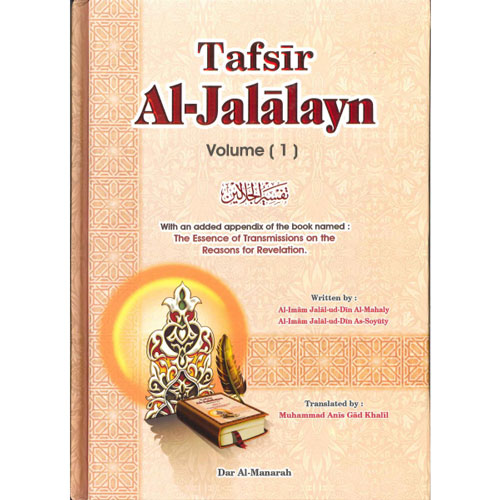
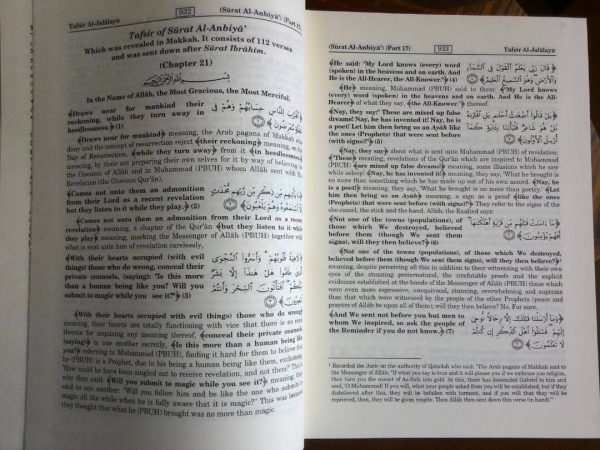
Tafsir Al-Jalalayn (set of 2 vol)
Highlights:
This book, “Tafsir al-Jalalayn,” meaning “The Commentary of the Two Jalals”, is named after its two authors: Jalalu’d-Din al-Mahalli (1389-1459), who wrote half of it, and his student, Jalalu’d-Din as-Suyuti (1445-1505), one of the greatest Muslim scholars of all, who completed it after al-Mahalli’s death. For half a millennium Tafsir al-Jalalayn has been considered the essential first step in the study of the meanings of the Quran by teachers and students throughout the Islamic world. Although it is among the shortest and simplest of the complete commentaries, it is at the same time both wide-ranging and profound. This translation by Muhammed Anis Gad Khalil gives non-Arabic speakers access to one of the seminal works of classical tafsir literature. It is hoped that it will prove a valuable aid to the correct understanding of the Quranic Revelation throughout the English-speaking world.
RM240.00
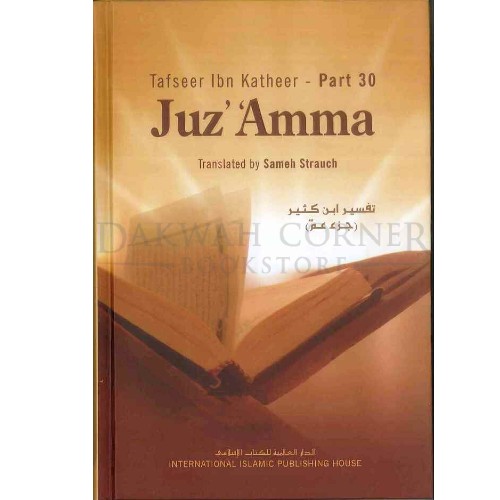
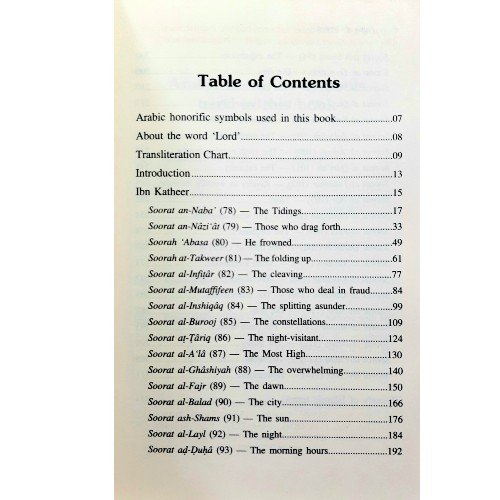
Tafseer Ibn Katheer Juz’ ‘Amma: Part 30 of the Qur’an
Highlights:
The 30th and last section of the Qur’an is probably the most widely read and memorized of all the parts of the Qur’an, containing as it does, many short chapters which are easy to commit to memory. This explanation and commentary of those chapters will help you understand their full meaning and importance.
RM50.00
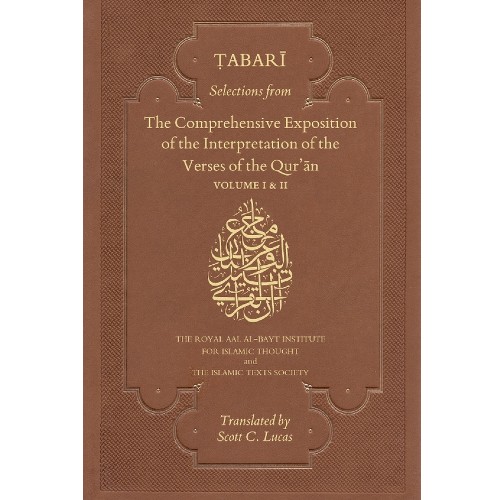
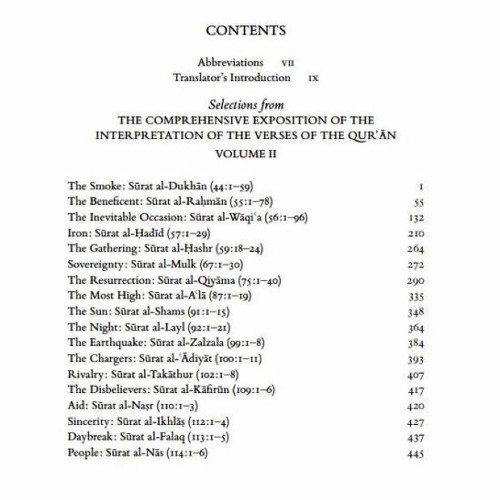
Tabari : The Comprehensive Exposition Of the Interpretation of the Verses of the Qur’an (2 Vol)
Highlights:
Tabari’s Qur’an Commentary, Comprehensive Exposition of the Interpretation of the Verses of the Qur’an, is one of the great monuments of classical Arabic and Islamic scholarship which, over a millennium, has been a fundamental reference work for scholars engaged in the tradition of Qur’anic exegesis. This two-volume translation focuses on thirty selected verses and Suras, or Chapters, associated with special merits and blessings and also includes Tabari’s own introduction to the Comprehensive Exposition
RM375.00
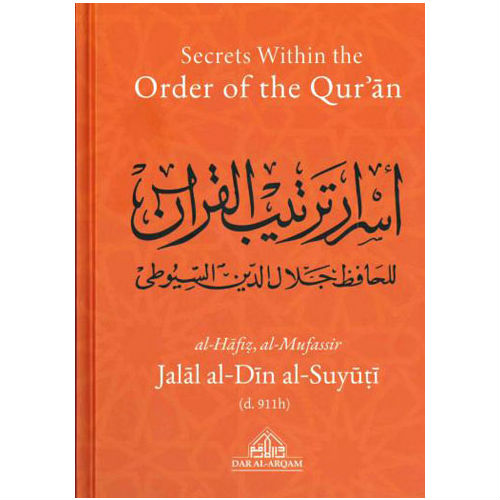
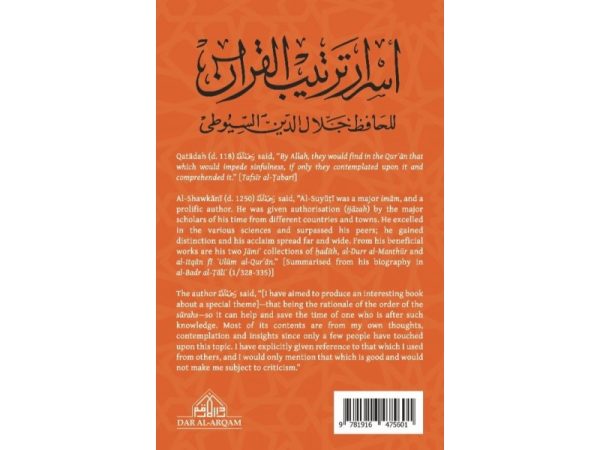
Secrets Within the Order of the Qur’an (H/B)
Highlights:
This unique book displays the genius of al-Suyūṭī in exegesis of the Qurʾān. Through his deep reflection and knowledge of the Qurʾān and its related sciences, he provides insights into why its chapters are ordered so and unveils intricacies to the reader which could only have been unearthed by one possessing such mastery and genius. The author states at many junctures within the book that he is displaying his reflections to the reader, so one is given the opportunity through this intimate writing style to ponder over the Qurʾān from the perspective of a true tafsīr master.
RM100.00

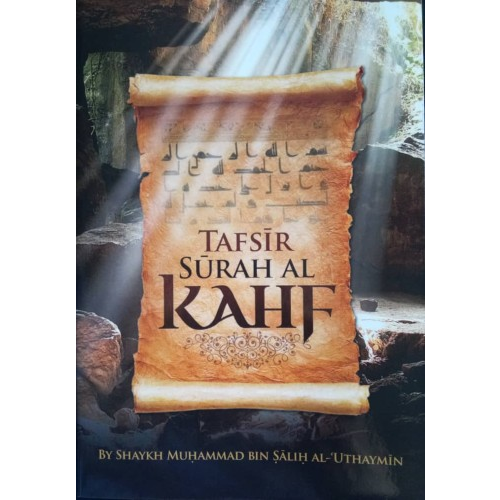

Tafseer Soorah Al-Hujurat (H/B)
Highlights:
Tafseer Soorah al-Hujurât: A Commentary on the 49th Chapter of the Qur’an is a treasury of divine advice, commandments, and prohibitions regarding common problems in social relations, including gossip, spying, arguing, and bigotry. To make the best use of this chapter, the believer needs a detailed explanation of the meanings of the verses.
Dr. Bilal Philips has based his tafseer (exegesis) on the methodology used in the classical works of tafseer. He has relied first of all on the explanations found within the Qur’an itself, then on explanations found in the Sunnah and related incidents which occurred at the time of the revelation of the verses in question. Beyond these primary sources, Dr. Philips has relied on the interpretations made by the Prophet’s Companions (may Allah be pleased with them) who were noted for their ability to interpret and comment on the Qur’an. ‘Abdullâh ibn ‘Abbâs, for example, was called ‘The interpreter of the Qur’an’ by Prophet Muhammad (blessings and peace of Allah be upon him). Finally, the author has made use of the grammatical explanations given in the classical tafseer works. Wherever possible, Dr. Philips has tried to apply the derived meanings of the verses to the problems of contemporary society.
RM40.50 RM60.00
Related Products
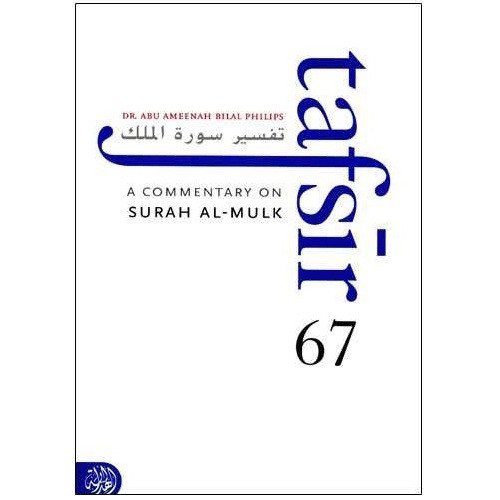
Tafsir 67 : A Commentary on Surah al Mulk (P/B)
Highlights:
The beauty of the Qur’an is such that its miracles cannot truly be understood until one contemplates every verse of every surah; this alone makes tafsir one of the most amazing sciences of Islam. Surah Al-Mulk is a chapter of the Quran which would be recited every night by the Prophet (peace be upon him), in its midst are deep meanings which highlight the purpose of our creation, as well as entailing the message of Islam. In this book, the author takes the reader on a wonderful journey through the gardens of the first surah in the 29th Juzz of the Qur’an.
About the Author: Dr. Philips was born in 1947 in Jamaica, but grew up in Canada, where he converted to Islam in 1972. He completed a diploma in Arabic language and a B.A. degree in 1979 from the College of Islamic Disciplines at the Islamic University of Madinah, an Islamic university in Saudi Arabia. At the University of Riyadh College of Education he completed his M.A. in Islamic Theology in 1985, and in 1994 he completed his Ph.D in Islamic Theology in the department of Islamic studies at the University of Wales. He later taught Islamic education and Arabic language in private schools in Riyadh for over ten years. Because of his opposition to Saudi Arabia’s position in the Gulf War, he had to leave the country and for three years he lectured M.Ed. students in the Islamic Studies department of Shariff Kabunsuan College (SKC) in Cotabato City, Mindanao, the Philippines. Islamic Information Center Since 1994, he has founded and directed the Islamic Information Center (which is now known as Discover Islam) in Dubai, United Arab Emirates, and is known as a prolific speaker and author on topics relating to Islam, including audio lectures and books. Presently, he is a lecturer of Arabic language and Islamic Studies at the American University in Dubai and ‘Ajman University in Ajman, United Arab Emirates. He frequently appears at the Islamic Research Foundation in Mumbai, India, on lecture tours. He has also founded the Distance Learning Program called Islamic Online University, which offers a four year degree in Islamic Studies plus a variety of short courses. Dr. Philips is something of a pioneer as a person of Western origin achieving the status of a scholar of Islam inside the tradition.
RM63.00
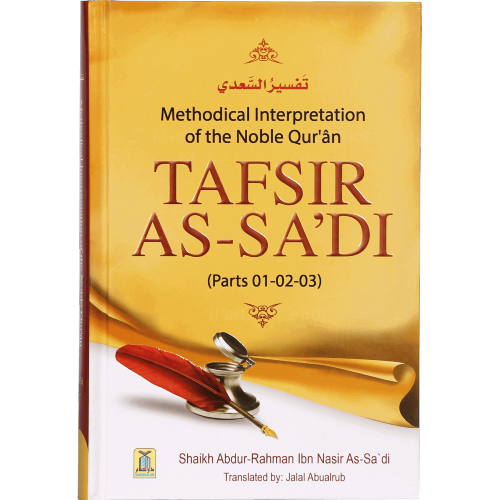
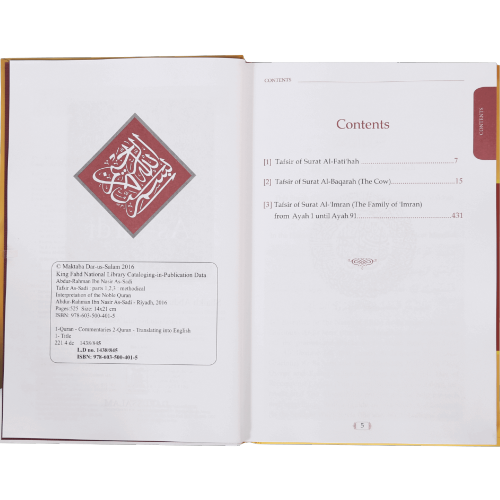
Tafsir As-Sa’di (parts 1,2,3)
Highlights:
Tafsir As-Sa’di is a straightforward, easy to read, easy to understand explanation of the meaning of Qur’anic Ayat and statement. In addition to the simplicity of Ibn Sa’adi’s writing, it is also articulate and eloquent. Consequently, for those newly acquainted with Tafsir and those new to Islam, this Tafsir provides an uncomplicated, deep and insightful comprehension into the meaning and explanation of the Qur’an.
RM80.00
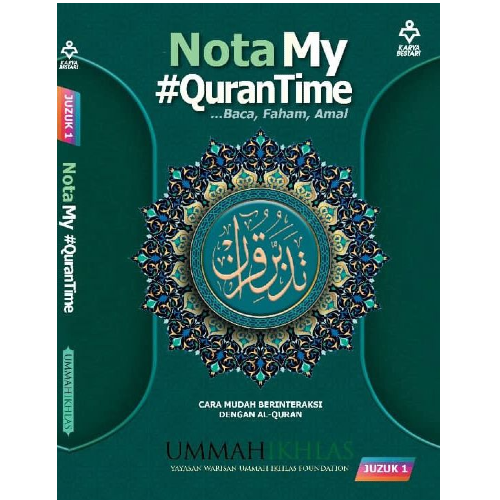
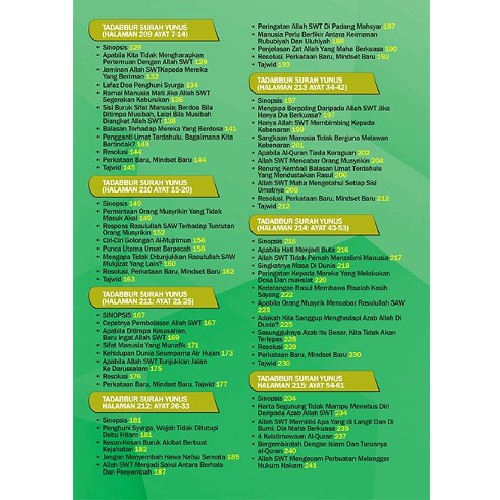
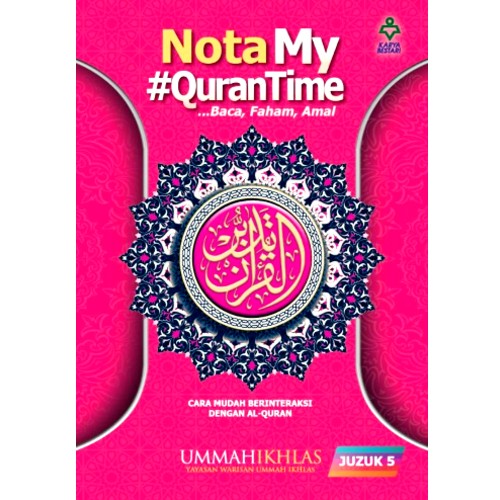
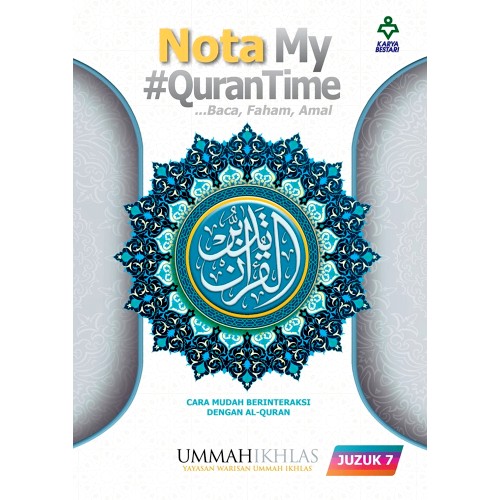
Nota My #QURANTIME Juzuk 1
Highlights:
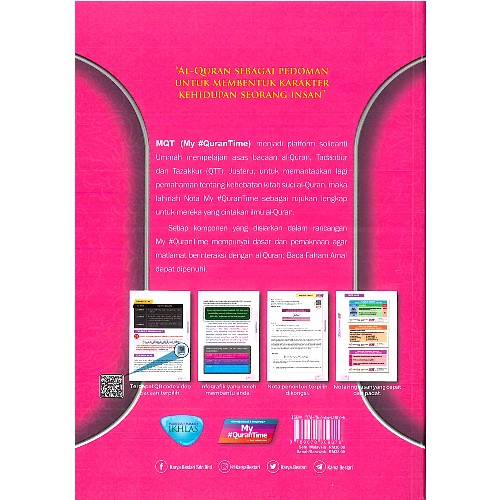
Sejajar dengan tujuan program My#QuranTime yang disiarkan di TV ALHIJRAH Iaitu mahu menjadi platform solidariti ummah mempelajari asas bacaan al-Quran, Tadabbur dan Tazakkur, maka lahirlah naskhah lengkap: NOTA MY #QURANTIME sebagai panduan lengkap buat mereka yang cintakan al-Quran.
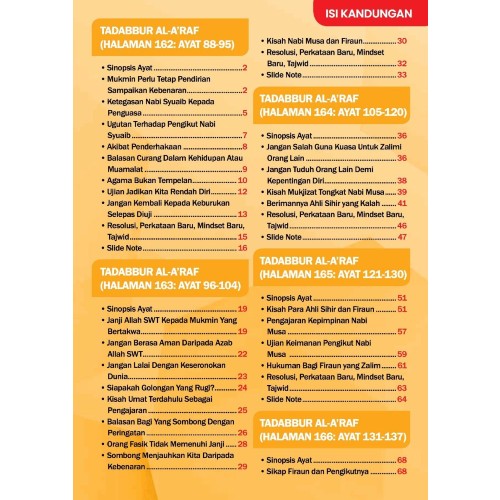
NOTA MY #QURANTIME ini akan diterbitkan sebanyak 30 juzuk, yang mana setiap juzuk mempunyai sebanyak 230 hingga 300 halaman.
Nota ini juga merangkumi:
- Satu buku, satu juzuk
- Nota pilihan daripada penonton
- Aplikasi QR code untuk video bacaan terpilih
- Nota ringkasan yang padat tapi mudah difahami
- Peta infografik berwarna yang dapat membantu pemahaman pembaca
RM30.00
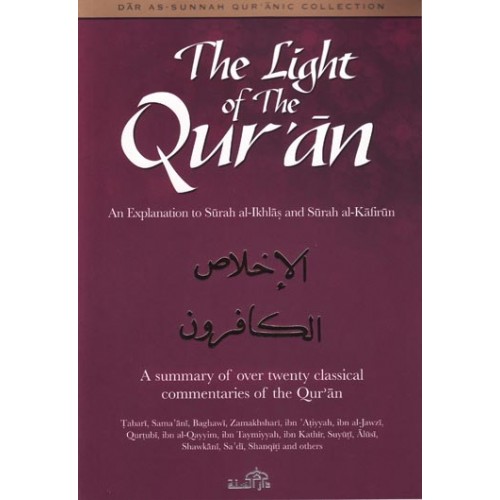
The Light of The Qur’an
Highlights:
The Prophet peace and blessings of Allah be upon him, passed by a person reciting Surah Al – Kafirun and remarked, “He has been saved from shirk”. He passed by another reciting Surah Al – Ikhlas and remarked. Paradise has become obligatory for him. Reported by Muslim.
These two chapters have both been given the title Al-Ikhlas, or purity of faith, because they deal with the topic of Tawhid in all its various aspects. Al – Ikhlas concentrates on the pure, essential faith in Allah that all mankind is required to have. Al – Kafirun deals with purity of deed and disavowal of disbelief and paganism. Both chapters lay out the parameters of mans relationship with his/her lord and creator, as well as his/her relationship those around him/her.
Pure, unblemished monotheism combined with sincerity in belief and deed defines the relationship with Allah. Hi is one and only true God, unique, without peer, equal or opposite, and nothing is like on to him. He is the one who stands in need of nothing whereas everything is in dire need of him.
Maintaining the essential Muslim identity and character defines the relationship between the Muslim and his fellow man. The Muslim is unambiguous about his religion, truthful and upright in speech, deed and his dealings with those around him. Hi is proud of his faith and has unshakable conviction in it. He loves his lord, his Messenger and the Muslims and is loyal to them. Because of this, the dearest thing to him is his religion and he will not compromise it, pleasing Allah comes before pleasing the people.
The prophet would frequently recite these two chapters in prayer because of the commonality of their theme and to stress that success is achieved, in this life and the next, by internalising their message and living by it.
RM41.00
Recently Viewed

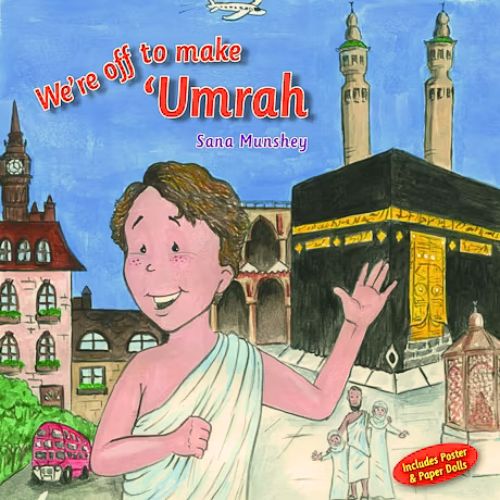
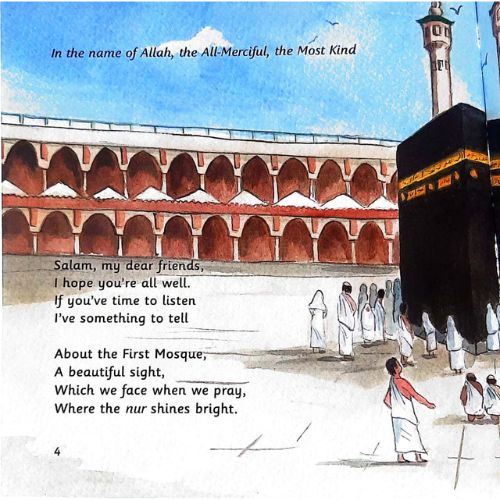
We’re Off to Make ‘Umrah (H/B)
Highlights:
Go on a journey of a lifetime….perform Umrah and visit Madina. Includes poster and paper dolls to enact Performing Umrah!
RM40.00
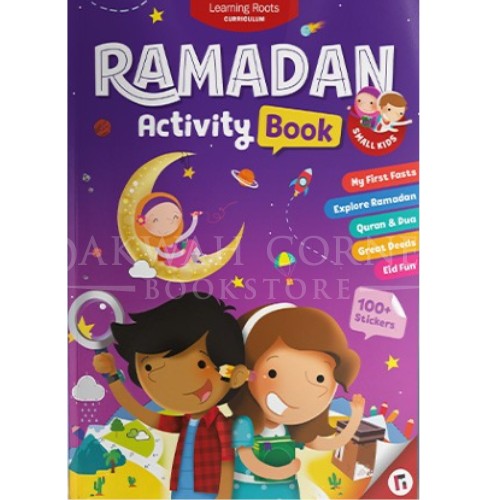
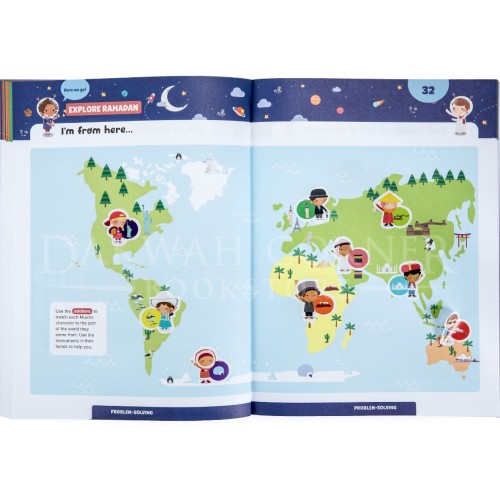


Forensic Psychiatry In Islamic Jurisprudence (P/B) (IBT)
Highlights:
This is the first book in Forensic Psychiatry that focuses on the application of psychiatry to legal issues connected to Islamic jurisprudence. It gives contemporary psychiatry in any Islamic country a broad spectrum of tools to work with, enabling the utilization of options specific to particular societal and cultural norms. This book will appeal to both the general as well as the academic reader.
RM40.00


The Best in Islam
Highlights:
A groundbreaking, first-of-its-kind, compilation of authentic prophetic statements and Qur’anic verses that describe people, places and things using the terms of praise: “Good”, “Better” and “Best” or their equivalents like “beloved”, “more beloved” and “most beloved.” The 182 Hadeeth and Quranic verses are alphabetically grouped according to their various subject matters.
This truly unique work, originally compiled in the beginning of the 1990s, was aimed at enlightening English readers with issues which Islam considers to be the best and most pleasing to the Almighty God. Hence, readers can appreciate the higher objectives and goals of Islamic teachings, rites and rituals.
RM36.00

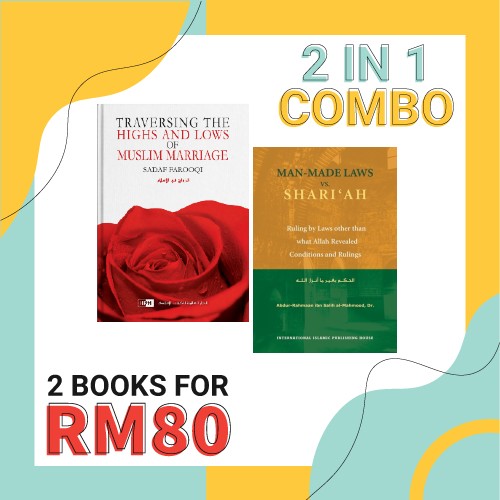
2IN1 Combo P02
Highlights:
1. Man Made Laws Vs. Shari‘ah (384 pages)
2. Traversing the Highs and Lows of Muslim Marriage (195 pages)
RM73.00 RM86.00

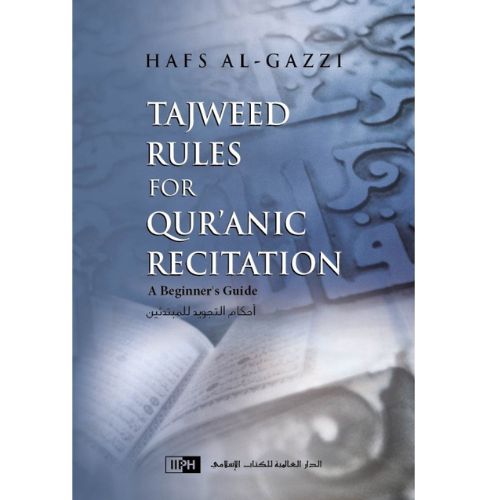
Tajweed Rules For Quranic Recitation [A Beginner Guide]
Highlights:
For every letter of the Qur’an that a Muslim recites, s/he is rewarded ten times over. This immense reward for such a seemingly simple task emphasizes the importance of learning how to recite the Qur’an. Tajweed Rules for Qur’anic Recitation: A Beginner’s Guide aims to give the reader the necessary tools to properly recite the Qur’an according to the manner in which the Prophet Muhammad (sa) recited it. To set the stage for learning the proper Qur’anic recitation, or tajweed, the history of the Qur’an is briefly discussed from its revelation to its compilation. In addition, the history of the Science of Tajweed is touched upon, in order to move the reader into the rules of Qur’anic recitation. With the beginning learner in mind, the rules are detailed in a simple yet clear manner. Each new rule is elucidated with examples from the Qur’an for learners to apply to their recitation.
RM45.00
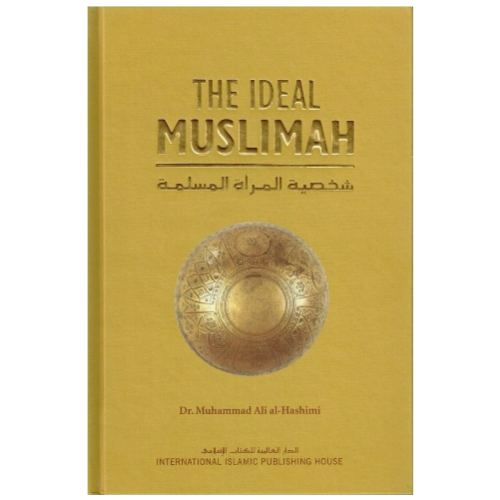
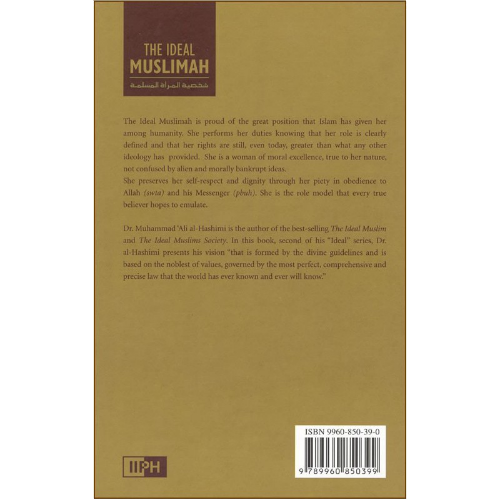
The Ideal Muslimah (IIPH)
5 ★
5 ★
1 Rating
5 ★
1
4 ★
0
3 ★
0
2 ★
0
1 ★
0
Highlights:
The Ideal Muslimah is proud of the great position that Islam has given her among humanity. She performs her duties knowing that her role is clearly defined and that her rights are still, even today, greater than what any other ideology has provided. She is a woman of moral excellence, true to her nature, not confused by alien and morally bankrupt ideas. She preserves her self-respect and dignity through her piety in obedience to Allah (swta) and his Messenger (pbuh). She is the role model that every true believer hopes to emulate.
RM90.00
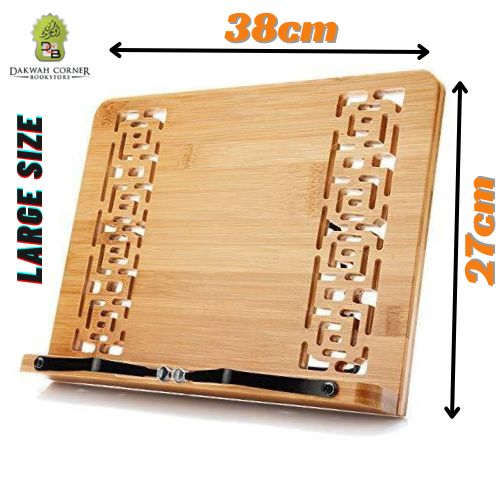
RM50.00 – RM65.00Price range: RM50.00 through RM65.00


There are no reviews yet.