


| Weight | 0.70 kg |
|---|---|
| Dimensions | 24.5 × 16.5 × 3.5 cm |
| Author | |
| Binding | Hardcover |
| ISBN | 9781916475663 |
| Pages | 321 |
| Year of publication | 2020 |
| Publisher | Dar Al-Arqam |
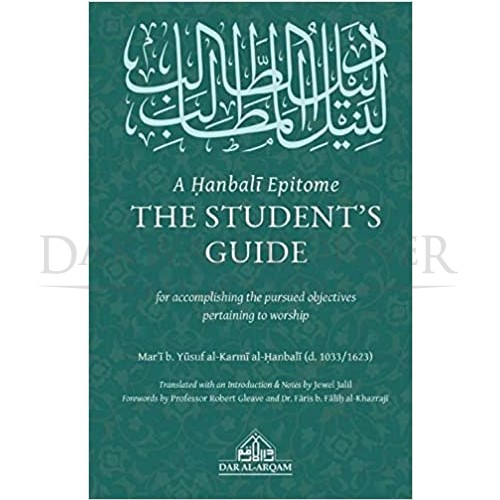
A Hanbali Epitome: A Student’s Guide
RM125.00
Out of Stock
Highlights:
somdn_product_page
Compare
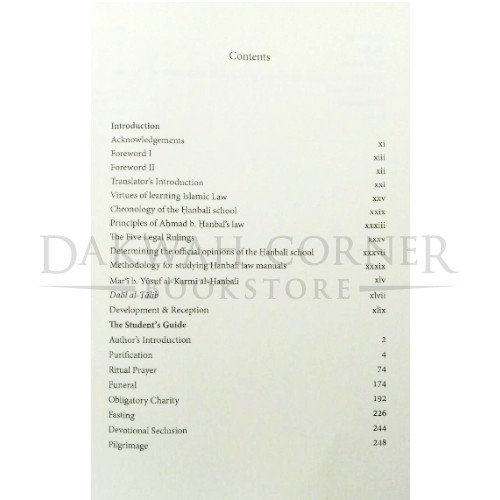
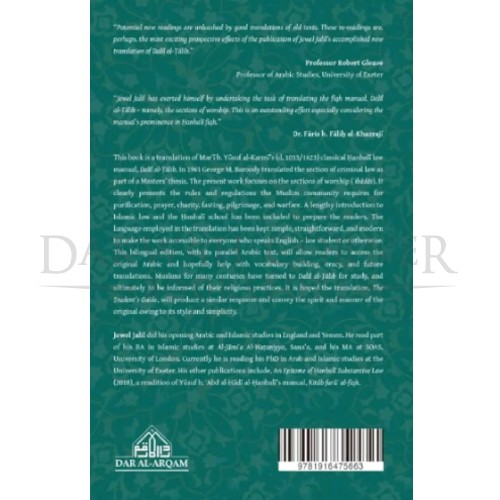
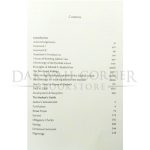
The present work focuses on the Muslim community requires for purification, prayer, charity, fasting, pilgrimage, and warfare. A lengthy introduction to Islamic law and the Hanbali’ school has been included to prepare the readers. The language employed in the translation has been kept simple, straightforward, and modern to make the work accessible to everyone who speaks English – law student or otherwise. This bilingual edition, with its parallel Arabic text, will allow readers to access the original Arabic and hopefully help with vocabulary building, oracy, and future translation. Muslims for many centuries have turned to Dalil al-Talib for study, and ultimately to be informed of their religious practices. It is hoped the translation, The Student’s Guide, will produce a similar response and convey the spirit and manner of the original owing to its style and simplicity.
Additional information
Reviews (0)
Be the first to review “A Hanbali Epitome: A Student’s Guide” Cancel reply
You must be logged in to post a review.
Related Products

The Problems of the Illegitimate Child (P/B)
Highlights:
This book addresses the views of the Sunni scholars regarding the importance of genealogical relationship (nasab) in Islamic family law and examines the role of legitimacy on the basis of the legal maxim “al-walad li al-firash”, evidence (al-bayyinah), and doubtful intercourse (wat’ shubhah). It also elucidates the views of the Sunni schools of law on how to establish illegitimacy. For the Sunni jurists, there are several situations that determine the illegitimacy of the child. A child is considered illegitimate if its birth is the outcome of adultery (zina) or the result of legitimate union but accompanied with imprecation (li‘an). Other circumstances include the birth of the child taking place in less than six lunar months, the father of the child being categorized as one who is incapable of begetting, or the birth as a result of marital relationship considered unlawful because of consanguinity. The book also deals comprehensively with the moral, religious, legal and other aspects of the illegitimate child and the foundling in the works of the Sunni jurists. The status and rights of the illegitimate child and the foundling in the Islamic family law of Malaysia and Brunei are also discussed by referring to some provisions from Federal Territory Act 1984 (Act 303) and Brunei law.
RM49.00


Funerals Regulations and Exhortations (H/B)
Highlights:
Our soul inevitably follows a route starting from birth, passing through death, and ending with our resurrection in the next life. The inevitable journey discusses over a sequence of titles: sickness, inheritance, funerals, Life in Barzakh and so on…
RM75.00

Worship In Islam: An In-depth Study of Ibadah, Salah and Sawm (P/B)
Highlights:
Worship in Islam is in-depth study of the nature and significance of Islamic spirituality by Abul A‘la Mawdudi (1903–79), one of the leading Muslim intellectuals of the twentieth century, with special reference to the concepts of God’s Oneness (tawhid), the finality of Prophethood (risalah) and the Islamic system of worship (‘ibadah) with a focus upon prayer (salah) and fasting (sawm) and their role in the development of the Islamic personality and Islam’s social order. The distinguishing feature of Mawdudi’s approach is his elaboration of the social dimension of worship, which extends the traditional approach found in Islamic jurisprudence, with its focus upon ritual and self-purification, to consider worship’s transformative role in social life. Presenting a holistic view of the Islamic system, Mawdudi highlights Islam’s social, economic and political dimensions, which he argues has the capacity to resolve emergent issues and problems that humankind faces.
This historic text should be of wider interest to both students and specialists in contemporary Islamic thought, and includes an introduction by Professor Anis Ahmad.
Edited and translated into accessible English by Ahmad Imam Shafaq Hashemi, this book is an authoritative compilation by a leading Islamic twentieth-century revivalist on the central matter of worship’s role in Islam.
RM84.00

Islamic Rules of Order (P/B)
Highlights:
Organizations must have rules of order to facilitate their debate and to fill in the procedures not detailed by their constitutional documents. While most American organizations are content to operate by Robert’s Rules of Order, Muslim organizations have often wrestled with questions over whether the rules of order systemized by a Western military figure are in accord with the Qur’an and the Sunnah.
This book tackles the matter directly and takes into account the Qur’an, the sunnah, Islamic manners and the history of Islamic consultation and leadership to provide a simple, practical guide to organizational procedure that can be incorporated into the governance of Muslim organizations. The book includes advice on writing bylaws and on complying with the best practices of the U.S. Dept. of Justice in a way that is Islamically authentic, transparent, and accountable. It provides a basic starting point for any Muslim organization while allowing for flexibility so that organizations may make any variations they require within their own bylaws and constitution, so that it can accommodate differing schools of thought on Islamic law. In its discursive approach it is an essential primer for understanding the value of rules of order and the Islamic context for their application. The Islamic Rules of Order has been adopted as the rules of order of the Association of Muslims Social Scientists.
RM50.00


Fiqh According To The Quran & Sunnah (2 vol)
Highlights:
The complete set, ‘Al-Lubab Fee Fiqh As-Sunnah Wal-Kitab,’ contains all of the books of Islamic Fiqh and its chapters, accompanied by evidence and is presented in a clear and simple manner, in order that they may be understood by the young and the old, without blindly following any of the schools of Jurisprudence, but rather being subject to authentic proofs and following the most authoritative opinions, without fanatical adherence to any particular group. Rather the author agrees with each group when the truth is with them and contradicts them when they veer from that which is correct.
Fiqh is to achieve access to knowledge of that which is unclear through knowledge of that which is proven, so it is more specific than mere knowledge or learning. And fiqh is knowledge of the juristic law. It is said Faquha -A man has acquired understanding and so he has become a Faqeeh (A scholar of Islamic Jurisprudence); and it is said Faqiha – He has understood it, i.e he has attained understanding of it, and it is said Tafaqqaha – he has devoted himself to the acquisition of (Islamic) Knowledge and specialized in it. Fiqh has been a subject of contention among the scholars as well as layman throughout the history of Islam.
RM180.00


Common Mistakes Regarding Prayer – IIPH
Highlights:
Formal prayer (salat) is the second pillar of Islam, and the most important of a Muslim’s acts of worship. Prophet Muhammad (PBUH) said: “The first of one’s actions for which a slave of Allah will be held accountable on the Day of Judgment will be one’s prayers. If they are correct and accounted for, then he (or she) will have succeeded (gained paradise); and if they are lacking, then he (or she) will have failed (lost paradise). If there is something defective in his (or her) obligatory prayers, the Lord will say: ‘See if my slave has any supererogatory prayers with which that which was defective in his (or her) obligatory prayers may be completed. Then the rest of his (or her) deeds will be judged in like manner.” (At-Tirmidhi and others) Shaykh Mashhur Hasan Salman has compiled a list of the most common errors that we make when we pray, discussing and explaining each one. This book is a valuable aid to Muslims hoping to perfect their prayers, so that their prayers may be free of defects and acceptable to Allah. This new and revised edition of the English translation of his work presents the text in a fluent, highly readable style.
RM38.00


Funeral Rites In Islam (H/B)
Highlights:
The purpose of this book is to provide English speaking Muslims a concise and authentic compilation of the instructions regarding funeral rites in Islam.
RM35.00

Shatibi’s Philosophy of Islamic Law (P/B)
Highlights:
Abu Ishaq al-Shatibi, who died in 1888, had sought an answer to the challenge posed by modernisation and change to Islamic law, by introducing maslahah, which forms the basis of his philosophy of Islamic law. In a fascinating way, the author leads us step by step to what he considers the true import of Shatibi’s views concerning jurisprudence.
RM41.00


The Ultimate Guide to Umrah by Darussalam
Highlights:
Based on the famous book ‘Getting the Best out of Hajj’ With special chapters on Umrah in Ramadaan & Visiting Madinah After Hajj, a Muslim considers Umrah to be the most significant worship that brings the opportunity of rewards and the blessings of visiting Ka’bah and the Prophet’s Mosque along with other sacred places one wishes to visit and try to feel the atmosphere present at the time of Allah’s Messenger (peace be upon him) and the hardships he had to bear while preaching Islam. During such a visit, a newcomer has to face many difficulties because of a lack of knowledge about the rites and places. To provide complete details about everything, a pilgrim wants to know, the first time this book has been compiled with the utmost care and research so as to make it useful in every respect.
RM55.00


Principles of Islamic Jurisprudence (2nd Revised Edition)
Highlights:
This book offers a detailed presentation of the theory of Muslim law (usul al-figh). Often regarded as the most sophisticated of the traditional Islamic disciplines, Muslim jurisprudence is concerned with the way in which the rituals and laws of religion are derived from the Qur’an and the Sunna – the precedent of the Prophet. Revelation, which is given to man to restore unity and help him achieve a just and devout order in society as well as in the soul, must be interpreted so as to render it practicable in every culture, while not betraying its spirit and immutable provisions. To achieve this, additional sources of legal authority are recognized, including consensus (ijma), analogical deduction (qiyas), public interest (maslaha) and local customary precedent (urf). In employing these, the jurist guards the five principles which it is the purpose of Islamic law to uphold, namely, the right to life, sound mind, property, lineage and religion.
RM75.00


Islamic Rulings on Menstruation and Postpartum Condition
Highlights:
The birth of human being is a most amazing phenomenon. The physical cycles that the body of woman must endure in order to maintain this act of creation should be respected to the highest degree. Allah mentions that our mothers have born us with difficulty and struggle and because of this are due the highest respect. one among many of the difficulties that women must brave, are the doubts that these conditions present to the correct obervance of her religion. How is her fassting affected, how are her prayers affected, how is her ability to pursue her studies, and how are her conjugal relations affected by her ever changing physical condition in relation to her as the sole vessel of the birth of man. A really valuable publication by Darussalam for all Muslim woman to study
RM11.00

The Pillars of Islam Made Easy – II Salah & Its Essential Conditions (H/B)
Highlights:
Salah is one of the five pillars on which the edifice of Islam rests. Most of us feel that we already know all there is about salah – the formal prayers of a Muslim. However, very few individuals actually do justice to it or derive any worldly or spiritual benefits from it.
Salah & Its Essential Conditions is an effort to detail the essential prerequiires of salah. Moreever, it takes a detailed look at its importance along with the different types of obligatory and voluntary prayers. It alsa presents an illustrated guide to help those who wish to learn or correct the performance of their prayers.
Inshallah, all those who wish to improve their salah will find plenty of help in this book whether they are looking for information on cleanliness and purify, locating the direction of qibla, improving their congregation during salah, making up for the missed salah, or joining acongregation when the imam has already sarted the salah, or joining a congregation when the imam has already started the salah. All in all, it is a relevant handbook on what the Prophet (saw) has described as the coolness of his eyes.
RM50.00
Recently Viewed
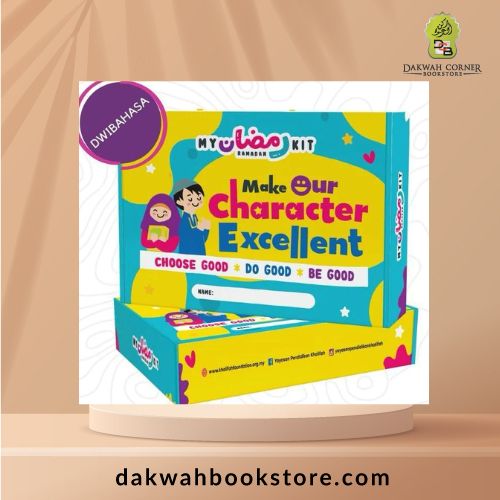
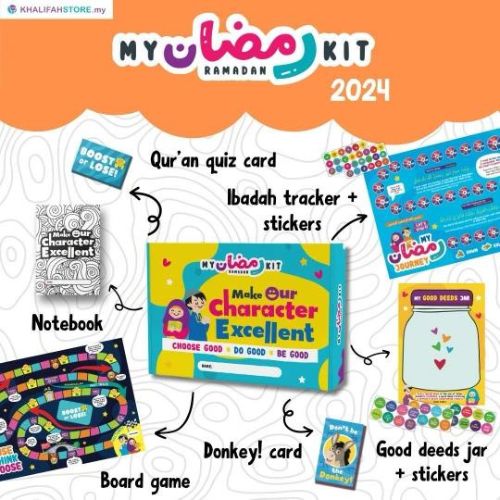
My Ramadan Kit 2025 (New)
Highlights:
𝐖𝐡𝐚𝐭’𝐬 𝐢𝐧𝐬𝐢𝐝𝐞 𝐭𝐡𝐞 𝐑𝐚𝐦𝐚𝐝𝐚𝐧 𝐊𝐢𝐭:
💛 1 x Board Game
💛 30 x Quran Quiz Cards
💛 Ibadah Tracker with Stickers
💛 Good Deeds Jar with Stickers
💛 Animals In The Quran Memory Game Cards
💛 Notebook with Coloring Pages
RM35.00
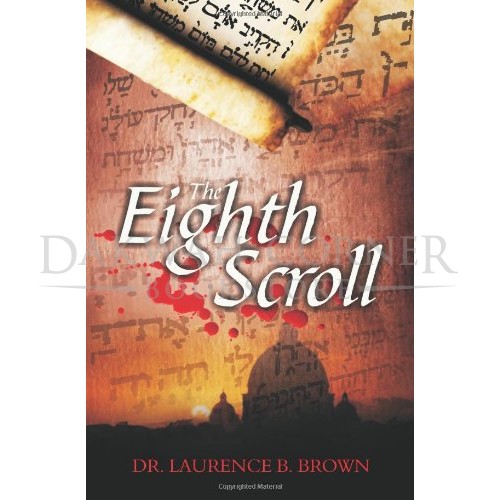
The Eighth Scroll
Highlights:
Stirring the flames of age-old controversies, The Eighth Scroll by Laurence B. Brown draws on the three Abrahamic faiths of Judaism, Christianity, and Islam to create an unbelievably dynamic and powerful story.
RM75.00
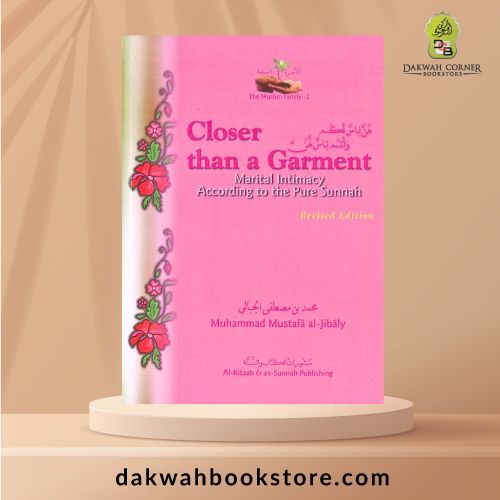
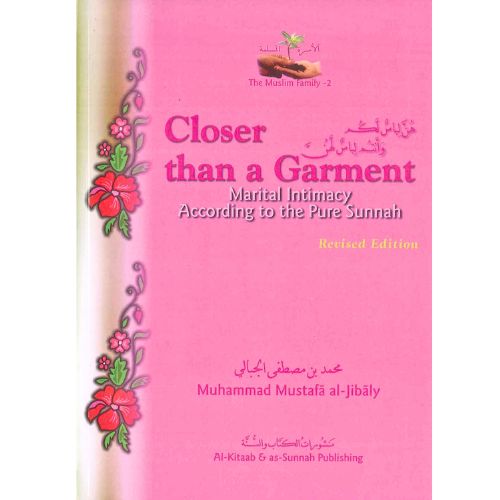
Closer Than A Garment (P/B)
4 ★
4 ★
1 Rating
5 ★
0
4 ★
1
3 ★
0
2 ★
0
1 ★
0
RM41.00
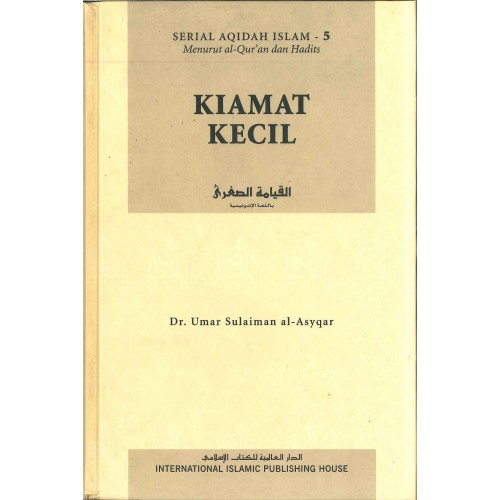
Kiamat Kecil ; Serial Aqidah Islam – 5
5 ★
5 ★
1 Rating
5 ★
1
4 ★
0
3 ★
0
2 ★
0
1 ★
0
Highlights:
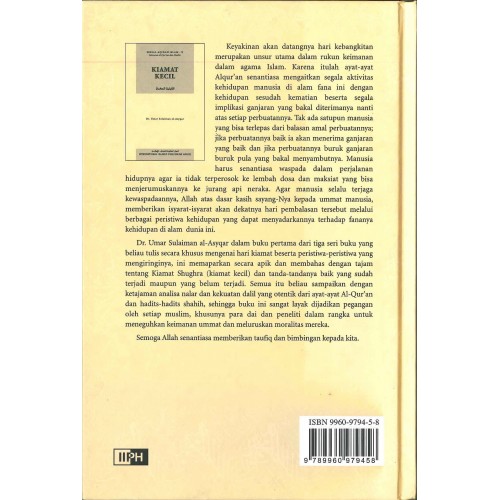
Kiamat Kecil: menurut al-Qurán dan hadits – Serial Aqidah Islam 5/ Dr. Umar Sulaiman al-Asyqar. Apa yang terjadi setelah kematian? Bagaimana kehidupan manusia setelah kehidupan dunia ini? Kapan dan bagaimana dunia ini berakhir? Ini adalah pertanyaan-pertanyaan yang menyangkut semua orang, tidak peduli apa latar belakang nya. Banyak yang telah mencoba menjawab pertanyaan-pertanyaan ini, dan menghasilkan teori-teori yang berkisar dari aneh ke nihilistik. Tapi teori-teori buatan manusia tidak dapat menjawab pertanyaan di luar batas kemampuan manusia. Dalam buku ini Dr. Umar al-Asyqar memaparkan secara apik dan membahas dengan tajam tentang kematian, perjalanan roh menuju langit, alam kubur dan kiamat sughra (kiamat kecil) dan tanda-tandanya, baik yang sudah terjadi maupun yang belum terjadi. Semua itu beliau sampaikan dengan ketajaman analisa nalar dan kekuatan dalil yang otentik dari ayat-ayat Al-Qur’an dan hadits-hadits shahih.
RM45.00
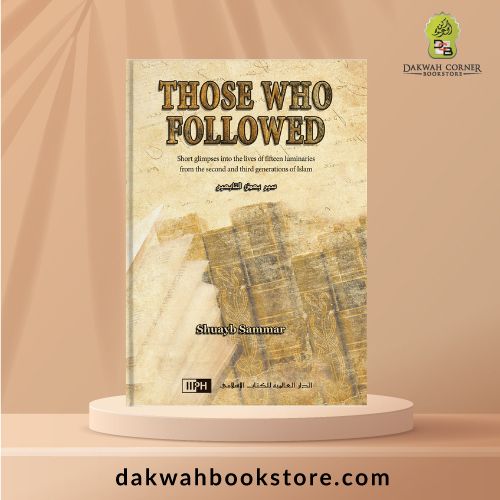
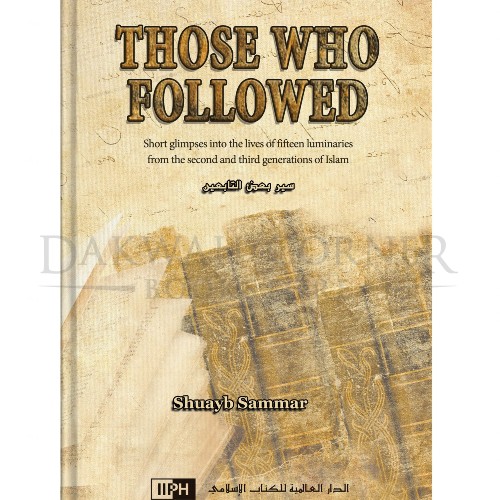
Those Who Followed by IIPH
Highlights:
Those Who Followed is a collection of interesting and inspiring short biographies of the selected torchbearers of Islam from the generations that followed the Companions of the Messenger of Allah (blessings and peace be upon him). Lessons from how they dealt with civil strife and their appraisal of the life in this world and the hereafter hold a lot of relevance today. This book is a must-have for every family library. It can be used by parents and teachers effectively to introduce role models like Imam Bukhari, Imam Ahmad ibn Hanbal, Abdullâh ibn al-Mubârak, Imam Abu Haneefah, and many others to preteens and teenagers.
RM56.00

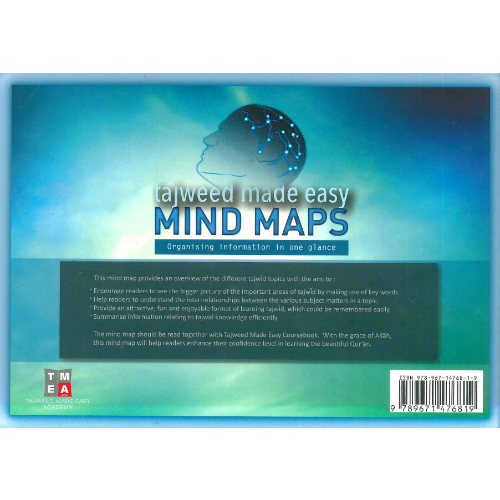
Tajweed Made Easy Mind Maps
Highlights:
This mind map provides an overview of the different tajwid topics with the aim to:
- Encourage readers to see the bigger picture of the important areas of tajwid by making use of key words.
- Help readers to understand the inter-relationships between the various subject matters in a topic.
- Provide an attractive, fun and enjoyable format of learning tajwid, which could be remembered easily.
- Summarise information relating to tajwid knowledge efficiently.
RM25.00
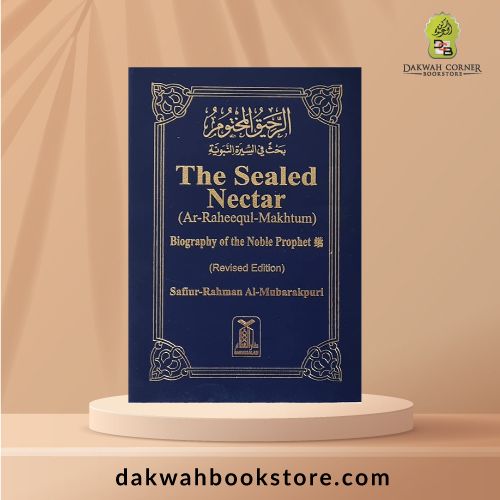
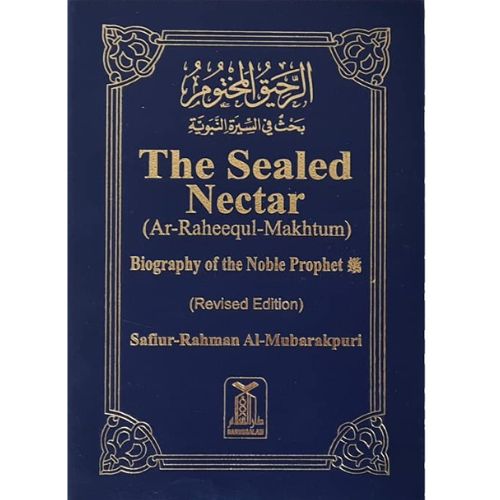
The Sealed Nectar (Pocket Size)
5 ★
5 ★
1 Rating
5 ★
1
4 ★
0
3 ★
0
2 ★
0
1 ★
0
RM65.00
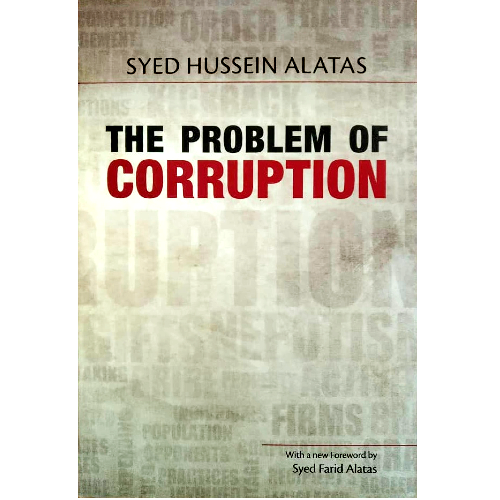
The Problem Of Corruption (P/B) (IBT)
Highlights:
“Corruption is a disease that can sweep through society like a tidal wave, leaving in its wake a trail of negligence, lethargy, inefficiency and callous disregard of man’s inhumanity to man. What is it like to live inside such a society? Why has it taken such strong root in so many countries? Is there no sense of outrage and shame against such a phenomenon among our elite? What can be done to stem the tide? Is it corruption as it is known in the West? These disturbing questions and more are answered in this book. Corruption in all its forms, bribery nepotism, and extortion, is shown for what it is – a major cause of the dehumanization and victimization of innocent people. The corrupt have no aspirations for the betterment of their societies. For this reason, all decent people must be gravely concerned with the problem and nurture the next generation to confront the corrupt and disrupt their way of life.”
RM35.00
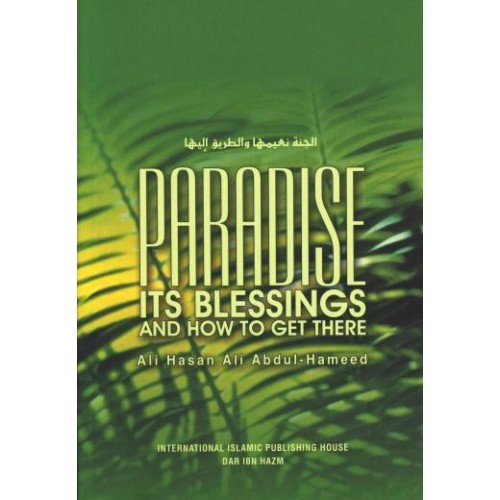
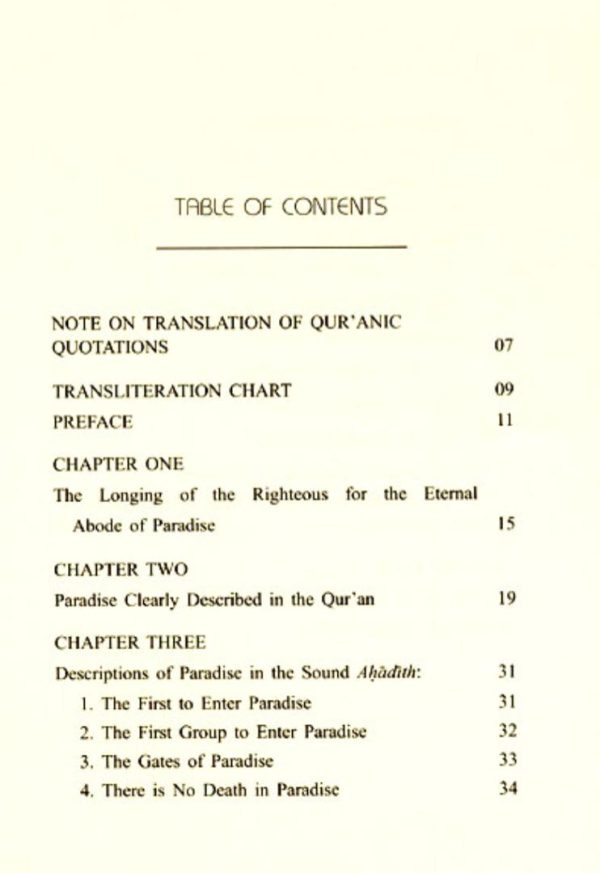
Paradise Its Blessings and How To Get There (P/B)
Highlights:
Paradise and its inhabitants as portrayed in the Qur’an and the Hadith, then discusses the various rewards and blessings that are promised to those who make it there. Finally, the author lists the many and myriad deeds that a Muslim can do that will help him or her to achieve the Garden of Eden.
RM10.00 RM11.00
A Hanbali Epitome: A Student’s Guide
Highlights:
The present work focuses on the Muslim community requires for purification, prayer, charity, fasting, pilgrimage, and warfare. A lengthy introduction to Islamic law and the Hanbali’ school has been included to prepare the readers. The language employed in the translation has been kept simple, straightforward, and modern to make the work accessible to everyone who speaks English – law student or otherwise. This bilingual edition, with its parallel Arabic text, will allow readers to access the original Arabic and hopefully help with vocabulary building, oracy, and future translation. Muslims for many centuries have turned to Dalil al-Talib for study, and ultimately to be informed of their religious practices. It is hoped the translation, The Student’s Guide, will produce a similar response and convey the spirit and manner of the original owing to its style and simplicity.
RM125.00
There are no reviews yet.