




| Weight | 0.70 kg |
|---|---|
| Dimensions | 24.5 × 16.5 × 3.5 cm |
| Author | |
| Binding | Hardcover |
| ISBN | 9781916475663 |
| Pages | 321 |
| Year of publication | 2020 |
| Publisher | Dar Al-Arqam |
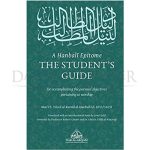
A Hanbali Epitome: A Student’s Guide
RM125.00
Out of Stock
Highlights:
somdn_product_page
Compare
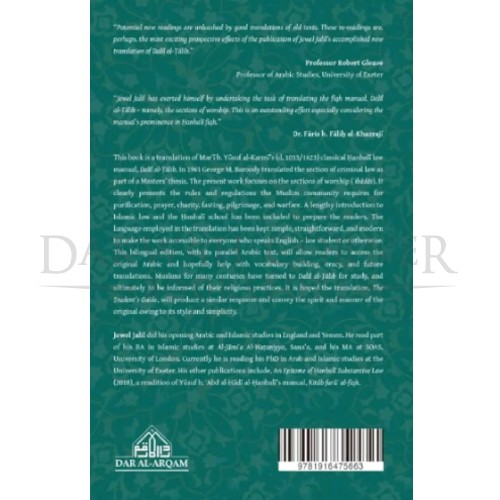
The present work focuses on the Muslim community requires for purification, prayer, charity, fasting, pilgrimage, and warfare. A lengthy introduction to Islamic law and the Hanbali’ school has been included to prepare the readers. The language employed in the translation has been kept simple, straightforward, and modern to make the work accessible to everyone who speaks English – law student or otherwise. This bilingual edition, with its parallel Arabic text, will allow readers to access the original Arabic and hopefully help with vocabulary building, oracy, and future translation. Muslims for many centuries have turned to Dalil al-Talib for study, and ultimately to be informed of their religious practices. It is hoped the translation, The Student’s Guide, will produce a similar response and convey the spirit and manner of the original owing to its style and simplicity.
Additional information
Reviews (0)
Be the first to review “A Hanbali Epitome: A Student’s Guide” Cancel reply
You must be logged in to post a review.
Related Products


Getting the Best Out of Hajj
Highlights:
The book provides a realistic view of Hajj as it is today, with detailed explanations of all the rites. It provides Figh related issues about Hajj, Salah and personal behaviour according to the Quran and Sunnah, to enable you to obtain the best value for your time spent in the holy cities. It also provides information and suggestions about planning for the journey, what to expect and how to survive, so you can depart with full confidence. This is a must have for all those planning to go on Hajj!
RM75.00


Funerals Regulations and Exhortations (H/B)
Highlights:
Our soul inevitably follows a route starting from birth, passing through death, and ending with our resurrection in the next life. The inevitable journey discusses over a sequence of titles: sickness, inheritance, funerals, Life in Barzakh and so on…
RM75.00

Hajj & Umrah And Visitors (H/B)
Highlights:
Rites and Selected Etiquettes for those intending to Perfom Hajj & Umrah and Visitors In this book the author calls attention to the most important things that those who intend to perform Hajj, Umrah or Visiting the Prophets Mosque in Medinah must have as provisions. The author has made his work brief and arranged its topics according to their priorities. the author mentions a considerable number of sayings of the people of knowledge and calling the attention of the reader to some important matters.
RM45.00


Fiqh Course: Tahaarah, Salaah & Janaa’iz
Highlights:
This course was compiled for English-speaking Muslims and is especially beneficial for new Muslims. It covers tahârah (purification), salâh (prayer) and janâ‘iz (funerals). It is set out in an easy-to-understand manner, citing evidence from the Qur’an and authentic hadiths. The aim of this book is to provide the reader with a correct, yet uncomplicated guide to the performance of the aforementioned acts of worship. Allah willing, it is the first in a series which will cover all aspects of worship and Islamic jurisprudence.
RM46.00

The Pillars of Islam Made Easy – II Salah & Its Essential Conditions (H/B)
Highlights:
Salah is one of the five pillars on which the edifice of Islam rests. Most of us feel that we already know all there is about salah – the formal prayers of a Muslim. However, very few individuals actually do justice to it or derive any worldly or spiritual benefits from it.
Salah & Its Essential Conditions is an effort to detail the essential prerequiires of salah. Moreever, it takes a detailed look at its importance along with the different types of obligatory and voluntary prayers. It alsa presents an illustrated guide to help those who wish to learn or correct the performance of their prayers.
Inshallah, all those who wish to improve their salah will find plenty of help in this book whether they are looking for information on cleanliness and purify, locating the direction of qibla, improving their congregation during salah, making up for the missed salah, or joining acongregation when the imam has already sarted the salah, or joining a congregation when the imam has already started the salah. All in all, it is a relevant handbook on what the Prophet (saw) has described as the coolness of his eyes.
RM50.00


Principles of Islamic Jurisprudence (2nd Revised Edition)
Highlights:
This book offers a detailed presentation of the theory of Muslim law (usul al-figh). Often regarded as the most sophisticated of the traditional Islamic disciplines, Muslim jurisprudence is concerned with the way in which the rituals and laws of religion are derived from the Qur’an and the Sunna – the precedent of the Prophet. Revelation, which is given to man to restore unity and help him achieve a just and devout order in society as well as in the soul, must be interpreted so as to render it practicable in every culture, while not betraying its spirit and immutable provisions. To achieve this, additional sources of legal authority are recognized, including consensus (ijma), analogical deduction (qiyas), public interest (maslaha) and local customary precedent (urf). In employing these, the jurist guards the five principles which it is the purpose of Islamic law to uphold, namely, the right to life, sound mind, property, lineage and religion.
RM75.00

Islamic Rules of Order (P/B)
Highlights:
Organizations must have rules of order to facilitate their debate and to fill in the procedures not detailed by their constitutional documents. While most American organizations are content to operate by Robert’s Rules of Order, Muslim organizations have often wrestled with questions over whether the rules of order systemized by a Western military figure are in accord with the Qur’an and the Sunnah.
This book tackles the matter directly and takes into account the Qur’an, the sunnah, Islamic manners and the history of Islamic consultation and leadership to provide a simple, practical guide to organizational procedure that can be incorporated into the governance of Muslim organizations. The book includes advice on writing bylaws and on complying with the best practices of the U.S. Dept. of Justice in a way that is Islamically authentic, transparent, and accountable. It provides a basic starting point for any Muslim organization while allowing for flexibility so that organizations may make any variations they require within their own bylaws and constitution, so that it can accommodate differing schools of thought on Islamic law. In its discursive approach it is an essential primer for understanding the value of rules of order and the Islamic context for their application. The Islamic Rules of Order has been adopted as the rules of order of the Association of Muslims Social Scientists.
RM50.00

War and Peace in Islam : The Uses and Abuses of Jihad (P/B)
Highlights:
Written by a number of Islamic religious authorities and Muslim scholars, this work presents the views and teachings of mainstream Sunni and Shi’i Islam on the subject of jihad. It authoritatively presents jihad as it is understood by the majority of the world’s 1.7 billion Muslims in the world today, and supports this understanding with extensive detail and scholarship. No word in English evokes more fear and misunderstanding than “jihad.” To date the books that have appeared on the subject in English by Western scholars have been either openly partisan and polemical or subtly traumatized by so many acts and images of terrorism in the name of jihad and by the historical memory of nearly 1,400 years of confrontation between Islam and Christianity. Though jihad is the central concern of War and Peace in Islam: The Uses and Abuses of Jihad, the range of the essays is not confined exclusively to the study of jihad. The work is divided into three parts: War and Its Practice, Peace and Its Practice, and Beyond Peace: The Practice of Forbearance, Mercy, Compassion and Love. The book aims to reveal the real meaning of jihad and to rectify many of the misunderstandings that surround both it and Islam’s relation with the “Other.”
Reviews:
“A dynamic myth-busting clarification of the real position of mainstream orthodox Islam on the whole question of violence and jihad.” —T. J. Winter, University of Cambridge
“This is the best book on the subject in English. It will be of inestimable value.” —Shaykh Mustafa Ceric, Grand Mufti Emeritus of Bosnia
RM145.00


Fiqh According To The Quran & Sunnah (2 vol)
Highlights:
The complete set, ‘Al-Lubab Fee Fiqh As-Sunnah Wal-Kitab,’ contains all of the books of Islamic Fiqh and its chapters, accompanied by evidence and is presented in a clear and simple manner, in order that they may be understood by the young and the old, without blindly following any of the schools of Jurisprudence, but rather being subject to authentic proofs and following the most authoritative opinions, without fanatical adherence to any particular group. Rather the author agrees with each group when the truth is with them and contradicts them when they veer from that which is correct.
Fiqh is to achieve access to knowledge of that which is unclear through knowledge of that which is proven, so it is more specific than mere knowledge or learning. And fiqh is knowledge of the juristic law. It is said Faquha -A man has acquired understanding and so he has become a Faqeeh (A scholar of Islamic Jurisprudence); and it is said Faqiha – He has understood it, i.e he has attained understanding of it, and it is said Tafaqqaha – he has devoted himself to the acquisition of (Islamic) Knowledge and specialized in it. Fiqh has been a subject of contention among the scholars as well as layman throughout the history of Islam.
RM180.00

Preservation of Health in Islamic Law (P/B)
Highlights:
Preservation of health (hifz al-sihhah) is the most important branch of Islamic medicine since it is primarily concerned with the prevention of illness rather than cure. This book represents one of the few attempts to introduce the role of Islamic medicine, although Chapter One provides information about a historical background of the preservation of helath in Islam, its aim is to provide fresh ant timely overview of the major aspects of legal, ritual and spiritual structures of teh Islamic law (shariah). These include the laws related to Ibadah, Islamic family laws, foods and drinks as well as environmental laws, for maintaning and preserving human health. Findings indicated that prevention of any diseases from Islamic medical law presentive cannot attain any real success unless it emanates from an Islamic fundamental teaching, namely: the pillars of Islam. Iman and observance of the Islamic rituals such as Salah, zakah, Sawm and Hajj, have played an important role in shaping the attitude, behavior and model personality of the Muslim, in boosting the spiritual motivation or attitude change, and in disseminating the message of prevention. This indicates that bodily and spiritual health goes hand in hand and that pyscho-spritual balance and health is a primary consideration whereas physical health is a secondary one.
RM47.00

The Problems of the Illegitimate Child (P/B)
Highlights:
This book addresses the views of the Sunni scholars regarding the importance of genealogical relationship (nasab) in Islamic family law and examines the role of legitimacy on the basis of the legal maxim “al-walad li al-firash”, evidence (al-bayyinah), and doubtful intercourse (wat’ shubhah). It also elucidates the views of the Sunni schools of law on how to establish illegitimacy. For the Sunni jurists, there are several situations that determine the illegitimacy of the child. A child is considered illegitimate if its birth is the outcome of adultery (zina) or the result of legitimate union but accompanied with imprecation (li‘an). Other circumstances include the birth of the child taking place in less than six lunar months, the father of the child being categorized as one who is incapable of begetting, or the birth as a result of marital relationship considered unlawful because of consanguinity. The book also deals comprehensively with the moral, religious, legal and other aspects of the illegitimate child and the foundling in the works of the Sunni jurists. The status and rights of the illegitimate child and the foundling in the Islamic family law of Malaysia and Brunei are also discussed by referring to some provisions from Federal Territory Act 1984 (Act 303) and Brunei law.
RM49.00

Istihsan (P/B)
Highlights:
This work constitutes a critical analysis of classical and modern aspects of the concept of istihsan (juristic preference), an important principle in Islamic legal legislation throughout history. Although there has been many research works on the subject, it still requires further investigation on the role and nature of istihsan with regard to a combination of classical and modern approaches. Consisting of four chapters, the author begins by introducing some general principles of Islamic law, before discussing the history of istihsan during the time of the Prophet and his Companions. He also analyses the validity of istihsan as a source of law and discusses the differences among scholars on its method of implementation.
RM57.00
Recently Viewed
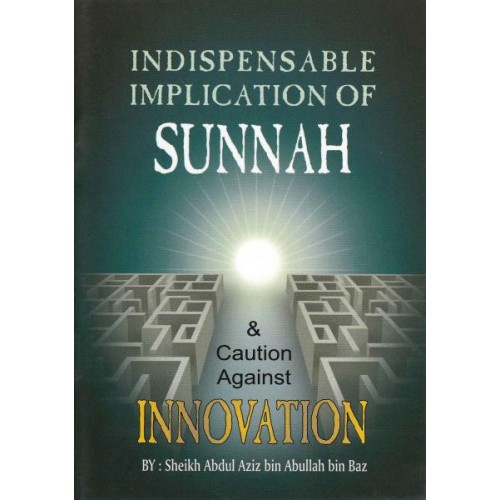
Indispensable Implication of Sunnah (P/B)
5 ★
5 ★
1 Rating
5 ★
1
4 ★
0
3 ★
0
2 ★
0
1 ★
0
Highlights:
The author has discusses the topic of innovation in Islam. For example, he proves that celebrating the Prophet’s birthday is not right according to the Qur’an and Sunnah.
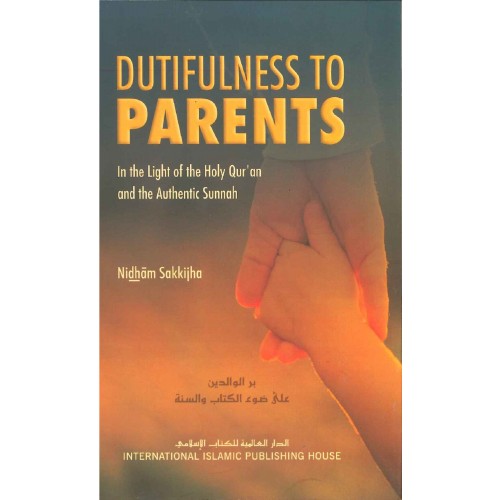
Dutifulness To Parents
4 ★
4 ★
1 Rating
5 ★
0
4 ★
1
3 ★
0
2 ★
0
1 ★
0
Highlights:
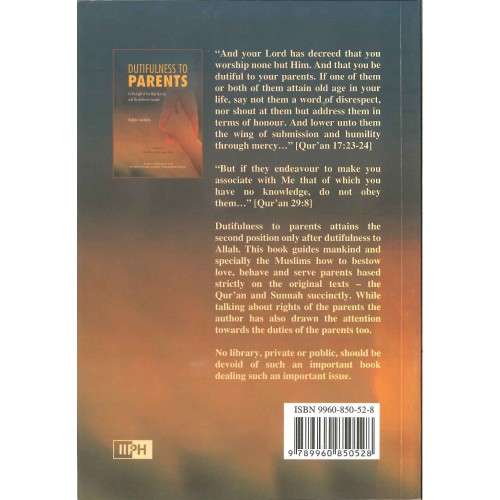
After dutifulness to Allah, dutifulness to our parents comes next for Muslims, but what does our duty to our parents entail? In this little book, Nidhâm Sakkijha gives examples and evidence from the Qur’an and the Hadith of Allah’s Messenger (blessings and peace be upon him) to explain, point by point, what these duties are, and how the fulfillment of these duties may lead us to Paradise, while their neglect may mean that we end up in Hell. This concise and very useful volume has been translated into English by Iman Zakaria Abu Ghazi.
RM8.00 RM9.00

In Search of God (P/B)
Highlights:
Some thinkers has said, ‘A smattering of knowledge turns people away from God. Grater knowledge brings them back to Him’. The author concludes in this book by examining various theories that the choice humanity have is not between the universe with God and the universe with God and the universe without God. The real option is between the universe with God and no universe at all. Therefore humanity is compelled to opt for the proposition the universe with God. Hence it is logical to say I exist, therefore, God exists.
RM11.00
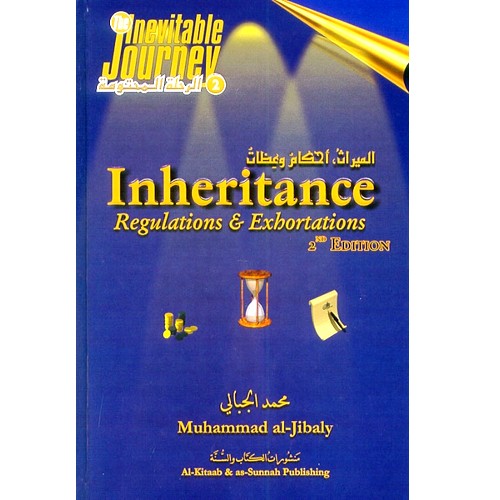
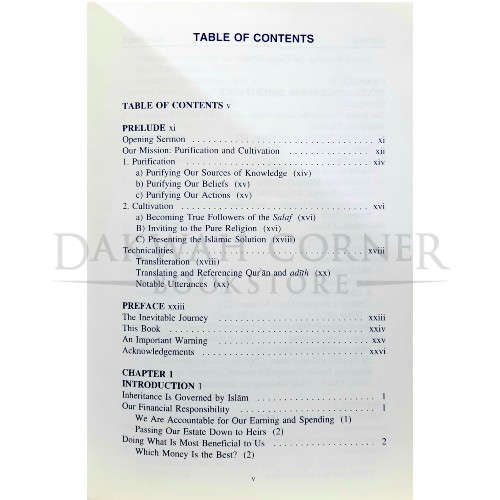
Inheritance Regulations & Exhortations
Highlights:
Description from the publisher: We inevitably go through the journey starting in this life, and extending into the grave, before our final abode in the hereafter. In the process, we pass through stages of sickness, death, and the intermediate life in the grave (al-Barzakh). Writing a will is a religious obligation on every capable Muslim. It protects against many problems and conflicts that could arise after a person’s death. This obligation is more emphasized in the West; Failing to write a well founded will may result in the distribution of one’s estate in discord with the Islamic law, and may lead to losses for some of the rightful inheritors
RM46.00
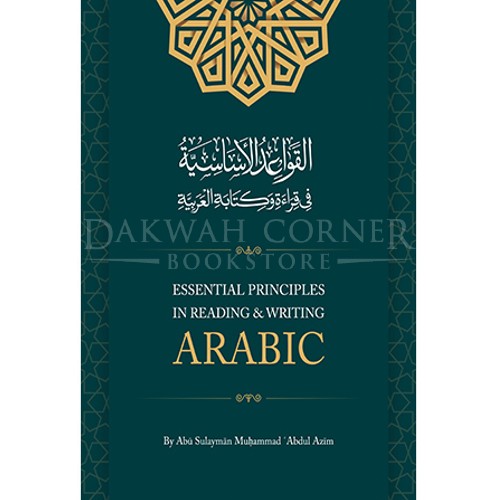
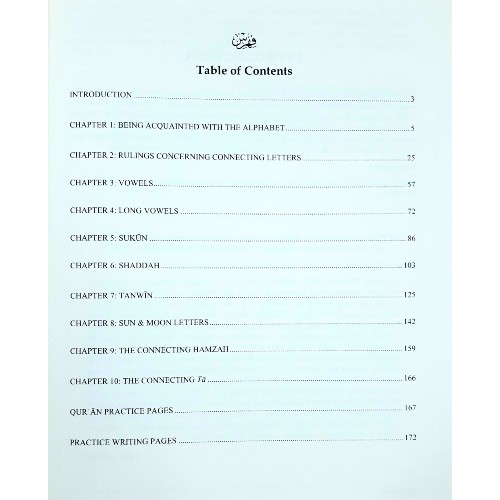
Essential Principles In Reading & Writing Arabic
Highlights:
This book was prepared and designed with the intent to facilitate for the Non-Arabic Speaker to gain essential tools in reading and writing in order to embark on their path acquire the Arabic Language. It contains the following:
- Introductory charts for each Principles as it relates to Arabic Reading
- Each chart contains a summary (in English) to help bridge the student’s understanding of how to apply said Reading Principle.
- A writing section that compliments the Introductory chart.
- Each chapter contains a connection writing drill.
- Each chapter concludes with a Qurʾānic drill chart in order facilitate practice of said Reading Principle.
- 5 Qurʾān Practice Pages for the purpose practice one’s reading.
- Extra Blank Practice Writing Pages.
- Practice Writing Pages of {Sūrah al-Qamar (54):17,22,32,&40}
RM95.00


Islam A Total Beginners Guide – Part Three (P/B)
Highlights:
In present era we are facing lot of questions:
• What is status of women in Islam?
• Who is superior – man or women?
• What does Islam say about inter-religious marriages, man’s treatment towards his wife and privacy in homes?
• What does Islam say about dress, veil, clothing and ornaments, perfumes and the wisdom of banning gold and silk for men?
This beginner’s guide to Islam answers all such questions.
RM45.00
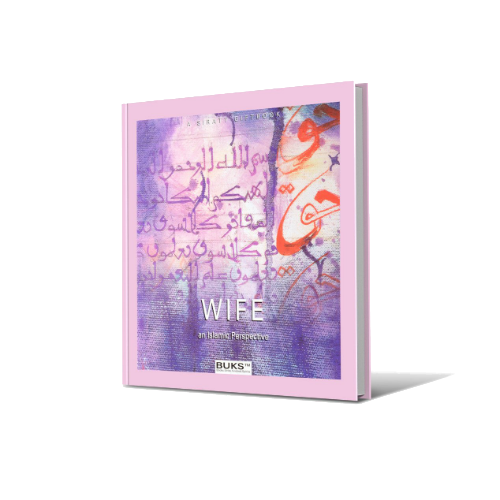
WIFE
Highlights:
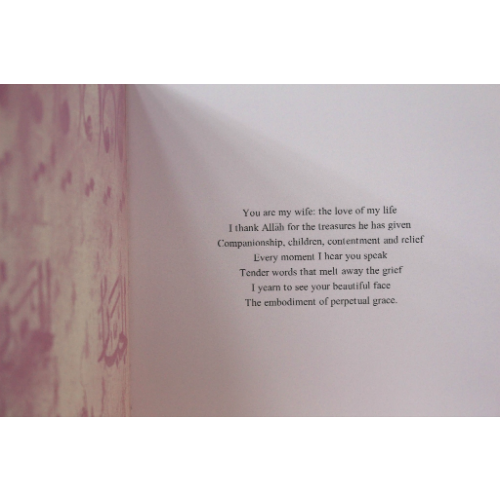
The perfect gift to give a loved one or indeed to educate oneself as to the significance Islam places on this important relationship through relevant Qur’anic Ayah, Hadith, and Islamic Poetry.
Example Quotes:
“And among His signs is this, that He has created for you mates from amongst yourselves, that you may dwell in tranquillity with them; and He has put love and mercy between you. Verily in that are signs for those who reflect. [Q30:21]”
“I want to tell you before it’s too late That you fill the vacuum in my heart Together through Nikah we are complete InshaAllah, I pray in Paradise we shall meet.”
Ideal gifts to convey what we sometimes find difficult to say through relevant Qur’anic Ayah, Hadith, and Islamic Poetry .
RM36.00

Fundamentals of Islam (P/B)
Highlights:
Fundamentals of Islam is a revised English edition of the critically acclaimed Khutubah (original written in Urdu). It consist of Friday congregational addresses, in them he expounds familiar themes; like Iman, Islam, the Prayer, Fasting, Alms-giving, Pilgrimage and Jihad.
RM38.00
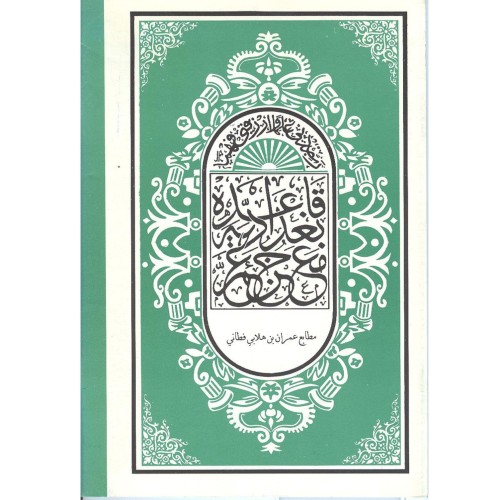
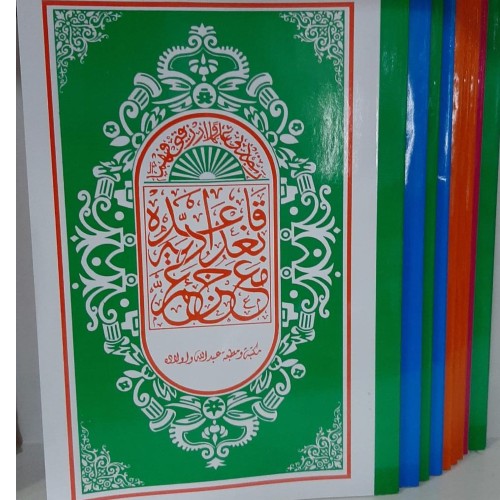


Funeral Rites In Islam (H/B)
Highlights:
The purpose of this book is to provide English speaking Muslims a concise and authentic compilation of the instructions regarding funeral rites in Islam.
RM35.00
Principles of Islamic Jurisprudence (2nd Revised Edition)
Highlights:
This book offers a detailed presentation of the theory of Muslim law (usul al-figh). Often regarded as the most sophisticated of the traditional Islamic disciplines, Muslim jurisprudence is concerned with the way in which the rituals and laws of religion are derived from the Qur’an and the Sunna – the precedent of the Prophet. Revelation, which is given to man to restore unity and help him achieve a just and devout order in society as well as in the soul, must be interpreted so as to render it practicable in every culture, while not betraying its spirit and immutable provisions. To achieve this, additional sources of legal authority are recognized, including consensus (ijma), analogical deduction (qiyas), public interest (maslaha) and local customary precedent (urf). In employing these, the jurist guards the five principles which it is the purpose of Islamic law to uphold, namely, the right to life, sound mind, property, lineage and religion.
RM75.00

Interactions Of The Greatest Leader (H/B)
Highlights:
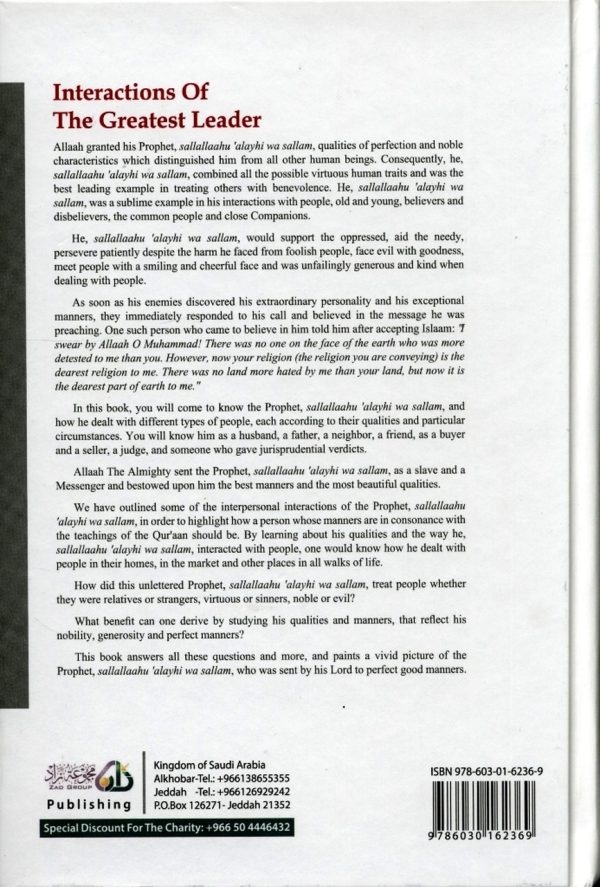
Allaah granted his Prophet, sallallaahu ‘alayhi wa sallam, qualities of perfection and noble characteristics which distinguished him from all other human beings. Consequently, he, sallallaahu ‘alayhi wa sallam, combined all the possible virtuous human traits and was the best leading example in treating others with benevolence. He, sallallaahu ‘alayhi wa sallam, was a sublime example in his interactions with people, old and young, believers and disbelievers, the common people and close Companions. He, sallallaahu ‘alayhi wa sallam, would support the oppressed, aid the needy, persevere patiently despite the harm he faced from foolish people, face evil with goodness, meet people with a smiling and cheerful face and was unfailingly generous and kind when dealing with people.
As soon as his enemies discovered his extraordinary personality and his exceptional manners, they immediately responded to his call and believed in the message he was preaching. One such person who came to believe in him told him after accepting Islaam: ” I swear by Allaah O Muhammad! There was no one on the face of the earth who was more detested to me than you. However, now your religion (the religion you are conveying) is the dearest religion to me. There was no land more hated by me than your land, but now it is the dearest part of earth to me.” In this book, you will come to know the Prophet, sallallaahu ‘alayhi wa sallam, and how he dealt with different types of people, each according to their qualities and particular circumstances. You will know him as a husband, a father, a neighbor, a friend, as a buyer and a seller, a judge, and someone who gave jurisprudential verdicts. Allaah The Almighty sent the Prophet, sallallaahu ‘alayhi wa sallam, as a slave and a Messenger and bestowed upon him the best manners and the most beautiful qualities. We have outlined some of the interpersonal interactions of the Prophet, sallallaahu ‘alayhi wa sallam, in order to highlight how a person whose manners are in consonance with the teachings of the Qur’aan should be.
By learning about his qualities and the way he, sallallaahu ‘alayhi wa sallam, interacted with people, one would know how he dealt with people in their homes, in the market and other places in all walks of life. How did this unlettered Prophet, sallallaahu ‘alayhi wa sallam, treat people whether they were relatives or strangers, virtuous or sinners, noble or evil? What benefit can one derive by studying his qualities and manners, that reflect his nobility, generosity and perfect manners? This book answers all these questions and more, and paints a vivid picture of the Prophet, sallallaahu ‘alayhi wa sallam, who was sent by his Lord to perfect good manners.
RM95.00
From my sisters’ lips
5 ★
5 ★
1 Rating
5 ★
1
4 ★
0
3 ★
0
2 ★
0
1 ★
0
Highlights:
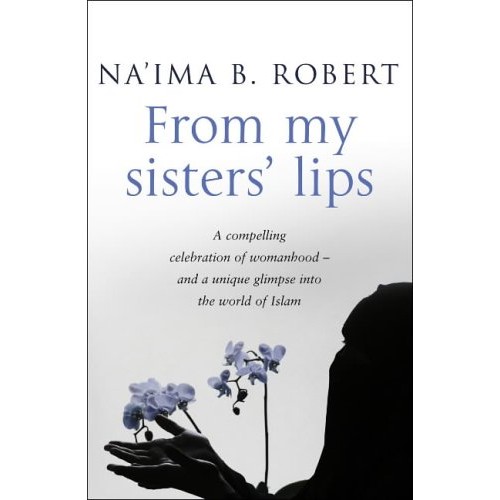
Covered from head to toe with only her eyes visible, the sight of a Muslim woman on a western city street rarely fails to provoke a strong reaction. Feelings of shock, horror, repulsion, pity or even fear are not uncommon. But have you ever wondered who it is behind the veil and what makes her tick? Ever wondered what her life is really like and whether her dreams, hopes and aspirations differ from yours? From My Sisters’ Lips offers a rare glimpse into the lives of a community of women, most of whom are converts to Islam, and invites you to share their joys, sorrows, convictions and faith.
When Na’ima B Robert abandoned her western lifestyle and embraced Islam six years ago, it was not a decision taken lightly. Yet soon after she took her first tentative steps towards covering, she felt empowered; no longer judged on physical appearances alone, no longer seeking the approval to feel beautiful – or using her looks to wield power over men – the experience effected her greatly. Before long she grew in confidence and courage. As she says, ‘Something just clicked. I thought, “Good, don’t look; don’t compare me with your latest squeeze, don’t try and guess my measurements – my body is my own business!”‘
From My Sisters’ Lips offers a glimpse into the lives of just some of the extraordinary women who, like herself, have chosen to live behind the veil. What emerges is a vivid and intimate portrait of a sisterhood; as they speak candidly and with conviction on a diverse range of subjects ranging from marriage to motherhood, stereotypes, submission and self-image, we hear the strong, proud voices of those who are seldom heard.
RM67.00

Tajweed Made Easy Mind Maps
Highlights:
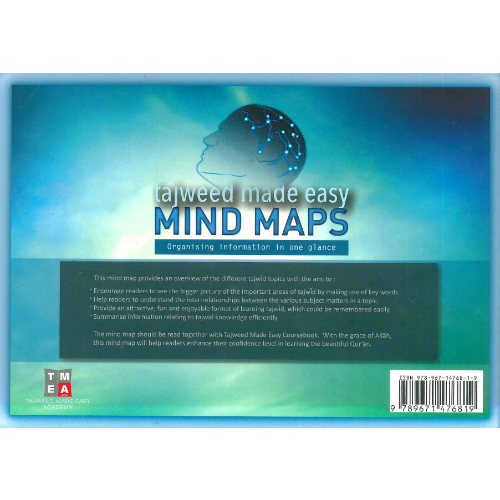
This mind map provides an overview of the different tajwid topics with the aim to:
- Encourage readers to see the bigger picture of the important areas of tajwid by making use of key words.
- Help readers to understand the inter-relationships between the various subject matters in a topic.
- Provide an attractive, fun and enjoyable format of learning tajwid, which could be remembered easily.
- Summarise information relating to tajwid knowledge efficiently.
RM25.00
There are no reviews yet.