





Towards a Fiqh for Minorities is an important subject and a much needed contribution to an area of fiqh that has become essential for the wellbeing and development of Muslim communities living in the West. The author stresses that the problems of Muslim minorities can only be tackled with a fresh juristic vision based on the principles, objectives, and higher values of the Qur’an in conjunction with the ultimate aims and intents (maqasid) of the Shariah. In essence, Dr. Al-Alwani s paper is a call for Muslim minorities to have a sense of themselves as citizens and develop a positive, confident view of their place and value in society, moving away from notions of immigrant status and governed by a humanistic vision focusing on the betterment of society.
Towards A Fiqh For Minorities: Some Basic Reflections
$7.95
| Weight | 0.40 kg |
|---|---|
| Dimensions | 22.86 × 15.24 cm |
| Author | |
| Binding | Paperback |
| ISBN | 9781565643529 |
| Pages | 45 |
| Publisher |
Be the first to review “Towards A Fiqh For Minorities: Some Basic Reflections” Cancel reply
You must be logged in to post a review.
Related Products

Istihsan (P/B)
This work constitutes a critical analysis of classical and modern aspects of the concept of istihsan (juristic preference), an important principle in Islamic legal legislation throughout history. Although there has been many research works on the subject, it still requires further investigation on the role and nature of istihsan with regard to a combination of classical and modern approaches. Consisting of four chapters, the author begins by introducing some general principles of Islamic law, before discussing the history of istihsan during the time of the Prophet and his Companions. He also analyses the validity of istihsan as a source of law and discusses the differences among scholars on its method of implementation.

The Right to Education, Work and Welfare in Islam (P/B)
In The Right to Education, Work and Welfare in Islam Professor M.H. Kamali develops an Islamic perspective on three connected and complementary areas of rights and liberties. He urges that education is often a necessary ingredient of professional work even more so now than in earlier times when the range and variety of specialised knowledge were relatively limited. A person who acquires education, whether generally or at advanced levels of specialisation, is more likely to stand in a better position to enter the workforce and thus to contribute to the welfare of the community.
The author commences his discussions on education, work and welfare in Islam by focusing on how each is treated in the Qur’an; and follows this by the example of the Prophet and, after him, the Pious Caliphs who gave prominence to the education and welfare needs of people at times both of scarcity and affluence. Professor Kamali then moves forward to our time and discusses the right to education, the education of children, institutionalisation of learning, academic freedom and the debate between science and religion.
The section on work elaborates on the value of work, work ethics, workers’ and employers’ rights and responsibilities, and the role and responsibility of governments.
Finally, the section on welfare focuses on the importance in Islam of caring for those who are in need and the different forms of provision that can be made available by individuals, the state and charities.


Having Fun The Halal Way Entertainment In Islam
With the advent of technology, the entertainment industry has flourished and become immensely popular. Combine this with the exponential advances in technology, and the result is an increasing number of ways to amuse ourselves. As a result of such advances, Muslim react in a variety of manners towards entertainment. Some label entertainment as completely forbidden. This sometimes includes parents who say no to almost everything that their young ones deem to be ‘fun’, without providing them with suitable alternatives. Others, who do not want to take this extreme approach, fall into the trap of excessive use of – and even addiction to – various sources of entertainment, without any limits.
In Having Fun the Halal Way, Ismail Kamdar explores the teachings of Islam regarding entertainment. Drawing upon the Quran, the Sunnah and the understanding of the righteous scholars of Islam, he provides a detailed and balanced analysis of the topic. He not only explains the detriments of the current entertainment industry, but also suggests alternative means to have a good time with friends and family members.


Zakah According to the Quran & Sunnah (Darussalam)
Zakah, the third Pillar of Islam, is probably the first Pillar of its economic system. It represents the first and most important mechanism to implement economic justice and to provide sustenance to the economically unfortunate, two issues for which Islam is especially sensitive. These two issues are the essence of this book. This book consists of all the main issues of Zakat (i-e, Zakah on Gold, Silver, Paper Money, Livestock, Fruits, Grains, Rented Land, Buried treasures, Minerals, Trade, Shares, Stocks, and Exploited Assets etc). The main objective of this work is to serve an easy and authentic reference to the reader.

Preservation of Health in Islamic Law (P/B)
Preservation of health (hifz al-sihhah) is the most important branch of Islamic medicine since it is primarily concerned with the prevention of illness rather than cure. This book represents one of the few attempts to introduce the role of Islamic medicine, although Chapter One provides information about a historical background of the preservation of helath in Islam, its aim is to provide fresh ant timely overview of the major aspects of legal, ritual and spiritual structures of teh Islamic law (shariah). These include the laws related to Ibadah, Islamic family laws, foods and drinks as well as environmental laws, for maintaning and preserving human health. Findings indicated that prevention of any diseases from Islamic medical law presentive cannot attain any real success unless it emanates from an Islamic fundamental teaching, namely: the pillars of Islam. Iman and observance of the Islamic rituals such as Salah, zakah, Sawm and Hajj, have played an important role in shaping the attitude, behavior and model personality of the Muslim, in boosting the spiritual motivation or attitude change, and in disseminating the message of prevention. This indicates that bodily and spiritual health goes hand in hand and that pyscho-spritual balance and health is a primary consideration whereas physical health is a secondary one.

Islamic Rules of Order (P/B)
Organizations must have rules of order to facilitate their debate and to fill in the procedures not detailed by their constitutional documents. While most American organizations are content to operate by Robert’s Rules of Order, Muslim organizations have often wrestled with questions over whether the rules of order systemized by a Western military figure are in accord with the Qur’an and the Sunnah.
This book tackles the matter directly and takes into account the Qur’an, the sunnah, Islamic manners and the history of Islamic consultation and leadership to provide a simple, practical guide to organizational procedure that can be incorporated into the governance of Muslim organizations. The book includes advice on writing bylaws and on complying with the best practices of the U.S. Dept. of Justice in a way that is Islamically authentic, transparent, and accountable. It provides a basic starting point for any Muslim organization while allowing for flexibility so that organizations may make any variations they require within their own bylaws and constitution, so that it can accommodate differing schools of thought on Islamic law. In its discursive approach it is an essential primer for understanding the value of rules of order and the Islamic context for their application. The Islamic Rules of Order has been adopted as the rules of order of the Association of Muslims Social Scientists.

The Pillars of Islam Made Easy – II Salah & Its Essential Conditions (H/B)
Salah is one of the five pillars on which the edifice of Islam rests. Most of us feel that we already know all there is about salah – the formal prayers of a Muslim. However, very few individuals actually do justice to it or derive any worldly or spiritual benefits from it.
Salah & Its Essential Conditions is an effort to detail the essential prerequiires of salah. Moreever, it takes a detailed look at its importance along with the different types of obligatory and voluntary prayers. It alsa presents an illustrated guide to help those who wish to learn or correct the performance of their prayers.
Inshallah, all those who wish to improve their salah will find plenty of help in this book whether they are looking for information on cleanliness and purify, locating the direction of qibla, improving their congregation during salah, making up for the missed salah, or joining acongregation when the imam has already sarted the salah, or joining a congregation when the imam has already started the salah. All in all, it is a relevant handbook on what the Prophet (saw) has described as the coolness of his eyes.


Getting the Best Out of Hajj
The book provides a realistic view of Hajj as it is today, with detailed explanations of all the rites. It provides Figh related issues about Hajj, Salah and personal behaviour according to the Quran and Sunnah, to enable you to obtain the best value for your time spent in the holy cities. It also provides information and suggestions about planning for the journey, what to expect and how to survive, so you can depart with full confidence. This is a must have for all those planning to go on Hajj!

Worship In Islam: An In-depth Study of Ibadah, Salah and Sawm (P/B)
Worship in Islam is in-depth study of the nature and significance of Islamic spirituality by Abul A‘la Mawdudi (1903–79), one of the leading Muslim intellectuals of the twentieth century, with special reference to the concepts of God’s Oneness (tawhid), the finality of Prophethood (risalah) and the Islamic system of worship (‘ibadah) with a focus upon prayer (salah) and fasting (sawm) and their role in the development of the Islamic personality and Islam’s social order. The distinguishing feature of Mawdudi’s approach is his elaboration of the social dimension of worship, which extends the traditional approach found in Islamic jurisprudence, with its focus upon ritual and self-purification, to consider worship’s transformative role in social life. Presenting a holistic view of the Islamic system, Mawdudi highlights Islam’s social, economic and political dimensions, which he argues has the capacity to resolve emergent issues and problems that humankind faces.
This historic text should be of wider interest to both students and specialists in contemporary Islamic thought, and includes an introduction by Professor Anis Ahmad.
Edited and translated into accessible English by Ahmad Imam Shafaq Hashemi, this book is an authoritative compilation by a leading Islamic twentieth-century revivalist on the central matter of worship’s role in Islam.


Smoking Intoxicants & Narcotics (P/B)
This book deals with the epidemic of smoking, which enslaves many of today’s Muslims, and which is aggravated by that most victims belittle its dangers and deny its prohibition.
This book includes a discussions of intoxicants, establishing the prohibition of various practices associated with them, as well as penalties (in both lives) for those who partake in them.
This book also includes a discussion of narcotics, with an overview of marijuana and qaat (or khat). Based on their established effects and harms, we conclude that narcotics are strongly prohibited, except in very limited medical settings.
This book, we hope, will provide many Muslims with guidance toward a healthier, cleaner and worthies Islamic personality. My Allah grant us guidance and facilitation.


Funeral Rites In Islam (H/B)
The purpose of this book is to provide English speaking Muslims a concise and authentic compilation of the instructions regarding funeral rites in Islam.

Shatibi’s Philosophy of Islamic Law (P/B)
Abu Ishaq al-Shatibi, who died in 1888, had sought an answer to the challenge posed by modernisation and change to Islamic law, by introducing maslahah, which forms the basis of his philosophy of Islamic law. In a fascinating way, the author leads us step by step to what he considers the true import of Shatibi’s views concerning jurisprudence.
Recently Viewed

Legacy Of The Prophet (Dar Us Sunnah)
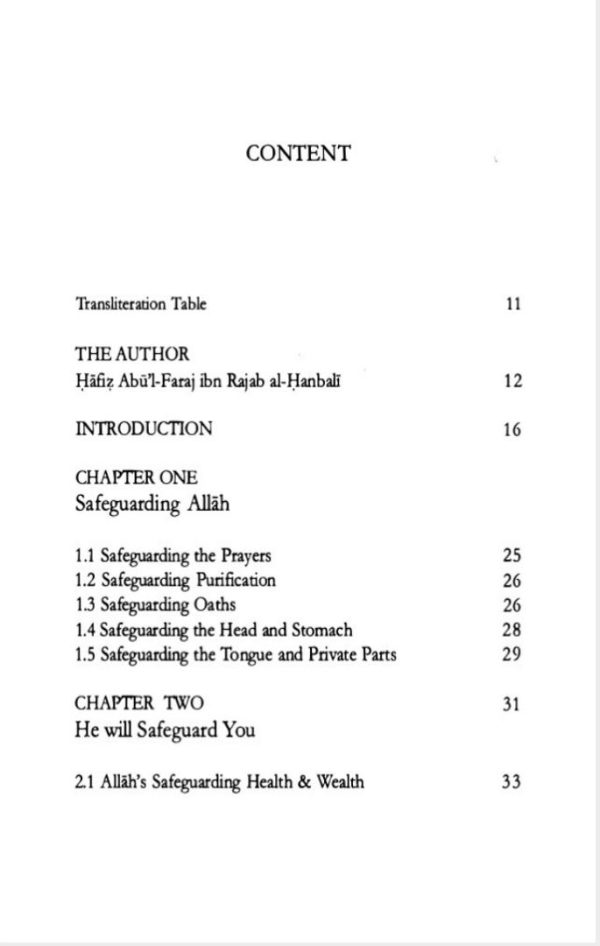
In this treatise, the author, ibn Rajab sets out to explain the advice the Prophet(s.a.w) imparted to ibn ‘Abbas (radiyAllahu ‘anhuma)…


Again And Again Until It’s Done
This story shows the power of repetition and persistence. Whether practising, cleaning up, or completing a task, children learn that repeating an action helps them reach their goal. The book encourages patience, consistency, and confidence through everyday examples.
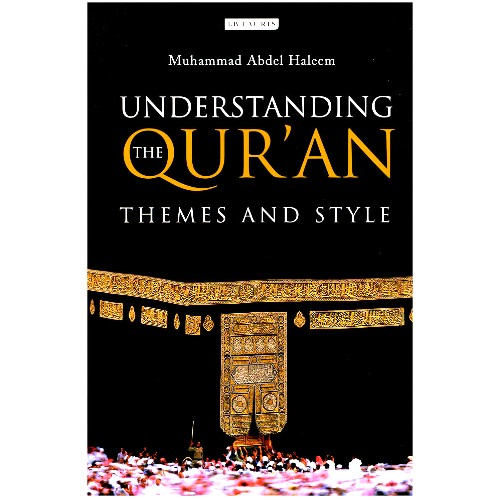
Understanding the Qur’an Themes and Style
The tenets of Islam cannot be grasped without a proper understanding of the Qur’an. In this book, Muhammad Abdel Haleem examines its recurrent themes and for the first time sets them in the context of the Qur’an’s linguistic style. Haleem examines the background to the development of the surahs (chapters) and the ayahs (verses) and the construction of the Qur’an itself.
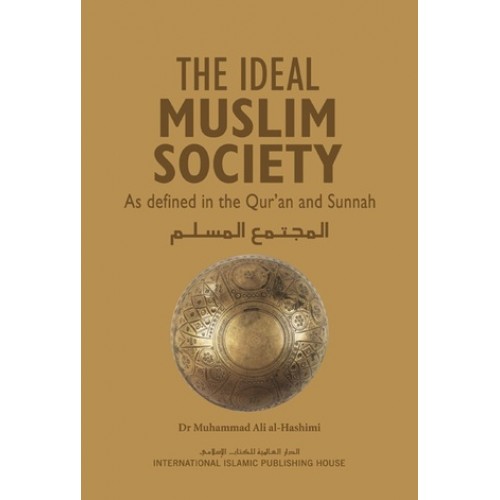
Ideal Muslim Society
From the translator, Nasiruddin al-Khattab: In a world plagued with wars, racism, political turmoil, economic downturns and social anguish, many people are looking for an alternative in which justice, freedom, decency and common sense will prevail. Such societies have existed in the past, in the golden eras of Islamic civilization, and we have the hope that, if Allah wills, such a society may appear again. In The Ideal Muslim Society, Dr. Muhammad ‘Ali al-Hashimi gives us a detailed picture of what this society would look like. Drawing on his extensive research of Islamic history and contrasting the ideal with the sorry state of affairs in human societies today, he explores the religious, political, economic, social and other facets of this ideal society, illustrating everything from the responsibilities of those in authority to the interactions between individuals on the humblest levels. For those who are longing to see a better world, this book offers practical ideas and hope.
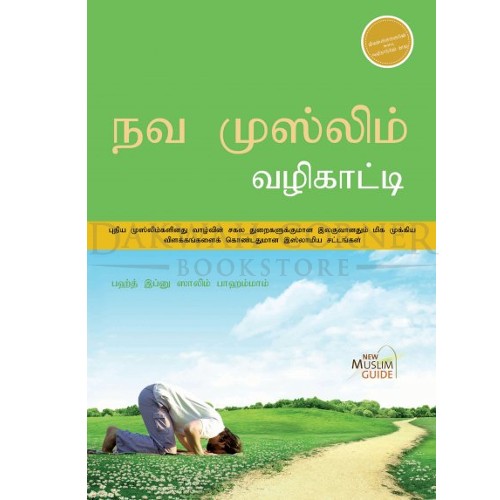
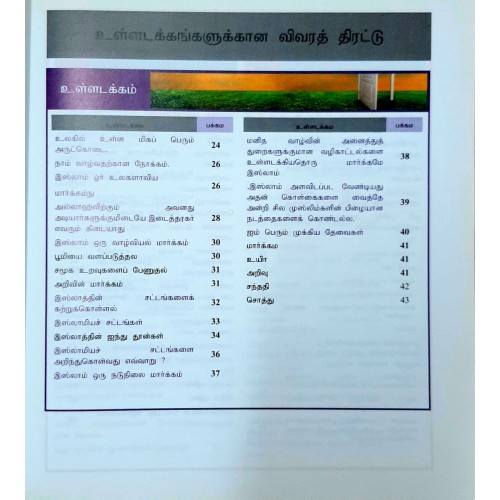
The New Muslim Guide (Tamil book)
The New Muslim Guide (Tamil Book)
The New Muslim Guide (Illustrated Guide) Simple rule and important islamic Guidelines for New Muslims in all Aspects of Life.
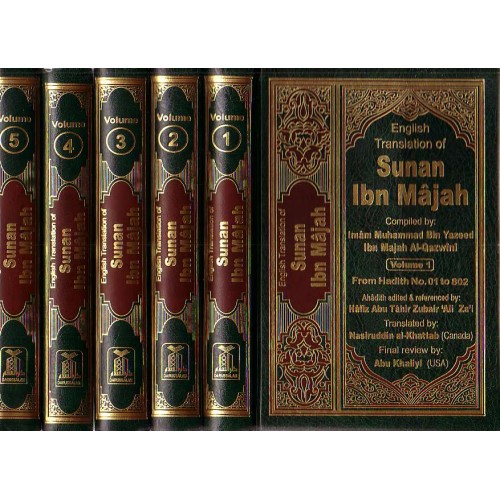
Sunan Ibn Majah (5 Vol. Set) (H/B)
Sunan Ibn Majah is one of the six most authentic collections of the Ahadith and contains 4,341 total Ahadith. Like the other translations of the six books of hadith, Dar-us-Salam Publications, has taken great care in correct translation, simple and clear modern English language, and high quality publishing.
Ahadith in the book are followed by comments to explain issues and to help readers derive lessons. To aid readers further, Dar-us-Salam, has added several features like section on how to benefit from Sunan Ibn Majah, about the Arabic and technical terms used, information about the hadith compilations and a glossary of Islamic terms in the last volume.
Each hadith is also followed by its status in regards to the authenticity. The status is explained more in detail in the Arabic text. The chain is also complete in the Arabic text while it is removed from the English to reduce the length and not being of much benefit to the English readers.
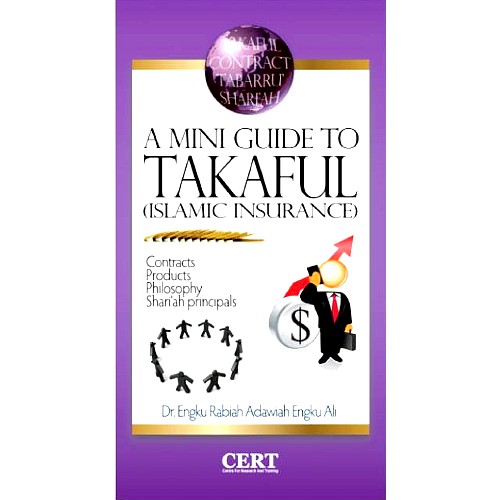
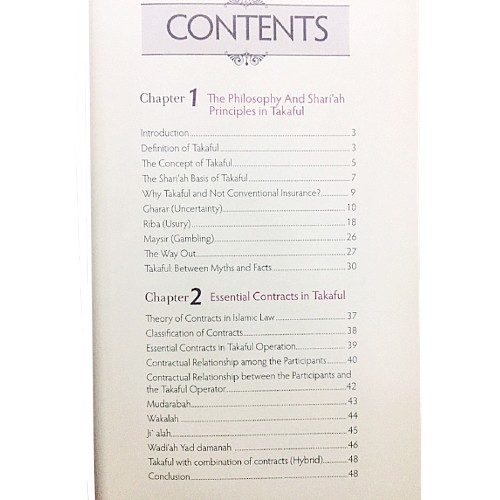
A Mini Guide to Takaful (Islamic Insurance)
This Mini Guide will prove useful and constructive to readers who want a better understanding of the takaful industry in contemporary Islamic finance.
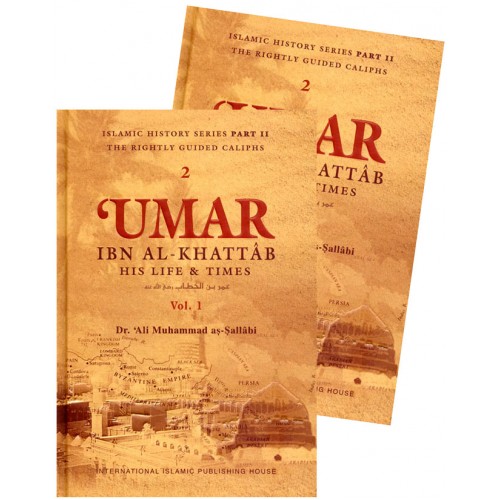
Umar ibn al-Khattâb: His Life and Times (2 Vols.) -IIPH
The second caliph of Islam, ‘Umar ibn al-Khattâb faced more struggles than any other Muslim leader in the early onset of Islam. His life began in a time of ignorance and ended during the Golden Age of Islam. Under his leadership, the Muslim world was witnessing some of its most notable conquests in the history of Islam. The strength and resilience of Islam’s leaders were being tested, and ‘Umar ibn al-Khattâb’s true commitment to Allah shone to reveal an Islamic spirit unlike that found in any other Muslim leader. The standards by which he lived can teach us a lot about determination, hardship, and success. The two books which compose ‘Umar ibn al-Khattâb: His Life and Times are sold together as a set. They belong in Part II of the Islamic History Series, as the second set of The Rightly Guided Caliphs. The Table of Contents for Volume 1 of ‘Umar ibn al-Khattâb: His Life and Times may be viewed via the ‘View Table of Contents’ link located above. This book was translated into English by Nasiruddin al-Khattab. From the Translator: For those who would be leaders, this book offers the model of an ideal Muslim leader, one who felt responsible before Allah for the well being of all those under his rule, including his troops, women, infants, non-Muslim subjects and even animals. ‘Umar was a ‘hands on’ leader who kept himself informed and consulted scholars and experts before every major decision. For the rest of us, this book offers a window into an exciting and important period of Islamic history, and it also reminds of an important lesson, that our strength comes not from wealth or money or status, but from our submission to Allah and our commitment to the path of Islam.
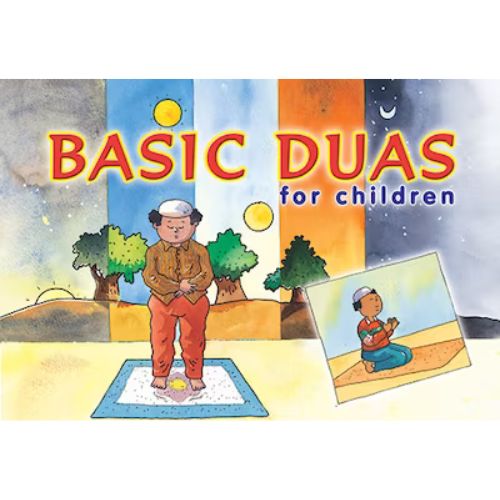
Basic Duas for Childrens
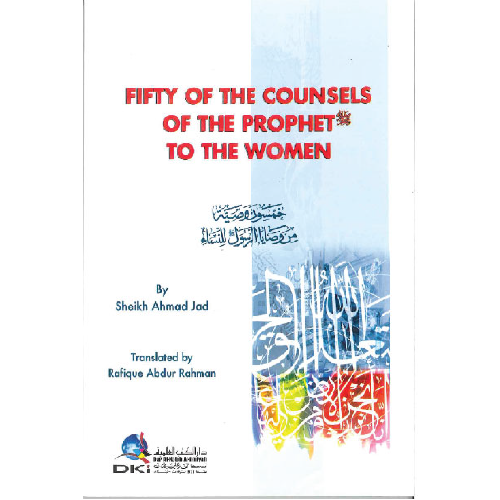
Fifty of the Counsels of the Prophet to the Women
Islam is very kind to women. The Prophet was very careful to respect their rights. Women \, in his times, possessed the religious knowledge, narrated ahadith. Nursed the sick and wounded on the battlefield and acquired knowledge. The home is the first madrasah of a child. This book shows women the path of Islam as shown by the prophet. The ahadith are explained on the pattern of great scholars like Ibn Hajar, Nawawi, Khattabi, Mubarakpuri, and others. A careful perusal will help the reader to understand the real message of Islam and to pattern her own life and her children’s on the right path.
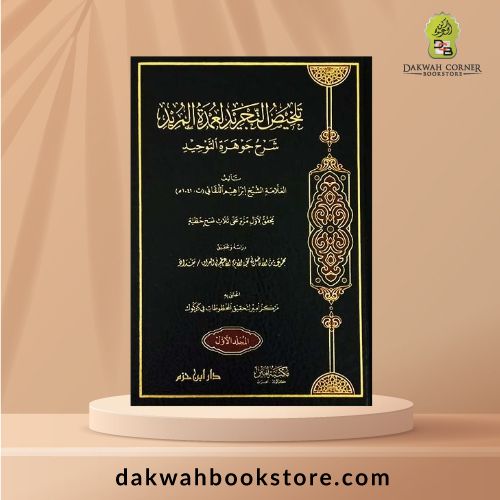
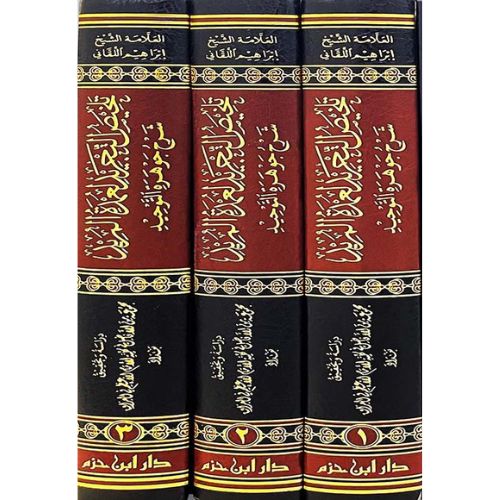
[AC] Talkhis Al Tajrid Li Umdatul Murid 3 Vol / تلخيص التجريد لعمدة المريد شرح جوهرة التوحيد 3 مجلدات
- عدد المجلدات: 3
- نوع التجليد: مجلد
- عدد الصفحات: 2064
There are no reviews yet.