


| Weight | 0.36 kg |
|---|---|
| Author | |
| ISBN | 9780648077107 |
| Pages | 288 |
| Product Type | Book |
| Publisher | OsoulGlobalCenter |
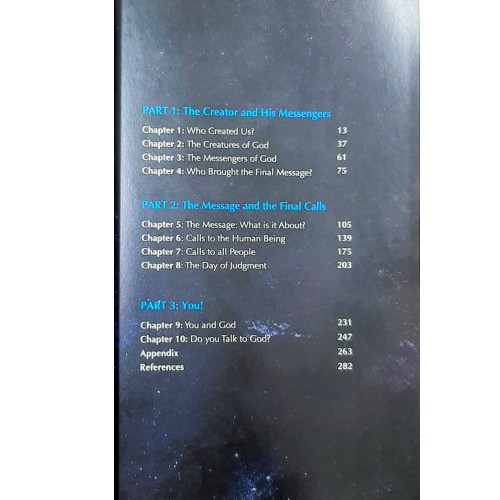
Three Messages from God to You
$5.68
Hurry up, Only 2 left.
Highlights:
somdn_product_page
Compare
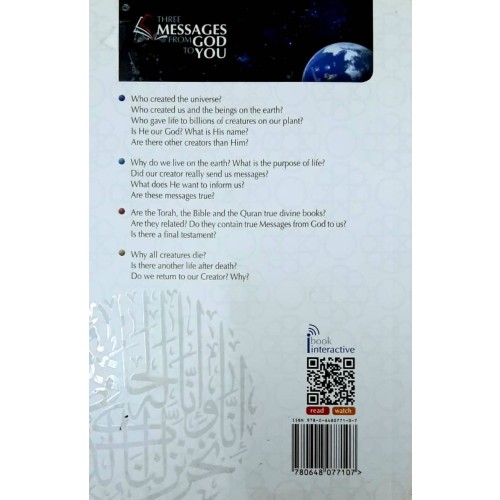
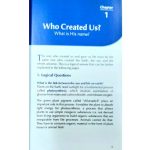
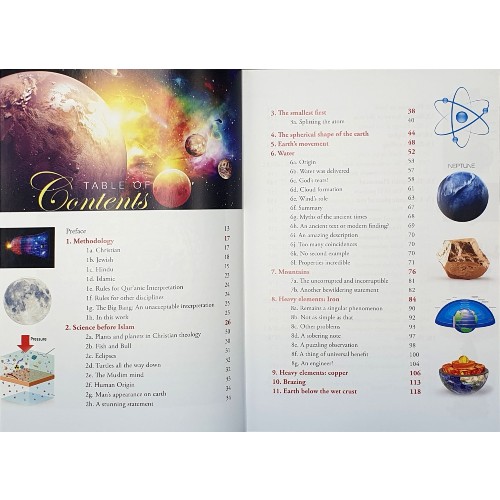
● Who created the universe? Who created us and the beings on the earth? Who gave life to billions of creatures on our plant? Is He our God? What is His name? Are there other creators than Him?
● Why do we live on the earth? What is the purpose of life? Did our creator really send us messages? What does He want to inform us? Are these messages true?
● Are the Torah, the Bible and the Quran true divine books? Are they related? Do they contain true Messages from God to us? Is there a final testament?
● Why all creatures die? Is there another life after death? Do we return to our Creator? Why?
SKU: QQ435
Categories: Dakwah Materials, Holy Quran and Quranic Sciences, Quranic Science/ Related
Additional information
Reviews (0)
Be the first to review “Three Messages from God to You” Cancel reply
You must be logged in to post a review.
Related Products


The Sources of the Qur’an
Highlights:
“Who is the author of the Qur’an?” On this subject scholars have flagrantly contradicted each other. This work attempts to make a critical review of the major ‘authorship’ theories by pressing into service logical arguments, historical evidence, textual analysis and scientific data. Probably, the only point of agreement about the Qur’an is that it was uttered for the first time by a man who was born in Makkah (Mecca), a city of Arabia, in the sixth century—a man by the name of Muhammad (blessings and peace be upon him). As to the source of the Qur’an, scholars are divided into three main groups: those who believe that Muhammad (blessings and peace be upon him) himself was the author; those who believe that he was not the author himself but learned it from another human author or authors; and those who believe that the Qur’an has no human author but is rather a word-for-word revelation from God. Hamza Njozi examines the three theories and comes to a firm and logical conclusion.


An Introduction to The Sciences of The Qur’an (H/B) Al-Hidaayah UK
Highlights:
An introduction to the Sciences of the Qur’aan presents a detailed and thorough explanation of the sciences related to the history, understanding and implementation of the Qur’aan. The book provides the English reader with a detailed analysis of classic Muslim scholarship regarding: the process on Inspiration (Wahy); the various means of classifying verses of the Qur’aan; the history of the compilation of the Qur’aan; the meaning of the seven ahruf and the ten qira’aat of the Qur’aan; the miraculous nature of the Qur’aan; the concept of abrogation in the Qur’aan; the procedure and methodology of tafseer; and many other topics. The work has a number of sections dedicated to explaining the traditional Muslim refutations of certain belief of the Ash’arees with regards to the Qur’aan.
This book also includes detailed discussions on modern Western scholarship of the Qur’aan. After presenting a history of the English translation of the Qur’aan, along with a critical review of some translations, the author discusses and refutes common Orientalist polemic literature on the Qur’aan.
The work is unique in that it presents classical material in a simple and modern style, while maintaning a hight academic level. It is the most advanced work of its kind in the English language, and a necessary reference for all serious students of Islamic knowledge.
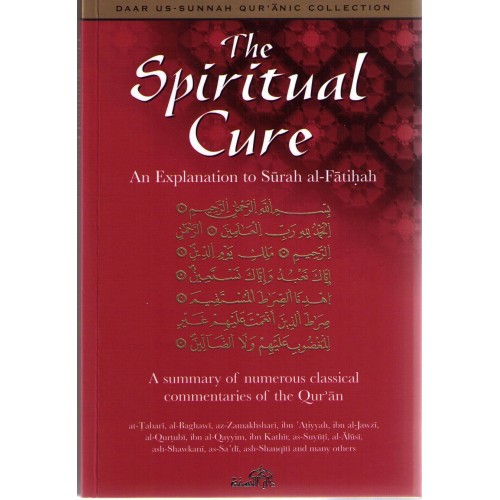
The Spiritual Cure An Explanation to Surah al-Fatihah (P/B)
Highlights:
Surah al Fatiha is the greatest chapter of the Qur’an, its like is not found in the rest of the Book or in the previous scriptures. It is a
Light that was granted to Prophet Muhammad (S) which had not been granted to any other Prophet or Messenger before him; indeed
some of the Salaf stated that when this chapter was revealed, Shaytãn l let out a great cry of lament.
It holds a central position in the daily Prayer hence the daily life of the Muslim.
The underlying theme, of al-Fatiha is one of contemplation and serenity; pondering the Names and Attributes of Allah, pondering the creation , and acknowledging that He Alone deserves praise and Worship, that He Alone should be asked for help, that He Alone Should be feared and hoped in, that He Alone should be invoked, that there is indeed a Day of Judgment, and that guidance has come to us and we are required to follow it.
It calls us to carefully scrutinise our relationship with our Lord: are we living according to the dictates of ‘none has the right to be worshipped save of Allah’ or not? This opening chapter, despite its brevity, calls man to fulfil the rights of Tawhid, the right that Allah has over us to worship Him Alone without any partner
A Summary of numerous Classical Commentaries of the Qur’an
at-Tabari, al-Baghawi, Az-Zamakhshari, ibn Atityyah, Ibn Jawzi, Al-Qurtubi, Ibn Qayyim, Ibn Kathir, as-Suyuti, Alusi, ash-Shawkani, as-Sa’di, ash-Shaqiti and many Others
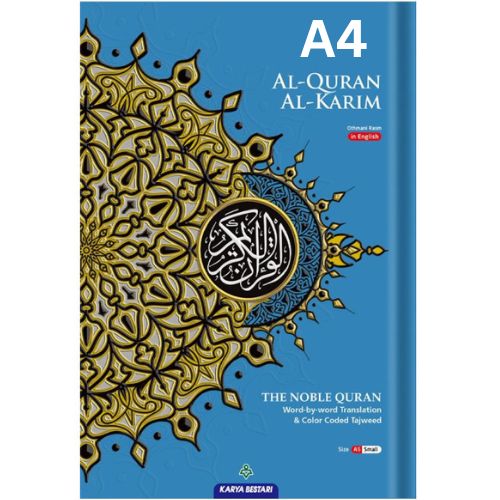
The Noble Quran Word-By-Word Translation & Color Coded Tajweed A4 (Arabic-English) – RANDOM COLOR
5 ★
5 ★
1 Rating
5 ★
1
4 ★
0
3 ★
0
2 ★
0
1 ★
0
Highlights:
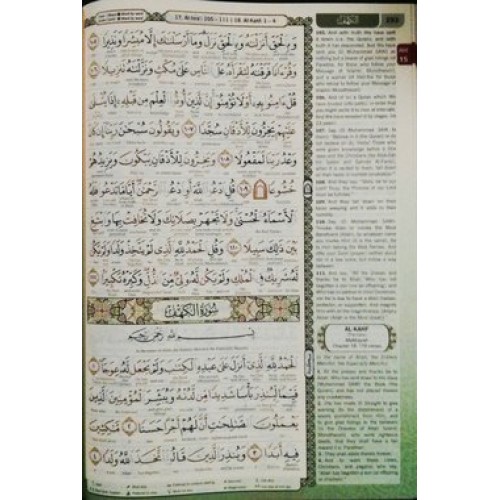
The Noble Quran (Al-Quran Al-Kareem Maqdis) is a translation learning method of word-by-word Al-Quran with every word and sentence is colored differently, in Arabic and English.
Every word in the Quran was translated literally so that the reader could understand the meaning of every single word. It needs to be remembered that not all literal translation represents the exact meaning of the word since the Quran uses varied Arabic language style and sometimes metaphor.
Accordingly, to understand the full or intended meaning of the word or the verse, Muhsin Khan’s the Holy Quran Translation had been included in this edition. However, to comprehend more of the meaning of the Quran, reading the commentary of the Quran from trusted scholars would be necessary.
Approved by the Department of Islamic Development of Malaysia (JAKIM) and Malaysian Ministry of Home Affairs (KDN).
Features:
● Rasm Uthmani script in English
● Word-by-word translation Arabic-English
● Color coded tajweed
● Asbab al-Nuzul
● Authentic Hadiths
● Riyad-us-Saliheen
● Al-Quran Language Dictionary (Mu’jam)
Size A4 Large
SPECIFIC COLOR PLEASE DM US.

Daily Wisdom: Selections from the Holy Qur’an (H/B)
Highlights:
This beautiful presentation of a selection from the Holy Qur’an engages the reader in a moment of daily reflection. Edited for ease of comprehension, English-speaking readers will find this compilation both spiritually enriching and easy to understand. With 365 verses covering the whole year, this is a must for every home.
An introduction to the Qur’an and its eternal message for humanity is included, giving the reader an insight into its origin, purpose, and style.
Abdur Raheem Kidwai is professor of English at the Aligarh Muslim University in India and the well-known author of many works on the Qur’an and Islam.
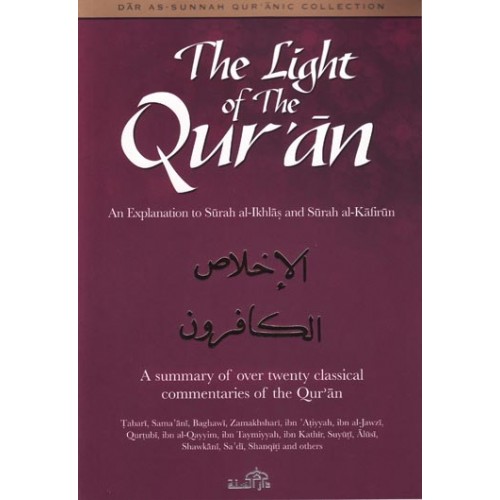
The Light of The Qur’an
Highlights:
The Prophet peace and blessings of Allah be upon him, passed by a person reciting Surah Al – Kafirun and remarked, “He has been saved from shirk”. He passed by another reciting Surah Al – Ikhlas and remarked. Paradise has become obligatory for him. Reported by Muslim.
These two chapters have both been given the title Al-Ikhlas, or purity of faith, because they deal with the topic of Tawhid in all its various aspects. Al – Ikhlas concentrates on the pure, essential faith in Allah that all mankind is required to have. Al – Kafirun deals with purity of deed and disavowal of disbelief and paganism. Both chapters lay out the parameters of mans relationship with his/her lord and creator, as well as his/her relationship those around him/her.
Pure, unblemished monotheism combined with sincerity in belief and deed defines the relationship with Allah. Hi is one and only true God, unique, without peer, equal or opposite, and nothing is like on to him. He is the one who stands in need of nothing whereas everything is in dire need of him.
Maintaining the essential Muslim identity and character defines the relationship between the Muslim and his fellow man. The Muslim is unambiguous about his religion, truthful and upright in speech, deed and his dealings with those around him. Hi is proud of his faith and has unshakable conviction in it. He loves his lord, his Messenger and the Muslims and is loyal to them. Because of this, the dearest thing to him is his religion and he will not compromise it, pleasing Allah comes before pleasing the people.
The prophet would frequently recite these two chapters in prayer because of the commonality of their theme and to stress that success is achieved, in this life and the next, by internalising their message and living by it.


Divine Speech
5 ★
5 ★
3 Ratings
5 ★
3
4 ★
0
3 ★
0
2 ★
0
1 ★
0
Highlights:
The Quran, the sacred scripture of Islam, is revered as the spoken word of God by approximately one-fifth of the world’s population. Since its inception, the power of the Quran has derived not only from its message, but also from the inimitable literary style and rhetorical impact that the Arabic scripture has on its audiences. Divine Speech: Exploring the Quran as Literature attempts to make some of the most recent Arabic and European-language scholarship on its literary features accessible to a wider, English-speaking audience. These features include its language and word choice, its use of figures of speech and other rhetorical devices, its manner of narrating parables and stories, and the structure, coherence, and the order of its “chapters”-aspects that typically remain mysterious to readers of English translations of the text. Divine Speech furnishes its readers with a better appreciation of the Quran from a literary perspective, and in the process stimulates interest in, and provides tools and resources for, further study of the scripture.
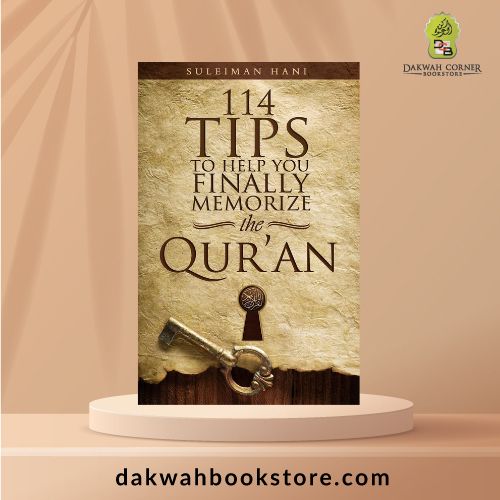
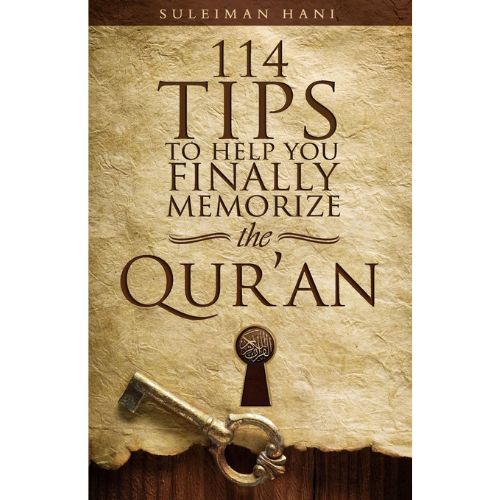
114 Tips to Help You Finally Memorize The Qur’an (P/B)
5 ★
5 ★
1 Rating
5 ★
1
4 ★
0
3 ★
0
2 ★
0
1 ★
0
Highlights:
“114 Tips to Help You Finally Memorize the Qur’an is a concise book that aims to equip readers of all backgrounds with the information and techniques necessary in order to begin, continue with, and complete the memorization of the Qur’an, eliminating thereby the common excuse and reasons for not memorizing.”
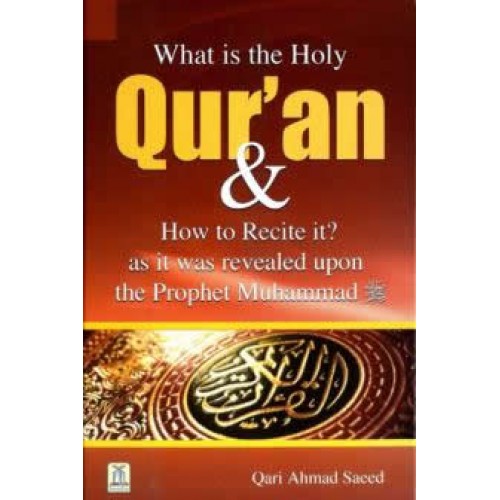
What is the Holy Quran & How to Recite it? (H/B)
Highlights:
This book guides readers to pronunciate the Arabic alphabet from their correct point of articulations. It also guides them to recite the Holy Qur’an according to the laws and principles of the art of recitation and intonation.
The correct pronunciation of the Arabic words and alphabet was difficult to some extent for the people living in the West as compared to those of East. So they need some more efforts to solve this problem and to make it easy for them.
By the grace of Allah, this book will do the job successfully and in a very convenient way.
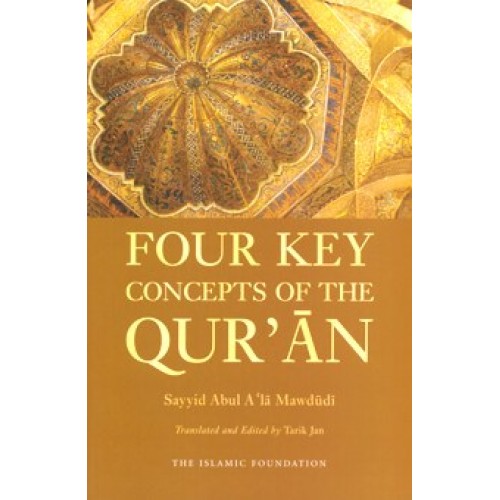
Four Key Concept of the Qur’an
Highlights:
Four Key concepts oF the Qur’An elucidates these basic Qur’anic concepts Ilah, Rabb, Ibadah and Din in order to bring out fully the Islamic way of life, as distinct from other perspectives. This elaboration goes a long way in developing a sound understanding of the Qur’an. It also explains the man-God relationship in Islam, guiding Muslims on how to lead their lives in total surrender to Allah.
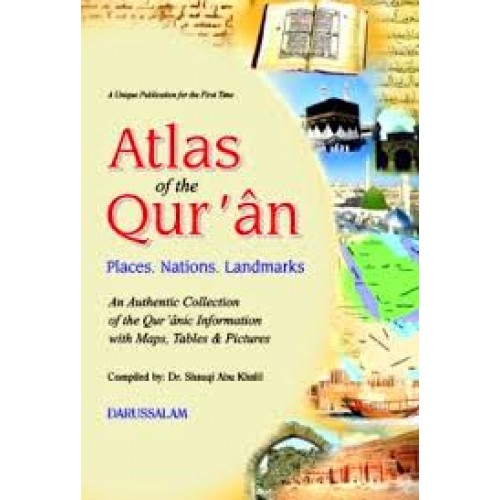
Atlas of the Qur’an (Darussalam)
Highlights:
This Atlas is new in its subject, a subject that has not been touched before. It helps whoever recites the Qur’an or studies it to specify the locations mentioned by the Noble Verses, and to mark those places of ancient people mentioned in the Qur’Gn. This is besides locating areas where the incidents of the prophetic Seerah occurred.
Eventually the diligent reader will easily recognize those places, learn about them, and take heed of them while reciting.
Eventually the diligent reader will easily recognize those places, learn about them, and take heed of them while reciting. The Atlas has also revealed obscure places we used to pass through inattentively, like the site where Nuh’s Ark settled, the site of the curved Sand-hills {Al Ahqah}, the cave of the young faithful men, the houses of median, the site of Sodom and other places determined by the Atlas depending on reliable sources.
Thus the Atlas eliminates all the guessing and the fantasies we used to encounter when reciting the Noble Quran, and takes us to the specific place.
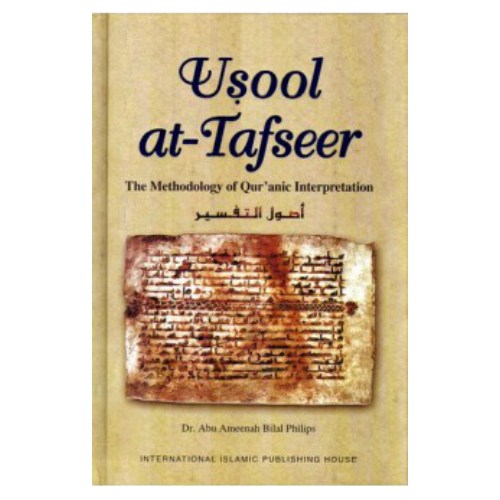
Usool at-Tafseer (H/B)
Highlights:
Usool at-Tafseer, essentially refers to the branches of knowledge necessary for providing an accurate interpretation of the Quranic texts, such as Arabic grammar and syntax, Arabic literature and Quranic sciences (Uloom al-Quran). Familiarity with modern fields of learning, like the pure sciences and social sciences is also necessary for a commentator in this era to make the Quraanic explanations relevant to human society. This book addresses the actual step-by-step methodology of interpreting Quran to ensure that interpretations are not merely the result of human whims and fancies.
Recently Viewed
Oud Al-Sultan
Highlights:
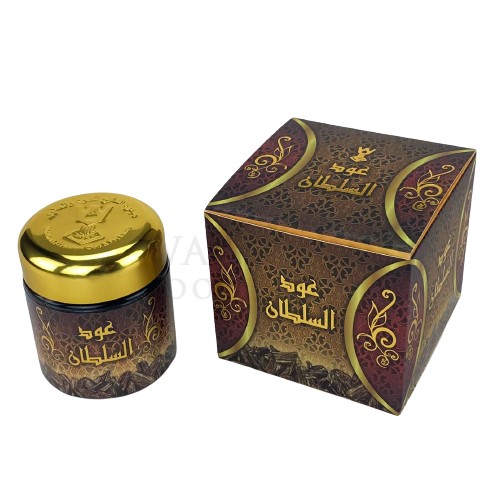
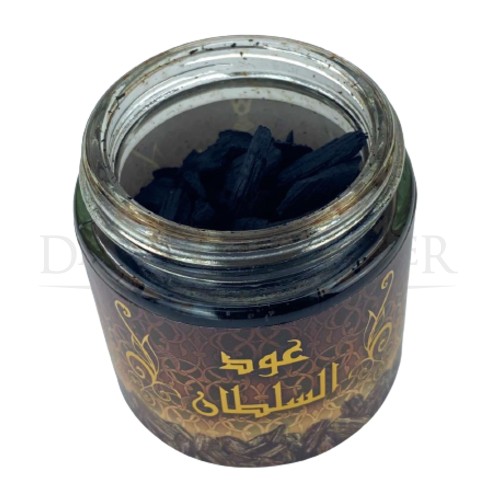
High-quality bakhoor burn Incense gives a fresh scent for your HOME, SHOP, or OFFICE.
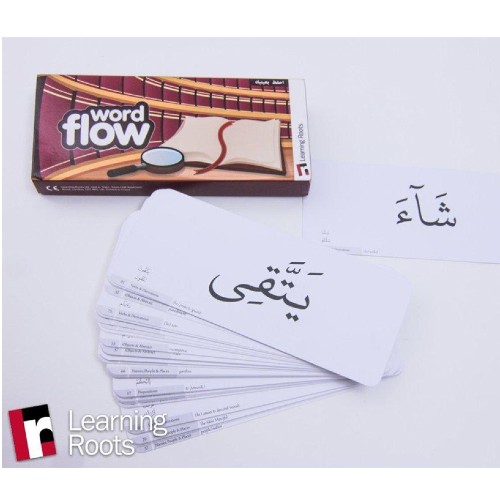

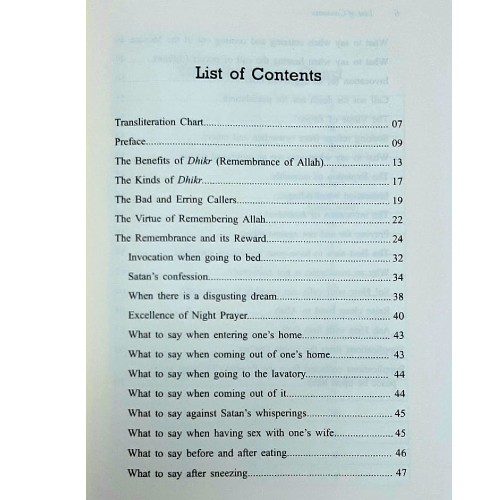
Let Us Remember Allah And Praise Him
Highlights:
Remembrance, praise and supplication – dhikr and du‘â’ – are the core of worship of the Divine. The Noble Qur’an and the last Prophet (blessings and peace of Allah be upon him) have stressed this point and taught us how to attain Allah’s pleasure through calling on Him and remembering Him in words of praise and thankfulness. This small book is a valuable collection of daily supplications from the Qur’an and the authentic hadiths. It contains the Arabic text, full transliteration and clear translation of the meaning of dozens of phrases of remembrance (dhikr) and supplication (du‘â’). This new and revised edition of Let Us Remember Allah and Praise Him is designed to be easy to use: its full-sized page format ensures that the print is large enough to read effortlessly, and yet its ultra-slim volume makes it no trouble to slip into a handbag or backpack. It is truly a practical handbook for every Muslim desiring to seek peace in this earthly life and salvation in the hereafter.
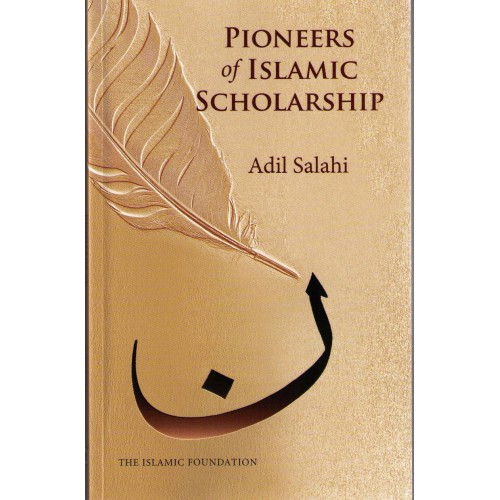
Pioneers of Islamic Scholarship
Highlights:
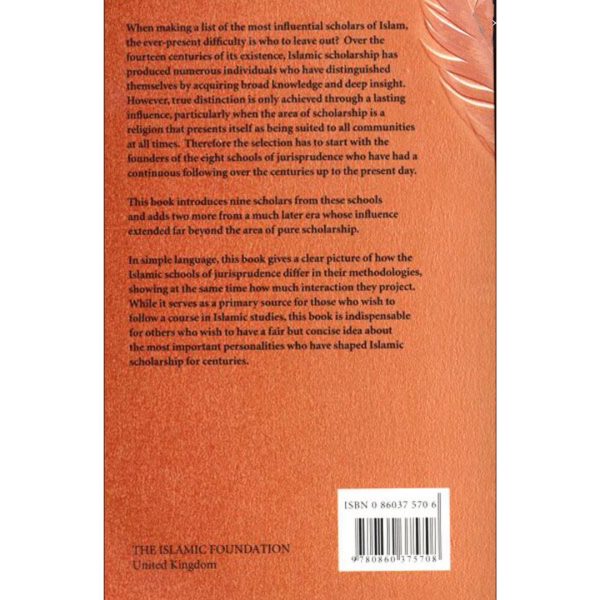
Over the fourteen centuries of its existence, Islamic scholarship has produced numerous individuals who have distinguished themselves by acquiring broad knowledge and deep insight.
- However, true distinction is only achieved through a lasting influence, particularly when the area of scholarship is a religion that presents itself as being suited to all communities at all times.
- The selection has to start with the founders of the eight schools of jurisprudence who have had a continuous following over the centuries up to the present day.
- This book introduces nine scholars from these schools and adds two more from a much later era whose influence extended far beyond the area of pure scholarship.
- In simple language, this book gives a clear picture of how the Islamic schools of jurisprudence differ in their methodologies, showing at the same time how much interaction they project.
- It serves as a primary source for those who wish to follow a course in Islamic studies, this book is indispensable for others who wish to have a fair but concise idea about the most important personalities who have shaped Islamic scholarship for centuries.
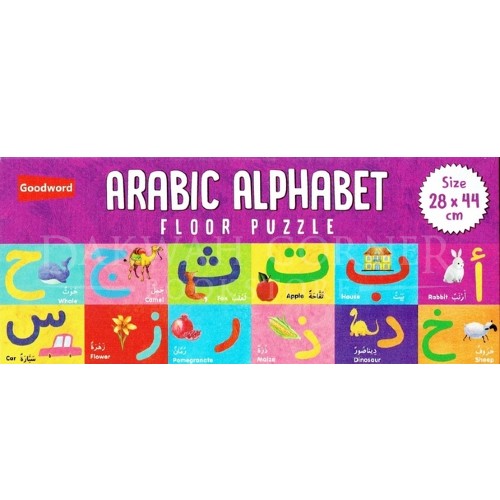
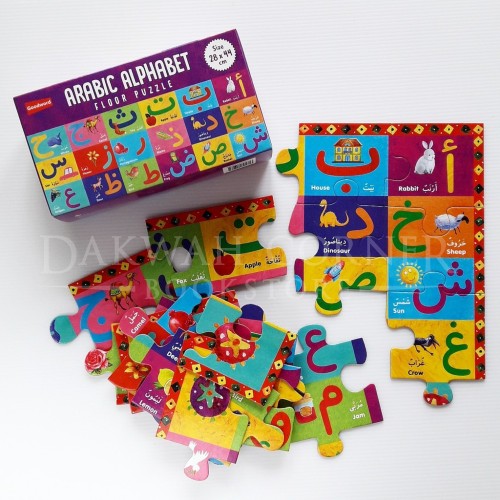
[GM] Arabic Alphabet Floor Puzzle (28cm x 44cm)
Highlights:
- 20 extra-thick cardboard pieces to piece together to explore the space
- Beautiful and child-friendly artwork
- Easy-Clean surface keeps the puzzle pieces looking new
- Promotes hand-eye coordination and problem-solving skill
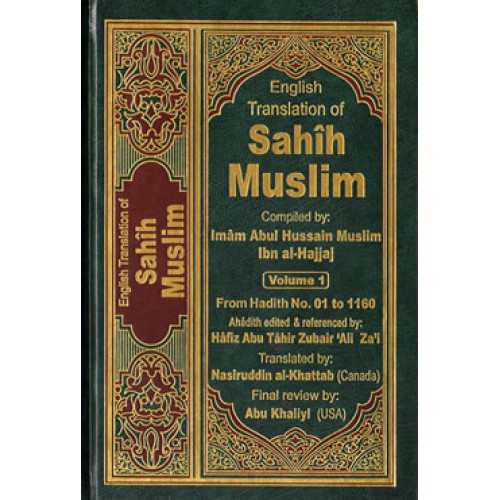
Sahih Muslim (7 Volumes)
Highlights:
The authentic hadith collections of Bukhari and Muslim are excellent in respect to both chain of transmissions and the texts as well as their general utility in that they gave guidance in almost all walks of life. The collections won the praise and acclaim of of Hadith scholars so much that they themselves produced works containing the same Ahadith as found in the collection of both Bukhari and Muslim but with their own independent chains consisting of a lesser # of sub-narrators and called their works Mustakhraj.
Imam Muslim is one of the foremost preservers of ahadith of the Prophet. His book comes second only to Sahih al Bukhari in terms of authenticity according to majority of scholars. It is considered to be better than Sahih Bukhari in terms of organization and repetition according to some scholars of Islam. It is the second in the collection of 6 books called “Sihah Sittah” or “6 most authentic books”. Imam Muslim took painstaking efforts in preserving the words/actions/sayings & approvals of the Prophet. He has mostly used 4-5 narrators in the chain of transmission although there are a couple of hadith containing 3 narrators. Imam Muslim was a very good student of Imam Bukhari and some of his Shuyukhs, although he did not narrate from Imam Bukhari too much, thus reducing the # of narrators.

Prophet Muhammad: A Blessing for Mankind
Highlights:
Prophet Muhammad (blessings and peace of Allah be upon him) and the lessons he taught us from the continued hardships he underwent in every stage of his life are a real blessing for humankind. Being an orphan child made him compassionate to widows and orphans as well as to the poor. His multiple marriages strengthened the ties of kinship amongst the different tribes, dissolving long-standing enmity. His message and prophethood were challenged by the polytheistic society in Makkah, forcing him and his few followers to emigrate to Madinah. Despite his illiteracy and the struggles he faced, he conveyed Allah’s Book, the Noble Qur’an, to all humanity, teaching them the values and principles that are presently adopted by billions of Muslims throughout the world. In the Qur’an, Allah, the Almighty addresses the Prophet (blessings and peace of Allah be upon him), saying: {We have sent you only as a mercy to the worlds.} (Qur’an 21: 107)
$1.82 $2.05
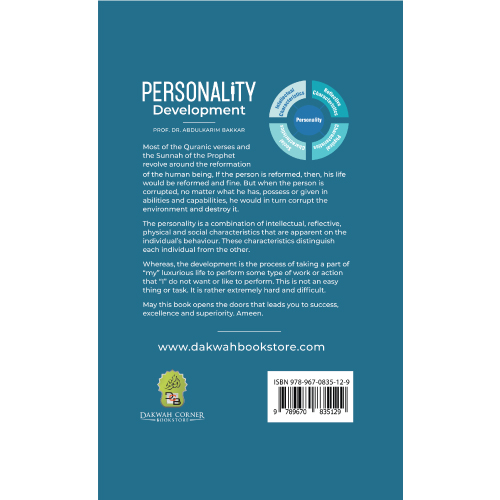
[E-Book] Personality Development
Highlights:
You need to register an account when purchase ESPECIALLY E-Books from dakwahcornerbookstore.com
This will enable you to keep track your links and Password for E-book, whenever you log in to your account. We will keep your personal information private and ensure it is safe.
You can either register for an account before or upon checking out your order.
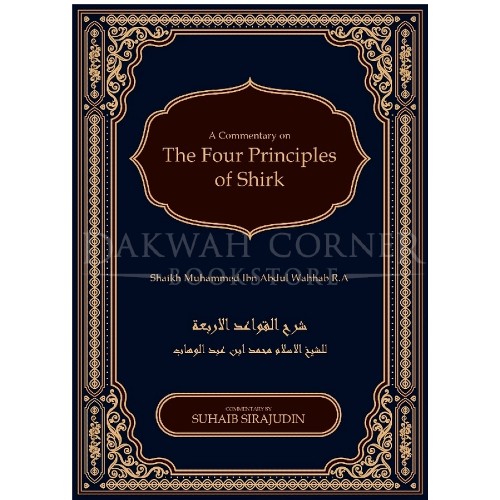
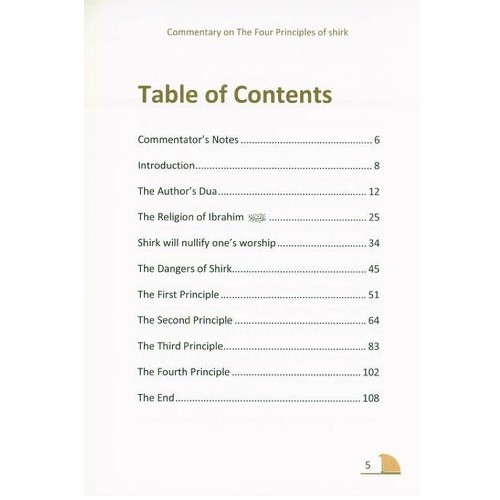
A Commentary on The Four Principles of Shirk
Highlights:
A commentary on the treatise of Shaikh Muhammed ibn Abdul Wahhab’s ‘Qawaidul Arba’ah’ The Four Principles of Shirk. In this treatise, the Shaikh discusses and brings the evidence for four principles; about knowing the disbelievers, knowing what they worship, that they differ in their religions, and the mushrikeen of now are worse than those before.

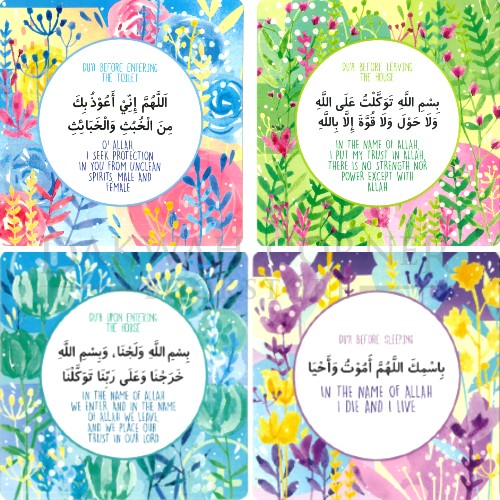
Du’a Prints
Highlights:
A collection of essentials du’as from authentic hadiths. Have 8 du’as in 1 set:-
- Du’a Exiting the Toilet
- Du’a Upon Entering the House
- Du’a Before Leaving the House
- Du’a Before Entering the Toilet
- Du’a Before Eating
- Du’a Before Sleeping
- Du’a in Seeking Knowledge
- Du’a After Waking Up
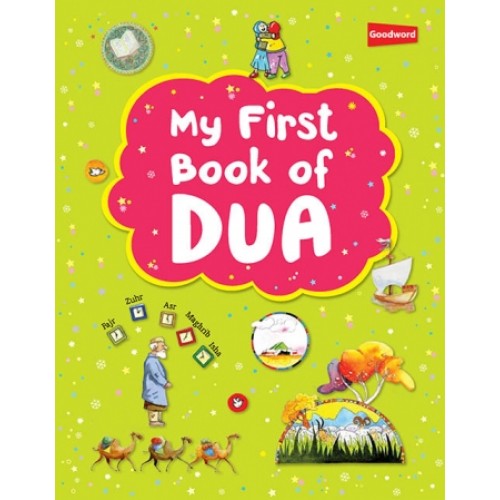
My First Book of Dua (H/B
Highlights:
My First Book of Dua is a delightful book for children which they may call their very own! Written with young hearts in mind, this short, easy-to-read book for 7 year-olds and above, is the perfect way to introduce children to the prayers from the Quran and the Hadith. My First Book of Dua helps children to learn to remember and thank Allah in a way that is meaningful and charming. This is a bright and appealing collection designed to be used at home, or at school. May this collection of prayers bring you wisdom and many blessings.
Speacial Features
- More than 150 prayers
- Delightful illustrations
- Exciting facts
- Hadith
- Quran quotes and references
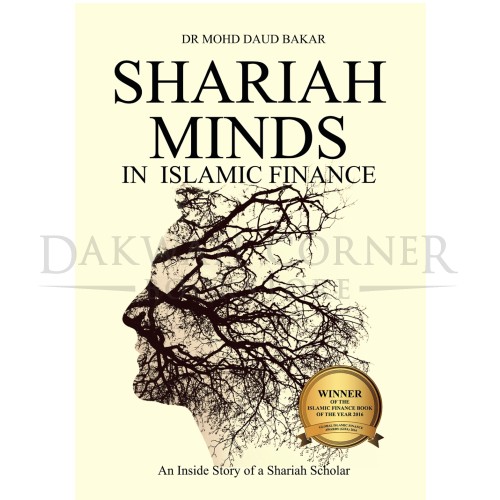
Shariah Minds In Islamic Finance
Highlights:
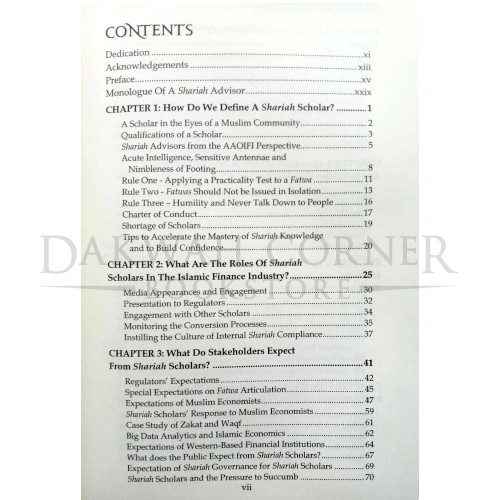
This book won the “Islamic Finance Book of the Year 2016”, awarded by Global Islamic Finance Award (GIFA) 2016. While Islamic finance might be known to many people, the life and minds of the Shariah scholars of Islamic finance have been shrouded in mystery. For the last forty years, Shariah scholars avoided an open engagement with industry stakeholders, and instead tended to ‘fortify’ themselves deeper and deeper in the ground. This has created an imperfect knowledge, if not negative insinuations about them. “Shariah Minds in Islamic Finance” is the first ever book which provides a rare inside look and accounts of the many facets of a career of a Shariah advisor. This is made more intriguing, as it is written by one of its practising global scholars. This is his story. The book is both enlightening and engaging. Courageous enough, this book examines issues, such as conflict of interest arising from multiple Shariah board representation by a few scholars, the purported lucrative scheme of Shariah professional fees, the monopoly of a few leading Shariah scholars, the development of young and forthcoming scholars, the perceived conflict between Malaysian-based scholars and GCC-based scholars, window shopping of fatwas and many other (antagonistic) perceptions on the Shariah scholars. Above all, this book offers a constructive appraisal of the Shariah advisors for the betterment of the Shariah advisory services and the industry as a whole. This book advocates the critical need for greater governance standards, which emphasise the duty of care, diligence and skills of Shariah scholars. Furthermore, this book hopes to inspire a new generation of Shariah scholars by providing invaluable tips and trade secrets from the authors’ two decades of industry experience.
There are no reviews yet.