


| Weight | 0.375 kg |
|---|---|
| Product Type | Book |
| Author | |
| Publisher | IIPH |
| Pages | 208 |
| ISBN | 9789960981307 |
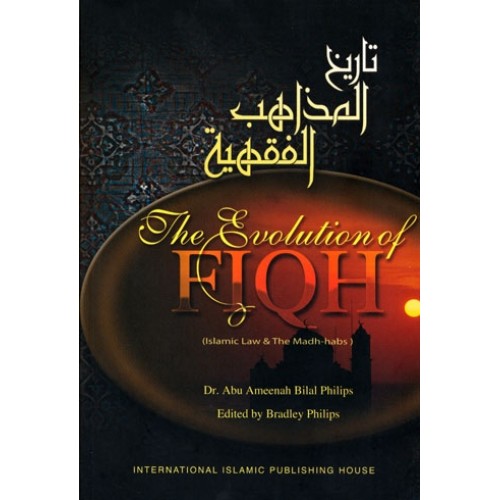
The Evolution of Fiqh (H/B)
$10.23
Out of Stock
Highlights:
somdn_product_page
Compare
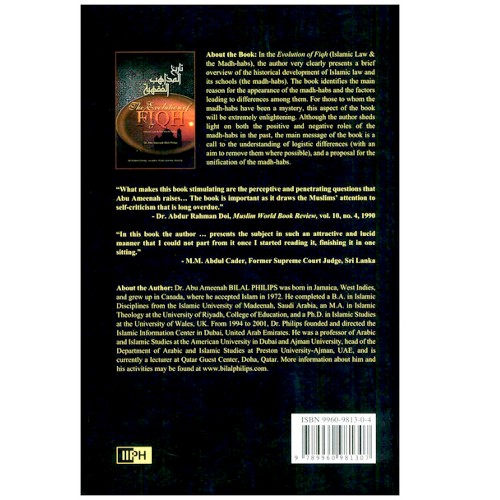
In The Evolution of Fiqh: Islamic Law & the Madh-habs, Dr. Bilal Philips presents a brief overview of the historical development of Islamic law and its schools of jurisprudence (the madh-habs). This authentic Islamic book on fiqh identifies the main reason for the appearance of the madh-habs and the factors leading to differences among them, with a call to understanding juristic differences and removing them where possible.
SKU: SJ40
Category: Sharia, Fiqh and Jurisprudence
Additional information
Reviews (0)
Be the first to review “The Evolution of Fiqh (H/B)” Cancel reply
You must be logged in to post a review.
Related Products


Fiqh According To The Quran & Sunnah (2 vol)
Highlights:
The complete set, ‘Al-Lubab Fee Fiqh As-Sunnah Wal-Kitab,’ contains all of the books of Islamic Fiqh and its chapters, accompanied by evidence and is presented in a clear and simple manner, in order that they may be understood by the young and the old, without blindly following any of the schools of Jurisprudence, but rather being subject to authentic proofs and following the most authoritative opinions, without fanatical adherence to any particular group. Rather the author agrees with each group when the truth is with them and contradicts them when they veer from that which is correct.
Fiqh is to achieve access to knowledge of that which is unclear through knowledge of that which is proven, so it is more specific than mere knowledge or learning. And fiqh is knowledge of the juristic law. It is said Faquha -A man has acquired understanding and so he has become a Faqeeh (A scholar of Islamic Jurisprudence); and it is said Faqiha – He has understood it, i.e he has attained understanding of it, and it is said Tafaqqaha – he has devoted himself to the acquisition of (Islamic) Knowledge and specialized in it. Fiqh has been a subject of contention among the scholars as well as layman throughout the history of Islam.


Principles of Islamic Jurisprudence (2nd Revised Edition)
Highlights:
This book offers a detailed presentation of the theory of Muslim law (usul al-figh). Often regarded as the most sophisticated of the traditional Islamic disciplines, Muslim jurisprudence is concerned with the way in which the rituals and laws of religion are derived from the Qur’an and the Sunna – the precedent of the Prophet. Revelation, which is given to man to restore unity and help him achieve a just and devout order in society as well as in the soul, must be interpreted so as to render it practicable in every culture, while not betraying its spirit and immutable provisions. To achieve this, additional sources of legal authority are recognized, including consensus (ijma), analogical deduction (qiyas), public interest (maslaha) and local customary precedent (urf). In employing these, the jurist guards the five principles which it is the purpose of Islamic law to uphold, namely, the right to life, sound mind, property, lineage and religion.


Fast According to the Quran & Sunnah
Highlights:
Saum (Fast) is a third Pillar of Islam. Allah’s Messenger said, Allah says: “Every deed of the son of Adam is for him, except Saum (fasting). It is for Me and I shall reward for it.”
As the status of this act of worship is so high it is essential to learn the pilings pertaining to this month of fasting so that Muslims will know what is obligatory in order to do it, what is forbidden to avoid it, and what is permissible so that they do not unnecessarily subject themselves to any hardship by depriving themselves from it.
This book consists of all the main issues of Fast. The main objective of this work is to serve an easy and authentic reference to the reader.

Shatibi’s Philosophy of Islamic Law (P/B)
Highlights:
Abu Ishaq al-Shatibi, who died in 1888, had sought an answer to the challenge posed by modernisation and change to Islamic law, by introducing maslahah, which forms the basis of his philosophy of Islamic law. In a fascinating way, the author leads us step by step to what he considers the true import of Shatibi’s views concerning jurisprudence.


Funerals Regulations and Exhortations (H/B)
Highlights:
Our soul inevitably follows a route starting from birth, passing through death, and ending with our resurrection in the next life. The inevitable journey discusses over a sequence of titles: sickness, inheritance, funerals, Life in Barzakh and so on…


Getting the Best Out of Hajj
Highlights:
The book provides a realistic view of Hajj as it is today, with detailed explanations of all the rites. It provides Figh related issues about Hajj, Salah and personal behaviour according to the Quran and Sunnah, to enable you to obtain the best value for your time spent in the holy cities. It also provides information and suggestions about planning for the journey, what to expect and how to survive, so you can depart with full confidence. This is a must have for all those planning to go on Hajj!


Fiqh Course: Tahaarah, Salaah & Janaa’iz
Highlights:
This course was compiled for English-speaking Muslims and is especially beneficial for new Muslims. It covers tahârah (purification), salâh (prayer) and janâ‘iz (funerals). It is set out in an easy-to-understand manner, citing evidence from the Qur’an and authentic hadiths. The aim of this book is to provide the reader with a correct, yet uncomplicated guide to the performance of the aforementioned acts of worship. Allah willing, it is the first in a series which will cover all aspects of worship and Islamic jurisprudence.

Hajj & Umrah And Visitors (H/B)
Highlights:
Rites and Selected Etiquettes for those intending to Perfom Hajj & Umrah and Visitors In this book the author calls attention to the most important things that those who intend to perform Hajj, Umrah or Visiting the Prophets Mosque in Medinah must have as provisions. The author has made his work brief and arranged its topics according to their priorities. the author mentions a considerable number of sayings of the people of knowledge and calling the attention of the reader to some important matters.

Istihsan (P/B)
Highlights:
This work constitutes a critical analysis of classical and modern aspects of the concept of istihsan (juristic preference), an important principle in Islamic legal legislation throughout history. Although there has been many research works on the subject, it still requires further investigation on the role and nature of istihsan with regard to a combination of classical and modern approaches. Consisting of four chapters, the author begins by introducing some general principles of Islamic law, before discussing the history of istihsan during the time of the Prophet and his Companions. He also analyses the validity of istihsan as a source of law and discusses the differences among scholars on its method of implementation.


Smoking Intoxicants & Narcotics (P/B)
Highlights:
This book deals with the epidemic of smoking, which enslaves many of today’s Muslims, and which is aggravated by that most victims belittle its dangers and deny its prohibition.
This book includes a discussions of intoxicants, establishing the prohibition of various practices associated with them, as well as penalties (in both lives) for those who partake in them.
This book also includes a discussion of narcotics, with an overview of marijuana and qaat (or khat). Based on their established effects and harms, we conclude that narcotics are strongly prohibited, except in very limited medical settings.
This book, we hope, will provide many Muslims with guidance toward a healthier, cleaner and worthies Islamic personality. My Allah grant us guidance and facilitation.


Al-Jumu’ah: The Day of Congregation
Highlights:
In our busy lives, Friday comes around once a week. It often comes and goes without our being really aware of it. For many Muslim men, it may be punctuated by the congregational prayer that they make special efforts to attend. For many Muslim women, it may go by just like any other day. This ought not to be the case. In this unique book, Dr. Gowher Yusuf gives us reason to stop and think about how special Friday (al-Jumu‘ah) really is, and what we should be doing to achieve the many bounteous blessings it holds for those who observe it. Drawing constantly from the Qur`an and the Sunnah and the great works of the scholars of Islam, Dr. Gowher Yusuf explores this topic in depth and presents it to the reader in simple language for them to understand and ponder over. This book travels through the various issues pertaining to the Friday prayer and its Khutbah, or sermon. These issues are explained within the Islamic framework, thus abolishing any myths and misunderstandings and clarifying the topic for the reader. Dr. Yusuf writes: The day of the week known as al-Jumu‘ah, or simply Jumu‘ah, is Friday, and it is special. Compared to the other days of the week, Friday has been accorded the largest amount of merit, so much so that the father of all humankind, Prophet Âdam (peace be upon him), was created on this day and a particular prayer was ordered for this day. It was from the guidance given to Prophet Muhammad (blessings and peace of Allah be upon him) to magnify this day, honour it, and designate it for acts of worship. …On a Friday, we all will be gathered and will stand congregated in front of Allah, the Exalted, on the Day of Resurrection, also called the Day of Accountability or the Day of Judgement.

Preservation of Health in Islamic Law (P/B)
Highlights:
Preservation of health (hifz al-sihhah) is the most important branch of Islamic medicine since it is primarily concerned with the prevention of illness rather than cure. This book represents one of the few attempts to introduce the role of Islamic medicine, although Chapter One provides information about a historical background of the preservation of helath in Islam, its aim is to provide fresh ant timely overview of the major aspects of legal, ritual and spiritual structures of teh Islamic law (shariah). These include the laws related to Ibadah, Islamic family laws, foods and drinks as well as environmental laws, for maintaning and preserving human health. Findings indicated that prevention of any diseases from Islamic medical law presentive cannot attain any real success unless it emanates from an Islamic fundamental teaching, namely: the pillars of Islam. Iman and observance of the Islamic rituals such as Salah, zakah, Sawm and Hajj, have played an important role in shaping the attitude, behavior and model personality of the Muslim, in boosting the spiritual motivation or attitude change, and in disseminating the message of prevention. This indicates that bodily and spiritual health goes hand in hand and that pyscho-spritual balance and health is a primary consideration whereas physical health is a secondary one.
Recently Viewed
Kaedah Rasulullah (saw) Menegur Kesilapan
4 ★
4 ★
1 Rating
5 ★
0
4 ★
1
3 ★
0
2 ★
0
1 ★
0
Highlights:
Tegur Menegur adalah satu sikap dan perbuatan yang baik pada pandangan Islam. Pada masa kini teguran boleh dilakukan melalui pelbagai media dan cara. Namun begitu ramai yang tidak mengerti dan memahami adab serta cara-cara untuk menegur sesuatu kesilapan.
Menegur kesilapan adalan sebahagian dari wahyu dan metodologi Al-Quran menjelaskan perintah dan larangan, persetujuan dan pengencaman dan pembetulan kesilapan.
Mengajar orang lain juga merupakan amalan yang mana paling baik yang manfaatnya dapat disebarkan kepada yang lain. Ia merupakan perkongsian tentang peninggalan para Anbiya (as) dan Rasul (saw) oleh dai’yah dan para pendidik.
“Sesungguhnya Allah, para malaikatNya dan penduduk langit dan bumi sehingga semut dalam lubangnya dan sehingga ikan di dalam lautan momohonka rahmat kepada pengajar manusia kepada kebaikan.” (At-Tirmidhi)
Berpandukan al-Quran dan Hadis sahih, Sheikh Muhammad Salih al-Munajid menerangkan bagaimana pendekatan Rasulullah (saw) dalm mengajar serta menegur kesilapan.
Ghibah (Backbiting) : The Root Cause of All Evil : The Commands and Prohibitions of the Shariah
Highlights:
Islam is a religion of peace, love, and compassion. Lies, suspicion, backbiting, slander, vain talk — all these are anathema to Islam. Indeed, such negative activity sows the seeds of enmity among the people and ultimately brings about the downfall of society. Backbiting (ghibah) in particular, according to the Qur’an, is not just a common social evil, but rather an abhorrent act, a major sin — the equivalent of eating one’s brother’s flesh.
Numerous ahadith of the Prophet Muhammed (pbuh) also underscore the complete futility, extreme loathsomeness and grave consequences of the deliberate misrepresentation of others. Backbiting, by the unanimous rulings of religious scholars (ijma) is forbidden, so that anyone who indulges in it is guilty of serious wrongdoing. Yet people have no qualms about engaging in this practice, flouting all prohibitions and strict commands.
Drawing upon important source material on the subjects of backbiting, false accusation (bhutan), and related issues, this book highlights the need to keep our society free of his ignoble malaise. To this end, it elucidates the relevant commands and prohibitions of the Shari’ah, so as to create in the minds of its readers a deep awareness of the sinfulness and ill effects of calumny.
By Shakil Ahmad Khan and Wasim Ahmad
Tajweed Rules of the Quran (Part Two)
Highlights:
By Allah’s grace, this is the second part of a three part book on the rules of tajweed of the Qur’an, for the recitation of Hafs from ‘Aasim by the way of Ash-Shaatibiyyah. It is is intended to be a guide for nom-Arabs with a good grasp in English in studying tajweed.
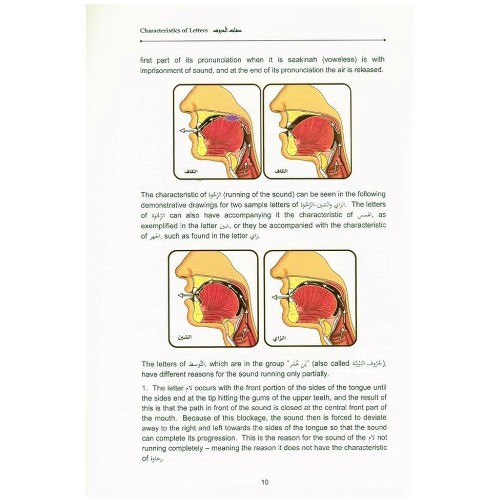
This book explains the concept of the accent (an-nabr) in the recitation of the Glourious Qur’an and the conditions of its use, it is also defines and explains the important chapter on the characteristics of the letter, velarization and attenuation (tafkheem and tarqeeq) are covered in this part, as well as the concept of the two alike, the two similar, the two close, and the two far and the rules for merging (idghaam) and clarity (ith-haar) in these different relationships. A brief introductory to grammar term is made in this book to assist the student in understanding the last chapter, that of the connecting hamzah (hamzah al-wasl).
The explanation of the different subject are in English, and the Arabic terms are translated. This is to assist the student in understanding and encourage them to learn the Arabic definitions and terms. This book should facilitate non-Arabs studying tajweed in a classroom with explanations taught in Arabic or in English.
This book cannot replace the importance of reciting to and being corrected by a trained teacher of tajweed, instead it is a guide and an aid in understanding the concepts of tajweed, the application can only be refined by recitation and correction.
Forty Hadiths On Poisonous Social Habits With Short Commentaries
Highlights:
In this unique collection of Forty Hadiths on Poisonous Social Habits, Yahya Ondigo emulates the tradition of Imam an-Nawawi and other great scholars. He has compiled hadiths (records of the guidance) of the Messenger of Allah (peace and blessings of Allah be upon him) and briefly commented on each.
This well-researched and thoroughly documented book offers both Muslim and non-Muslim readers a clear understanding of how the divinely-inspired words and actions of Prophet Muhammad (peace and blessings be upon him) apply to our contemporary societies. Such social ills as lying, greed, corruption, smoking, gambling and others have been discussed along with their social implications.
After elaborating each issue, the author has offered wise and insightful advice to get rid of that particular social habit. In this beautifully-worded piece, his deep faith in Islam shines through along with his love and concern for humanity.
This compilation is meant to awaken our realization of the causes and effects of these poisonous habits so that perhaps we may be reminded, take admonition, and try to change our situations. As is the rule, Allah will not change the condition of a people either from bad to good, or vice versa, until the people change what is in them selves.
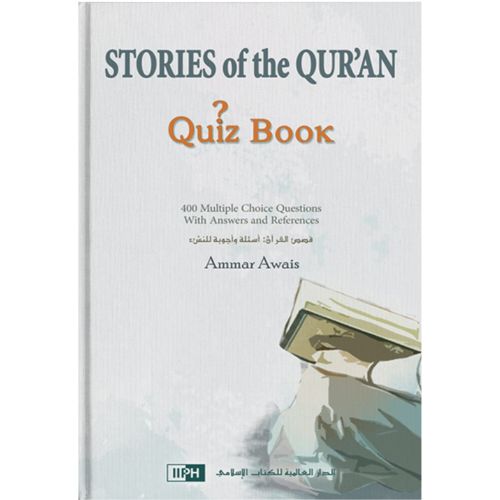
Stories of the Qur’an: Quiz Book
Highlights:
Four hundred questions are spread over fifty quizzes in this well-researched book that aims to test the reader’s knowledge about various personalities and incidents related in the Qur’an. Stories of the Qur’an: Quiz Book is extremely handy in familiarizing young adults with the lives of the prophets and righteous individuals. It can also be used in quiz competitions and fun-based learning activities.
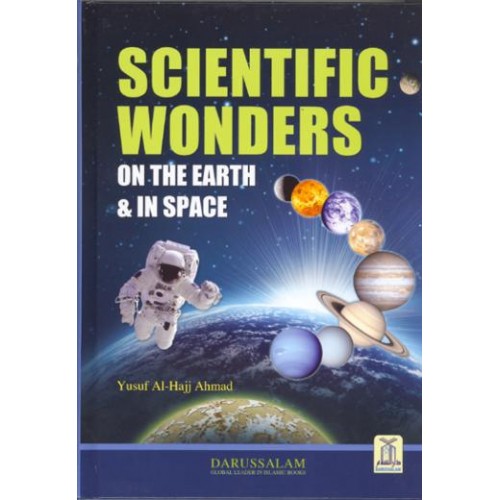
Scientific Wonders on the Earth and in Space (H/B)
Highlights:
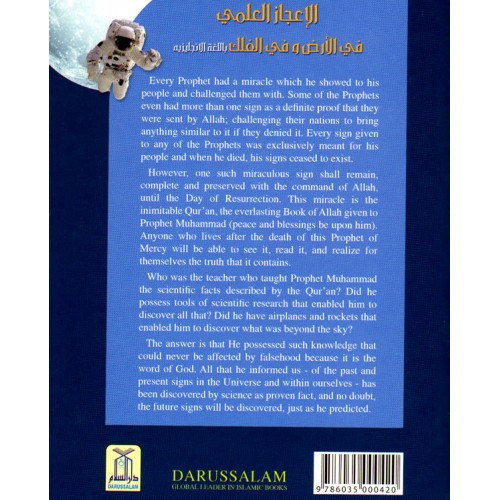
Every Prophet had a miracle which he showed to his people and challenged them with. Some of the Prophets even had more than one sign as a definite proof that. they were sent by Allah; challenging their nations to bring anything similar to it if they denied it. Every sign given to any of the Prophets was exclusively meant for his people and when he died, his signs ceased to exist.
However, one such miraculous sign shall remain, complete and preserved with the command of Allah, until the Day of Resurrection. This miracle is the inimitable Qur’an, the everlasting Book of Allah given to Prophet Muhammad (peace and blessings be upon him). Anyone who lives after the death of this Prophet of Mercy will be able to see it, read it, and realize for themselves the truth that it contains.
Who was the teacher who taught Prophet Muhammad the scientific facts described by the Qur’an? Did he possess tools of scientific research that enabled him to discover all that? Did he have airplanes and rockets that enabled him to discover what was beyond the sky?
The answer is that He possessed such knowledge that could never be affected by falsehood because it is the word of God. All that he informed us – of the past and present signs in the Universe and within ourselves – has been discovered by science as proven fact, and no doubt, the future signs will be discovered, just as he predicted.
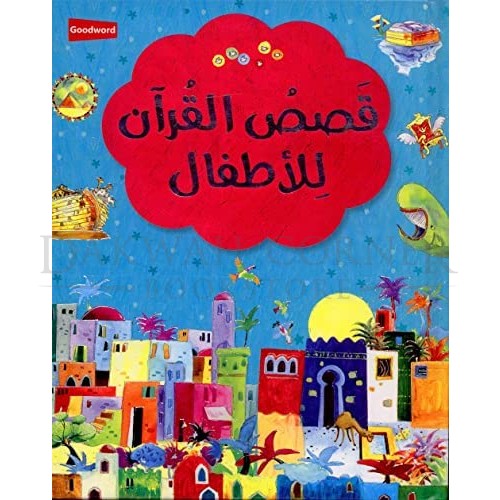
[MM] Ajmal Ma Fi Al Hayat Al Asas Bi Allah (اجمل ما في الحياة الانس بالله)
Highlights:
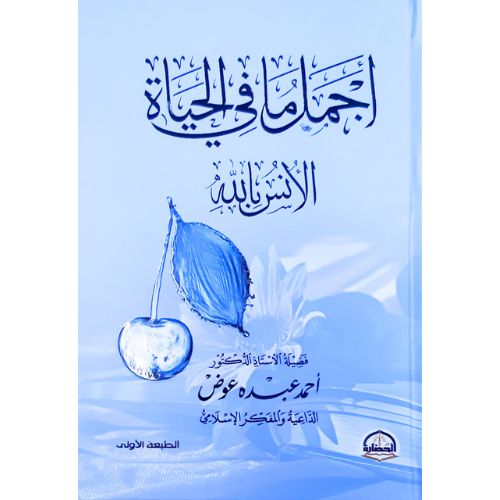
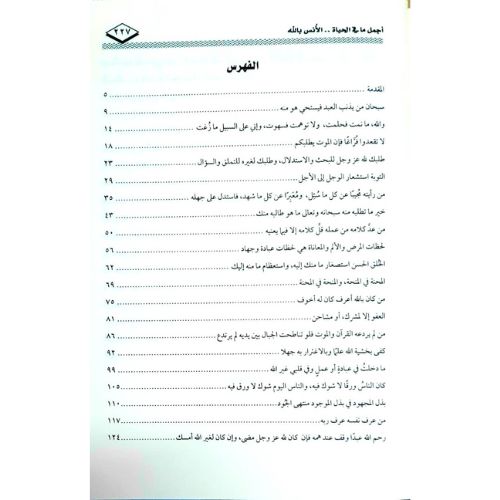
(أجمل ما في الحياة الأنس بالله) الذي ينبت النور في القلوب، ليثمر أنوارا وأقمارا ربانية تهدي صاحبها إلى باب المليك، وإلى جنة القرب من الرب الرحيم، وتظله بظلال الفكرة والعبرة، فتكون سياجا بينه وبين الشيطان ، ودربا مستقيتها ممتدا بالطاعة إلى قرب الرحمن. لقد جاءت مادة هذا الكتاب حكما من زاد الصالحين، ومن درر القول، وهي باب عظيم للتفكر، ودعوة للأوبة والتوبة، فهي نعم الزاد، يرتفع به بناء الطاعة والهدى، وتضيء القلوب بأنور الحكمة والتقى . ولقد تنوعت هذه الحكم ، فمنها ما يأخذ بيد المسلم إلى التوبة فالتوبة استشعار الوجل إلى الأجل، ولا خير في الحياة إلا لتائب أو رجل يعمل في الدرجات، فسبحان من يذنب العبد فيستحي هو منه. ومنها ما يدعو العبد إلى العمل: لا تقعدوا فراغا فإن الموت يطلبكم.
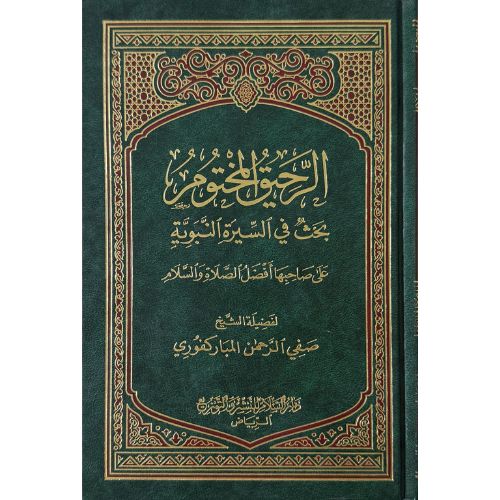
(SB)Ar Raheeq Al Makhtoum – Medium (15x22cm) /الرحيق المختوم – كبير
Highlights:
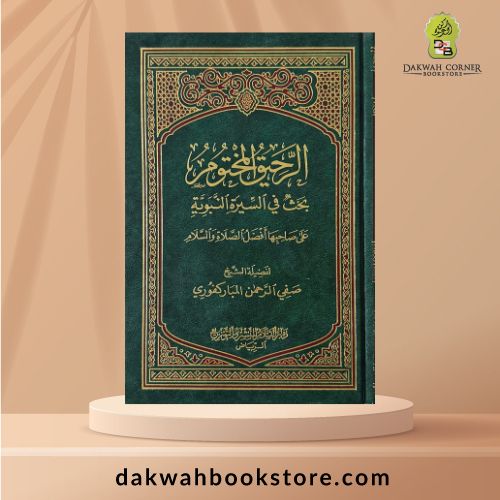
Scholars of Ahadith (traditions) and writers of the biography of Muhammad, the Messenger of Allah, have explored his life from every angle and aspect from birth to death. Every event, every incident of his life has been described and narrated, but none had claimed that he has given his life’s recording its full rights. Hundreds of books have been written on the life of Muhammad and this endeavor will continue till the Day of Resurrection.
No doubt The Sealed Nectar ( Ø §Ã™â€žÃ˜ ±Ã˜ يق Ø §Ã™â€žÃ™â€¦Ã˜ ®Ã˜ ªÃ™Ë†Ã™â€¦ – Ar-Raheeq AI-Makhtum) is a book of great value and praiseworthy work on the life of Muhammad. This book has been written by the Eminent Shaikh Safiur-Rahman Mubarakpuri of Jamiah Salafiyah, Banaras (India). The first Islamic Conference on Seerah (biography of the Prophet) was held in 1976 in Pakistan sponsored by the Muslim World League. The League announced a world contest for writing a book on the life of the Prophet. One hundred fifty thousand Saudi Riyals (SR 150,000) (forty thousand U.S. Dollars) was the grand prize for the best five books.
One hundred and seventy-one manuscripts were received from all over the world. Out of these, eighty-five were in the Arabic Language, sixty-four in Urdu, twenty-one were in English and one in French and Hausa.
A board of highly qualified scholars judged the manuscripts and announced the results. The manuscript of Shaikh Safiur-Rahman Mubarakpuri, Jamiah Salafiyah Banaras (India), author of the book in hand (The Sealed Nectar) received first the grand prize of SR 50,000 (fifty thousand Saudi Riyals) for its authentic and sound collections of the narrations. Dr. Majid Ali Khan, New Delhi, India, placed second. The third prize went to Dr. Naseer Ahmed, Islamic University, Lahore, Pakistan. The fourth prize was awarded to Mr. Harnid Mahmud of Egypt. The fifth and final prize was awarded to Abdus-Salam Hashim of Madinah Munawwarah. An extravagant prize distribution ceremony was held at Makkah Al-Mukarramah on 12 Rabi’ul-Awwal 1399 A.H. (1979 C.E.). Afterwards, the book was published by the Muslim World League and then many other organizations gained the honor of publishing this masterpiece. Darussalam also published this book in the Arabic language. I had wished to publish this book in the English language for the wider benefit of humanity. Shaikh Safiur-Rahman willingly agreed to the idea and consented to publish the English translation. The stage of translation was traversed with the help of brother Mahir Abu Dhahab, owner and general manager of Markaz Noor Ash-Sham in Damascus, Syria.
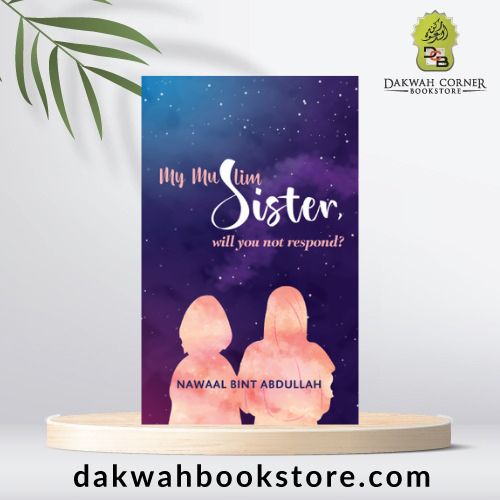
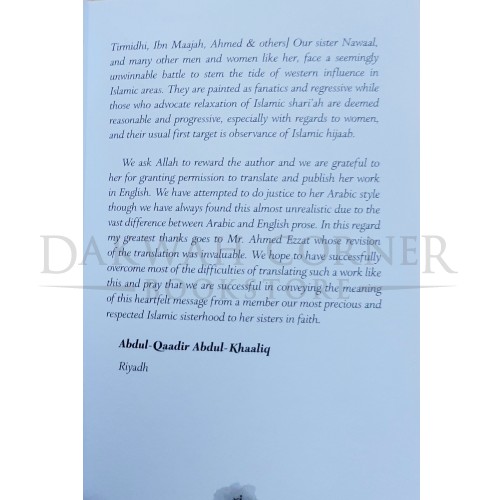
My Muslim Sister, will you not respond?
Highlights:
This book is the result of the author’s personal experiences and observation of the issues concerning muslim women of today. From the influences of society and culture, to the lack of understanding toward obligations and rights, women in general are under pressure to “look good.”

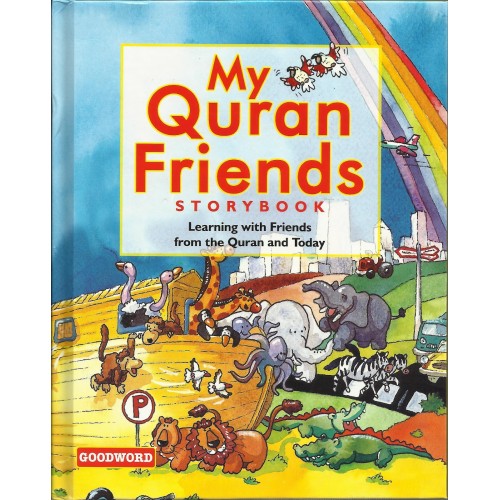
My Quran Friends Storybook (P/B)
Highlights:
My Quran Friends Storybook has sixty stories from the lives of the Prophets and today’s children’s, highlighting the Islamic teaching and virtues. This book encourages children to read Allah’s word and apply it in their every day life. It will help them to imbibe the true spirit of Islam.
There are no reviews yet.