| Weight | 0.95 kg |
|---|---|
| Dimensions | 21 × 17 × 2 cm |
| Author | |
| Binding | Paperback |
| ISBN | 9789673633623 |
| Pages | 429 |
| Publisher | Penerbit Press UITM |
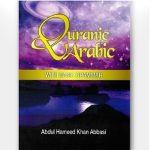
Quranic Arabic With Basic Grammar
RM79.00
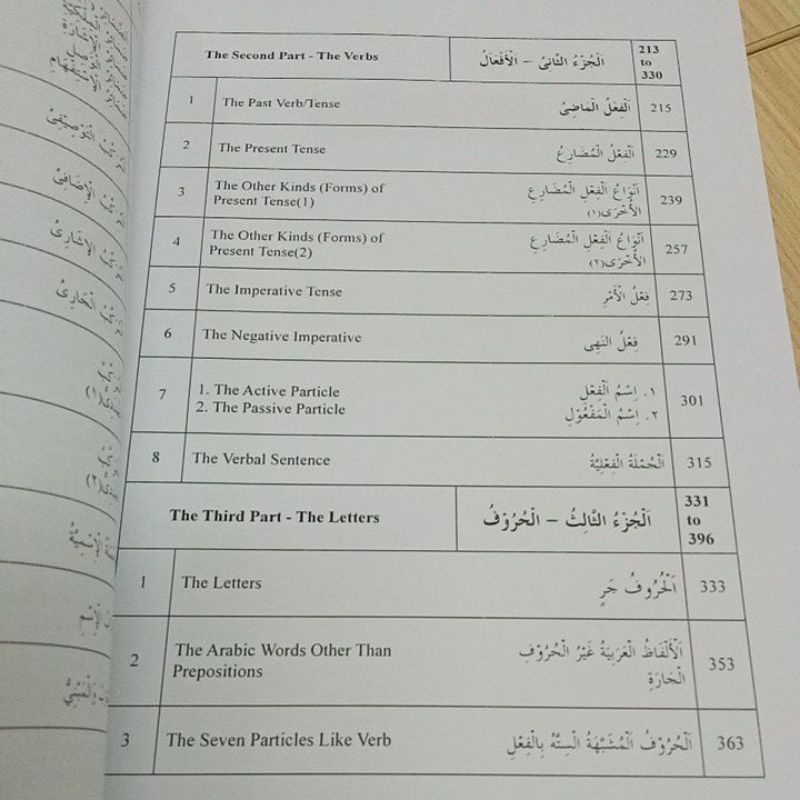
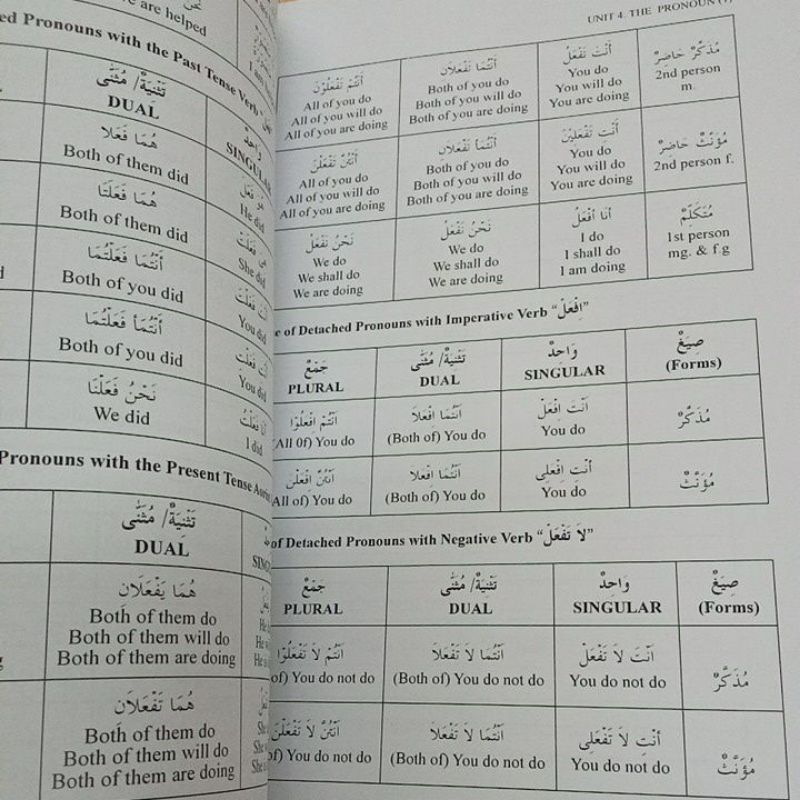
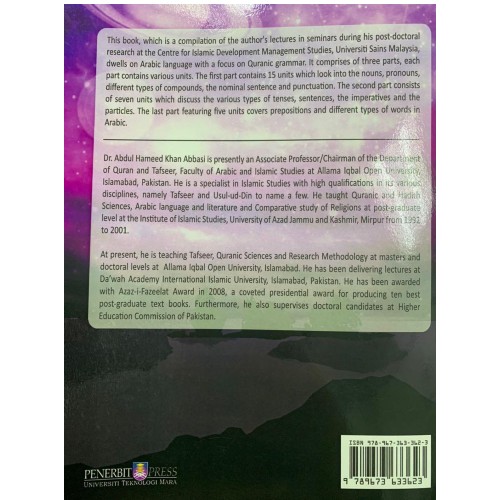
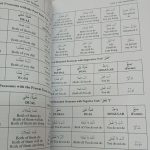
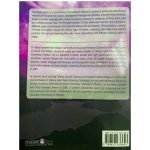
This book, which is a compilation of the author’s lectures in seminars during his post-doctoral research at the Centre for Islamic Development Management Studies, Universiti Sains Malaysia, dwells on Arabic language with a focus on Quranic grammar. It comprises of three parts, each part contains various units. The first part contains 15 unit which look into the nouns, pronouns, different types of compounds, the nominal sentence and punctuation. The second part consists of seven units which discuss the various types of tenses, sentences, the imperatives and the particles. The last part featuring five units covers prepositions and different types of words in Arabic.
Frequently Bought Together
Be the first to review “Quranic Arabic With Basic Grammar” Cancel reply
You must be logged in to post a review.
You may also like…
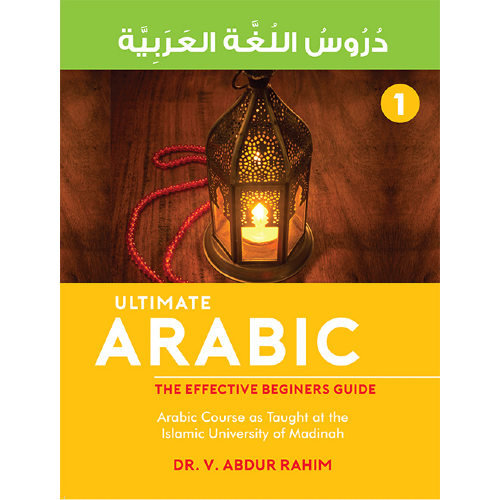
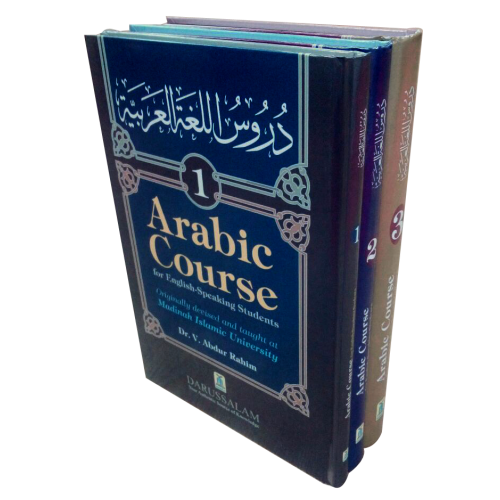
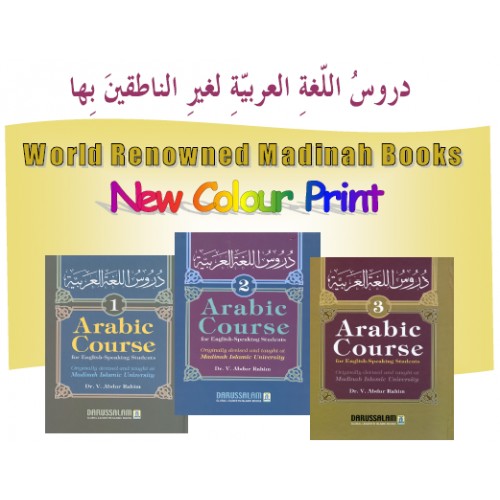
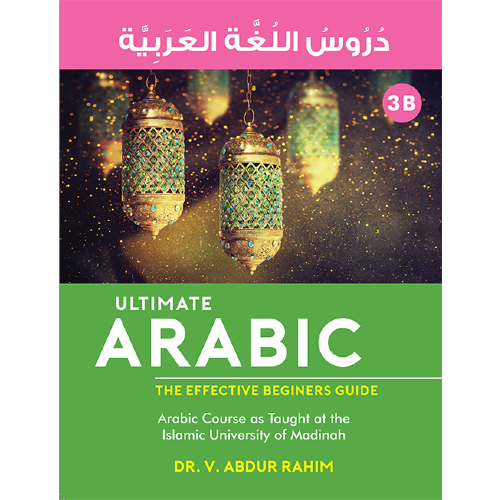
Arabic Course for English-Speaking Students -3 Vols (H/B)
Easy Arabic Course (Durus al-Lughat al-Arabiyah) – For English-Speaking Students. As per the curricula and norms pescribed by the Islamic University of Madinah.
Combines Modern Arabic vocabulary with Islamic terminology as used in the Qur’an and hadith. Assists in learning Arabic grammar and essential language skills Uses a conversational approach to help understand grammatical usages in its perfect form. Contains Multi-skil exercises to improve vocabulary and language
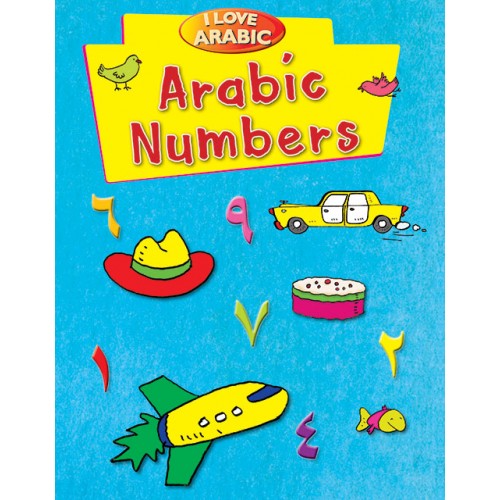
I Love Arabic: Arabic Numbers
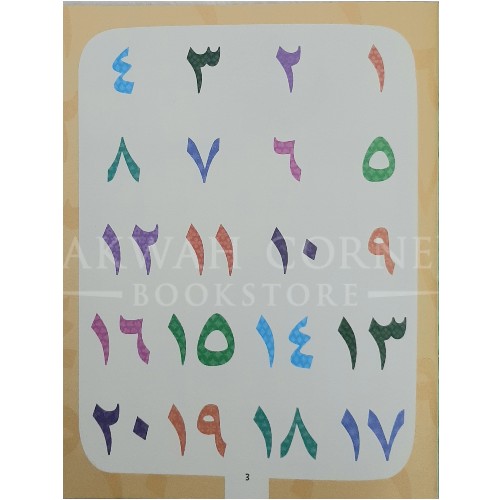
Arabic Numbers, the third book in the I Love Arabic series, introduces young learners to identifying, counting and writing Arabic numbers. This colourful book presents each number along with delightful illustrations, which the young learner has to identify, count, say aloud and then practice writing. Arabic Numbers is an exciting first book for young learners who want to master Arabic numbers. Arabic Numbers develops these skills: * Identifying numbers * Counting numbers * Writing numbers.
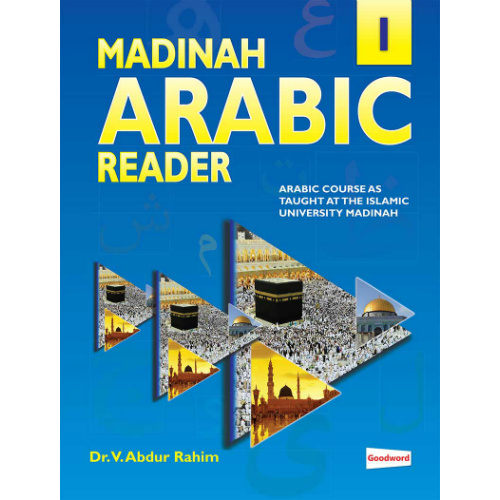
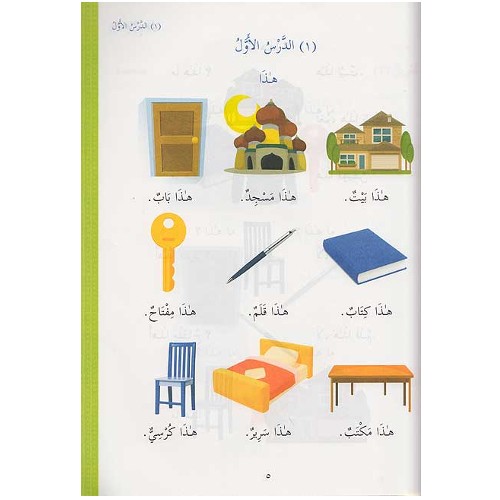
Madinah Arabic Reader (Book 1)
Arabic Learning
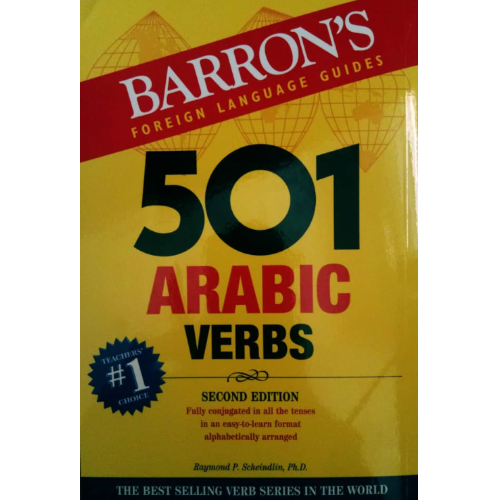
Arabic Verbs: Fully Conjugated All Forms Bilingual Edition
This update, easy-to-use reference book gives you:
- The 501 most common Arabic verbs in a table format
- Both the Arabic characters and their English infinitive form at the top of each page
- Exemplary essay that discusses Arabic verb formation and usage
- Common idioms with example sentences to demonstrate verb usage
- A grammar review and a pattern index
- Indexes that list verbs in both root order and strict alphabetical order
Essential Principles In Reading & Writing Arabic
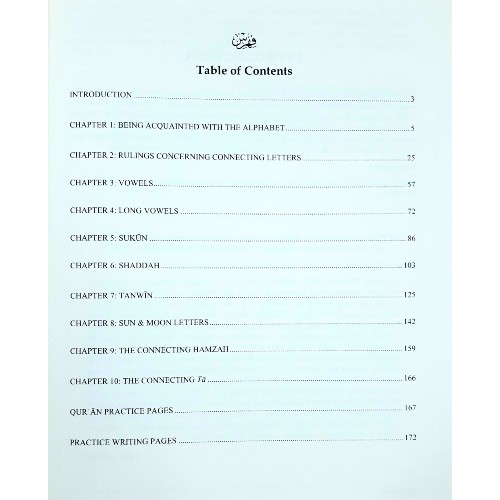
This book was prepared and designed with the intent to facilitate for the Non-Arabic Speaker to gain essential tools in reading and writing in order to embark on their path acquire the Arabic Language. It contains the following:
- Introductory charts for each Principles as it relates to Arabic Reading
- Each chart contains a summary (in English) to help bridge the student’s understanding of how to apply said Reading Principle.
- A writing section that compliments the Introductory chart.
- Each chapter contains a connection writing drill.
- Each chapter concludes with a Qurʾānic drill chart in order facilitate practice of said Reading Principle.
- 5 Qurʾān Practice Pages for the purpose practice one’s reading.
- Extra Blank Practice Writing Pages.
- Practice Writing Pages of {Sūrah al-Qamar (54):17,22,32,&40}
Related Products
Arabic Grammar Made Easy (P/B)
An approach to teaching the Arabic language by introducing vocabulary and grammar in small doses, based on the most commonly used words in Arabic literature and the most frequently used grammatical constructions. Book One focuses on the rules of nominal sentences.
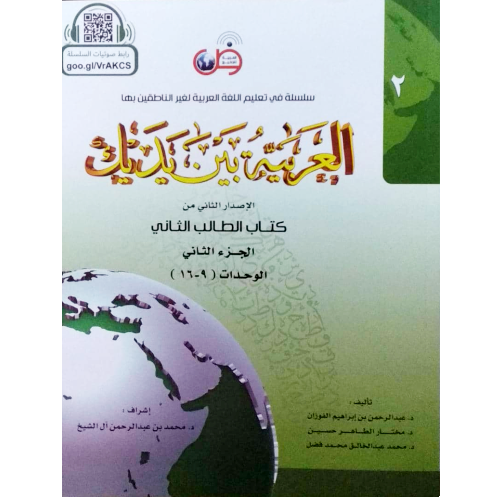
[AR] Al-Arabiyyah Bayna Yadayk Book 1 Part 1
Al-Arabiyyah Bayna Yadayk, Arabic At Your Hands (Students Level 1, Book 1) – With QR
This series is designed for the non-Arab speaking, senior level student. It helps the student learn Arabic through listening and conversation along with reading and writing. The series stresses communication and also offers glimpses into the Arabic culture, both Islamic and national.
The first level consists of two parts (books), each of which includes 8 units (total of 16 units). Each unit consists of 9 lessons, constituting a total of 144 basic lessons in this level.
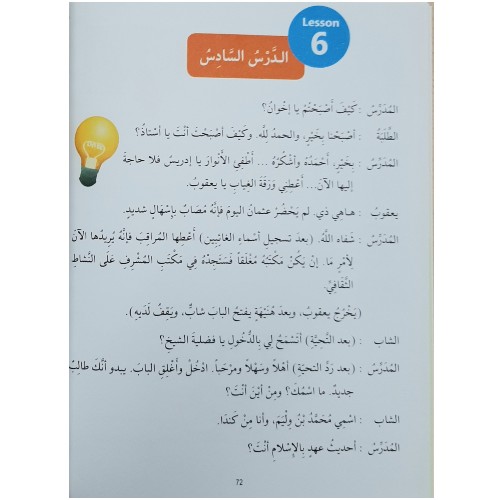
Madinah Arabic Reader (Book 2)
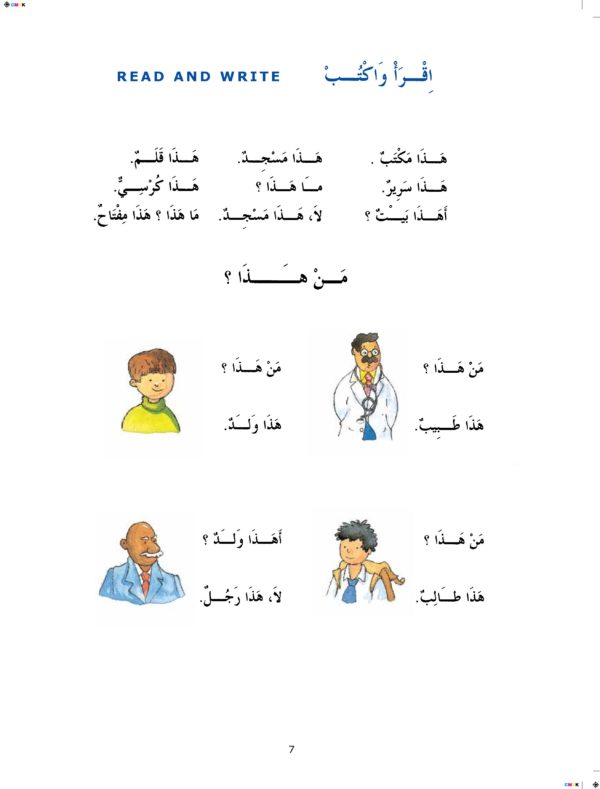
Professor Abdur Rahim, Director of the Translation Centre of the King Fahd Quran Printing Complex and former Professor of Arabic at the Islamic University of Madinah, Saudi Arabia, has authored texts designed to impart a knowledge of classical Arabic through applied grammar. Each lesson, based on a conversation, illustrates distinctive language patterns. These patterns are elucidated by a variety of helpful exercises. The vocabulary ranges from classical and Quranic Arabic to modern Arabic. This series of books is currently being utilized at various schools to prepare students for the University of London (UK) GCE O-Level and A-Level examinations.
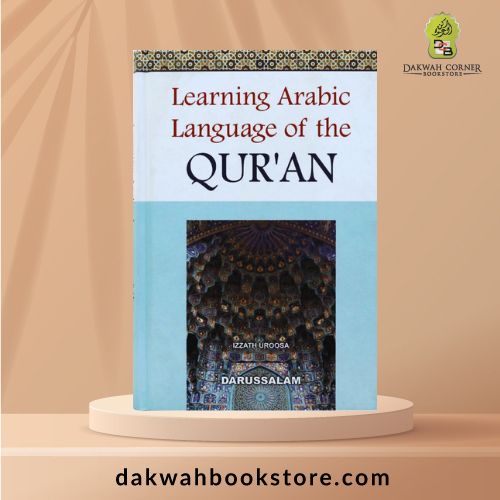
Learning Arabic Language Of The Qur’an
Other components that make this book attractive and useful are the simplicity of the language used, and its clarity and effectiveness of expression in achieving its objective. This book can be used by students of different ages whose intention is to learn Arabic with an eye toward proper understanding of the Qur’an.
The author has profound knowledge of both the Arabic and English languages. She also possesses a deep insight into Qur’anic expressions. She studied Arabic in Saudi Arabia and in India. This comprehensive book is the result of her diligence and commitment to learning and teaching the Qur’anic Arabic.
May Allah reward her for this valuable service to the understanding of the Qur’an and make it popular among the students and the academic world at large.
Prof. Mohsin Usmani Nadwi, Professor of Arabic and Dean at English and Foreign languages University (formerly CIEFL) Hyderabad, India.
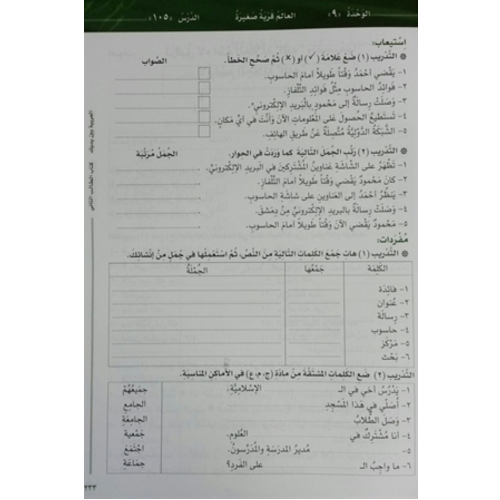
[AR] Al-Arabiyyah Bayna Yadayk Book 2 Part 2
Al-’Arabiyyah bayna yadayk Means Arabic in Your Hands.
The great thing about these books is it covers a lot of vocabulary through pictures, Images, and using Arabic Only, introduces the students to grammar later and gradually rather than pushing them at the deep end before they can swim. Much like the Arabic Course for English Speaking Students 3 Vols Set, UKIA, it is more Islamic inclined and fulfills the desire for the student of knowledge to learn the language of the Qur’an.
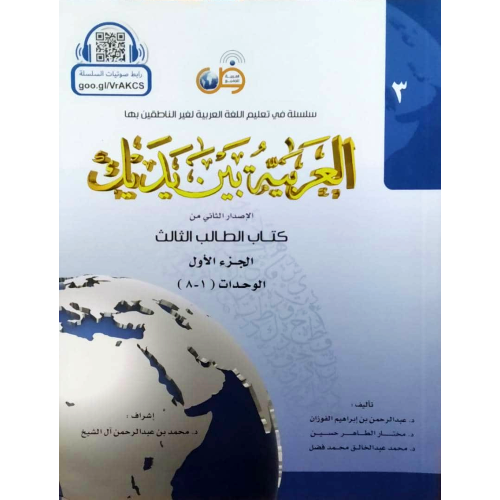
[AR] Al-Arabiyyah Bayna Yadayk Book 3 Part 1
Al-’Arabiyyah bayna yadayk Means Arabic in Your Hands.
The great thing about these books is it covers a lot of vocabulary through pictures, Images, and using Arabic Only, introduces the students to grammar later and gradually rather than pushing them at the deep end before they can swim. Much like the Arabic Course for English Speaking Students 3 Vols Set, UKIA, it is more Islamic inclined and fulfills the desire for the student of knowledge to learn the language of the Qur’an.
The third level (part 1 and 2) comprises 5 tests as follows:
- 1. Level determining test at the beginning of the first book to determining the student’s level and his ability to begin the third level.
- 2. Small test in the middle of the first book.
- 3. Midlevel test at the end of the first book.
- 3. Small test in the middle of the second book.
- 4. Final comprehensive test at the end of the second book.
At the end of the third level, there are lists of vocabulary used n each unit and another list of all the vocabularies of the level arranged alphabetically. It also includes comprehension texts for all text and some exercises used in this level.
Morphology Made Easy P/B (Part 1-4)
Prepared by the teachers of Madrasa Islamiyah Benoni, South Africa.
Arabic Through The Qur’an
Whether used as a means of self-instruction or as part of higher learning coursework, this language primer is ideally suited for those wishing to learn classical Arabic and for Muslims who wish to learn Arabic exclusively for use in their religious and spiritual practice. Designed to enhance the understanding of the Qur’an and its vocabulary that has infiltrated the whole of Arabic and Islamic literature, this workbook provides 40 easy-to-follow lessons for learning Qur’anic rather than modern Arabic. Beginning with a section on the Arabic alphabet, the text moves on to individual lessons that address one or more grammatical topics, ranging from the basics of nouns, adjectives, and prepositions to the more complex concepts of the imperative, the passive, and conditional sentence, introducing new vocabulary in the process. Accompanying translation exercises, a glossary of technical terms, and an index supplement the main text.
Recently Viewed
Hell-Fire Its Torments and Denizens
In all the divine revelations there is a constant warning that wrongdoers may end up in Hell-fire, though Allah’s kindness and mercy are extended to many people. Reading about the Hell-fire enables one to know it, fear it, and try utmost to keep oneself away from it through correct beliefs and good deeds. The more one knows about Hell-fire, the more he or she strives to be saved from its reach. Relying on statements from the Holy Qur’an and the Hadith, this book enables the reader to have a realistic picture of Hell-fire’s torments. It may be enough to know that it is a raging fire, but detailed knowledge of it, as displayed in this book, will strengthen a person’s belief and eventually, Allah willing, make him or her seek for and remain steadfast on the path to salvation. This is an indispensable book for believers and non-believers alike. Hell-fire: Its Torments and Denizens is an abridged, summarized version of Siddiq Hasan Khan’s book about the Hell-fire.
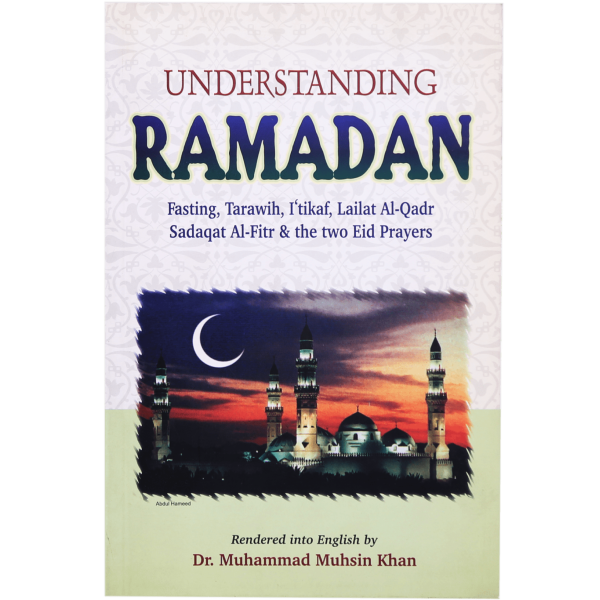
Understanding Ramadan
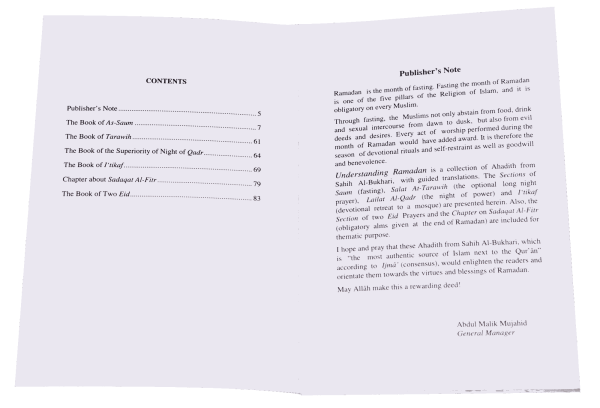
This book covers important aspects regarding Ramadan. The book is a collection of Ahadith from Sahih Al-Bukhari, with guided translations. The topics which are covered are Fasting, Salat at-Tarawih, Lailat Al-Qadr and Itikaf. Also, the section of two Eid Prayers and the chapter on Sadaqat Al-Fitr are included for the thematic purpose. This book is a must-read for all.
The Middle Path of Moderration in Islam (H/B)
In The Middle Path of Moderation in Islam, leading Islamic law expert Mohammad Hashim Kamali examines the concept of wasatiyyah, or moderation, arguing that scholars, religious communities, and policy circles alike must have access to this governing principle that drives the silent majority of Muslims, rather than focusing on the extremist fringe. Kamari explores wasatiyyah in both historical/conceptual terms and in contemporary/practical terms. Tracing the definition and scope of the concept from the foundational sources of Islam, the Qu’ran and Hadith, he demonstrates that wasatiyyah has a long and well-developed history in Islamic law and applies the concept to contemporary issues of global policy, such as justice, women’s rights, environmental and financial balance, and globalization.
Framing his work as an open dialogue against a now-decades long formulation of the arguably destructive Huntingtonian “clash of civilizations” thesis as well as the public rhetoric of fear of Muslim extremism since the attacks of September 11, 2001, Kamali connects historical conceptions of wasatiyyah to the themes of state and international law, governance, and cultural maladies in the Muslim world and beyond. Both a descriptive and prescriptive meditation on a key but often neglected principle of Islam, The Middle Path of Moderation in Islam provides insight into an idea that is in the strategic interest of the West both to show and practice for themselves and to recognize in Muslim countries.
40 Kisah Palsu Tetapi Masyhur
Kisah ini bukan sekadar penyedap bicara. Jikalau benarnya tiada, maka dongeng nilainya lantas hilang hikmahnya. Jikalau kebetulan betulpun dianggap salah, apatah lagi yang tidak benar terutama berkaitan manusia.
Buku ini wajib dibaca oleh pendakwah, motivator, penceramah, pendidik, ibubapa, mahupun sesiapa sahaja supaya dapat kita betulkan yang biasa dan biasakan yang betul.
(Ustaz Ahmad Husni bin Abdul Rahman)
The Problems of the Illegitimate Child (P/B)
This book addresses the views of the Sunni scholars regarding the importance of genealogical relationship (nasab) in Islamic family law and examines the role of legitimacy on the basis of the legal maxim “al-walad li al-firash”, evidence (al-bayyinah), and doubtful intercourse (wat’ shubhah). It also elucidates the views of the Sunni schools of law on how to establish illegitimacy. For the Sunni jurists, there are several situations that determine the illegitimacy of the child. A child is considered illegitimate if its birth is the outcome of adultery (zina) or the result of legitimate union but accompanied with imprecation (li‘an). Other circumstances include the birth of the child taking place in less than six lunar months, the father of the child being categorized as one who is incapable of begetting, or the birth as a result of marital relationship considered unlawful because of consanguinity. The book also deals comprehensively with the moral, religious, legal and other aspects of the illegitimate child and the foundling in the works of the Sunni jurists. The status and rights of the illegitimate child and the foundling in the Islamic family law of Malaysia and Brunei are also discussed by referring to some provisions from Federal Territory Act 1984 (Act 303) and Brunei law.


There are no reviews yet.