


| Weight | 0.17 kg |
|---|---|
| Product Type | Book |
| Author | |
| Publisher | IIPH |
| Pages | 94 |
| ISBN | 9789960850832 |
The Purpose of Creation (P/B)
RM15.00
Hurry up, Only 1 left.
Highlights:
somdn_product_page
Compare
Mankind must know about the purpose of their existence, their responsibility towards their Creator, and what they must do in preparation for the Day in which they shall return to Him – this work addresses these issues aptly in the authors usual readable style.
SKU: GB16
Categories: General Islamic Books, Recommendation
Additional information
Reviews (0)
Be the first to review “The Purpose of Creation (P/B)” Cancel reply
You must be logged in to post a review.
Related Products

Essential Lessons for Every Muslim
Highlights:
This work is a translation of Shaikh Abdul Aziz bin Baz’s book ‘Ad-Duroos Al-Muhimmah li-Ammatil-Ummah.’ It contains concise lessons that explain the fundamental teachings of Islam. This book covers a wide range of basic information such as the meaning of Tawhid (Islamic monotheism), the categories and implications of Shirk (polytheism), the regulations of prayer, and Islamic morals and manners. As the title implies, these are truly essential lessons for everyone who is concerned with the correctness of his Islamic beliefs and acts of worship.
RM15.00

In Pursuit of Allah’s Pleasure
Highlights:
In this book the authors outlined a complete methodology for Islamic work today. From `Aqeedah to Da’wah, Jihad to Khilafah and Taqwa to Sabr (patience), they explained how all of these parts of Islam come together for the sole objective of each and every Muslim: to seek the Pleasure of Allah ( SWT ), the Irresistible. It was written in a manner portraying the true situation of the Muslims today and, coming from imprisoned scholars: a realistic portrayal.
This book is an excellent read by itself and an even better guide if used as a syllabus in learning Islam in an organised, collective manner. It is ideal as a basis for study circles and acts as a comprehensive manual. Coupled with the supplementary reading of some other books in the English language and memorisation of the Holy Quran, it can consolidate the knowledge of anyone seeking to work for Islam in this day and age.
Contents
Preface
Introduction
Part One: Our Ultimate Goal
Part Two: Our `Aqeedah
Part Three: Our Understanding
Part Four: Our Aim
Part Five: Our Path
Part Six: Our Provisions
Part Seven: Our Walaa’ (Loyalty)
Part Eight: Our ‘Adaa’ (Animosity)
Part Nine: Our Gathering
Glossary of Arabic Trems
The Twentieth Century has witnessed one of the fiercest blows inflicted upon our Ummah by our enemy: the collapse of the Khilafah. If only their conspiracy had stopped at the demise of Khilafah. But they went on to indoctrinate Muslims with strange, foreign ideas and concepts, in order to confuse our understanding of our Deen. Once we wake up and try to return to our original Deen, we will be confronted with an intellectual perplexity, in which evil and good is mixed. Hence, the truth will be ambiguous and we will go astray, and lose the true understanding of Islam.
And hold fast, all of you together, to the Rope of Allah (this Qur’an) and be not divided among yourselves.” [Surah Ale-Imran (3), Ayah 103.]
by Dr. Naahah Ibrahim, Asim Abdul Maajid and Esaam-ud-Deen Darbaalah
RM53.00

When Wings Expand (P/B)
Highlights:
Writing on the pages of her journal, Nur, a teenage girl in Canada, charts the onset and advance of her mother’s cancer. Nur watches her mother’s body begin to shrink and her mood begin to darken. And when family and friends begin to encroach, Nur must face the prospect of her mother’s looming death.
RM40.00

Dreams of the Prophets and the Righteous
Highlights:
Originally written in Arabic by Abdul Mun’im al Hashmi. It is like an encyclopedia of dreams. It tells us how we should behave on seeing a dream and how they may be interpreted. There are dreams of the Prophets and the Righteous men, and the dreams of the Prophet and his Sahabah. Some dreams of non-Muslims also find place in this book. The author also informs as to what various things like animals, birds and certain chapters of the Qur’an would mean if seen in a dream.
RM35.00

Philanthropy and Social Justice in Islam (P/B)
Highlights:
This book analyses the principles and practices of philanthropy and distributive justice in Islam. It argues, with analyses and examples, that the accomplishment of purposive philanthropy, as commanded by the fundamental tenets of Islam, through the professionalization and rationalization of zakat management, modernization of awaqaf, etc. has the potential of optimizing justice in Muslim societies. The work draws on the Quran, Hadithe, other authentic literature, and also on official documents and publications of management agencies dealing with philanthropy in different Muslim countries/societies. The analyses are documented enough to be used as a text for the study of philanthropy in Islam in tertiary institutions nonetheless are simple enough to draw general readership and to be used by non-profit and international organizations worldwide in order to order to understand the principles and issues of philanthropy and distributive justice in Muslim societies.
RM40.00

Lawful Wives or Unlawful Girlfriends
Highlights:
In the Name of Allah, the Most Beneficent, the Most Merciful
Allah (SWT) says: (If you fear that you will not be able to deal justly with the orphans, marry women of your choice, two or three or four; but if you fear that you shall not be able to deal justly (with them), then only one or (the captives or the slaves) that your right hands possess. That will be more suitable to prevent you from doing injustice) (An-Nisa’: 3).
Praise be to Allah (SWT) who has prescribed for His Servants a religion (Islam) that is beneficial to them in this world and the Hereafter, and Peace and Blessing be upon His Messengers and Prophets who were guided by His Guidance and conveyed His Religion. The last and seal of His Messengers was Muhammad Ibn Abdillah (SAW). He (SAW) was the best to advise his Ummah and convey the True Message, by words, deeds and his character. He (SAW) was the best model and example for the believers.
RM42.00

Fundamentals of Islam (P/B)
Highlights:
Fundamentals of Islam is a revised English edition of the critically acclaimed Khutubah (original written in Urdu). It consist of Friday congregational addresses, in them he expounds familiar themes; like Iman, Islam, the Prayer, Fasting, Alms-giving, Pilgrimage and Jihad.
RM38.00


Islam A Total Beginners Guide – Part Three (P/B)
Highlights:
In present era we are facing lot of questions:
• What is status of women in Islam?
• Who is superior – man or women?
• What does Islam say about inter-religious marriages, man’s treatment towards his wife and privacy in homes?
• What does Islam say about dress, veil, clothing and ornaments, perfumes and the wisdom of banning gold and silk for men?
This beginner’s guide to Islam answers all such questions.
RM45.00

In Search of God (P/B)
Highlights:
Some thinkers has said, ‘A smattering of knowledge turns people away from God. Grater knowledge brings them back to Him’. The author concludes in this book by examining various theories that the choice humanity have is not between the universe with God and the universe with God and the universe without God. The real option is between the universe with God and no universe at all. Therefore humanity is compelled to opt for the proposition the universe with God. Hence it is logical to say I exist, therefore, God exists.
RM11.00

Ibn Taymeeyah’s Essay on the Jinn (P/B) ASN
Highlights:
Dr. Abu Ameenah Bilal Philips has rendered Ibn Taymiyah’s treatise, Eedaah-ud-Dalaalah fee ‘Umoom-ir-Risaalah, from volume 19 of Majmoo‘-ul-Fataawa into very readable English. This abridged and annotated translation is significant in that it is perhaps the first book available in English exclusively on the topic of spirit-possession and exorcism in Islam.
Ahmad ibn ‘Abdul-Haleem ibn Taymeeyah was bron in the town of Harran [near Edessa, in what was once Northern Iraq, but is now called Orfa and is a part of Turkey.], in the year 1263 CE. His father was a leading scholar of the Hanbalite school of Islamic law and so was his grandfather, who authored Muntaqaa al-Akhbaar, the text of ash-Shawkaanee’s Hadeeth classic Nayl al-Awtaar.
Ibn Taymeeyah mastered the various disciplines of Islamic study at an early age and read extensively the books of the various sects and religions in existence at that time. Much of his time and effort was spend defending the orthodox Islamic position against a tidal wave of deviation which had swept over the Muslim nation. Consequently, he faced many difficulties from both the prominent sectarian scholars of his time and from the authorities who supported them. His clashes with them led to his imprisonment on numerous occasions. Ibn Taymeeyah also fought, not only against internal enemies of Islaam, but also against its external enemies by both his Fatwaas (Islamic legal rulings) and his physical participation in battles. His ruling allowing the taking up arms against groups which recognized the Shahaadataan (declaration of faith) but refused to uphold some aspects of the fundamental principles of Islaam, greatly affected the resistance movement against the Tartars who had declared their acceptance of Islaam but did not rule according to divine law.
During these struggles he wrote countless books and treatises demonstrating his extensive reading and knowledge, not only of the positions of the early scholars, but also those of the legal and theological schools which had subsequently evolved. Ibn Taymeeyah also had a major effect on the open-minded schoars of his day, most of whom were from the Shaafi’ite school of law. Among the most famous of his students were IBN KATHEER, ADH-DHAHABEE and IBN AL-QAYYIM. The author died in 1328 while in prison in Damascus for his Fatwaa against undertaking journeys to visit the graves of saints [Ibn Taymeeyah’s ruling was based on the authentic statement reported by Abu Hurayrah wherein the Prophet Muhammad (sallallaahu alayhi wasallam) said, “Do not undertake a journey except to three masjids; this masjid of mine, Masjid al-Haraam (Makkah) and Masjid al-Aqsaa (Bayt al-Maqdis).” Collected by Al-Bukhaaree and Muslim]. His Fatwaa had been distorted by his enemies to say that he forbade visiting the Prophet Muhammad’s (sallallaahu alayhi wasallam) grave.
RM33.00

Wholeness and Holiness in Education An Islamic Perspective (P/B)
Highlights:
It was initially an adaptation of Shah ‘Abdul Qadir Muhaddith Dehlawi’s translation and commentary known as Mudih al-Qur’an which according to many great ‘ulama’ is devinely inspired and accepted by all Muslims.
RM62.00

Treatment of Magic, Evil Eye & Satan’s Touch (P/B)
Highlights:
A detailed treatise on the authentic treatments for afflictions of magic, evil eye and possession based on the Islamic teachings of the Qur’an and Sunnah of Muhammad.
RM65.00
Recently Viewed
RM21.00
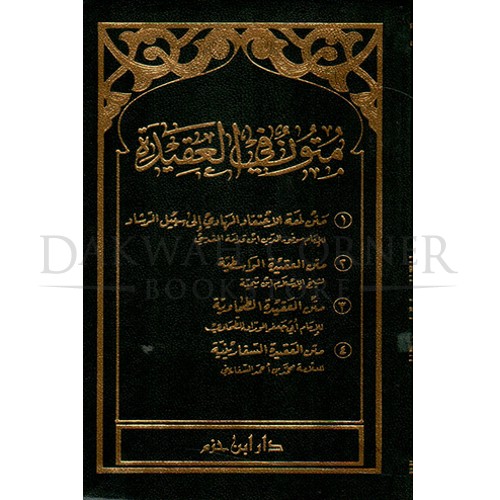
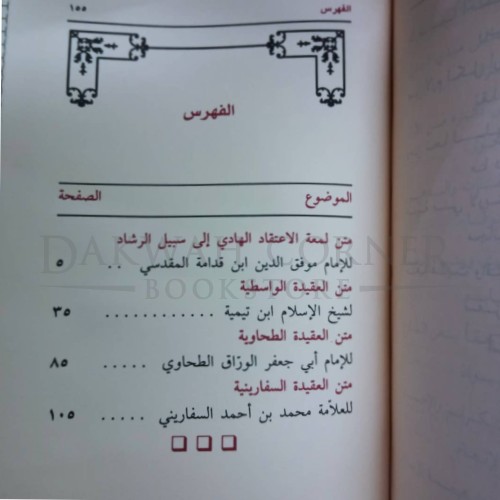
[AC] Mutunun Fi Aqeedah / متون في العقيدة
Highlights:
متون النحو (الآجرومية وملحة الإعراب ) لونان ـ شاموا ( 10×15 فلكسي )
RM20.00


Let Us Remember Allah And Praise Him
Highlights:
Remembrance, praise and supplication – dhikr and du‘â’ – are the core of worship of the Divine. The Noble Qur’an and the last Prophet (blessings and peace of Allah be upon him) have stressed this point and taught us how to attain Allah’s pleasure through calling on Him and remembering Him in words of praise and thankfulness. This small book is a valuable collection of daily supplications from the Qur’an and the authentic hadiths. It contains the Arabic text, full transliteration and clear translation of the meaning of dozens of phrases of remembrance (dhikr) and supplication (du‘â’). This new and revised edition of Let Us Remember Allah and Praise Him is designed to be easy to use: its full-sized page format ensures that the print is large enough to read effortlessly, and yet its ultra-slim volume makes it no trouble to slip into a handbag or backpack. It is truly a practical handbook for every Muslim desiring to seek peace in this earthly life and salvation in the hereafter.
RM12.00
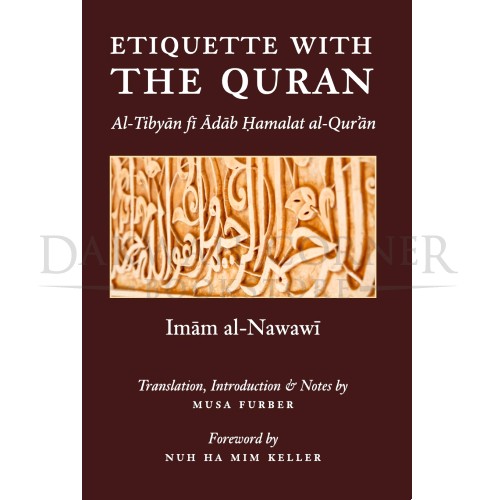

Etiquette With The Quran (Islamosaic)
Highlights:
An enduring classic work on the etiquette that a Muslim must or should have with regard to handling and reciting the Quran (the Muslim scripture). The topics this volume raises include: ritual cleanliness, opportune times for recitation, the etiquette that students have with their teachers (and that teachers must have with their students), and variety of other issues that every Muslim should know and frequently ask about.
He present works was designed and written to explain to men and women how best to benefit from the Book of Allah. The blessing of the Quran is that whoever recites it as it should be recited is changed by it, and brought by imperceptible degrees to see why everything is the way it is. The seed of this knowledge is a humble intention to draw nearer to the Divine, the soil in which it takes root are reverence, awe, and love, ant its fruit is this world and the next. It is well known to everyone conversant wuth the Islamic disciplines that the learning of many thins does not teach wisdom, and that traditional books do not reveal their secrets or bestow their benefits to those without the key to them.
This key is adab, the “the right way of doing things,” rendered in the title as “etiquette.”… Books, especially sacred ones, give their knowledge to those of adab, and Westerns who know something about the sciences of Islam have been waiting for a book like this in English for a long time.
-From the Foreword by
Nuh Ha Mim Keller
RM57.00


Divine Speech
5 ★
5 ★
3 Ratings
5 ★
3
4 ★
0
3 ★
0
2 ★
0
1 ★
0
Highlights:
The Quran, the sacred scripture of Islam, is revered as the spoken word of God by approximately one-fifth of the world’s population. Since its inception, the power of the Quran has derived not only from its message, but also from the inimitable literary style and rhetorical impact that the Arabic scripture has on its audiences. Divine Speech: Exploring the Quran as Literature attempts to make some of the most recent Arabic and European-language scholarship on its literary features accessible to a wider, English-speaking audience. These features include its language and word choice, its use of figures of speech and other rhetorical devices, its manner of narrating parables and stories, and the structure, coherence, and the order of its “chapters”-aspects that typically remain mysterious to readers of English translations of the text. Divine Speech furnishes its readers with a better appreciation of the Quran from a literary perspective, and in the process stimulates interest in, and provides tools and resources for, further study of the scripture.
RM100.00
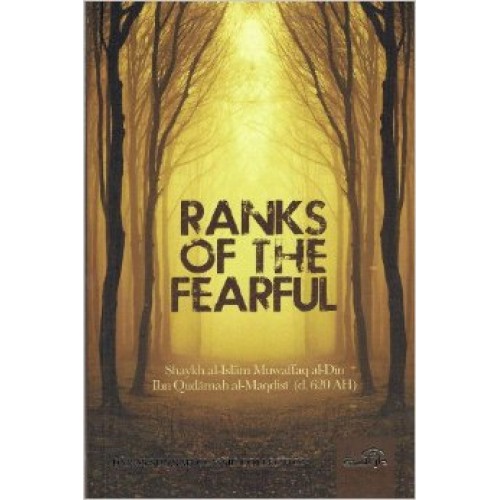
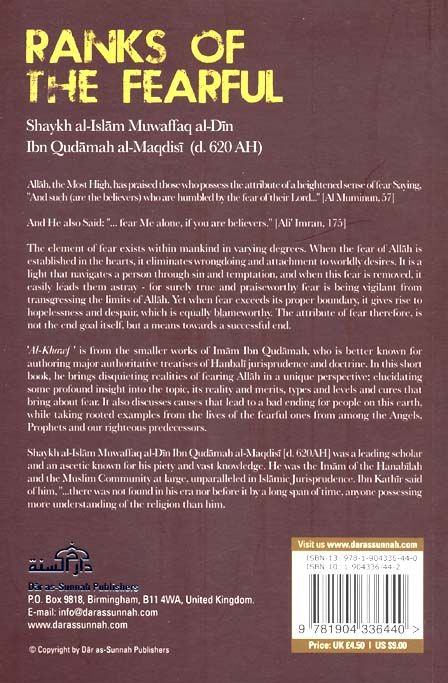
Ranks of the Fearful (P/B)
Highlights:
Ranks of The Fearful by Shaykh Al Islam Muwaffaq Al Din Ibn Qudamah Al Maqdisi (Died 620 Hijri) Allah, the Most High, has praised those who possess the attribute of a heightened sense of fear Saying, “And such (are the believers) who are humbled by the fear of their Lord…” (Al Muminun, 57) And He also Said: “… fear Me alone, if you are believers.” (Ali’ Imran, 175) The element of fear exists within mankind in varying degrees. When the fear of Allah is established in the hearts, it eliminates wrongdoing and attachment to worldly desires. It is alight that navigates a person through sin and temptation, and when this fear is removed, it easily leads them astray – for surely true and praiseworthy fear is being vigilant from transgressing the limits of Allah. Yet when fear exceeds its proper boundary, it gives rise to hopelessness and despair, which is equally blameworthy. The attribute of fear therefore, is not the end goal itself, but a means towards a successful end. ‘Al-Khawf ‘ is from the smaller works of Imam Ibn Qudamah, who is better known for authoring major authoritative treatises of Hanbali jurisprudence and doctrine. In this short book, he brings disquieting realities of fearing Allah in a unique perspective; elucidating some profound insight into the topic, its reality and merits, types and levels and cures that bring about fear. It also discusses causes that lead to a bad ending for people on this earth, while taking rooted examples from the lives of the fearful ones from among the Angels,Prophets and our righteous predecessors.
RM44.00

A Beginner’s Guide to Understanding Islamic Pedagogy
Highlights:
“Education all over the world has massive potential to create raw social change in society, but first we must realize it is not just what we teach, but how it is taught”. Dr. Mohammed Sabrin
RM14.00 RM20.00
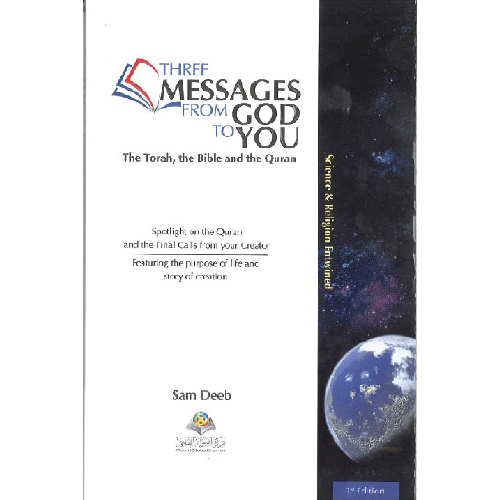
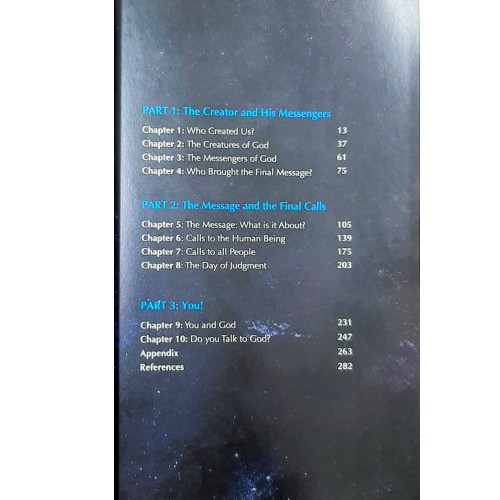
Three Messages from God to You
Highlights:
● Who created the universe? Who created us and the beings on the earth? Who gave life to billions of creatures on our plant? Is He our God? What is His name? Are there other creators than Him?
● Why do we live on the earth? What is the purpose of life? Did our creator really send us messages? What does He want to inform us? Are these messages true?
● Are the Torah, the Bible and the Quran true divine books? Are they related? Do they contain true Messages from God to us? Is there a final testament?
● Why all creatures die? Is there another life after death? Do we return to our Creator? Why?
RM25.00
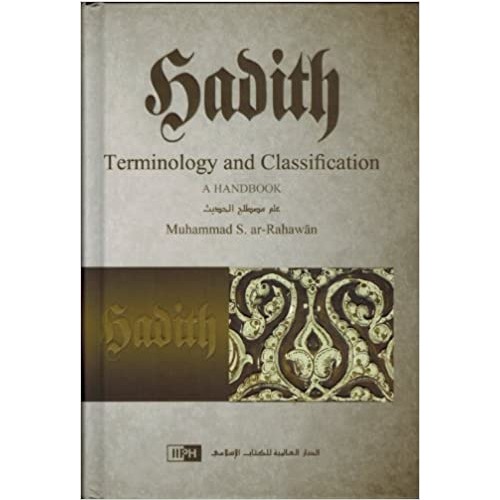
Hadith Terminology and Classification (H/B)
Highlights:
Islam is a complete way of life that enlightens through the Qur’an and the Sunnah, the true path of guidance and success in this world and the hereafter. However, one must accurately comprehend what has been ordained through the Sunnah and identify the authentic hadiths of the Prophet (blessings and peace be upon him). To do that, it is imperative to understand the rules that govern the classification and definitions of hadith methodology and criticism.
RM65.00
The Purpose of Creation (P/B)
Highlights:
Mankind must know about the purpose of their existence, their responsibility towards their Creator, and what they must do in preparation for the Day in which they shall return to Him – this work addresses these issues aptly in the authors usual readable style.
RM15.00
( FREE-eBook) Reliance on Allah
Highlights:
Dialogue is the girdle of the intelligent and the habit of the wise. Dialogue has the greatest influence on humans during interactions and is the loftiest method of enlightenment and preaching. Dialogue is like engraving; it engraves on the souls and leaves lasting impressions on the character of the audience.
After the advent of prophethood, our beloved Prophet Muhammad (Sallalahu Alayhe Wassalam)stayed in Makkah for thirteen years without engaging in physical combat with the non-believers, he did not raise a spear nor unsheathe a sword. He was persistently dialoguing with the people of Makkah for thirteen years !
Dialogue was a well established signpost, clearly seen at every stage of the life of the Prophet (Sallalahu Alayhe Wassalam) and at the different points of his call. The most beloved speech to the people and endearing to their hearts, the most easily accepted by them is that which comes in the form of a conversation in which the listener, the addressee, contributes in speech with his tongue and reasoning while employing his intellect.
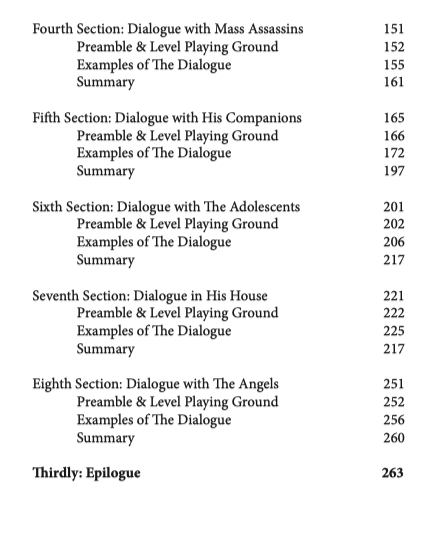
Secrets Of Dialogue and Persuasion : The Loftiest Dialogues and Most Powerful Methods Of Persuasion From The Life Of The Best Men صلى الله عليه وسلم is a study of the dialogues of our beloved Prophet Muhammad (Sallalahu Alayhe Wassalam) while inviting to the path of Allah SWT.
- How did he communicate his message to the World’s superpowers at the time, considering the and community in which he lived ?
- What responses did he receive and what lines of action did he follow?
- How did he persuade the youths and adolescents to accept his message ?
- How did he converse with his household, including the women and children ?
- What were the major elements of his dialogues that yielded the best results ?
RM0.00

My Dad’s Beard
4 ★
4 ★
1 Rating
5 ★
0
4 ★
1
3 ★
0
2 ★
0
1 ★
0
Highlights:
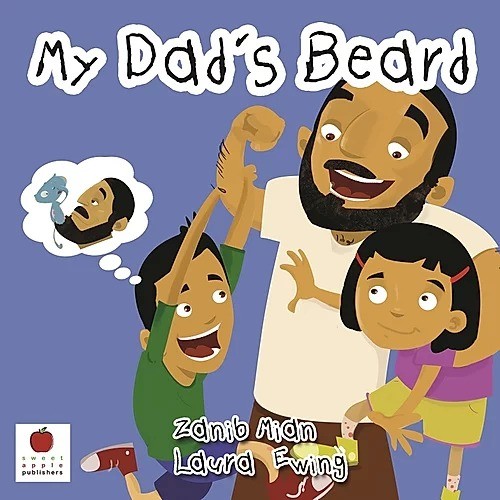
This book is huge in size and huge in sentiment! It honours the male figures in the family and glorifies the Sunnah of keeping a beard. An adorable little boy personifies his love for his father through his beard, sharing how it looks at different times, makes him even more handsome, and why the whole family love it! Full of fun and fantastic for sharing!
RM86.00
There are no reviews yet.