


![[QT] Suar Al Quran Al Karim / سور القرآن الكريم](https://shop.dakwahbookstore.com/wp-content/uploads/2024/12/website-500x500-2024-12-13T124032.898.jpg)
![[AHS] Hakaza Zahara Jil Salah ad Din wa Hakaza Adat al Quds / هكذا ظهر جيل صلاح الدين .. وهكذا عادت القدس](https://shop.dakwahbookstore.com/wp-content/uploads/2024/12/TARIQ-16.jpg)
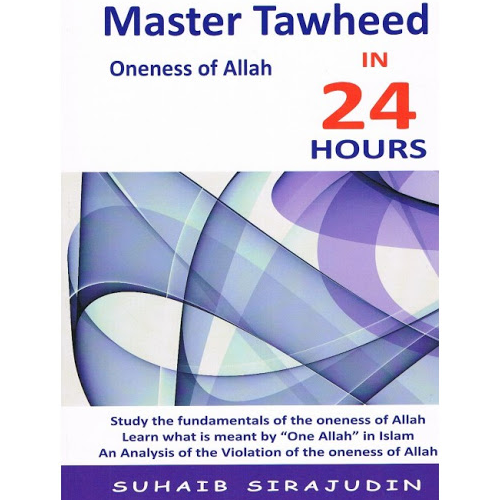
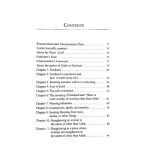
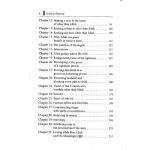
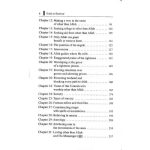
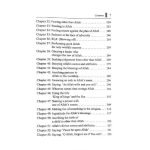
All praise be to Allah (swt ) `The Exalted, the Rabb of the worlds, and our Prophet, Muhammad (saas ) `Blessings and Peace be upon him’, and upon all his family and companions. When I embraced Islam in 1983, by the grace of Allah (swt ), one of the first books which I was given to read was a translation of Kitaab At-Tawheed by the renowned scholar, Muhammad Ibn `Abdil Wahhaab: I understood very little of it and was driven to the conclusion that this was because I was new to Islam and therefore lacked knowledge. It was only later, when I was fortunate enough to study the book, Taiseer Al-‘Azeez Al-Hameed in Arabic, that I realized that not even Arabic speakers try to understand Kitaab At-Tawheed without the benefit of an explanation. It has therefore been in my mind for some time to try to provide English-speakers with an explanation of this great work, but unfortunately, other projects diverted me until now.
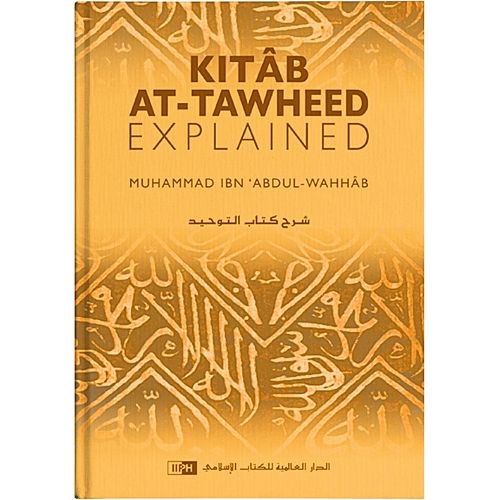
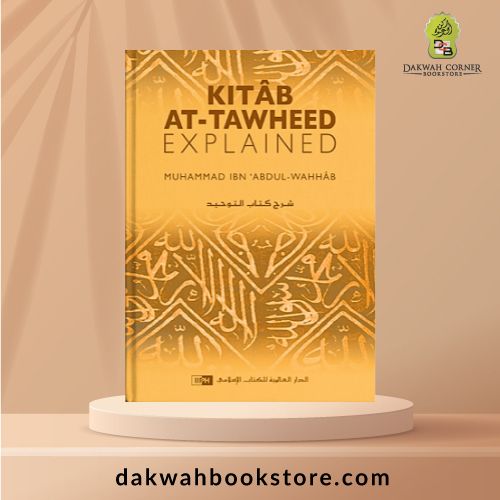
Kitab At-Tawheed Explained
$19.32

Frequently Bought Together
Iman Kepada Allah ; Serial Aqidah Islam - 1
| Weight | 0.58 kg |
|---|---|
| Dimensions | 16 × 22 × 3 cm |
| Product Type | Book |
| Author | |
| Publisher | IIPH |
| ISBN | 9786035010788 |
Be the first to review “Kitab At-Tawheed Explained” Cancel reply
You must be logged in to post a review.
You may also like…
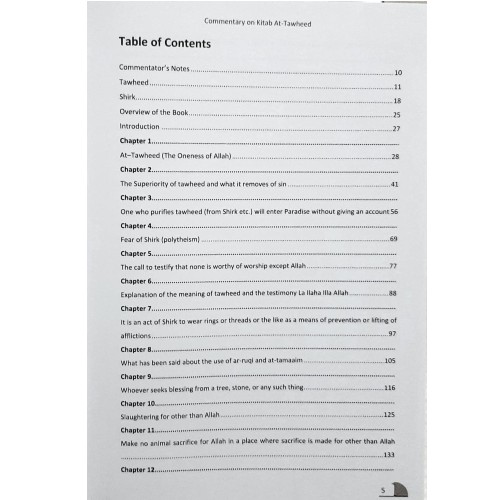
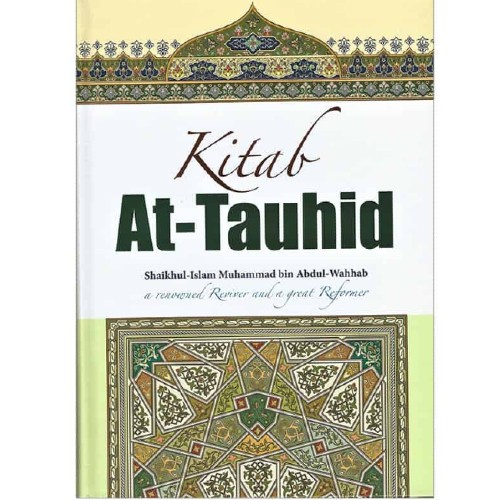
A Commentary On Kitab At-Tawheed
This is a commentary on the book of Shaikh Muhammed ibn Abdul Wahhab’s Kitab At-Tawheed (The Book of Tawheed). Kitab At-Tawheed is an excellent and comprehensive book. It illuminates to the reader the light of tawheed the Oneness of Allah tawheed, the very foundation of this deen, the single most important concept and the purpose behind our creation.
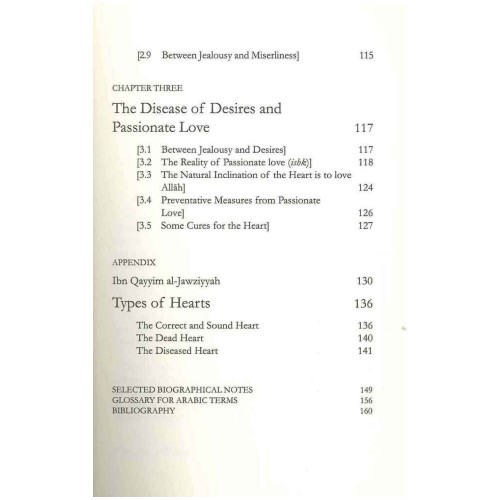
Diseases Of The Hearts & Their Cures (Dar as Sunnah)
Translated by Abu Rumaysah “Know O beloved reader that it is most important to spend one’s time and energy in treating the heart, and hastening to correct and purify it from sickness and all sins. This is due to the heart occupying a great and lofty position in Islaam, for it is the place to which the Lord looks and the storehouse for tawheed, faith, and sincerity. Actions are distinguished, one from the other, with respect to their excellence in the Sight of Allah in accordance with the condition of the heart, not by their number or form, but rather due to the strength of the caller, his or her truthfulness, his or her sincerity and the extent to which he or she prefers Allah over himself or herself … Al-Haafidh ibn Hajr al-Asqalaanee, may Allah have mercy upon him and provide us with his knowledge, said: “The heart has been singled out for this because it is the leader of the body, and through the purification of the leader the subjects become purified, and with his corruption they become corrupted. So if you, O servant of Allah, with to cure your heart then it is upon you to be truthful with regards to seeking refuge with Allah and putting your trust in Him, to pray a great deal of superogatory prayers, to perform the actions of obedience to Allah frequently, to pray the night prayer while the people are sleeping, and to treat your heart by making it continuously stick to the remembrances and by befriending only the righteous … and to frequently recite the Qur’an. And Allah will indeed allow all of this to be preserved by him.”
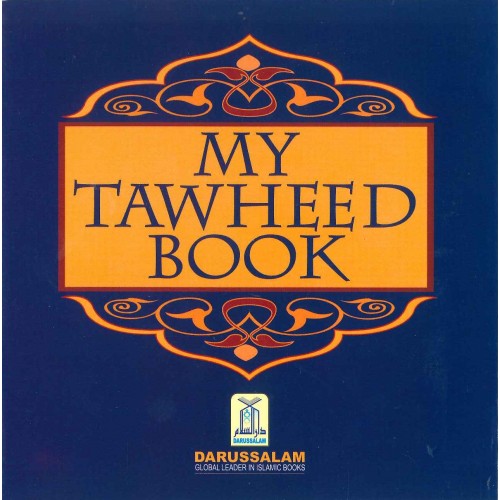
My Tawheed Book
A colourful and easy to understand book which teaches children the basic understanding of Tawheed.
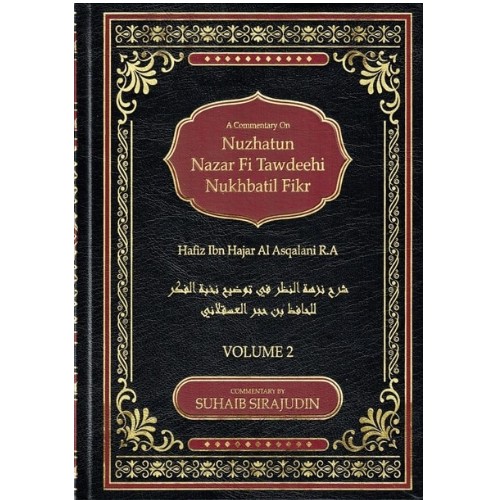
A Commentary On Nuzhatun Nazar Fi Tawheedi Nukhbatil Fikr ( 2 Vols)
About Hafiz Ibn Hajar Asqalani Imam Ahmad ibn Ali al-Asqalani (d. 852/1448); famously known as Ibn Hajar after one of his ancestors is arguably the best hadith scholar of the Mamluk period. The Dhahabi of his time and the amir al-muminin of the hadith scholars. Imam Suyuti says that he drank from the well of zamzam and prayed to Allah to give him more knowledge than Shams ad-Din adh-Dhahabi. He is the author of over 300 books some going into lengthy volumes. He died on Friday 28 Dhi al-Hijja 852 hijri and was buried in al-Qarrafa; Cairo; now famously known as the City of the Dead (madinat al-mawta)
Related Products

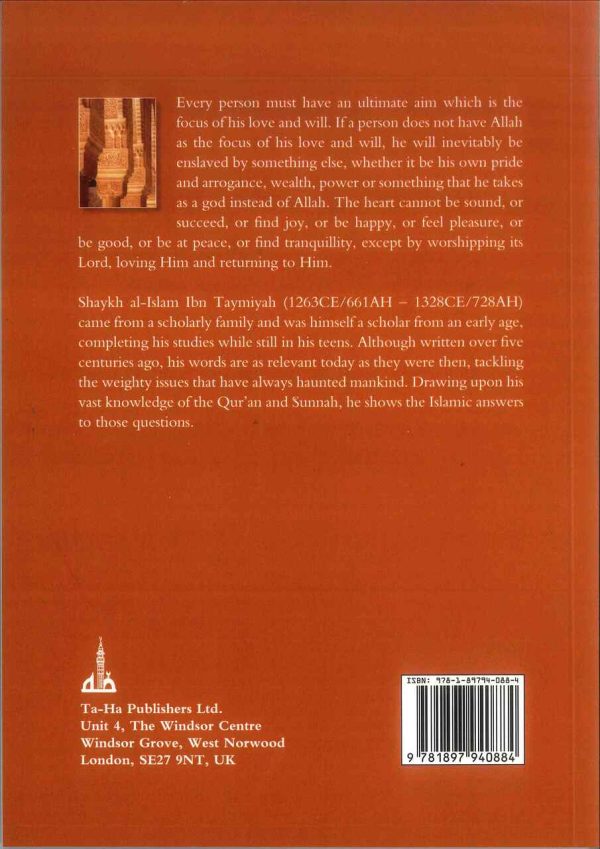
Al-‘Ubudiyyah: Being a True Slave of Allah
Shaykh Ibn Taymiyyah defines the concept of worship in Islam and explains that to be a true “slave of Allah” is a status of both virtue and nobility. The title “slave of Allaah” is one of great honor which Allah bestowed upon the best of creation, Muhammad (SAW). Ibn Taymiyyah highlights the prevalent traps which people fall into, when becoming enslaved by, or allowing their hearts to become attached to worldly objects. The emphasis is on servitude to Allah which is adorned with the true love we hold for Him in our hearts — a matter of central importance for every Muslim.
Highly Recommended for the young blooded who Want to Run before they can Walk and even the Old timers ‘Who sometimes are so comfortable Walking that they have forgotten that there is sometimes a need to run’ in the Path Towards Allah.
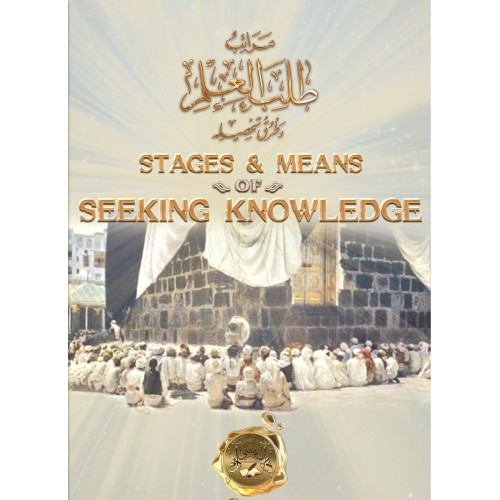
Stages & Means of Seeking Knowledge (P/B)
a small excerpt from the book:
“And those who disbelieve say: “Why is not the Quran revealed to him all at once?” Thus (it is sent down in parts), that We may strengthen your heart thereby. And We have revealed it to you gradually, in stages.”[1]”[2]
Al-Zarnooji -rahimahullah- said, “Imam Sharf ul-Din al-Uqayli – rahimahullah- used to say, “My opinion regarding learning knowledge is in agreement with what our teachers taught us. They used to teach beginners level one books because they are understandable, easy to memorize, enjoyable, and common. A beginner should not write down something he does not understand because it numbs the intelligence and is a waste of time. Instead, a beginner should focus on the task of understanding his teacher through deep thinking and repetition. Significantly, the smaller the portion in one class with repetition the more progress in understanding. A famous saying states: Memorizing two letters is better than hearing two loads, and understanding two letters is better than memorizing two loads.”[3]
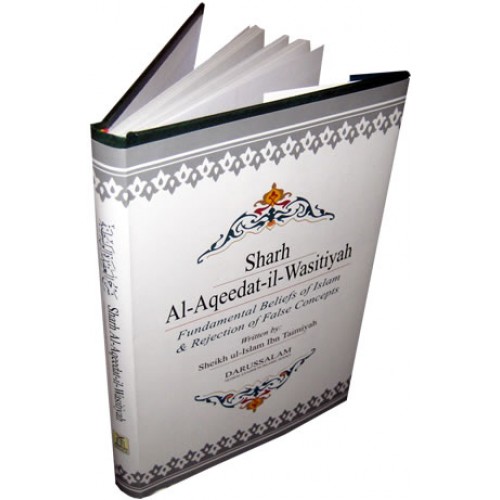
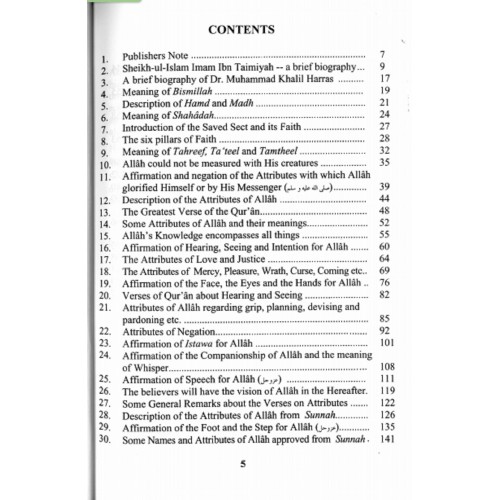
Sharh Al-Aqeedat-il-Wasitiyah (H/B)
Sheikh-ul-Islam’s book Al-Aqeedah-il-Wasitiyah deals with the perfect and undefiled Islamic Faith and Creed of the As-Salaf-As-Salih (the pious predecessors) particularly in regards to Allah’s names and attributes, with solid arguments in brief words and terminology. The book is highly appreciated by the scholars for its brevity as well as comprehensiveness; and for its contents produced perfectly in line with the Qur’an and Sunnah in an appealing and manifest manner.
The eminent scholar of Islam, Sheikh-ul-Islam Imam Ibn Taimiyah, discusses the real & original faith of Islam according to the Qur’an & Sunnah. The real faith in Allah and his religion Islam is to follow the Qur’an and Sunnah strictly. Any scholar who adds or attributes or alters any basic fundamental of Islam is wrong & deviates from the teachings of Islam. Every Muslim must read this book to get the real light of Faith.

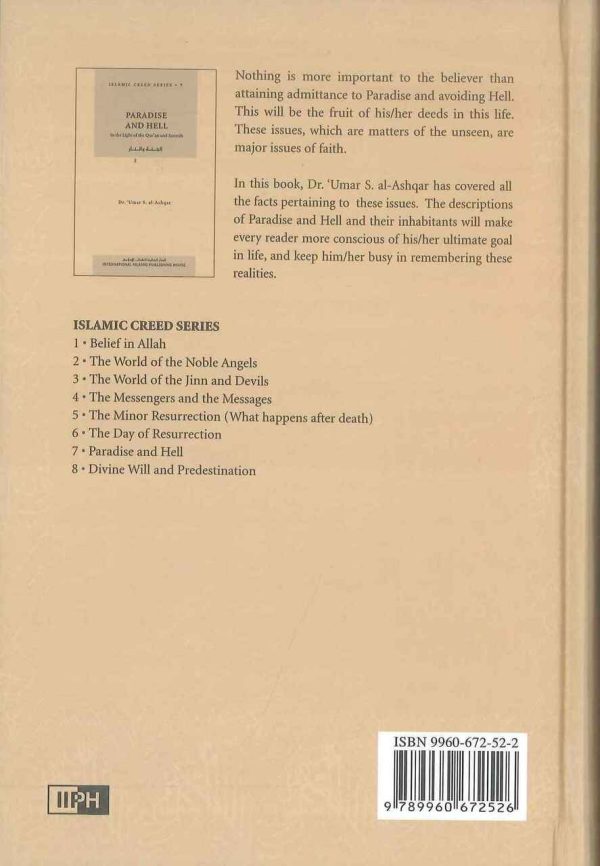
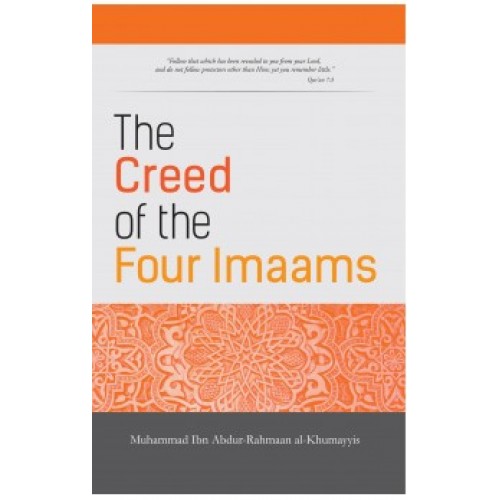
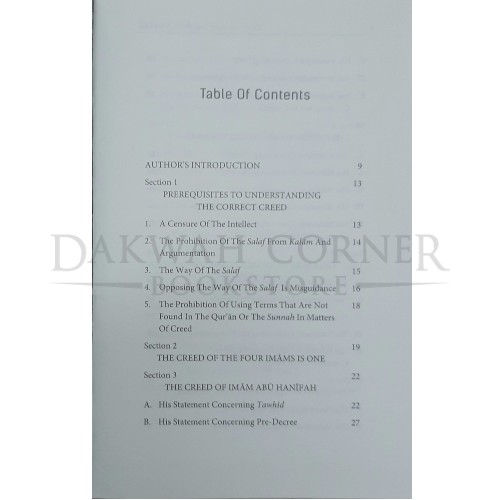
The Creed Of The Four Imaams (H/B)
The book proves the important, yet overlooked point: that despite whatever differences the Imaams had in their fiqh, their creed (aqidah) was one and the same in almost all issues. Many narrations are brought from the past and present day scholars showing that the path to Allaah is one. Detailed biographies have been provided for each of the four Imaams from ancient authentic sources. Additionally many doubts cast over the creed and lives of the Imaams have been uncovered, and the Creed of the Ahlus-Sunnah wal-Jama’ah has been exonerated.
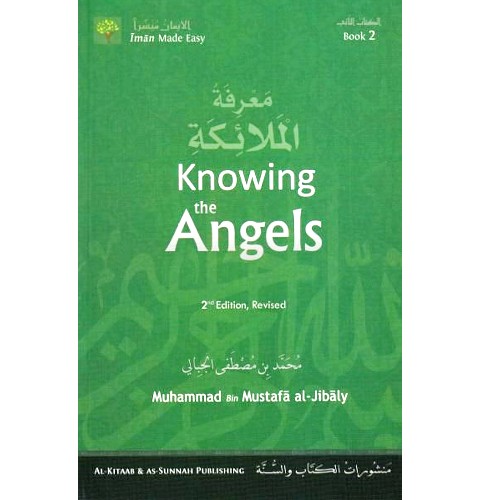
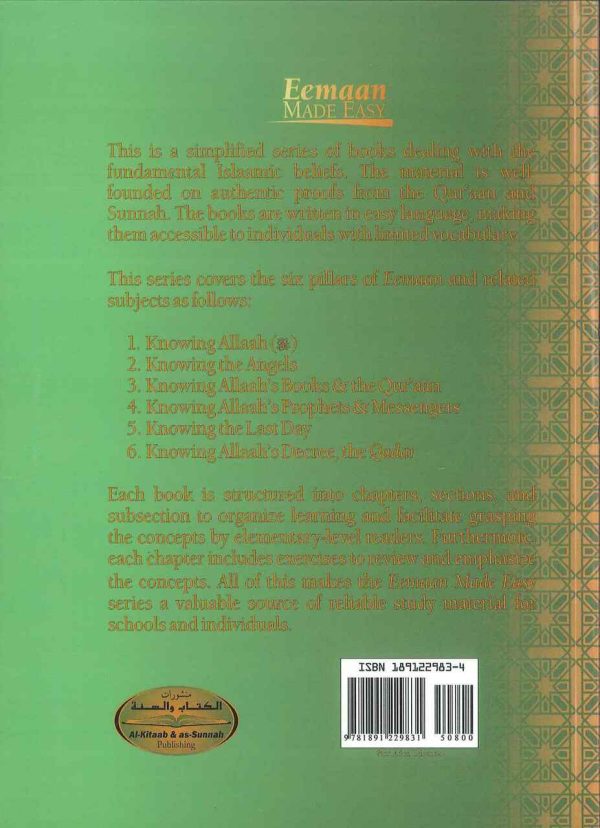
Knowing The Angles: Revised 2nd Edition (P/B) (Eeman Made Easy Series)
This is book regarding the Angels – Al-Malaika and is part of a simplified series of books dealing with the fundamental Islaamic beliefs – Iman. The material is well-founded on authentic proofs from the Qur’aan and Sunnah. The books are written in easy language, making them accessible to individuals with limited vocabulary.
This series covers the six pillars Imaan and related subjects in 6 books as follows:
- Knowing Allah
- Knowing the Angels
- Knowing Allah’s Books & the Qur’an
- Knowing Allah’s Prophets & Messengers
- Knowing the Last Day
- Believing in Allah’s Decree, Qadar
Each book is structured into chapters, sections, and subsection to organize learning and facilitate grasping the concepts by elementary-level readers. Furthermore each chapter includes exercises review and emphasizes the concepts. All this makes the Emaan Made Easy series a valuable source of reliable study material for schools and individuals.
Spiritual Disease and It’s Cure
The Imam was asked a long question of which a part was – What is the opinion of the scholars regarding a man who is afflicted by a disease, and knows that if it should continue it would damage his life? The Imam Quoted the Hadith from Sahih Bukhari The prophet (S) said: ‘Allah has appointed a remedy for every disease He has sent down’ Imam Ahmad reported on the authority of Usamah bin Shareek that the ‘ Prophet (S) said Allah has not made a disease without providing a remedy for it, wih the exception of one disease, namely old age’ This Applies to the medicine for the heart, soul and body. The well being of the servant’s heart, is far more important than that of his body, for while the well being of his body enables him to lead a life that is free from illnesses in this world, that of the heart ensures him both a fortunate life in this world and eternal bliss in the next.
Imam Ibn al-Qayyim al-Jawziyya was born into a scholarly and virtuous family in 691 AH/ 1292 A.D. At that time Damascus was a centre of literature and thought. Many schools were located there and he studied and graduated under the protection, direction and sponsorship of his father. He was particularly influenced by his Shaykh and teacher Imam Ibn Taymiyyah, and also by Ibn ash-Shirazi amongst others. Ibn al-Qayyim al-Jawziyya died in the city of Damascus the year 751 AH/1350 C.E.,when he was scarcely 60 years old, and was buried at the cemetery of Bab- al-Saghir, near the grave of his father – Rahimahuma Allah.
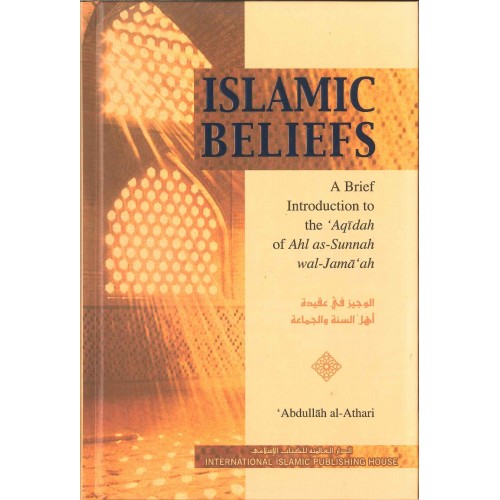
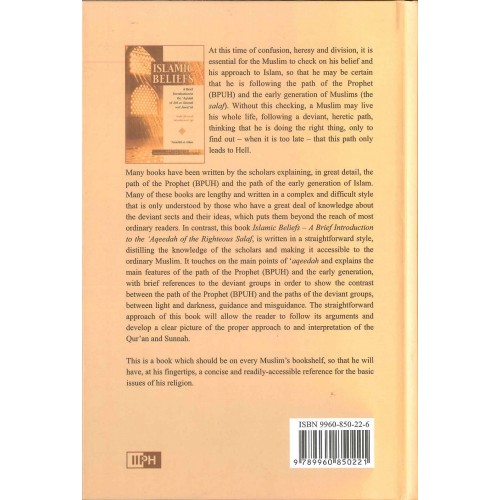
Islamic Beliefs
In this era of confusion, innovation, and division, it is essential for Muslims to monitor their beliefs and their approach to Islam, so that they may be certain that they are following the path of the Prophet (blessings and peace of Allah be upon him) and the early generation of pious Muslims (the salaf). Without careful attention, a Muslim may live his or her whole life following a deviant path filled with innovation, thinking that he or she is doing the right thing, only to find out – when it is too late – that this path only leads to hell. Islamic Beliefs: A Brief Introduction to the ‘Aqeedah of Ahl as-Sunnah wal-Jamâ‘ah is written in a straightforward style, distilling the knowledge of the scholars and making it accessible to the ordinary Muslim. It touches on the main points of ‘aqeedah (fundamental Islamic beliefs or creed) and explains the main features of the path of the Prophet (peace be upon him) and the early generation, with brief references to deviant groups in order to show the contrast between the path of the Prophet (peace be upon him) and the paths of the deviant groups, between light and darkness, guidance and misguidance. The straightforward approach of this book will allow the reader to follow its arguments and develop a clear picture of the proper approach to and interpretation of the Qur’an and the Sunnah. This is a book which should be on every Muslim’s bookshelf, so that they will have at their fingertips a concise and readily-accessible reference for the basic issues of their religion.
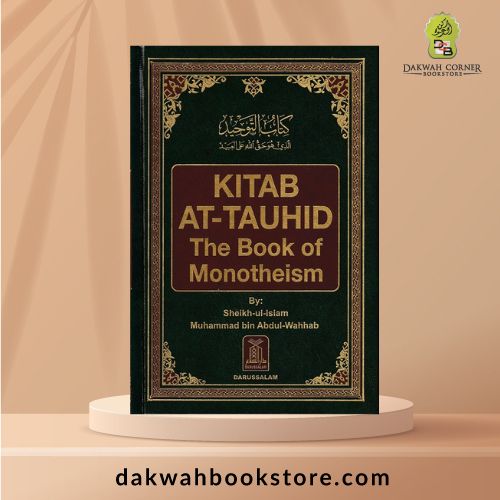
Kitab At-Tauhid The Book Of Monotheism
In this book, all the relevant Verses have been discussed reasonably, rationally and sincerely; and the essence of the Qur’an and Sunnah is placed in a very simple and appealing manner. This is the reason that the upright persons, beyond group ism and prejudices, have been adopting the correct Islamic path – the path of the Qur’an and Sunnah – under the influence of the basic facts and proofs produced herein. Kitab At- Tauhid is one of the best books on the subject of Tauhid (Monotheism) and ranks high in authenticity. Till date it has been published many times. It has been a means of guidance for millions of people throughout the world, by taking them out of the darkness of polytheism, heresy and error. If Allah wills, this book would also undoubtedly prove beneficial in all the times to come.
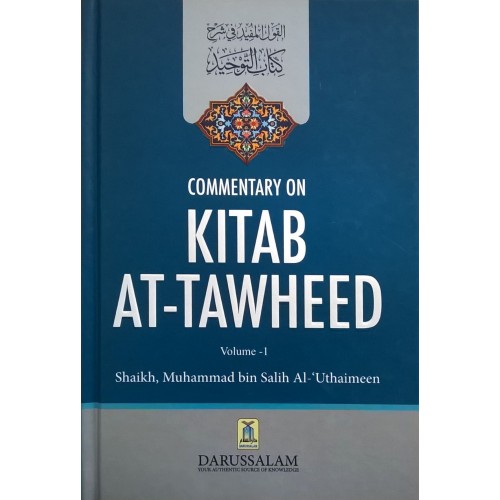
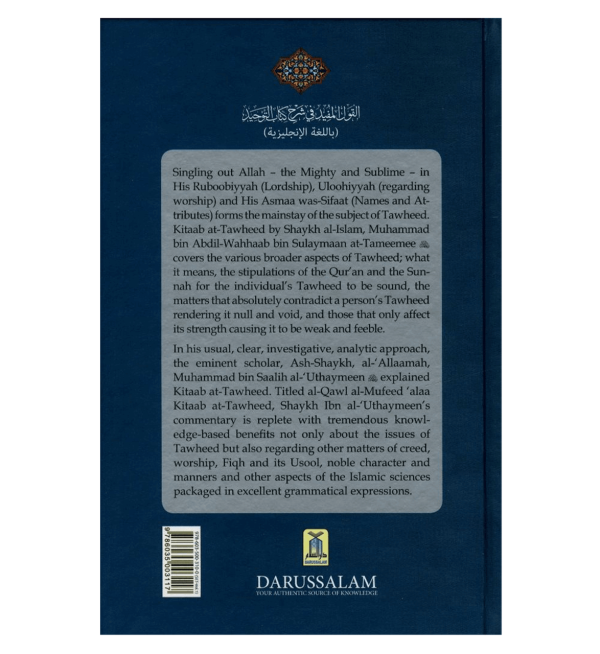
Commentary on Kitab At-Tawheed – 2 Volumes (H/B)
The title of the Arabic explanation by the shaykh is Al Qawl Al Mufeed Alaa Kitaab at-Tawheed.
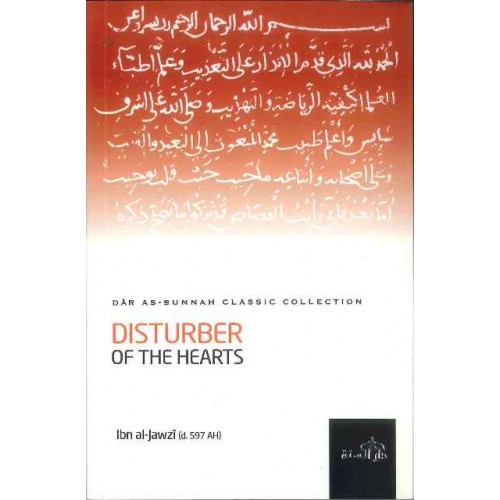
Disturber Of The Hearts
The third masterpiece in the series addresses the disturbing phenomena of unrealistic hope, lack of fear of Allah, and wishful thinking.
Recently Viewed
My Arabic Alphabet Book
The Language of the Qur’an (Board Book) Ages 3 to 5

History of Islam: Umar ibn al-Khattab (P/B)
This is the second volume from this series, which deals with the life of Umar ibn al-Khattab , the second of the Four Rightly-Guided Caliphs. The evaluation of Amir al-Mu’minin Umar al-Farooq, may Allah be pleased with him, and his far-sighted policies is captured in a statement attributed to the Prophet (S), There were in the nations before you inspired people, and if there is any one of them in my nation, it is Omar. Darussalam presents the entire History of Islam to our youth in language that appeals to them, in a simple yet lucid manner. The first four volumes in this series explore Islamic history during the period of the first Four Rightly-Guided Caliphs. Later volumes would be devoted to the History of Islam, down through the ages to modern times, inshaAllah.
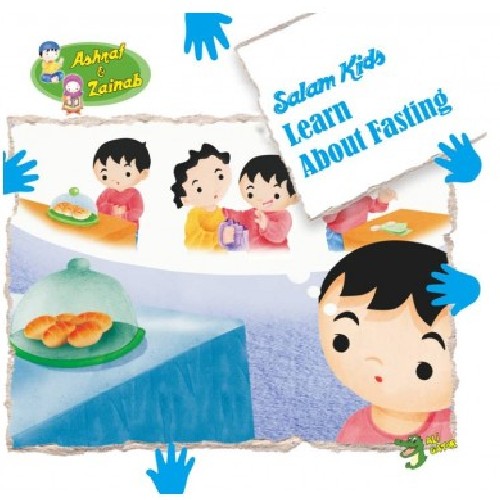
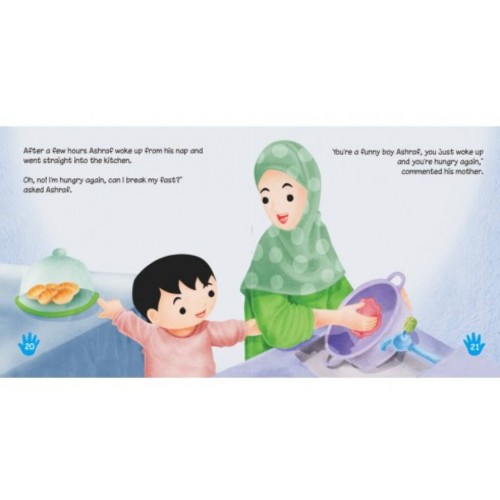
Salam Kids :Learn About Fasting
Ashraf is excited to be fasting for the first time. He hopes he can make it through the whole day, but he seems to be always hungry.
There’s a lot to learn about fasting and Ashraf is doing his best to please Allah.
The Salam Kids Series are books designed to encourage young children to try their best and start to implement Islamic practices into their lives.
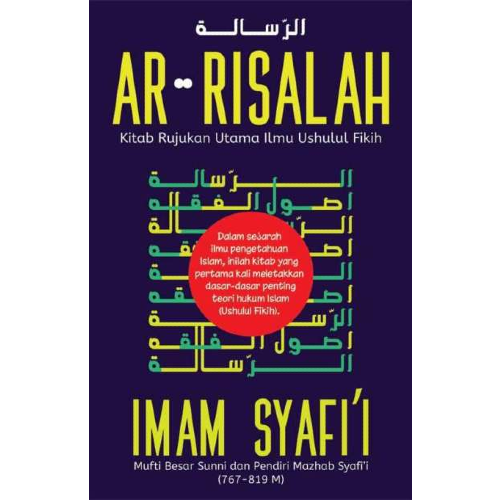

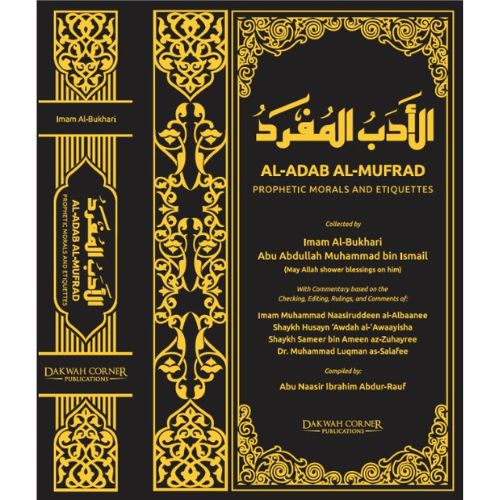
Al-Adab Al-Mufrad (DCB)
Al-Adab Al-Mufrad
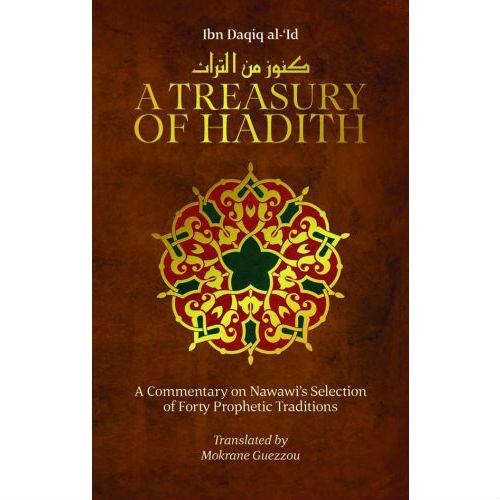
A Treasury of Hadith
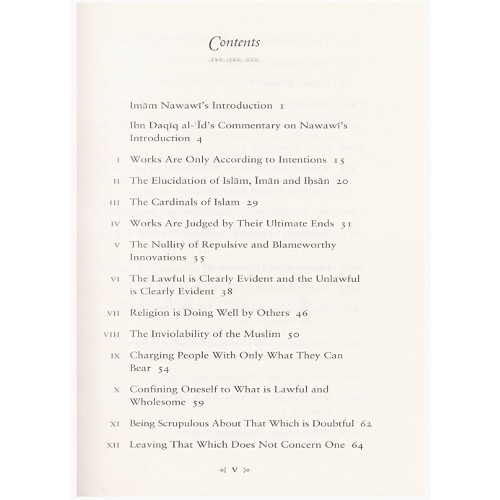
This classical short commentary on Imam Nawawi’s famous collection of forty-two traditions of the Prophet Muhammad, may Allah bless him and give him peace, is an authoritative introduction to key Islamic principles and teachings, Accounted as hadith master, in this collection Imam Nawawi collected together those traditions that he considered were axial to the entire Islamic faith. As the first title in Kube’s new Treasury Series in Islamic Thought and Civilization, this accessible translation is presented in a beautiful gift format.
Ibn Daqiq al-‘Id (d.1302) was a Shafi’i mujtahid imam, who was educated in Damascus, Alexandria, and Egypt. Accounted as one of the greatest scholars in Islam in the fundamentals of law and belief, he wrote extensively in the areas of law, principles of jurisprudence, hadith, and tenets of faith. Imam Nawawi (d.1277) was accounted as an Imam of the later Shafi’i school and was known for his piety and knowledge.


A Brief Illustrated Guide to Understanding Islam (P/B)
Discusses some evidence for the truth of Islam, the scientific miracles in the Holy Qur’an, and the great challenge to produce a single chapter like the chapters of the Holy Qur’an.
The History of Islam 3 Vol (H/B)
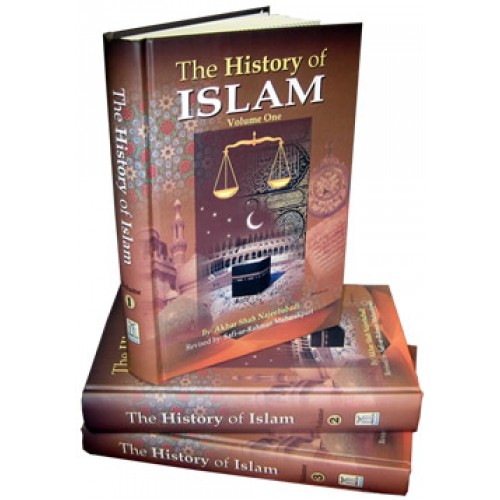
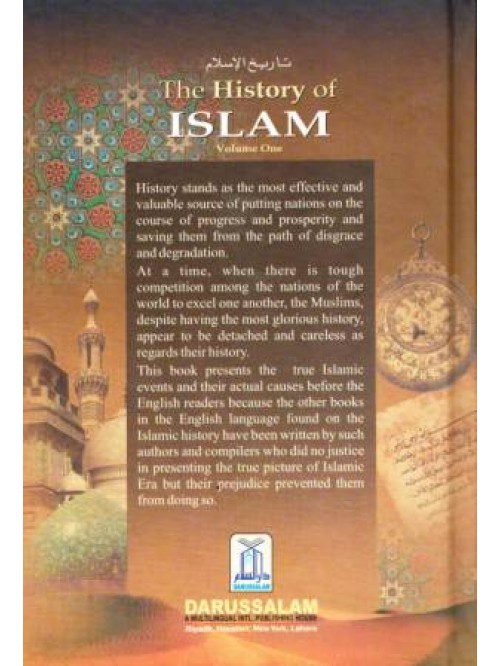
History stands as the most effective and valuable source of putting nation on the course of progress and prosperity and saving them from the path of disgrace and degradation.
At a time, when there is tough competition among the nations of the world to excel one another, the Muslim, despite having the most glorious history, appear to be detached and careless as regards their history.
This book presents the true Islamic events and their actual causes before the English readers because the other books in the English language found on the Islamic history have been written by such authors and compilers who did no justice in presenting the true picture of Islamic Era but their prejudice prevented them from doing so.

Abraham – The Friend Of God
Abraham, as a prophet and patriarch, is called “the friend of God” in Jewish, Christian, and Islamic scriptures, and has a place of eminence in the shared scriptures and histories of each of these three monotheistic, prophetic, and Middle Eastern religions.
In Abraham: The Friend of God, Dr. Dirks provides Jewish, Christian, and Muslim readers with a unique and original presentation of the life of Abraham. In constructing a chronological biography of Abraham, the author integrated and synthesized information from a wide range of Judaeo-Christian and Islamic traditions, including the Bible, the Pseudeigrapha (I.e. Jubilees and the Genesis Apocryphon), the Qur’an, the authenticated sayings (Sahih Ahadith) of Prophet Muhammad, and the classic books of ancient history authored by Josephus and Al-Tabari. This integrated biographical sketch is embedded in a framework drawn from the various historical and geographical contexts dealing with different aspects of Abraham’s life.
There are no reviews yet.