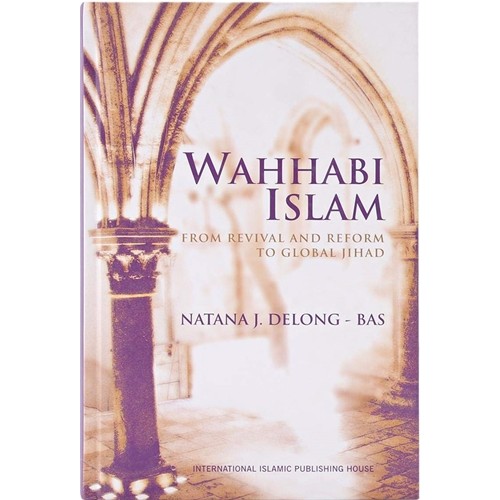
| Weight | 0.635 kg |
|---|---|
| Author | |
| ISBN | 9786035010535 |
| Pages | 427 |
| Product Type | Book |
| Publisher | IIPH |
| Binding | Hardbound |
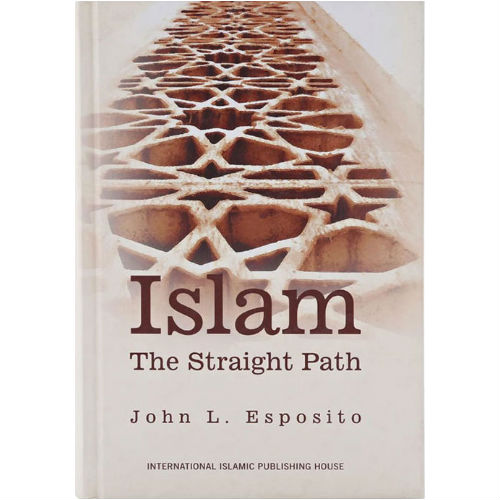
Islam The Straight Path
$20.68
This updated version of Islam: The Straight Path includes a new Epilogue by John Esposito in which he addresses the impact 9/11 and its aftermath have had on both the Muslim and non-Muslim world, discussing Islam’s relationship to democracy and modernity and focusing more sharply on the origins and growth of extremism and terrorism in the name of Islam. This exceptionally successful survey text introduces the faith, belief, and practice of Islam from its earliest origins up to its contemporary resurgence. Esposito, an internationally renowned expert on Islam, traces the development of this dynamic faith and its impact on world history and politics, discussing the formation of Islamic belief and practice and chronicling the struggle of Muslims to define and adhere to their Islamic way of life. Lucidly written and expansive in scope, Islam: The Straight Path provides keen insight into one of the world’s least understood religions and is ideally suited for use in courses on Islam, comparative religions, and Middle Eastern history and culture.
Be the first to review “Islam The Straight Path” Cancel reply
You must be logged in to post a review.
Related Products

In Search of God (P/B)
Some thinkers has said, ‘A smattering of knowledge turns people away from God. Grater knowledge brings them back to Him’. The author concludes in this book by examining various theories that the choice humanity have is not between the universe with God and the universe with God and the universe without God. The real option is between the universe with God and no universe at all. Therefore humanity is compelled to opt for the proposition the universe with God. Hence it is logical to say I exist, therefore, God exists.
A Brief Illustrated Guide to Understanding Islam (P/B)
Discusses some evidence for the truth of Islam, the scientific miracles in the Holy Qur’an, and the great challenge to produce a single chapter like the chapters of the Holy Qur’an.
Journey to Islam: Diary of a German Diplomat 1951-2000 (The Islamic Foundation)
A lengthy process, rich in remarkable and thought-provoking events, including compelling encounters with Islamic philosophy, led the author to embrace Islam. His experiences since that time – such as his pilgrimages to Makkah – further deepened his understanding of, and identification with, this “fastest growing religion in Europe.” This “Diary” is, however, much more than a recorded soliloquy. It is a lively introduction to Islam as such – developed in the spiritual confrontation of a Muslim intellectual of European background with the ideology and value system of post-industrial western society.
New Directions in Islamic Education : Pedagogy and Identity Formation (P/B)
New Directions in Islamic Education explores the relationship between pedagogy and the formation of religious identities within Islamic education settings that are based in minority and majority Muslim contexts. Based on empirical research, the book engages critically with the philosophical, theological and cultural dynamics that inform Muslim educational thought and practice. The book offers an integrated model of Islamic education that identifies the heart of the Islamic educational imagination as tarbiyah, a transformative process of becoming. Overall, this book seeks to ground the theory and practice of Islamic education within the experience of the educator and the learner, and it synthesises the spiritual foundations of Islam with the tradition of critical reflection within the classical Muslim educational heritage. This ground breaking and wide-ranging work should be of interest not only to Muslim educators and education specialists, but also to social scientists, theologians and policy makers.
Ibn Taymeeyah’s Essay on the Jinn (P/B) ASN
Dr. Abu Ameenah Bilal Philips has rendered Ibn Taymiyah’s treatise, Eedaah-ud-Dalaalah fee ‘Umoom-ir-Risaalah, from volume 19 of Majmoo‘-ul-Fataawa into very readable English. This abridged and annotated translation is significant in that it is perhaps the first book available in English exclusively on the topic of spirit-possession and exorcism in Islam.
Ahmad ibn ‘Abdul-Haleem ibn Taymeeyah was bron in the town of Harran [near Edessa, in what was once Northern Iraq, but is now called Orfa and is a part of Turkey.], in the year 1263 CE. His father was a leading scholar of the Hanbalite school of Islamic law and so was his grandfather, who authored Muntaqaa al-Akhbaar, the text of ash-Shawkaanee’s Hadeeth classic Nayl al-Awtaar.
Ibn Taymeeyah mastered the various disciplines of Islamic study at an early age and read extensively the books of the various sects and religions in existence at that time. Much of his time and effort was spend defending the orthodox Islamic position against a tidal wave of deviation which had swept over the Muslim nation. Consequently, he faced many difficulties from both the prominent sectarian scholars of his time and from the authorities who supported them. His clashes with them led to his imprisonment on numerous occasions. Ibn Taymeeyah also fought, not only against internal enemies of Islaam, but also against its external enemies by both his Fatwaas (Islamic legal rulings) and his physical participation in battles. His ruling allowing the taking up arms against groups which recognized the Shahaadataan (declaration of faith) but refused to uphold some aspects of the fundamental principles of Islaam, greatly affected the resistance movement against the Tartars who had declared their acceptance of Islaam but did not rule according to divine law.
During these struggles he wrote countless books and treatises demonstrating his extensive reading and knowledge, not only of the positions of the early scholars, but also those of the legal and theological schools which had subsequently evolved. Ibn Taymeeyah also had a major effect on the open-minded schoars of his day, most of whom were from the Shaafi’ite school of law. Among the most famous of his students were IBN KATHEER, ADH-DHAHABEE and IBN AL-QAYYIM. The author died in 1328 while in prison in Damascus for his Fatwaa against undertaking journeys to visit the graves of saints [Ibn Taymeeyah’s ruling was based on the authentic statement reported by Abu Hurayrah wherein the Prophet Muhammad (sallallaahu alayhi wasallam) said, “Do not undertake a journey except to three masjids; this masjid of mine, Masjid al-Haraam (Makkah) and Masjid al-Aqsaa (Bayt al-Maqdis).” Collected by Al-Bukhaaree and Muslim]. His Fatwaa had been distorted by his enemies to say that he forbade visiting the Prophet Muhammad’s (sallallaahu alayhi wasallam) grave.
Prophet Muhammad: A Blessing for Mankind
Prophet Muhammad (blessings and peace of Allah be upon him) and the lessons he taught us from the continued hardships he underwent in every stage of his life are a real blessing for humankind. Being an orphan child made him compassionate to widows and orphans as well as to the poor. His multiple marriages strengthened the ties of kinship amongst the different tribes, dissolving long-standing enmity. His message and prophethood were challenged by the polytheistic society in Makkah, forcing him and his few followers to emigrate to Madinah. Despite his illiteracy and the struggles he faced, he conveyed Allah’s Book, the Noble Qur’an, to all humanity, teaching them the values and principles that are presently adopted by billions of Muslims throughout the world. In the Qur’an, Allah, the Almighty addresses the Prophet (blessings and peace of Allah be upon him), saying: {We have sent you only as a mercy to the worlds.} (Qur’an 21: 107)
A Treatise on Hijab and Compilation of Questions Pertaining to Family Matters (H/B)
No one denies that the modesty which is commanded by Islamic Law and by convention includes the decency and decorousness demanded of a woman, and the kind of behavior that will ensure that she is kept far away from situations of temptation and suspicion. Further more, there is no doubt that the greatest act of modesty that she can perform is to wear the hijab, which covers her face. It is the best thing with which she can adorn herself, because it protects her and keeps her far removed from temptation.
Philanthropy and Social Justice in Islam (P/B)
This book analyses the principles and practices of philanthropy and distributive justice in Islam. It argues, with analyses and examples, that the accomplishment of purposive philanthropy, as commanded by the fundamental tenets of Islam, through the professionalization and rationalization of zakat management, modernization of awaqaf, etc. has the potential of optimizing justice in Muslim societies. The work draws on the Quran, Hadithe, other authentic literature, and also on official documents and publications of management agencies dealing with philanthropy in different Muslim countries/societies. The analyses are documented enough to be used as a text for the study of philanthropy in Islam in tertiary institutions nonetheless are simple enough to draw general readership and to be used by non-profit and international organizations worldwide in order to order to understand the principles and issues of philanthropy and distributive justice in Muslim societies.
Wholeness and Holiness in Education An Islamic Perspective (P/B)
It was initially an adaptation of Shah ‘Abdul Qadir Muhaddith Dehlawi’s translation and commentary known as Mudih al-Qur’an which according to many great ‘ulama’ is devinely inspired and accepted by all Muslims.
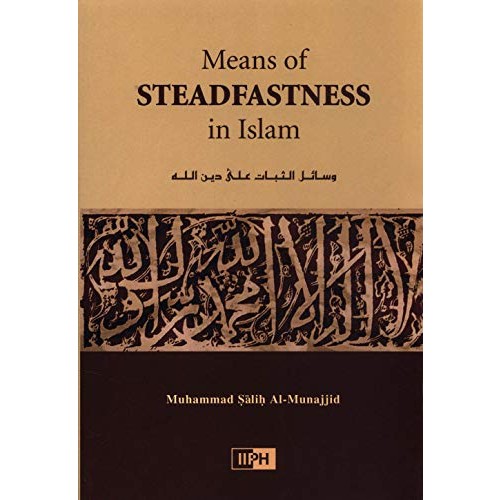
Means of Steadfastness in Islam
Steadfastness and patient perseverance in Allah’s religion is a basic requirement that should be met by every sincere Muslim who wants to stick to the Straight Path with understanding and determination. Muslims today face many temptations and distractions. Those who consciously seek the means of steadfastness will succeed and those who are negligent will, sadly, suffer the doubts and confusion which are more severe now than ever before. Happy are those who seek the way out and join the righteous, dedicated Muslims, and who spare no effort to learn their religion and remain steadfast. This valuable book
deals with all these issues and points out the means of steadfastness that every Muslim should learn and practice. The author also discusses common worldly distractions and explains how to deal with them.

Hell-Fire Its Torments and Denizens
In all the divine revelations there is a constant warning that wrongdoers may end up in Hell-fire, though Allah’s kindness and mercy are extended to many people. Reading about the Hell-fire enables one to know it, fear it, and try utmost to keep oneself away from it through correct beliefs and good deeds. The more one knows about Hell-fire, the more he or she strives to be saved from its reach. Relying on statements from the Holy Qur’an and the Hadith, this book enables the reader to have a realistic picture of Hell-fire’s torments. It may be enough to know that it is a raging fire, but detailed knowledge of it, as displayed in this book, will strengthen a person’s belief and eventually, Allah willing, make him or her seek for and remain steadfast on the path to salvation. This is an indispensable book for believers and non-believers alike. Hell-fire: Its Torments and Denizens is an abridged, summarized version of Siddiq Hasan Khan’s book about the Hell-fire.
Fundamentals of Islam (P/B)
Fundamentals of Islam is a revised English edition of the critically acclaimed Khutubah (original written in Urdu). It consist of Friday congregational addresses, in them he expounds familiar themes; like Iman, Islam, the Prayer, Fasting, Alms-giving, Pilgrimage and Jihad.
Recently Viewed
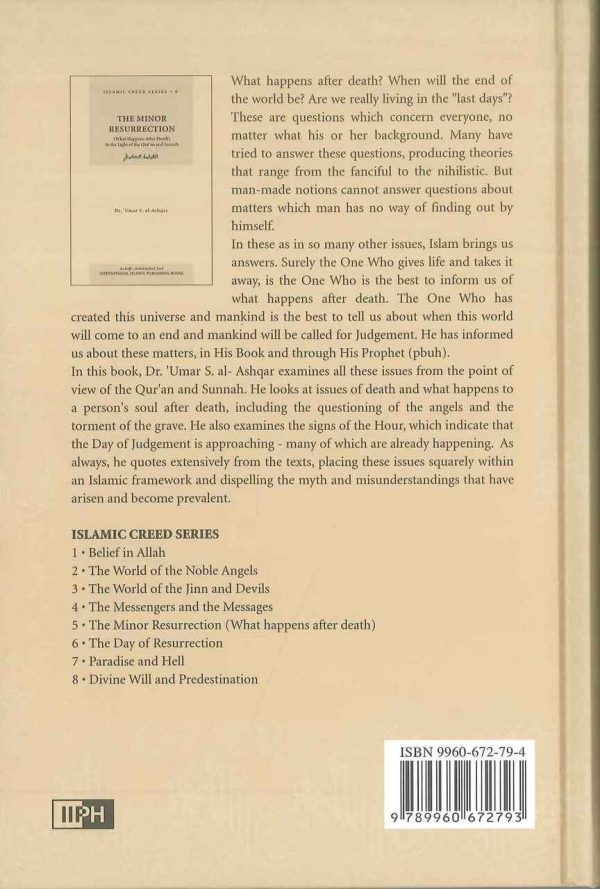
The Minor Resurrection – Islamic Creed Series 5
What happens after death? When will the end of the world be? Are we really living in the ‘last days’? These are questions which concern everyone, no matter what his or her background. Many have tried to answer these questions, producing theories that range from the fanciful to the nihilistic, but manmade notions cannot answer questions about matters which the human has no way of finding out by himself or herself. In these as in so many other issues, Islam brings us answers. Surely the One who gives life and takes it away is the One who is the best to inform us of what happens after death. The One who has created this universe and humankind is the best to tell us about when this world will come to an end and humankind will be called to judgement. He has informed us about these matters, in His Book and through His Prophet (blessings and peace be upon him).
In this book, Dr. ‘Umar al-Ashqar examines all these issues from the point of view of the Qur’an and the Sunnah. He looks at issues of death and what happens to a person’s soul after death, including the questioning of the angels and the torment of the grave. He also examines the signs of the Last Hour, which indicate that the Day of Judgement is approaching – many of which are already happening. As always, he quotes extensively from the texts, placing these issues squarely within an Islamic framework and dispelling the myths and misunderstandings that have arisen and become prevalent. This Islamic Creed Series of books has been translated into English by Nasiruddin al-Khattab.
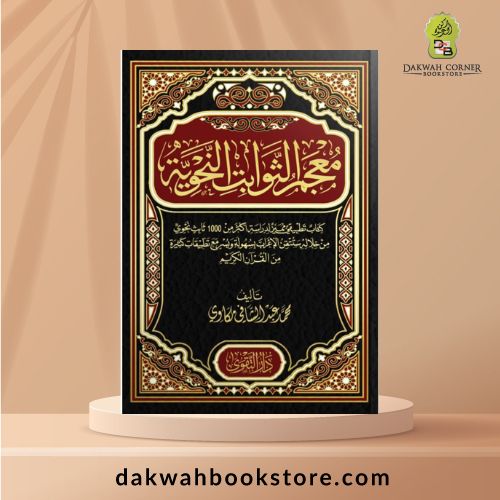
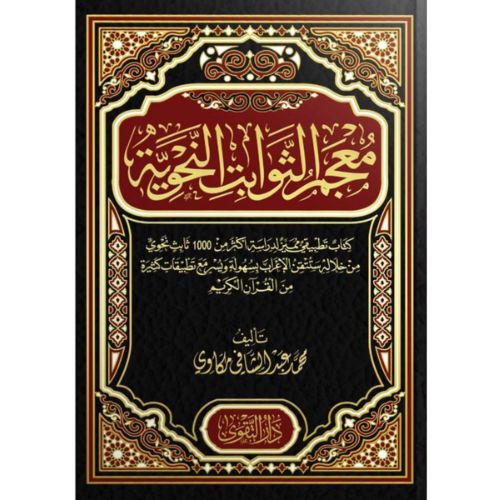
[ALA] Muʿjam al-Thawābit al-Naḥwiyya / معجم الثوابت النحوية
كتاب تطبيقي مميز لدراسة أكثر من 1000 ثابت نحوي من خلاله ستتقن الإعراب بسهولة ويسر مع تطبيقات كثيرة من القرآن الكريم
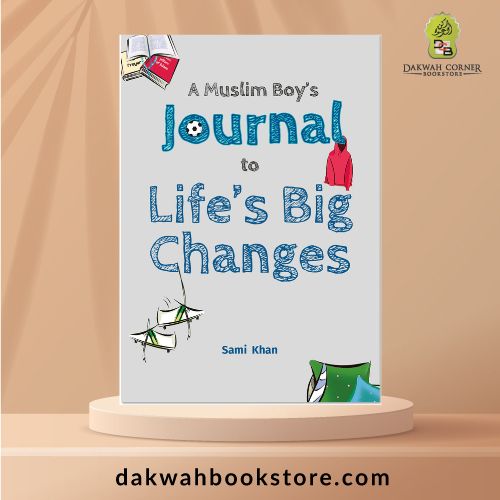
A Muslim Boy’s Journal to Life’s Big Changes
Bursting with inspiring illustrations, activities and challenges, this journal is your fun space to building a stronger relationship with Allah and living your best life.
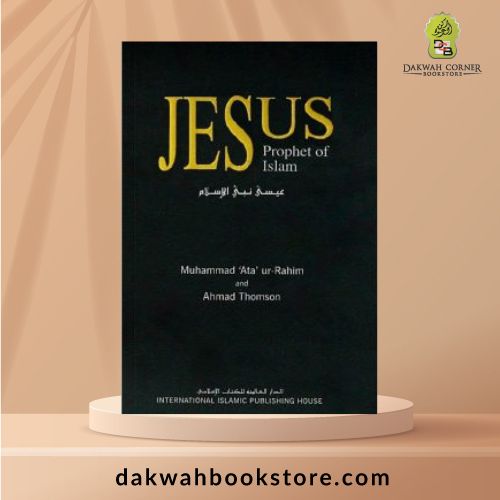
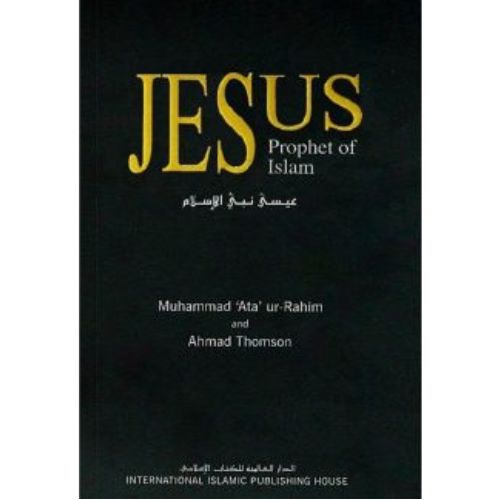
Jesus Prophet of Islam (H/B) – IIPH
1996 expanded and revised edition. This book examines Jesus as a prophet teaching the Unity of God, and the historical collapse of Christianity as it abandoned his teaching. The author sketches the dramatic picture of the original followers of Jesus who affirmed Unity. What emerges is that “Christianity” is the fiction that replaced their truth. A work that covers the Gospel of Barnabas, the Gospel of Hermes, the Shephard, early and later Unitarian Christians, Jesus in the Gospels and in the Qur’an and Hadith. The author clearly shows the idea of Jesus as part of a Trinity was a Greek Pagan idea adopted by early Christian mission-aries to gain converts among the Greek, and did not become a widely accepted Christian doctrine until after the Council of Nicea in 325 A.D.
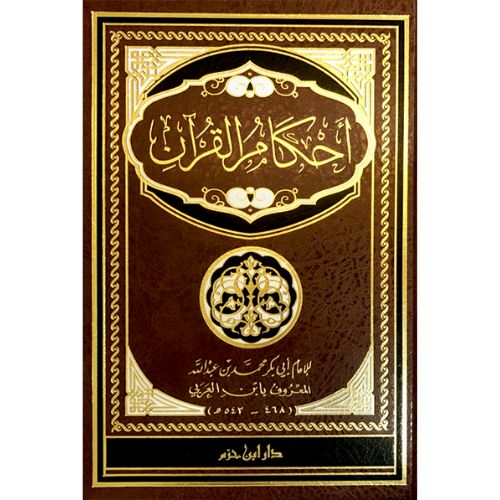
[ATQ] Ahkam Alquran / أحكام القرآن
أحكام القرآن كتاب تفسير فقهي للقرآن الكريم حسب المذهب الحنفي من تأليف أبو بكر الجصاص، استنبط مؤلفه من آيات الأحكام، مع ذكر اختلاف العلماء، ثم ينبسط في ذكر الأدلة بتوسع من الكتاب والسنة واللغة العربية والنظر.
Divine Speech
The Quran, the sacred scripture of Islam, is revered as the spoken word of God by approximately one-fifth of the world’s population. Since its inception, the power of the Quran has derived not only from its message, but also from the inimitable literary style and rhetorical impact that the Arabic scripture has on its audiences. Divine Speech: Exploring the Quran as Literature attempts to make some of the most recent Arabic and European-language scholarship on its literary features accessible to a wider, English-speaking audience. These features include its language and word choice, its use of figures of speech and other rhetorical devices, its manner of narrating parables and stories, and the structure, coherence, and the order of its “chapters”-aspects that typically remain mysterious to readers of English translations of the text. Divine Speech furnishes its readers with a better appreciation of the Quran from a literary perspective, and in the process stimulates interest in, and provides tools and resources for, further study of the scripture.
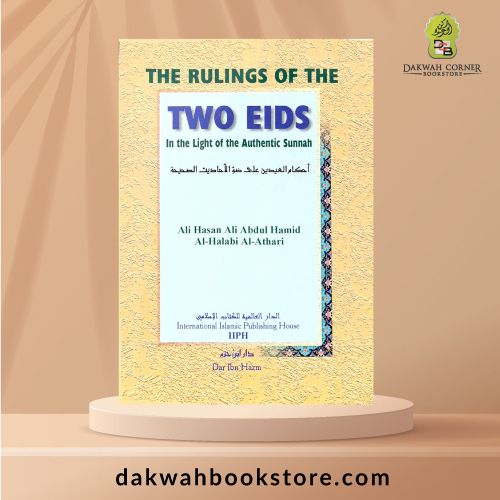
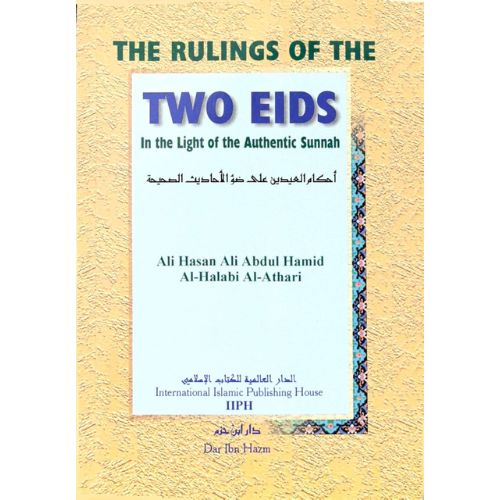
The Rulings Of The Two Eids
Islam the religion revealed by Allah the All-Merciful did not ignore the human need for entertainment and allowed pleasure. The Two Eids are two occasions on which people show and feel happiness. After performing Hajj, the Muslim enjoys the Eid festival and eats his sacrifice meat. After Ramadan, the breakfast (Fitr) festival is another occasion for happiness, love and entertainment.
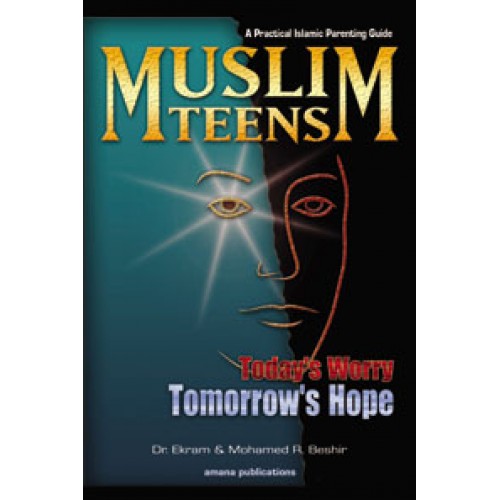
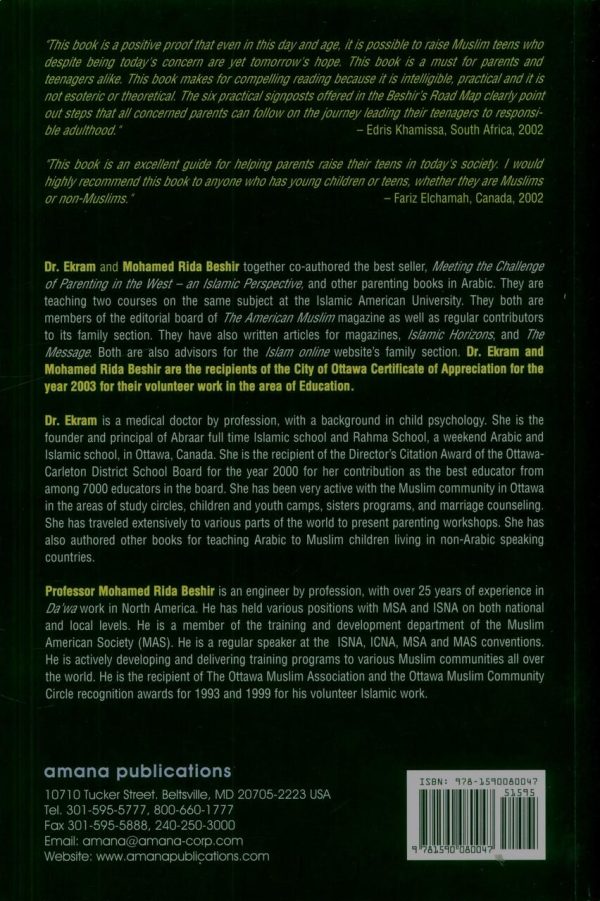
Muslim Teens (English Edition) (P/B)
The book offers a practical guide for parents who wish to protect their teens from the dazzle of a superfluous western culture and help them lead a virtuous life as taught by Islam.
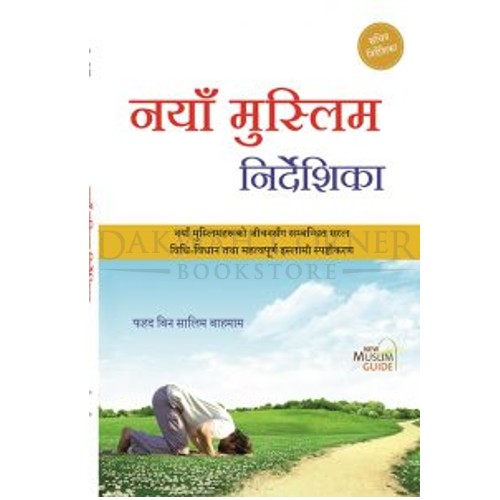
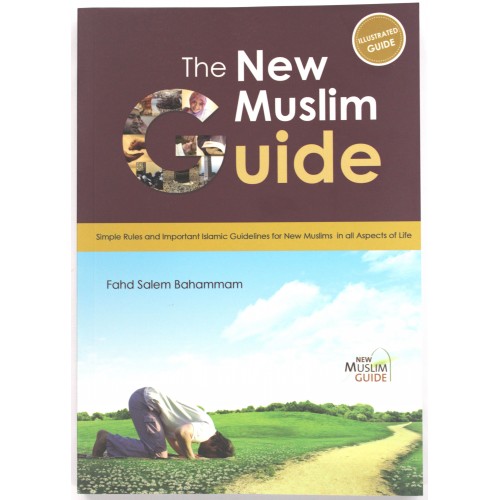
The New Muslim Guide (ENGLISH)
The New Muslim Guide (Illustrated Guide) Simple rule and important islamic Guidelines for New Muslims in all Aspects of Life.
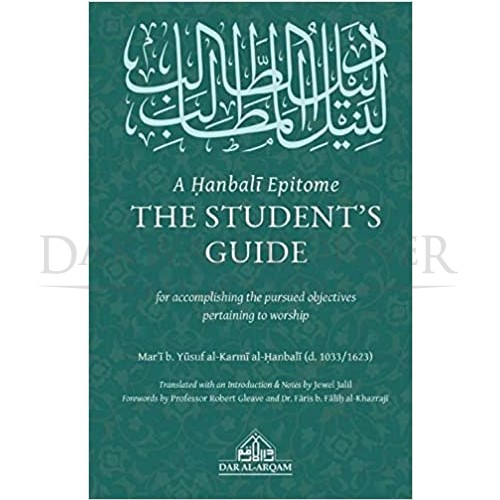
A Hanbali Epitome: A Student’s Guide
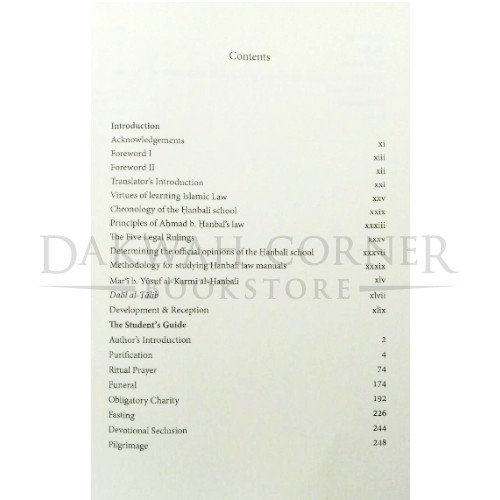
The present work focuses on the Muslim community requires for purification, prayer, charity, fasting, pilgrimage, and warfare. A lengthy introduction to Islamic law and the Hanbali’ school has been included to prepare the readers. The language employed in the translation has been kept simple, straightforward, and modern to make the work accessible to everyone who speaks English – law student or otherwise. This bilingual edition, with its parallel Arabic text, will allow readers to access the original Arabic and hopefully help with vocabulary building, oracy, and future translation. Muslims for many centuries have turned to Dalil al-Talib for study, and ultimately to be informed of their religious practices. It is hoped the translation, The Student’s Guide, will produce a similar response and convey the spirit and manner of the original owing to its style and simplicity.


There are no reviews yet.