





| Weight | 0.03 kg |
|---|---|
| Product Type | Book |
| Author | |
| Publisher | IIPH |
| Pages | 71 |
| ISBN | 9960850544 |
Hell-Fire Its Torments and Denizens
$2.73
In Stock

Highlights:
somdn_product_page
Compare
In all the divine revelations there is a constant warning that wrongdoers may end up in Hell-fire, though Allah’s kindness and mercy are extended to many people. Reading about the Hell-fire enables one to know it, fear it, and try utmost to keep oneself away from it through correct beliefs and good deeds. The more one knows about Hell-fire, the more he or she strives to be saved from its reach. Relying on statements from the Holy Qur’an and the Hadith, this book enables the reader to have a realistic picture of Hell-fire’s torments. It may be enough to know that it is a raging fire, but detailed knowledge of it, as displayed in this book, will strengthen a person’s belief and eventually, Allah willing, make him or her seek for and remain steadfast on the path to salvation. This is an indispensable book for believers and non-believers alike. Hell-fire: Its Torments and Denizens is an abridged, summarized version of Siddiq Hasan Khan’s book about the Hell-fire.
Additional information
Reviews (0)
Be the first to review “Hell-Fire Its Torments and Denizens” Cancel reply
You must be logged in to post a review.
Related Products

Treatment of Magic, Evil Eye & Satan’s Touch (P/B)
Highlights:
A detailed treatise on the authentic treatments for afflictions of magic, evil eye and possession based on the Islamic teachings of the Qur’an and Sunnah of Muhammad.


Islam A Total Beginners Guide – Part Three (P/B)
Highlights:
In present era we are facing lot of questions:
• What is status of women in Islam?
• Who is superior – man or women?
• What does Islam say about inter-religious marriages, man’s treatment towards his wife and privacy in homes?
• What does Islam say about dress, veil, clothing and ornaments, perfumes and the wisdom of banning gold and silk for men?
This beginner’s guide to Islam answers all such questions.

Let Us Be Muslims (P/B)
Highlights:
LET US BE MUSLIMS is a new edited English version of Sayyid Mawdudi’s Urdu Khutubat. It is no ordinary book, says Khurram Murad in his long Introduction, for it has stirred more hearts and impelled more lives to change their course than any of his more erudite works. In these Friday congregational addresses, Sayyid Mawdudi expounds such familiar themes as Iman, Islam, the Prayer, Fasting, Almsgiving, Pilgrimage and Jihad. But, in an unusually beautiful, powerfully reasoned, eloquent and passionate, and yet simple and lucid style,
“Sayyid Abul A’la Al-Mawdudui (1903-1979), one of the chief architects of contemporary Islamic resurgence, was the an outstanding Islamic thinker and writer of his time. He devoted his life to expound the meaning and message of Islam and to organise a collective movement to establish the Islamic Order. In this struggle, he had to pass through all kinds of sufferings.
Between 1948-67, he spent a total of five years in different prisons of Pakistan. In 1953, he was also sentenced to death by a Martial Law court for writing a ‘seditious’ pamphlet, this sentence being later commuted to life imprisonment. In 1941, he founded Jama’at-I Islami, of which he remained Amir, until 1972 and which is one of the most prominent Islamic movements of our day. He authored more than one hundred works on Islam, both scholarly and popular, and his writings have been translated into forty languages.”

Philanthropy and Social Justice in Islam (P/B)
Highlights:
This book analyses the principles and practices of philanthropy and distributive justice in Islam. It argues, with analyses and examples, that the accomplishment of purposive philanthropy, as commanded by the fundamental tenets of Islam, through the professionalization and rationalization of zakat management, modernization of awaqaf, etc. has the potential of optimizing justice in Muslim societies. The work draws on the Quran, Hadithe, other authentic literature, and also on official documents and publications of management agencies dealing with philanthropy in different Muslim countries/societies. The analyses are documented enough to be used as a text for the study of philanthropy in Islam in tertiary institutions nonetheless are simple enough to draw general readership and to be used by non-profit and international organizations worldwide in order to order to understand the principles and issues of philanthropy and distributive justice in Muslim societies.

Muslim Unification at Time of Crisis
Highlights:
This book authored by one of the great scholars of our time is an advice to the people of Ahulul ?Sunnah wal-Jamaah to unify and be merciful to each other, and cooperate upon righteousness and taqwa.


Why Islam?
Highlights:
Often, the first thing someone is asked when they discover the truth and embrace Islam is the question: Why Islam? Here, an American revert-to-Islam answers that question. The author, K. Sherman, writes: The beauty of Islam is probably the best-kept secret in modern times; it is about time it was revealed. This is the sentiment of a majority of people who are discovering the truth about Islam every day. My first exposure to the religion was through a perusal of a fifty-page booklet titled Towards Understanding Islam (written in 1932). It explained to me everything that twenty years of life and fifteen years of education could not. After the initial sense of relief, I suddenly felt cheated. I was consumed with rage. Why? I could not fathom how people could know about this phenomenal way of life and not speak out and inform others. This book is my personal take on the beauty of Islam, backed up by relevant and authentic references. I am convinced that humanity direly needs it and it is my duty to speak out.

When Wings Expand (P/B)
Highlights:
Writing on the pages of her journal, Nur, a teenage girl in Canada, charts the onset and advance of her mother’s cancer. Nur watches her mother’s body begin to shrink and her mood begin to darken. And when family and friends begin to encroach, Nur must face the prospect of her mother’s looming death.

Rizq Lawful Earnings (P/B)
Highlights:
Narrated by Umar Ibn al-Khattaab (May Allah be pleased with him), the Prophet (Peace be upon him) said:
“If you put your faith completely in Allah, He will arrange for your sustenance in the same way as he provides for the bird. They go out in the morning with their stomachs empty and return filled in the evening.” (Tirmidhee)
This book discusses the place of pride Islam gives to making lawful earnings and rizq through hard work and striving. It also looks at the contempt Islam places on begging and indolence. Then it looks at which earnings are lawful, which are not and the many ways by which wealth can increase while seeking the pleasure of Allah (Glorified and Exalted is He).


Islam A Total Beginners Guide – Part Two (P/B)
Highlights:
In present era we are facing lot of questions:
• What is status of women in Islam?
• Who is superior – man or women?
• What does Islam say about inter-religious marriages, man’s treatment towards his wife and privacy in homes?
• What does Islam say about dress, veil, clothing and ornaments, perfumes and the wisdom of banning gold and silk for men?
This beginner’s guide to Islam answers all such questions.


A Brief Illustrated Guide to Understanding Islam (P/B)
Highlights:
Discusses some evidence for the truth of Islam, the scientific miracles in the Holy Qur’an, and the great challenge to produce a single chapter like the chapters of the Holy Qur’an.

Ibn Taymeeyah’s Essay on the Jinn (P/B) ASN
Highlights:
Dr. Abu Ameenah Bilal Philips has rendered Ibn Taymiyah’s treatise, Eedaah-ud-Dalaalah fee ‘Umoom-ir-Risaalah, from volume 19 of Majmoo‘-ul-Fataawa into very readable English. This abridged and annotated translation is significant in that it is perhaps the first book available in English exclusively on the topic of spirit-possession and exorcism in Islam.
Ahmad ibn ‘Abdul-Haleem ibn Taymeeyah was bron in the town of Harran [near Edessa, in what was once Northern Iraq, but is now called Orfa and is a part of Turkey.], in the year 1263 CE. His father was a leading scholar of the Hanbalite school of Islamic law and so was his grandfather, who authored Muntaqaa al-Akhbaar, the text of ash-Shawkaanee’s Hadeeth classic Nayl al-Awtaar.
Ibn Taymeeyah mastered the various disciplines of Islamic study at an early age and read extensively the books of the various sects and religions in existence at that time. Much of his time and effort was spend defending the orthodox Islamic position against a tidal wave of deviation which had swept over the Muslim nation. Consequently, he faced many difficulties from both the prominent sectarian scholars of his time and from the authorities who supported them. His clashes with them led to his imprisonment on numerous occasions. Ibn Taymeeyah also fought, not only against internal enemies of Islaam, but also against its external enemies by both his Fatwaas (Islamic legal rulings) and his physical participation in battles. His ruling allowing the taking up arms against groups which recognized the Shahaadataan (declaration of faith) but refused to uphold some aspects of the fundamental principles of Islaam, greatly affected the resistance movement against the Tartars who had declared their acceptance of Islaam but did not rule according to divine law.
During these struggles he wrote countless books and treatises demonstrating his extensive reading and knowledge, not only of the positions of the early scholars, but also those of the legal and theological schools which had subsequently evolved. Ibn Taymeeyah also had a major effect on the open-minded schoars of his day, most of whom were from the Shaafi’ite school of law. Among the most famous of his students were IBN KATHEER, ADH-DHAHABEE and IBN AL-QAYYIM. The author died in 1328 while in prison in Damascus for his Fatwaa against undertaking journeys to visit the graves of saints [Ibn Taymeeyah’s ruling was based on the authentic statement reported by Abu Hurayrah wherein the Prophet Muhammad (sallallaahu alayhi wasallam) said, “Do not undertake a journey except to three masjids; this masjid of mine, Masjid al-Haraam (Makkah) and Masjid al-Aqsaa (Bayt al-Maqdis).” Collected by Al-Bukhaaree and Muslim]. His Fatwaa had been distorted by his enemies to say that he forbade visiting the Prophet Muhammad’s (sallallaahu alayhi wasallam) grave.

Kindness to Parents
Highlights:
Kindness to Parents is a very enlightening booklet by Abdul Malik Al-Qasim. He has collected several stories and narrations that demonstrate the Birr (being dutiful) and kindness to our righteous Salaf towards their parents’ needs and necessities, in obedience to Allah’s worship in sincerity. He refers from the Noble Qur’an that a man is never allowed to say ‘Uff” (fie) if he smells a bad order coming from his parents or one of them.
The author has exposed shortcomings and errors of many among us who don not preserve the rights of their parents.
Recently Viewed
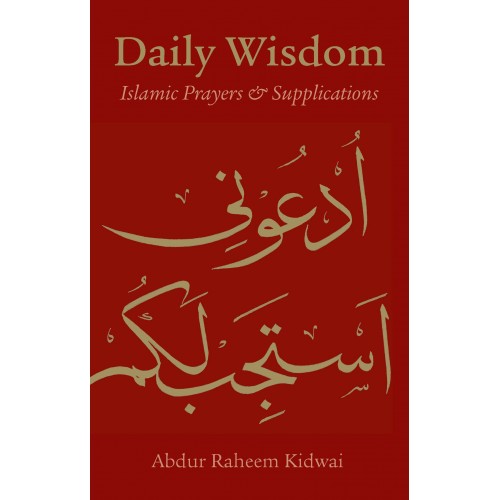
Daily Wisdom :Islamic Prayer & Supplications (H/B)
Highlights:
This beautiful presentation of Islamic prayers and supplications engages the reader in a moment daily reflection. With 365 prayers covering the whole year, this is a must for every home. An essential companion to the first two books in the Daily wisdom series..

The Middle Path of Moderration in Islam (H/B)
Highlights:
In The Middle Path of Moderation in Islam, leading Islamic law expert Mohammad Hashim Kamali examines the concept of wasatiyyah, or moderation, arguing that scholars, religious communities, and policy circles alike must have access to this governing principle that drives the silent majority of Muslims, rather than focusing on the extremist fringe. Kamari explores wasatiyyah in both historical/conceptual terms and in contemporary/practical terms. Tracing the definition and scope of the concept from the foundational sources of Islam, the Qu’ran and Hadith, he demonstrates that wasatiyyah has a long and well-developed history in Islamic law and applies the concept to contemporary issues of global policy, such as justice, women’s rights, environmental and financial balance, and globalization.
Framing his work as an open dialogue against a now-decades long formulation of the arguably destructive Huntingtonian “clash of civilizations” thesis as well as the public rhetoric of fear of Muslim extremism since the attacks of September 11, 2001, Kamali connects historical conceptions of wasatiyyah to the themes of state and international law, governance, and cultural maladies in the Muslim world and beyond. Both a descriptive and prescriptive meditation on a key but often neglected principle of Islam, The Middle Path of Moderation in Islam provides insight into an idea that is in the strategic interest of the West both to show and practice for themselves and to recognize in Muslim countries.
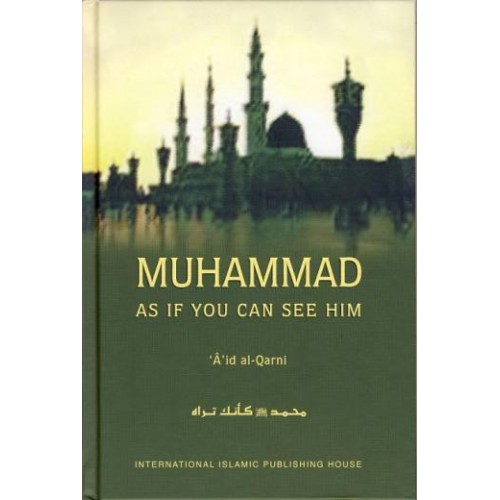
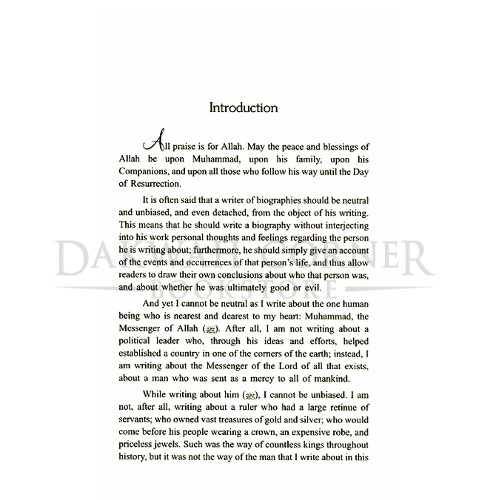
Muhammad As If You Can See Him (H/B)
Highlights:
How many times have you heard the phrase, ‘Would you do that if the prophet was watching?’
This book challenges readers to think closely about this phrase, and describes the Prophet Muhammad (PBUH) from the first page of the book’s first chapter.
In fact, the book is a message of love from a mere human being.. to the best of human beings.
Written by the best-selling author of Don’t be Sad and You can be the Happiest Woman in the World, Muhammad as if you can see Him is promised to have the same effect on readers as did ‘Aid Al-Qarni’s previous writings.
What makes the book so special??
It is written by a skilled and award-winning author.
It describes the Prophet’s physical features as well as his inner traits.
The book leads the reader to understanding Muhammad from his beginning to his end.
The text and words are easy to understand, and the stories allow readers to keep up with their pace.
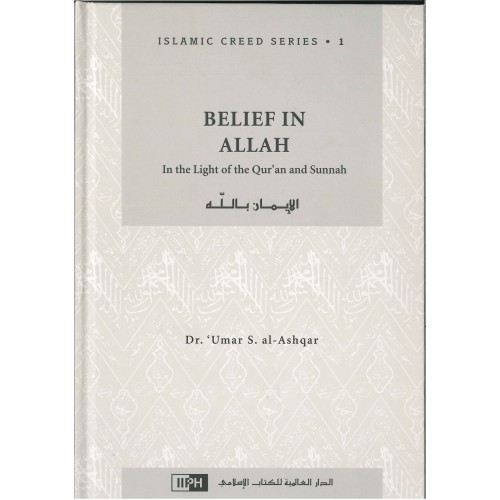
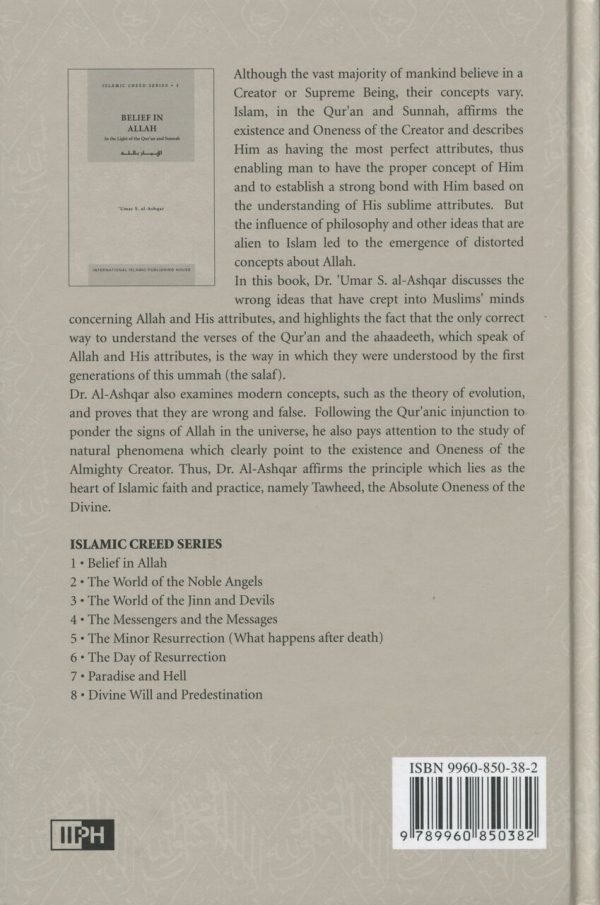
Belief In Allah – Islamic Creed Series 1
Highlights:
Aqidah and Creed
The Heavenly Dispute (Dar Us Sunnah)
Highlights:
The Prophet (peace and blessing be upon him) said of this hadith, “Indeed, it is the truth, so study and learn it.”
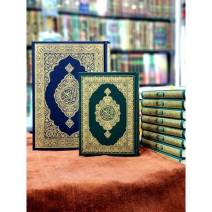
Mushaf Waqaf in Makkah Project
Highlights:
Mushaf Waqaf in Makkah Project
There is no doubt that rewards are multiplied at certain times and places as the Prophet (PBUH) have mentioned in many authentic Hadith. For example, the rewards of good deeds are doubled in Ramadhan and on the first 10 days of Dhul Hijjah, and prayers in the two Holy Mosque of Makkah are multiplied thousand folds.
We have noticed the interest of Muslim pilgrims and visitors since the ancient times in taking this opportunity of doubling their rewards throughout their stay in the Holy land of Makkah based on this principle. They have engaged in recitations of the Qur’an and pondering upon it, performing voluntary tawaf, offering voluntary prayers, doing extra charity works and other acts of worship prescribed by God Almighty.
Among the noble deeds by Pilgrims is the endowment of mushaf in Arabic as well as its translations in the Holy Mosque and the Prophet’s Mosque, taking advantage of the Muslims’ preoccupation with the Book of Allah during the period while seeking the satisfaction of their Creator in the purest spot on the globe.
Dawah Corner Bookstore Makkah branch is now introducing its new service of the endowment of the Mushaf in the Holy Mosque and the Prophet’s Mosque via an e-gateway in accordance with the regulations prescribed by the affairs of the Two Holy Mosques:
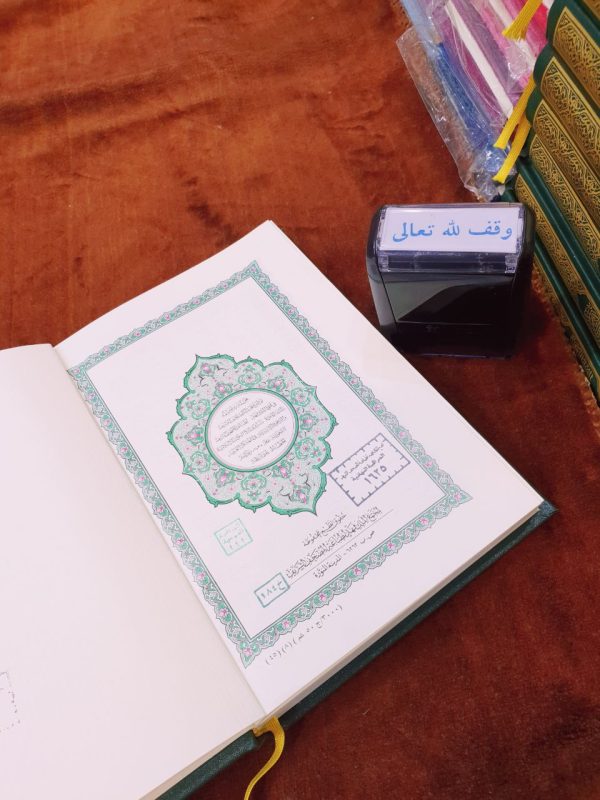
1- The Qur’an should be printed from King Fahd Complex in Madinah
2 – and to be placed in the places reserved for the Qur’an.
3 – with a clear seal (Waqf Lillah).
Now with this new e-service, everyone can perform the endowment of Mushaf in the Holy Mosque and the Prophet’s Mosque whenever they want and from wherever they are. Dawah Corner Bookstore will handle all the process onsite on your behalf and provide you with photographs and documents according to your needs for your record and for accountability purposes.
Simply log into our website, www.dakwahbookstore.com to choose your preferred Mushaf type and its quantity. After checking out, you will receive the details of the transaction in your mailbox. Please note that the price of the Qur’an Mushaf will be adopted at the market value at the time of the transaction.
$17.05 – $24.55Price range: $17.05 through $24.55
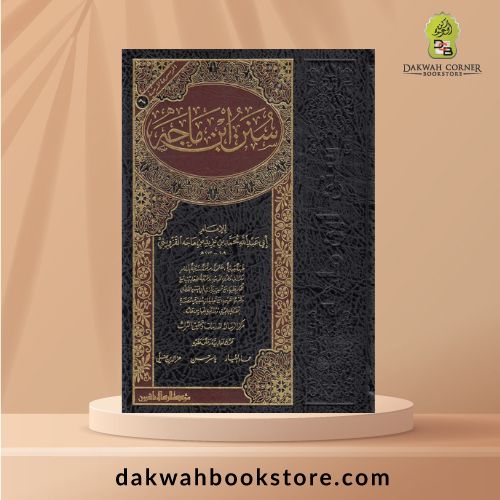
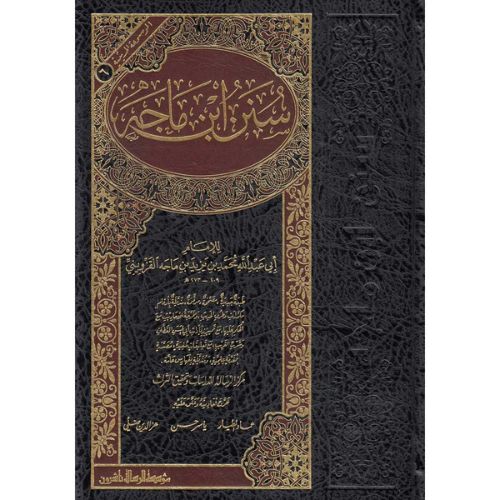
[AH] Sunan Ibn Majah (Ar Risalah Naashirun) / سنن بن ماجه
Highlights:
كتاب “سنن ابن ماجه” هو سادس الكتب الستة المعتمدة (الكتب الستة لأصول السنة النبوية المشرفة). قام بجمعه وتصنيفه الإمام أبو عبد الله محمد بن يزيد بن ماجه القزويني.

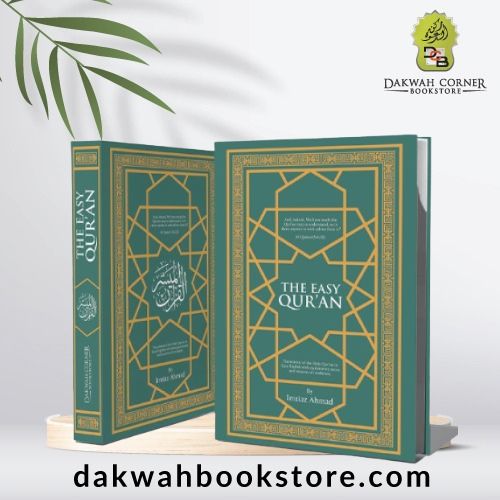
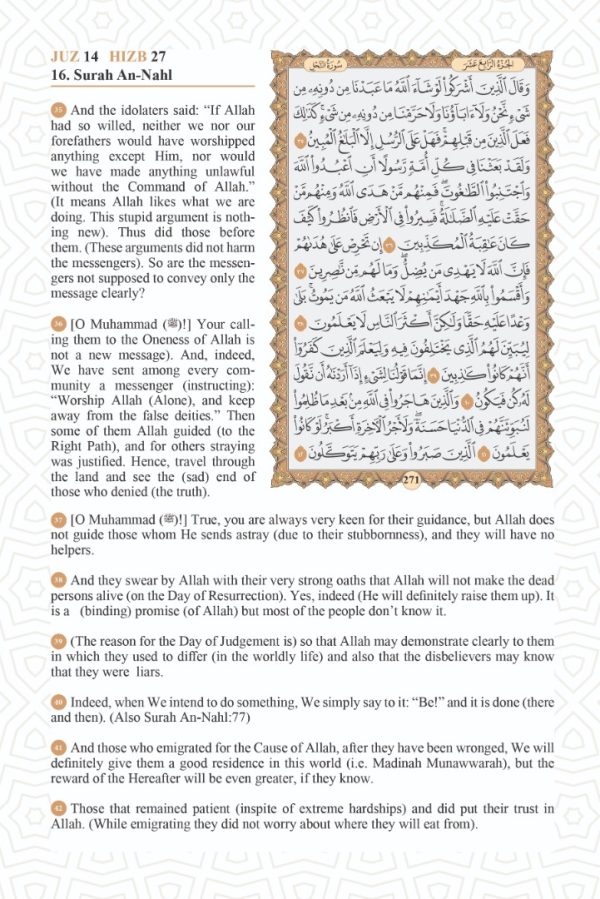
The Easy Qur’an New (Full Arabic Page) 6×9
Highlights:
The Easy Qur’an translation reviewed and approved by the Ministry of Information Saudi Arabia and Religious affairs Ministry Islamic Republic of Pakistan.
Published by Da’wah Corner Bookstore Saudi Arabia
$13.64
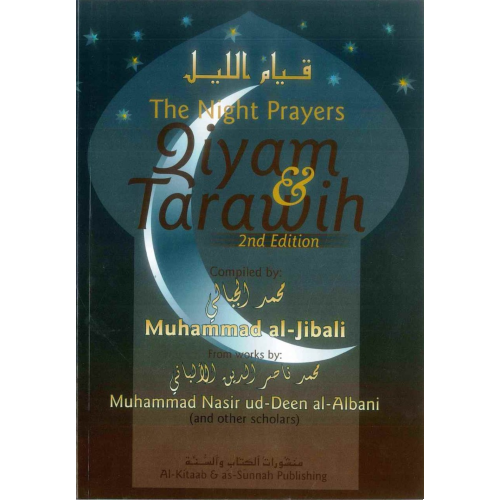
The Night Prayers Qiyam & Tarawih
Highlights:
A most rewarding and fulfilling part of a Muslim’s worship are those blessed moments that he spends praying in the depth of the night, privately addressing his Great Lord, sincerely glorifying Him, humbly imploring Him – beseeching His forgiveness and asking Him for favours. The voluntary “night prayer”, or qiyam, is indispensable for a person’s moral, spiritual, and physical welfare. Yet, it is greatly misunderstood and largely neglected by most Muslims. This is why we present this book, with two main objectives:
1. Provide a complete guide on the subject of qiyam and related issues, in accordance with the Quran, the Sunnah, and the guidance of the Salaf.
2. Present to the reader, in the process, two important works by the prominent scholar Muhammad Nasir ud-Deen al-Albaani (may Allah bless him): “Salat ut-Taraaweeh” and “Qiyaam Ramadan”.
This book is not only for Ramadan, but is for every night of the year. It is an treasure of guidance that one will want to keep by his pillow at night, and grab it as soon as he rises for the greatest bliss of the night. It is a gift that is sure to please and benefit
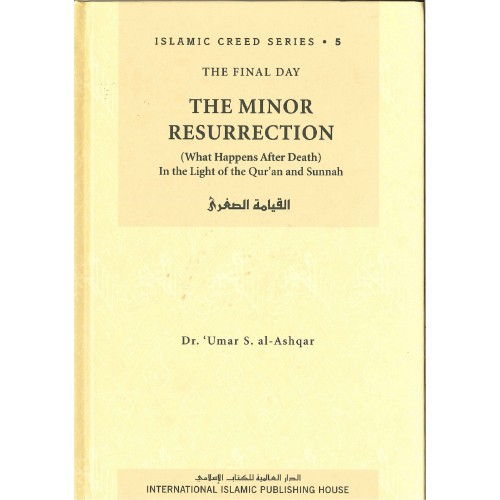
The Minor Resurrection – Islamic Creed Series 5
Highlights:
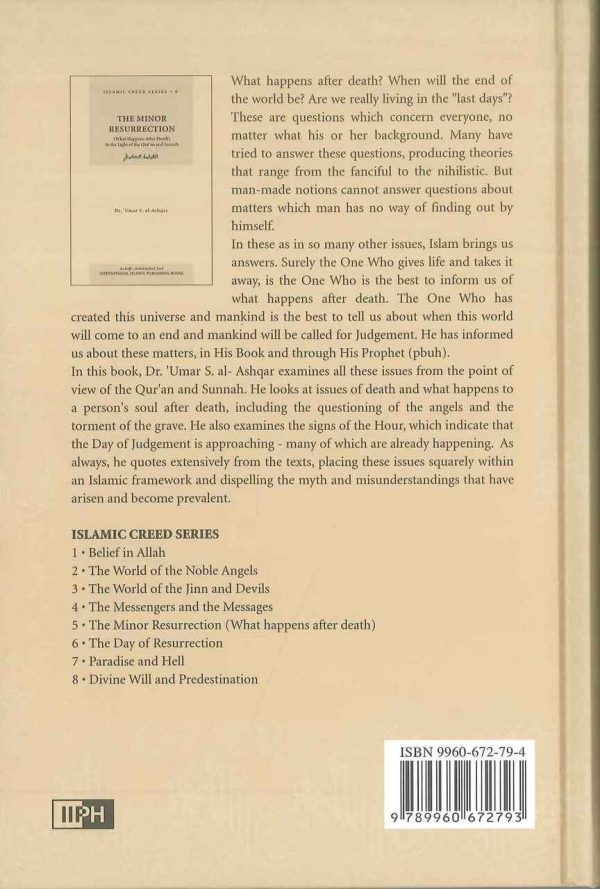
What happens after death? When will the end of the world be? Are we really living in the ‘last days’? These are questions which concern everyone, no matter what his or her background. Many have tried to answer these questions, producing theories that range from the fanciful to the nihilistic, but manmade notions cannot answer questions about matters which the human has no way of finding out by himself or herself. In these as in so many other issues, Islam brings us answers. Surely the One who gives life and takes it away is the One who is the best to inform us of what happens after death. The One who has created this universe and humankind is the best to tell us about when this world will come to an end and humankind will be called to judgement. He has informed us about these matters, in His Book and through His Prophet (blessings and peace be upon him).
In this book, Dr. ‘Umar al-Ashqar examines all these issues from the point of view of the Qur’an and the Sunnah. He looks at issues of death and what happens to a person’s soul after death, including the questioning of the angels and the torment of the grave. He also examines the signs of the Last Hour, which indicate that the Day of Judgement is approaching – many of which are already happening. As always, he quotes extensively from the texts, placing these issues squarely within an Islamic framework and dispelling the myths and misunderstandings that have arisen and become prevalent. This Islamic Creed Series of books has been translated into English by Nasiruddin al-Khattab.
There are no reviews yet.