

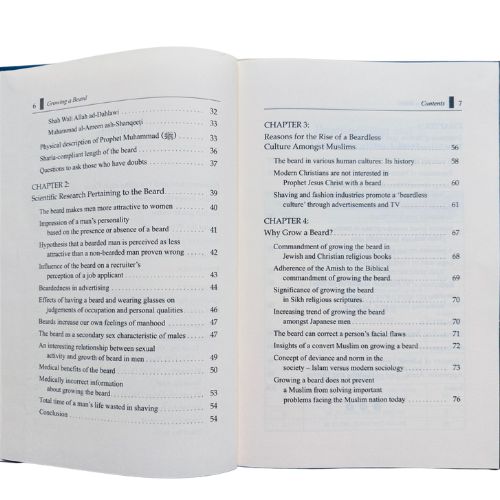
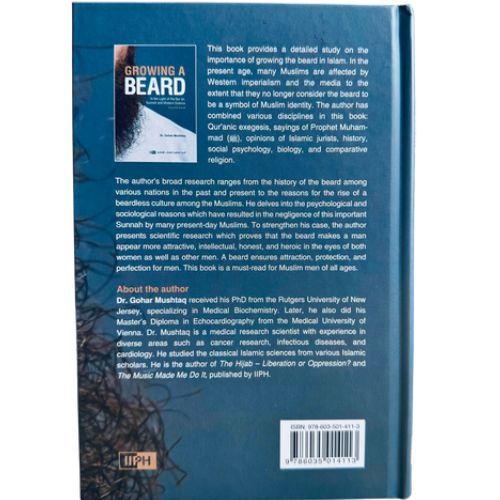



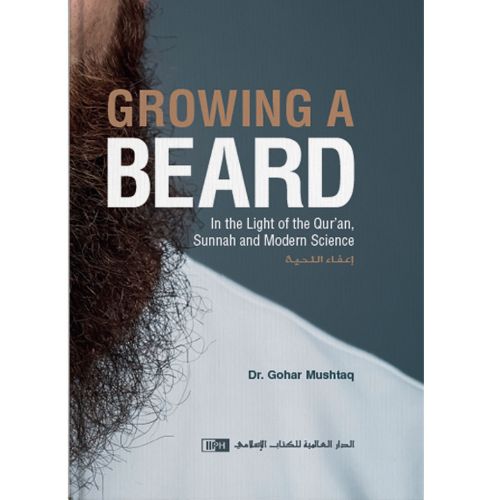
In this book, Dr. Gohar Mushtaq elucidates a neglected Sunnah – growing the beard. In a frank and to-the-point style, he presents an all-inclusive analysis of the beard: its historical and religious importance – not only in Islam but also in other faiths – along with its sociological perceptions and biological characteristics. This book is a must-read for Muslim men of all ages.
Growing a Beard (IIPH)
RM46.00
Hurry up, Only 3 left.

Frequently Bought Together
1 Item
RM46.00
2 Add-Ons
RM116.00
Total
RM162.00
Additional information
| Weight | 0.280 kg |
|---|---|
| Dimensions | 22 × 15 × 1 cm |
| Author | |
| Binding | Hardcover |
| ISBN | 9786035014113 |
| Pages | 112 |
| Publisher | IIPH |
Related Products
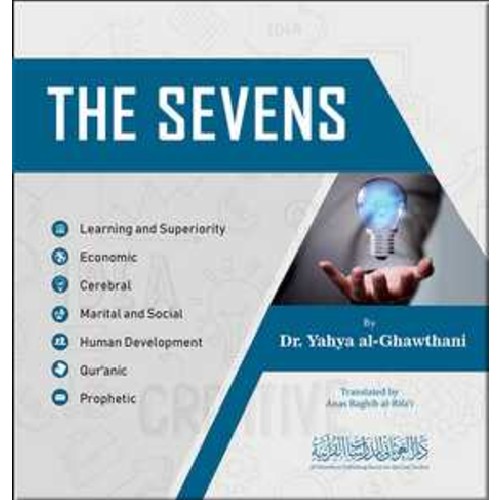
The Sevens
Highlights:
A concise guide for lecturers and trainers. It includes 70 Sevens which are among the strongest assistant to you in life. They are the extract of the experiments and experiences of successful scholars, within intensified points and concentrated pivots
RM60.00
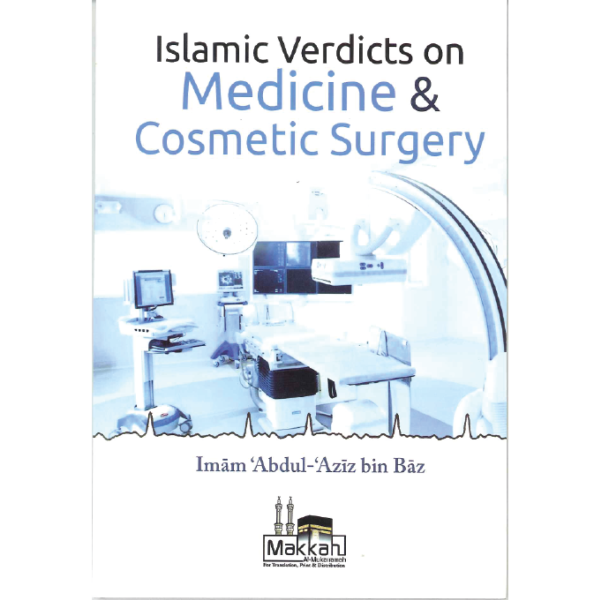
Islamic Verdicts on Medicine & Cosmetic Surgery
Highlights:
We had the honor of our eyes being gifted with seeing his eminence Imam Abdul Aziz Bin Baz may Allah bestow upon him immense mercy and of sitting with him when he delivered verdicts regarding rulings of the Shariah on many medical issues which have been increasingly asked about by patients and people working in the medical field. We focused ourselves, with success granted by Allah, on the authenticity of medical information to the best of our ability. We have applied our best efforts in its presentation while simplifying it as much as possible. This is so that it is easily understood by those who are not specialists in medical fields.
RM45.00
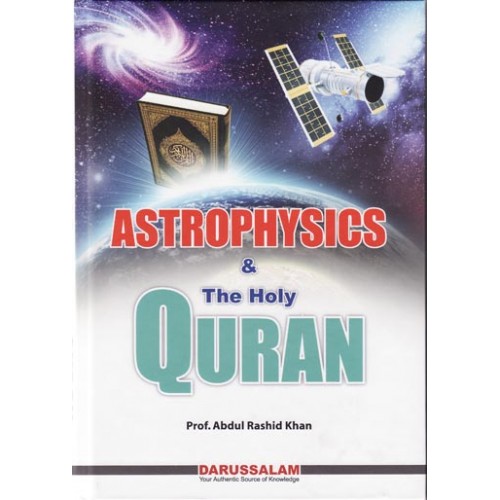
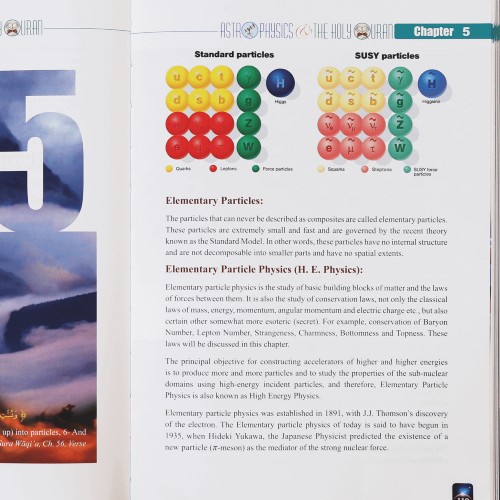
Astrophysics & The Holy Quran (H/B)
Highlights:
We are living now-a-days in the age of science. The intelligent human beings want to know where did they come from? Where did the universe come from? Will the universe come to an end, if so, how? Is the universe static or dynamic, if dynamic, is it expanding or contracting? What is time? When was it started? Will it come to an end? What are Black Holes? What are the forces of Nature? What is the smallest piece of matter? What is the status of man in the universe? Are there ultimate limits for human beings to know about something?
The majority of people especially in the third world are unable to answer these questions. When they are asked such questions, most of them answer with a shrug or with a vague and ambiguous knowledge. On the basis of Holy Qur’an as well as scientific knowledge, I have tried my level best to answer these questions in this book “Astrophysics and the Holy Quran”.
RM80.00
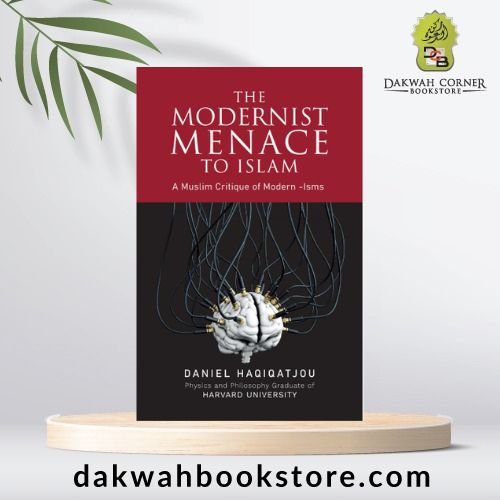
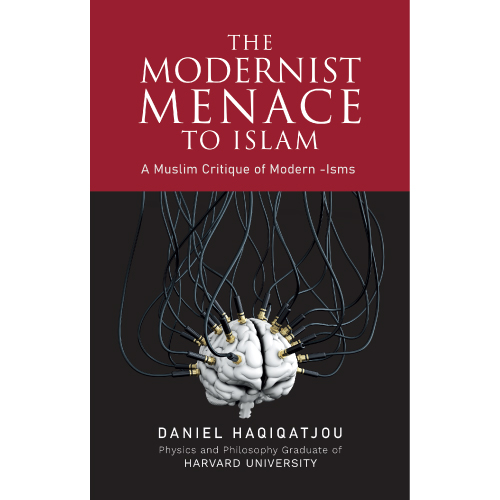
The Modernist Menace To Islam
5 ★
5 ★
8 Ratings
5 ★
8
4 ★
0
3 ★
0
2 ★
0
1 ★
0
RM35.00
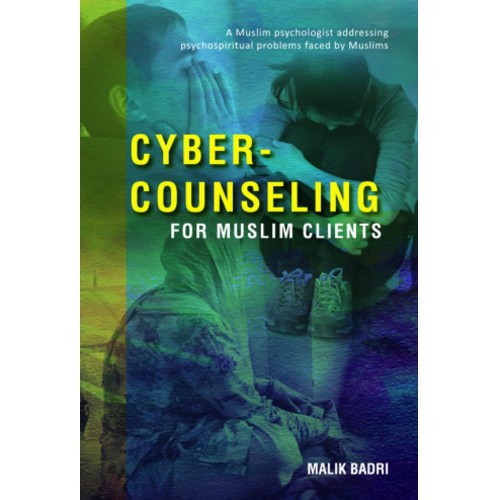
Cyber-Counseling For Muslim Clients
Highlights:
A Muslim psychologist addressing psychospiritual problems faced by Muslims
RM35.00
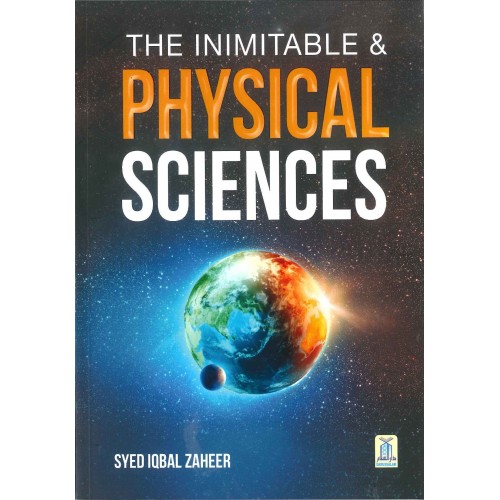
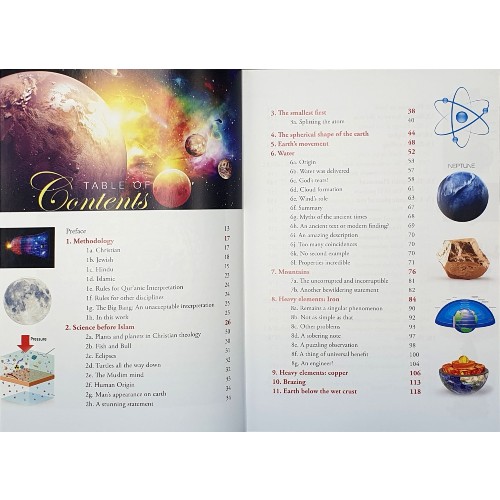
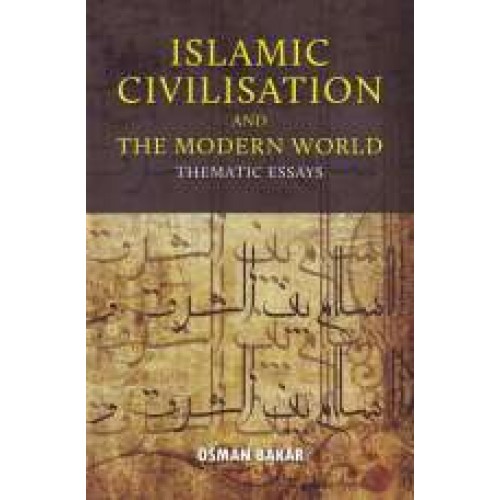
Islamic Civilisation and The Modern World (P/B)
Highlights:
This book presents a thematic treatment of Islamic civilisation. Each of the fourteen chapters comprising this book treats at least one of the major themes that are characteristic of this youngest religiously-based civilisation of the world.
RM65.00
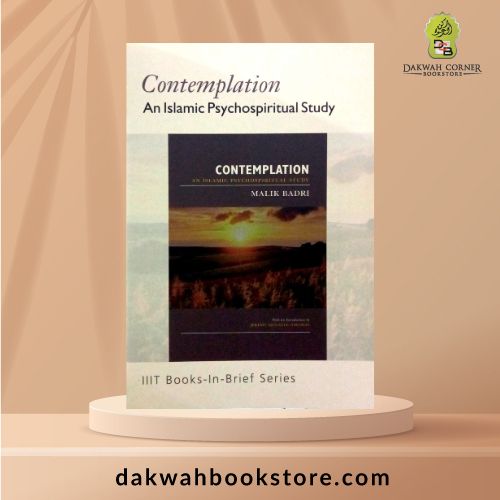
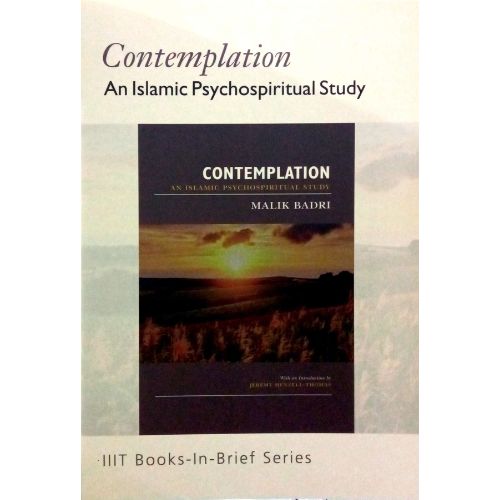
Contemplation: An Islamic Psychospiritual Study (IIIT) (Book in Brief Series)
4 ★
4 ★
1 Rating
5 ★
0
4 ★
1
3 ★
0
2 ★
0
1 ★
0
Highlights:
IIIT Books-In-Brief Series is a valuable collection of the Institute’s key
publications written in condensed form to give readers a core under-standing of the main contents of the original.
RM45.00

Recently Viewed


33 Ways of Developing Al-Khushoo`: Humility and Devotion in Prayer
5 ★
5 ★
1 Rating
5 ★
1
4 ★
0
3 ★
0
2 ★
0
1 ★
0
Highlights:
Shaykh Muhammad Salih al-Munajjid’s little book is perhaps one of the most widely-circulated among Muslims today. This is because the topic touches worshippers where it hurts—we know that we often lapse into an automatic sort of prayer when we lose concentration. The Shaykh points out that this loss of concentration really stems from a lack of humility and devotion—in Arabic, khushoo‘. His aim in writing this book is to help us to get back that khushoo‘. His step-by-step approach makes it simple. He gives practical advice and uses the excellent example of the prayer of the Messenger of Allah (blessings and peace be upon him) to guide us, so that as worshippers, we can truly return to a state of humility and devotion before the Lord.
RM15.00


Divine Speech
5 ★
5 ★
3 Ratings
5 ★
3
4 ★
0
3 ★
0
2 ★
0
1 ★
0
Highlights:
The Quran, the sacred scripture of Islam, is revered as the spoken word of God by approximately one-fifth of the world’s population. Since its inception, the power of the Quran has derived not only from its message, but also from the inimitable literary style and rhetorical impact that the Arabic scripture has on its audiences. Divine Speech: Exploring the Quran as Literature attempts to make some of the most recent Arabic and European-language scholarship on its literary features accessible to a wider, English-speaking audience. These features include its language and word choice, its use of figures of speech and other rhetorical devices, its manner of narrating parables and stories, and the structure, coherence, and the order of its “chapters”-aspects that typically remain mysterious to readers of English translations of the text. Divine Speech furnishes its readers with a better appreciation of the Quran from a literary perspective, and in the process stimulates interest in, and provides tools and resources for, further study of the scripture.
RM100.00
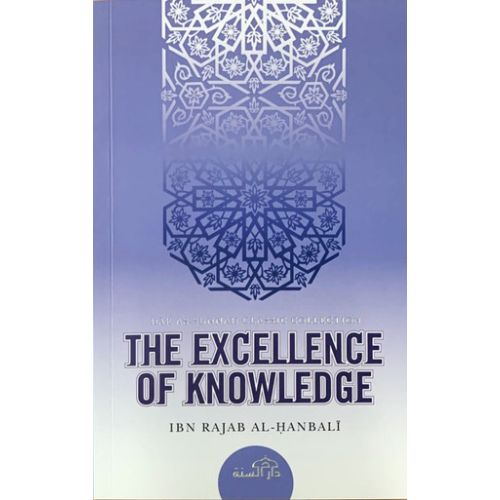
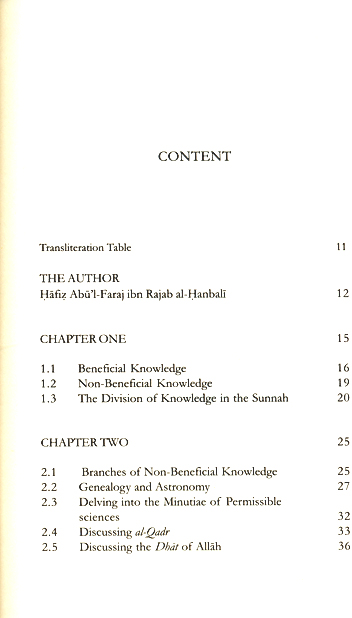
The Excellence of Knowledge (Dar as-Sunnah Publishers)
Highlights:
The way and wisdom of the Salaf, all goodness lies in traversing the way of the Salaf, beneficial Knowledge with regards the ‘Inner Sciences’, the foundation of knowledge and many other branches of the beneficial knowledge.
RM39.00


Why Islam?
Highlights:
Often, the first thing someone is asked when they discover the truth and embrace Islam is the question: Why Islam? Here, an American revert-to-Islam answers that question. The author, K. Sherman, writes: The beauty of Islam is probably the best-kept secret in modern times; it is about time it was revealed. This is the sentiment of a majority of people who are discovering the truth about Islam every day. My first exposure to the religion was through a perusal of a fifty-page booklet titled Towards Understanding Islam (written in 1932). It explained to me everything that twenty years of life and fifteen years of education could not. After the initial sense of relief, I suddenly felt cheated. I was consumed with rage. Why? I could not fathom how people could know about this phenomenal way of life and not speak out and inform others. This book is my personal take on the beauty of Islam, backed up by relevant and authentic references. I am convinced that humanity direly needs it and it is my duty to speak out.
RM22.00
RM50.00 – RM65.00Price range: RM50.00 through RM65.00
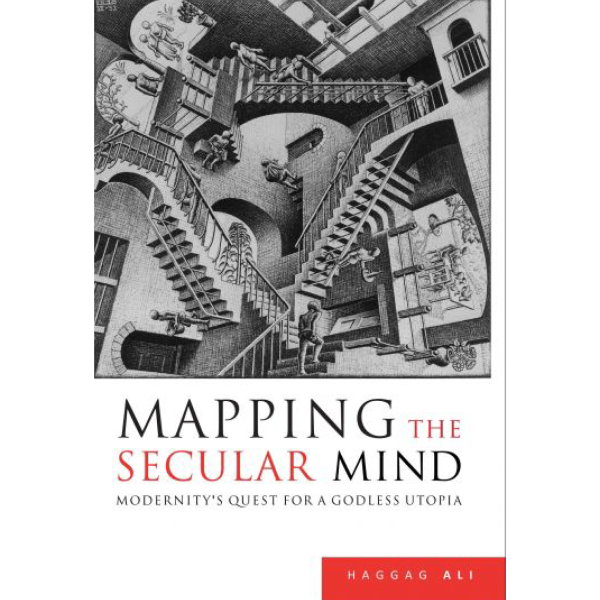
Mapping The Secular Mind (IIIT)
Highlights:
The secular mind had a grand plan, to establish an earthly paradise, a utopia of the here and now, a modern civilization governed by human reason, rationality, and the triumph of progress. Whilst ideals are one thing, the means to realize them is something else. Away from the hype, emancipating humanity from the shackles of God and religion has proved no easy matter. Mapping the Secular Mind critically examines issues of reason, rationality, and secular materialism, to explore how these mental perceptions, or ways of mapping the world, have affected human interaction and sociological development. It does this by comparing and contrasting the ideas of Abdelwahab M. Elmessiri (1938 2008) a leading Arab intellectual, and Zygmunt Bauman (1925), one of the world s foremost sociologists. In the last few decades, an emergent Western critique of modernity has inspired Muslim intellectuals to develop new ideas, images, terms and concepts that state their positions towards the tendencies of secular modernity, its transformations and consequences, and how it manipulates perceptions of reality. The book challenges foundations of secular ideology to argue that its aspirations have deeply transformed human consciousness and man s sense of self, leaving him a creature of purposeless consumption, wearied by the search for fulfillment, and controlled by materialistic laws governing physical phenomena. It also offers a more darker thesis, that Fascist Germany and the Eugenics movement were a form of Social Darwinism taken to its logical course. These were not an aberration from the principles of modernity, Ali argues, but a consistent outcome of the modern worldview, with the seeds of self-destruction being woven into the very fabric of the philosophy.
RM86.00