


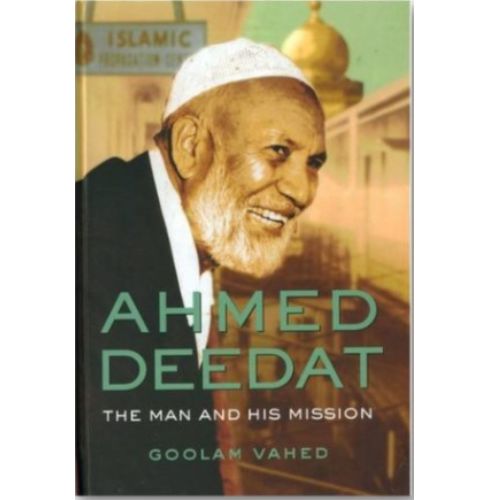
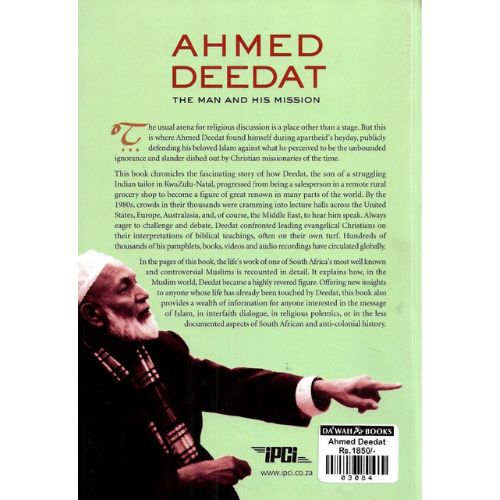


This book chronicles the fascinating story of how Deedat, the son of a struggling Indian tailor in KwaZulu-Natal, progressed from being a salesperson in a remote rural grocery shop to become a figure of great renown in many parts of the world. By the 1980s, crowds in their thousands were cramming into lecture halls across the United States, Europe, Australasia, and, of course, the Middle East, to hear him speak. Always cager to challenge and debate, Deedat confronted leading evangelical Christians on their interpretations of biblical teachings, often on their own turf. Hundreds of thousands of his pamphlets, books, videos and audio recordings have circulated globally.
In the pages of this book, the life’s work of one of South Africa’s most well known and controversial Muslims is recounted in detail. It explains how, in the Muslim world, Deedat became a highly revered figure. Offering new insights to anyone whose life has already been touched by Deedat, this book also provides a wealth of information for anyone interested in the message of Islam, in interfaith dialogue, in religious polemics, or in the less documented aspects of South African and anti-colonial history.








Tafseer Soorah Al-Hujurat (H/B)
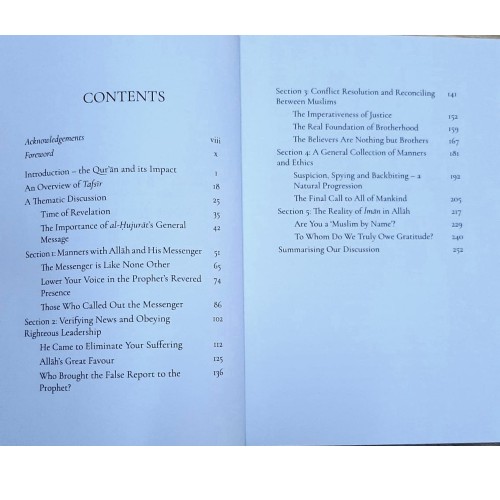
Tafseer Soorah al-Hujurât: A Commentary on the 49th Chapter of the Qur’an is a treasury of divine advice, commandments, and prohibitions regarding common problems in social relations, including gossip, spying, arguing, and bigotry. To make the best use of this chapter, the believer needs a detailed explanation of the meanings of the verses.
Dr. Bilal Philips has based his tafseer (exegesis) on the methodology used in the classical works of tafseer. He has relied first of all on the explanations found within the Qur’an itself, then on explanations found in the Sunnah and related incidents which occurred at the time of the revelation of the verses in question. Beyond these primary sources, Dr. Philips has relied on the interpretations made by the Prophet’s Companions (may Allah be pleased with them) who were noted for their ability to interpret and comment on the Qur’an. ‘Abdullâh ibn ‘Abbâs, for example, was called ‘The interpreter of the Qur’an’ by Prophet Muhammad (blessings and peace of Allah be upon him). Finally, the author has made use of the grammatical explanations given in the classical tafseer works. Wherever possible, Dr. Philips has tried to apply the derived meanings of the verses to the problems of contemporary society.
RM60.00