



| Weight | 0.70 kg |
|---|---|
| Dimensions | 24.5 × 16.5 × 3.5 cm |
| Author | |
| Binding | Hardcover |
| ISBN | 9781916475663 |
| Pages | 321 |
| Year of publication | 2020 |
| Publisher | Dar Al-Arqam |
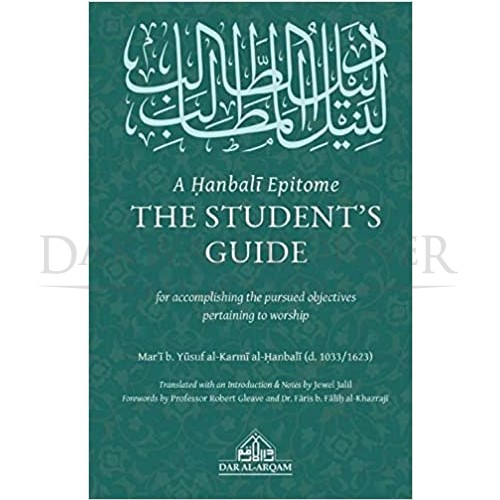
A Hanbali Epitome: A Student’s Guide
$28.41
Out of Stock
Highlights:
somdn_product_page
Compare
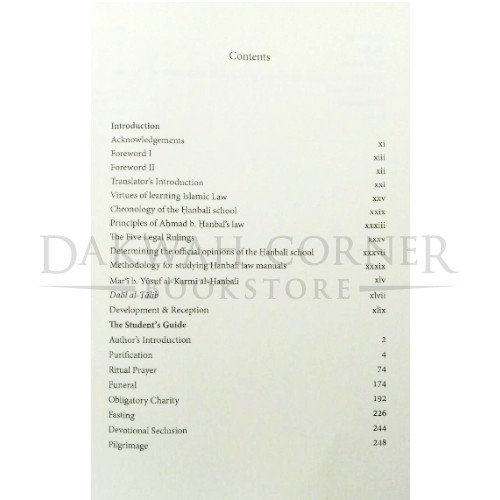
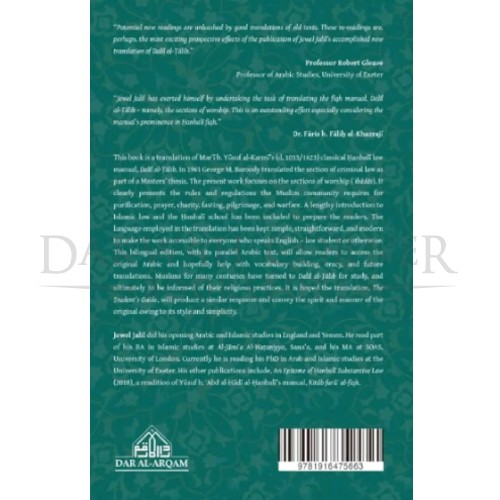
The present work focuses on the Muslim community requires for purification, prayer, charity, fasting, pilgrimage, and warfare. A lengthy introduction to Islamic law and the Hanbali’ school has been included to prepare the readers. The language employed in the translation has been kept simple, straightforward, and modern to make the work accessible to everyone who speaks English – law student or otherwise. This bilingual edition, with its parallel Arabic text, will allow readers to access the original Arabic and hopefully help with vocabulary building, oracy, and future translation. Muslims for many centuries have turned to Dalil al-Talib for study, and ultimately to be informed of their religious practices. It is hoped the translation, The Student’s Guide, will produce a similar response and convey the spirit and manner of the original owing to its style and simplicity.
Additional information
Reviews (0)
Be the first to review “A Hanbali Epitome: A Student’s Guide” Cancel reply
You must be logged in to post a review.
Related Products


Common Mistakes Regarding Prayer – IIPH
Highlights:
Formal prayer (salat) is the second pillar of Islam, and the most important of a Muslim’s acts of worship. Prophet Muhammad (PBUH) said: “The first of one’s actions for which a slave of Allah will be held accountable on the Day of Judgment will be one’s prayers. If they are correct and accounted for, then he (or she) will have succeeded (gained paradise); and if they are lacking, then he (or she) will have failed (lost paradise). If there is something defective in his (or her) obligatory prayers, the Lord will say: ‘See if my slave has any supererogatory prayers with which that which was defective in his (or her) obligatory prayers may be completed. Then the rest of his (or her) deeds will be judged in like manner.” (At-Tirmidhi and others) Shaykh Mashhur Hasan Salman has compiled a list of the most common errors that we make when we pray, discussing and explaining each one. This book is a valuable aid to Muslims hoping to perfect their prayers, so that their prayers may be free of defects and acceptable to Allah. This new and revised edition of the English translation of his work presents the text in a fluent, highly readable style.

Forensic Psychiatry In Islamic Jurisprudence (P/B) (IBT)
Highlights:
This is the first book in Forensic Psychiatry that focuses on the application of psychiatry to legal issues connected to Islamic jurisprudence. It gives contemporary psychiatry in any Islamic country a broad spectrum of tools to work with, enabling the utilization of options specific to particular societal and cultural norms. This book will appeal to both the general as well as the academic reader.


Funerals Regulations and Exhortations (H/B)
Highlights:
Our soul inevitably follows a route starting from birth, passing through death, and ending with our resurrection in the next life. The inevitable journey discusses over a sequence of titles: sickness, inheritance, funerals, Life in Barzakh and so on…


The Concise Presentation of the Fiqh of the Sunnah and the Noble Book
Highlights:
Written by Dr. Abdul-Azeem Badawi and translated by Jamal al-Din M. Zarabozo, The Concise Presentation of the Fiqh of the Sunnah and the Noble Book covers the fiqh of diverse topics like purity, prayer, fasting, zakah, pilgrimage, marriage, business transactions, foods, inheritance, criminal offenses, and jihad. Dr. Badawi relies only on the Quran and the Sunnah, making it an authentic Islamic book on fiqh and a collection of sound hadiths.

Islamic Rules of Order (P/B)
Highlights:
Organizations must have rules of order to facilitate their debate and to fill in the procedures not detailed by their constitutional documents. While most American organizations are content to operate by Robert’s Rules of Order, Muslim organizations have often wrestled with questions over whether the rules of order systemized by a Western military figure are in accord with the Qur’an and the Sunnah.
This book tackles the matter directly and takes into account the Qur’an, the sunnah, Islamic manners and the history of Islamic consultation and leadership to provide a simple, practical guide to organizational procedure that can be incorporated into the governance of Muslim organizations. The book includes advice on writing bylaws and on complying with the best practices of the U.S. Dept. of Justice in a way that is Islamically authentic, transparent, and accountable. It provides a basic starting point for any Muslim organization while allowing for flexibility so that organizations may make any variations they require within their own bylaws and constitution, so that it can accommodate differing schools of thought on Islamic law. In its discursive approach it is an essential primer for understanding the value of rules of order and the Islamic context for their application. The Islamic Rules of Order has been adopted as the rules of order of the Association of Muslims Social Scientists.

War and Peace in Islam : The Uses and Abuses of Jihad (P/B)
Highlights:
Written by a number of Islamic religious authorities and Muslim scholars, this work presents the views and teachings of mainstream Sunni and Shi’i Islam on the subject of jihad. It authoritatively presents jihad as it is understood by the majority of the world’s 1.7 billion Muslims in the world today, and supports this understanding with extensive detail and scholarship. No word in English evokes more fear and misunderstanding than “jihad.” To date the books that have appeared on the subject in English by Western scholars have been either openly partisan and polemical or subtly traumatized by so many acts and images of terrorism in the name of jihad and by the historical memory of nearly 1,400 years of confrontation between Islam and Christianity. Though jihad is the central concern of War and Peace in Islam: The Uses and Abuses of Jihad, the range of the essays is not confined exclusively to the study of jihad. The work is divided into three parts: War and Its Practice, Peace and Its Practice, and Beyond Peace: The Practice of Forbearance, Mercy, Compassion and Love. The book aims to reveal the real meaning of jihad and to rectify many of the misunderstandings that surround both it and Islam’s relation with the “Other.”
Reviews:
“A dynamic myth-busting clarification of the real position of mainstream orthodox Islam on the whole question of violence and jihad.” —T. J. Winter, University of Cambridge
“This is the best book on the subject in English. It will be of inestimable value.” —Shaykh Mustafa Ceric, Grand Mufti Emeritus of Bosnia


Zakah According to the Quran & Sunnah (Darussalam)
Highlights:
Zakah, the third Pillar of Islam, is probably the first Pillar of its economic system. It represents the first and most important mechanism to implement economic justice and to provide sustenance to the economically unfortunate, two issues for which Islam is especially sensitive. These two issues are the essence of this book. This book consists of all the main issues of Zakat (i-e, Zakah on Gold, Silver, Paper Money, Livestock, Fruits, Grains, Rented Land, Buried treasures, Minerals, Trade, Shares, Stocks, and Exploited Assets etc). The main objective of this work is to serve an easy and authentic reference to the reader.


Funeral Rites In Islam (H/B)
Highlights:
The purpose of this book is to provide English speaking Muslims a concise and authentic compilation of the instructions regarding funeral rites in Islam.


Fiqh Course: Tahaarah, Salaah & Janaa’iz
Highlights:
This course was compiled for English-speaking Muslims and is especially beneficial for new Muslims. It covers tahârah (purification), salâh (prayer) and janâ‘iz (funerals). It is set out in an easy-to-understand manner, citing evidence from the Qur’an and authentic hadiths. The aim of this book is to provide the reader with a correct, yet uncomplicated guide to the performance of the aforementioned acts of worship. Allah willing, it is the first in a series which will cover all aspects of worship and Islamic jurisprudence.

The Right to Education, Work and Welfare in Islam (P/B)
Highlights:
In The Right to Education, Work and Welfare in Islam Professor M.H. Kamali develops an Islamic perspective on three connected and complementary areas of rights and liberties. He urges that education is often a necessary ingredient of professional work even more so now than in earlier times when the range and variety of specialised knowledge were relatively limited. A person who acquires education, whether generally or at advanced levels of specialisation, is more likely to stand in a better position to enter the workforce and thus to contribute to the welfare of the community.
The author commences his discussions on education, work and welfare in Islam by focusing on how each is treated in the Qur’an; and follows this by the example of the Prophet and, after him, the Pious Caliphs who gave prominence to the education and welfare needs of people at times both of scarcity and affluence. Professor Kamali then moves forward to our time and discusses the right to education, the education of children, institutionalisation of learning, academic freedom and the debate between science and religion.
The section on work elaborates on the value of work, work ethics, workers’ and employers’ rights and responsibilities, and the role and responsibility of governments.
Finally, the section on welfare focuses on the importance in Islam of caring for those who are in need and the different forms of provision that can be made available by individuals, the state and charities.


Having Fun The Halal Way Entertainment In Islam
5 ★
5 ★
1 Rating
5 ★
1
4 ★
0
3 ★
0
2 ★
0
1 ★
0
Highlights:
With the advent of technology, the entertainment industry has flourished and become immensely popular. Combine this with the exponential advances in technology, and the result is an increasing number of ways to amuse ourselves. As a result of such advances, Muslim react in a variety of manners towards entertainment. Some label entertainment as completely forbidden. This sometimes includes parents who say no to almost everything that their young ones deem to be ‘fun’, without providing them with suitable alternatives. Others, who do not want to take this extreme approach, fall into the trap of excessive use of – and even addiction to – various sources of entertainment, without any limits.
In Having Fun the Halal Way, Ismail Kamdar explores the teachings of Islam regarding entertainment. Drawing upon the Quran, the Sunnah and the understanding of the righteous scholars of Islam, he provides a detailed and balanced analysis of the topic. He not only explains the detriments of the current entertainment industry, but also suggests alternative means to have a good time with friends and family members.


Fast According to the Quran & Sunnah
Highlights:
Saum (Fast) is a third Pillar of Islam. Allah’s Messenger said, Allah says: “Every deed of the son of Adam is for him, except Saum (fasting). It is for Me and I shall reward for it.”
As the status of this act of worship is so high it is essential to learn the pilings pertaining to this month of fasting so that Muslims will know what is obligatory in order to do it, what is forbidden to avoid it, and what is permissible so that they do not unnecessarily subject themselves to any hardship by depriving themselves from it.
This book consists of all the main issues of Fast. The main objective of this work is to serve an easy and authentic reference to the reader.
Recently Viewed
The Final Messenger : The Lifestory of Prophet Muhammad
Highlights:
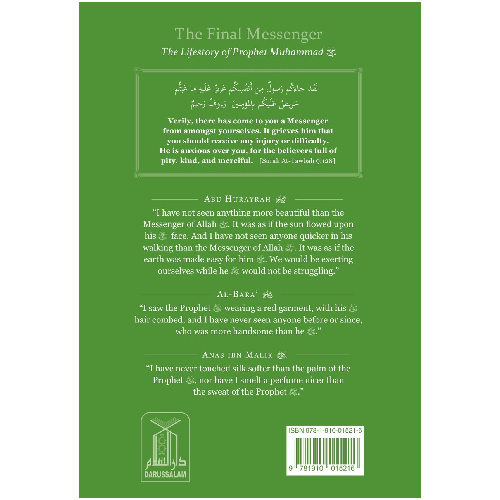
The Life story of Prophet Muhammad SAWﷺ Verily, there has come to you a Messenger from among yourselves. It grieves him that you should receive any injury or difficulty. He is anxious over you, for the believers full of pity, Kind, and merciful. [Surah At-Tawbah 9:128] Abu Hurayrah : I have not seen anything more beautiful than the messenger of Allah SWTﷺ. It was as if the sun flowed upon his SAWﷺface. And I have not seen anyone quicker in his walking than the Messenger of Allah SWT.It was if the earth was made easy for him SAW.We would be exerting ourselves while he SAWﷺwould not be struggling.’’ Al Bara’ ‘’I saw the Prophet SAWﷺ wearing a red garment, with his SAWﷺhair combed, and I have never seen anyone before or since, who was more handsome than he SAW. Anas Ibn Malik ‘’I have never touched silk softer than the palm of the prophet SAW,nor have I smelt a perfume nicer than the sweat of the prophet SAW.’’
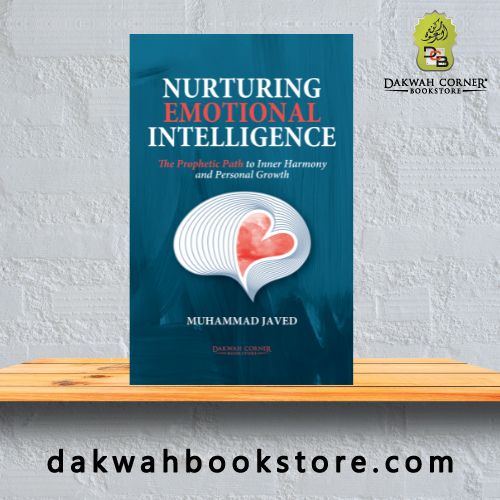
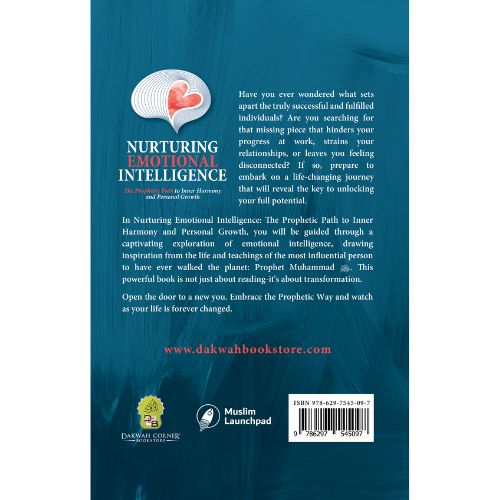
Nurturing Emotional Intelligence (New Cover)
Highlights:
Nurturing Emotional Intelligence
Have you ever wondered what sets apart the truly successful and fulfilled individuals? Are you searching for that missing piece that hinders your progress at work, strains your relationships, or leaves you feeling disconnected? If so, prepare to embark on a life-changing journey that will reveal the key to unlocking your full potential.


Umar ibn Abdul-Azeez The Just Caliph (IIPH)
Highlights:
This book, written by Luqman Nagy, highlights the life and times of ‘Umar ibn ‘Abdul-‘Azeez, a truly exceptional Muslim ruler who, during his twenty-nine months in office, governed the Ummah totally in accordance with the Qur’an and the Sunnah. His sincere devotion to the religion of Islam enabled ‘Umar ibn ‘Abdul-‘Azeez to bring prosperity and contentment not only to the Ummah but to all those residing within the Umayyad state.

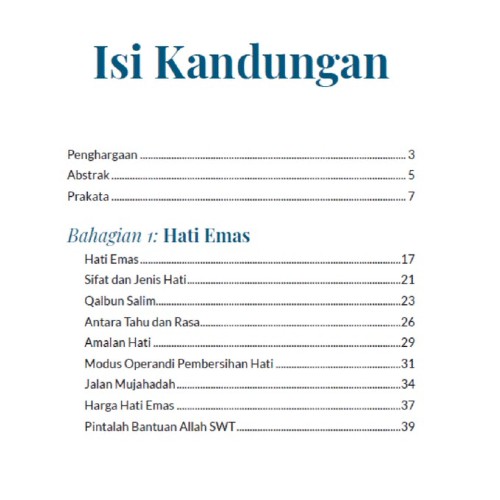
Berteduh Kerana Kekosongan Hati
Highlights:
Namun, hati kita tetap berasa kosong.
Mengapa?
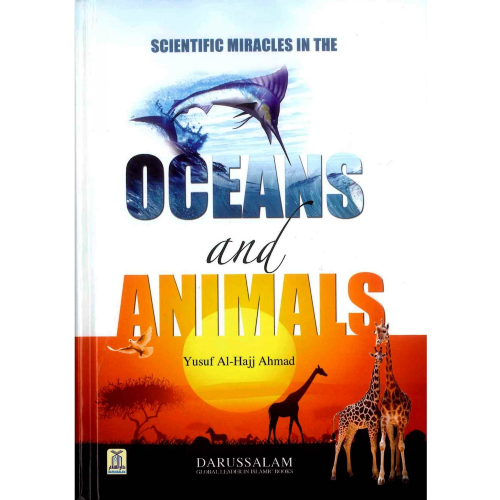
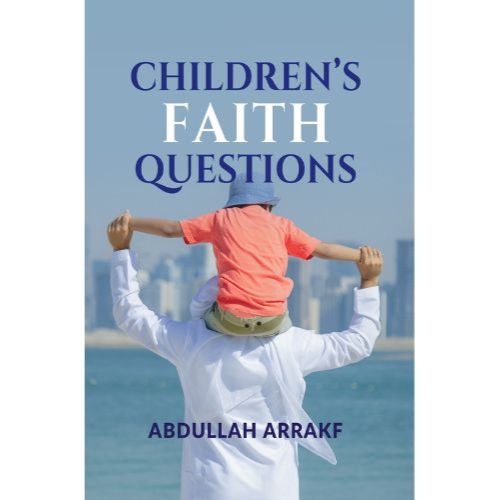
Children’s Faith Questions (New Cover)
Highlights:
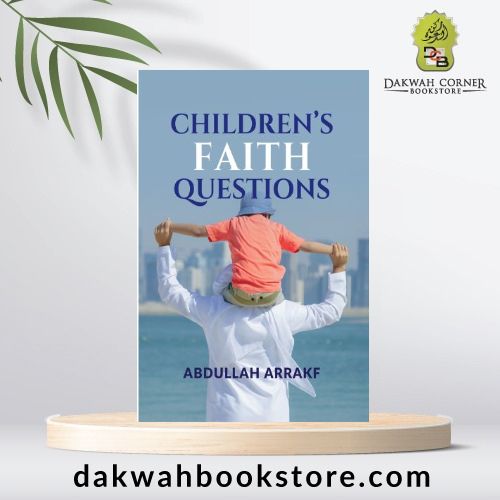
This book calls upon Muslim parents to teach the faith to their children in a time of globalization and unlimited access—through technology—to all that is confusingly contradictory to the Islamic faith.
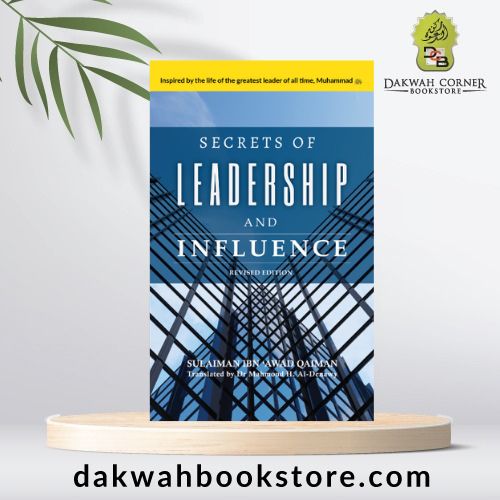
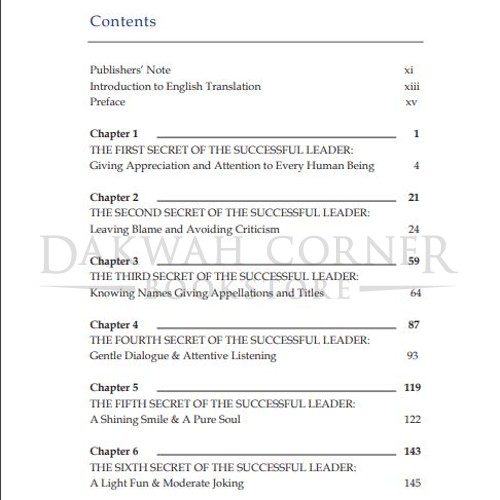
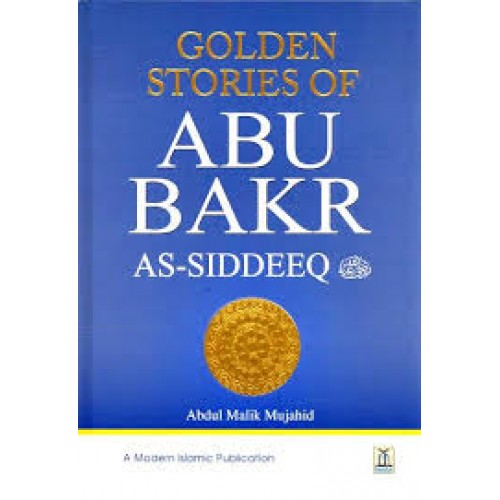
Golden Stories of Abu Bakr As-Siddeeq
Highlights:
Golden Stories of Abu Bakr As-Siddeeq (RA) This book provides detailed and insightful glimpses into the extraordinary life of the first Caliph of the Muslims, Abu Bakr As-Siddeeq (RA) and his massive contribution to all of humanity; As a principled and disciplined young person in Makkah A successful businessman Embracing Islam under the tutelage of the prophet (SAW) and laying the groundwork for Islam’s spread across the globe. In a world currently needing moral and ethical leadership based on the divine revelations of Allah, the life of Abu Bakr offers a blueprint to a successful life to those Muslims and non Muslims who are searching for the truth. He was a truly a man for all ages, encompassing all aspects of complete individual, as an intellectual, Companion of the Prophet and Caliph.
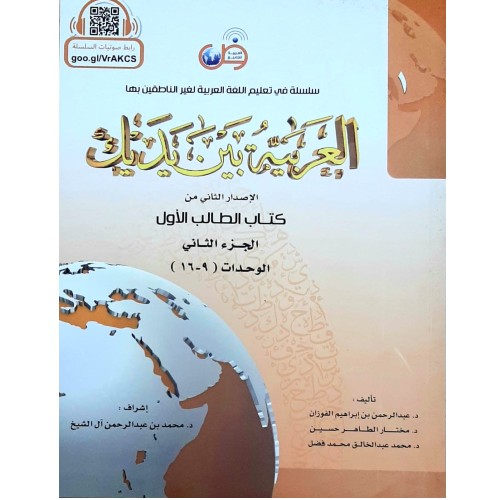
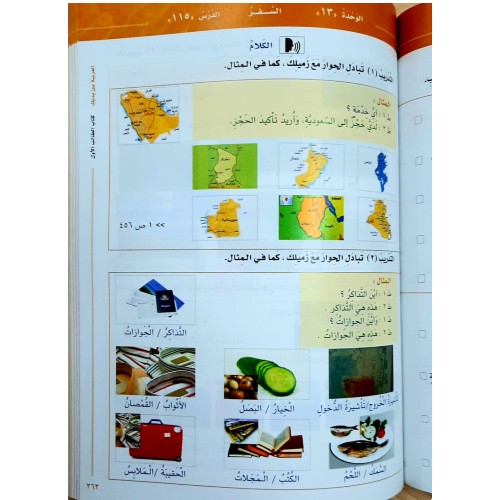
[AR] Al-Arabiyyah Bayna Yadayk Book 1 Part 2
Highlights:
Al-Arabiyyah Bayna Yadayk, Arabic At Your Hands Series (Students Level 1- Book 2) – With QR
This series is designed for the non-Arab speaking, senior level student. It helps the student learn Arabic through listening and conversation along with reading and writing. The series stresses communication and also offers glimpses into the Arabic culture, both Islamic and national.
The first level consists of two parts (books), each of which includes 8 units (total of 16 units). Each unit consists of 9 lessons, constituting a total of 144 basic lessons in this level.
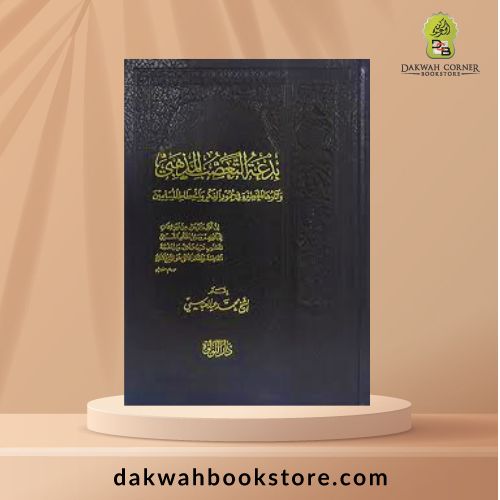
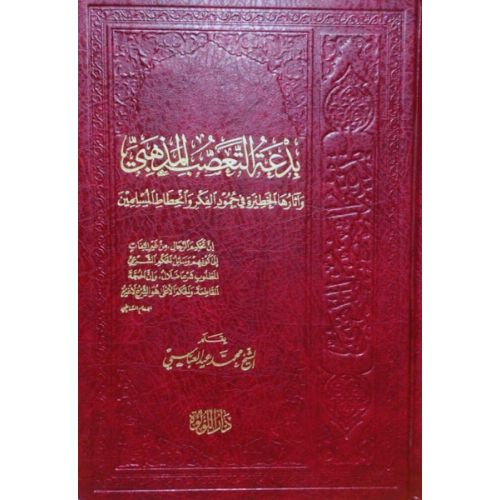
[AAC] Bidaah Al Taasub Al Madhhabi / بدعة التعصب المذهبي
Highlights:
بدعة التعصب المذهبي واثارها الخطيرة في جهود الفكر وانحطاط المسلمين
Women In Jahiliya and Islam (P/B)
Highlights:
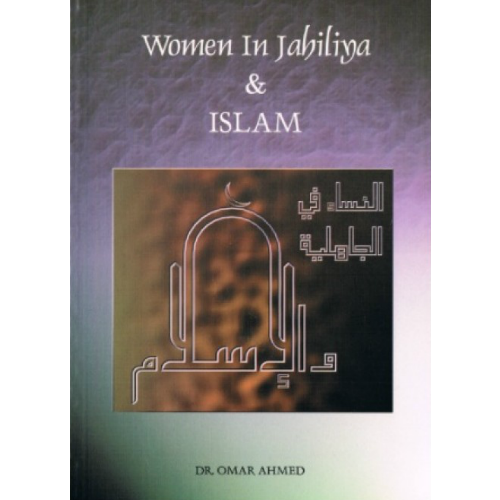
A short study dealing with the special status the woman holds in Islam as opposed to her mistreatment in Jahiliya.
A brief survey of the status of women in previous civilizations and religions,
In the pre-Islamic era (Jahiliya).
It then provides a fair evaluation of what Islam contributed towards the restoration of woman’s dignity and rights which is just as relevant in today’s modern Jahiliya as it was in the past.
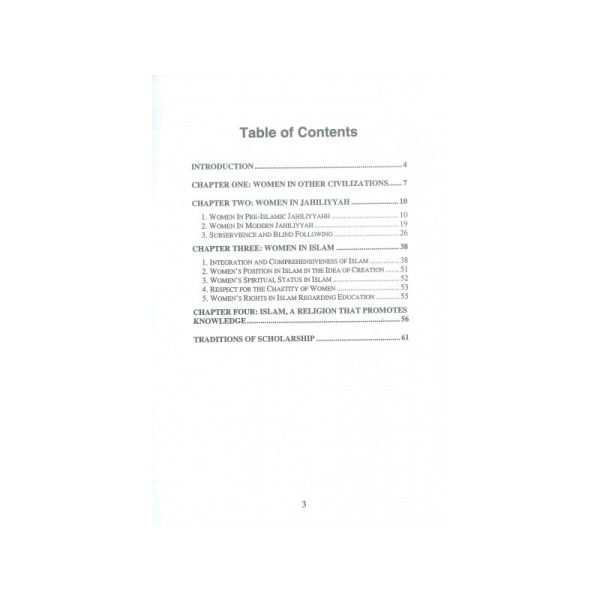
1.Women in Other Civilizations.
2. Women in Pre-Islamic Jahiliya.
3.Women in Modern Jahiliya.
4. Subservience & Blind Following.
5.Integration and Comprehensiveness of Islam.
6.Women’s Position in Islam on the Idea of Creation.
7.Women’s Spiritual Status in Islam.
8.Respect for the Chastity of Women.
9.Women’s Rights in Islam Regarding Education.
There are no reviews yet.