

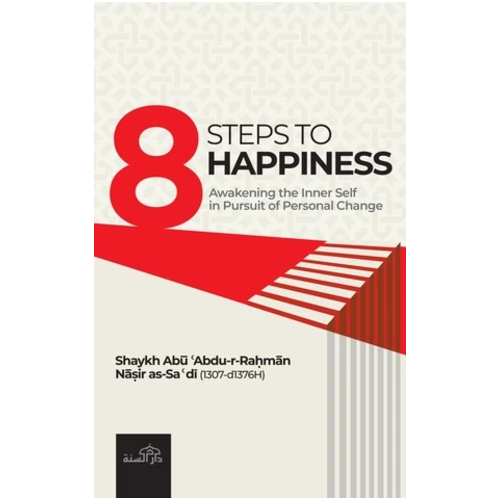
8 Steps to Happiness By as-Sa’di (Wasa’il al-Mufida lil-Hayat al-Sa’idah)
5 ★
5 ★
1 Rating
5 ★
1
4 ★
0
3 ★
0
2 ★
0
1 ★
0
(1)
Highlights:
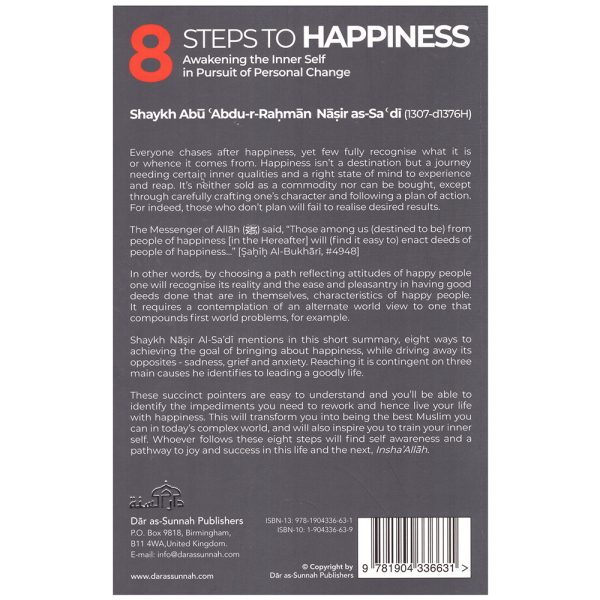
Everyone chases after happiness, yet few fully recognize what it is or whence it comes from. Happiness isn’t a destination but a journey needing certain inner qualities and a right state of mind to experience and reap. It’s neither sold as a commodity nor can be bought, except through carefully crafting one’s character and following a plan of action.
For indeed, those who don’t plan will fail to realize desired results. The Messenger of Allah (peace and blessings be upon him) said, “Those among us (destined to be) from people of happiness [in the Hereafter] will (find it easy to) enact deeds of people of happiness…” [Sahih Al-Bukhari, #4948].
In other words, by choosing a path reflecting attitudes of happy people one will recognize its reality and the ease and pleasantry in having good deeds done that are in themselves, characteristics of happy people. It requires contemplation of an alternate world view to one that compounds first world problems, for example.
Shaykh Nasir Al-Sa’di mentions in this short summary, eight ways to achieving the goal of bringing about happiness while driving away its opposites – sadness, grief, and anxiety. Reaching it is contingent on three main causes he identifies to leading a goodly life.
These succinct pointers are easy to understand and you’ll be able to identify the impediments you need to rework and hence live your life with happiness. This will transform you into being the best Muslim you can in today’s complex world, and will also inspire you to train your inner self.
Whoever follows these eight steps will find self-awareness and a pathway to joy and success in this life and the next, Insha’Allah.
RM35.00

At Their Feet Piety Towards Parents
4 ★
4 ★
1 Rating
5 ★
0
4 ★
1
3 ★
0
2 ★
0
1 ★
0
(1)
Highlights:
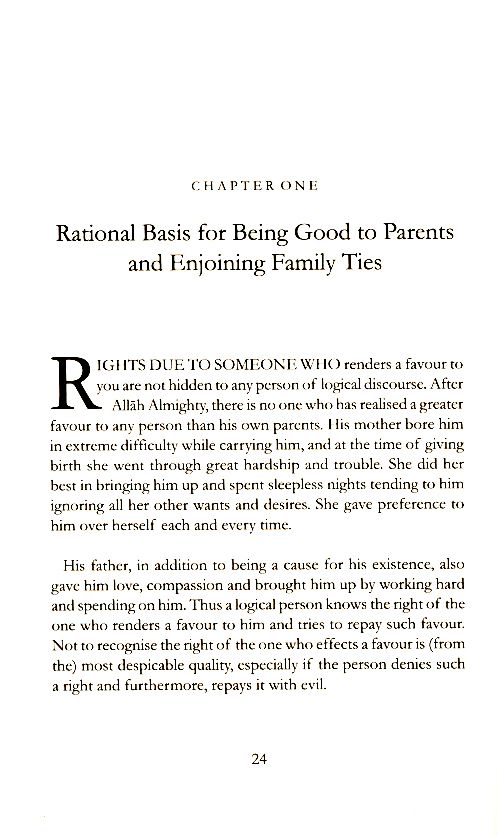
The renowned and eminent scholar, Ibn al-Jawzī penned this emotive book upon witnessing the disregard and neglect some of the youth in his time had for their parents and kin, and not regarding it to be a necessary part of religion.
RM38.00
Awaking From The Sleep Of Heedlesness
4 ★
4 ★
1 Rating
5 ★
0
4 ★
1
3 ★
0
2 ★
0
1 ★
0
(1)
Highlights:
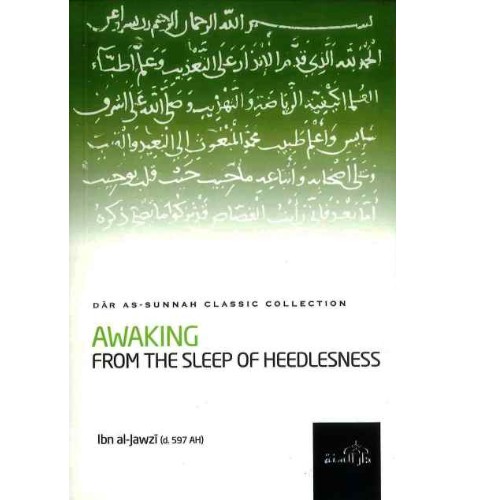
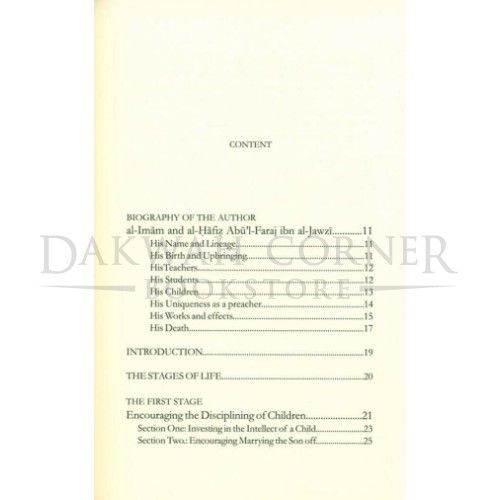
This fourth masterpiece in the series expounds on the five stages of life: the first stage of encouraging and disciplining; the second stage of youthfulness, protecting the self and struggling against desires; the third of maturity; the fourth stage of old age; the fifth stage of decrepitude.
RM35.00
Difference Between Advising And Shaming ( Dar as-Sunnah)
4.5 ★
4.5 ★
2 Ratings
5 ★
1
4 ★
1
3 ★
0
2 ★
0
1 ★
0
(2)
Highlights:
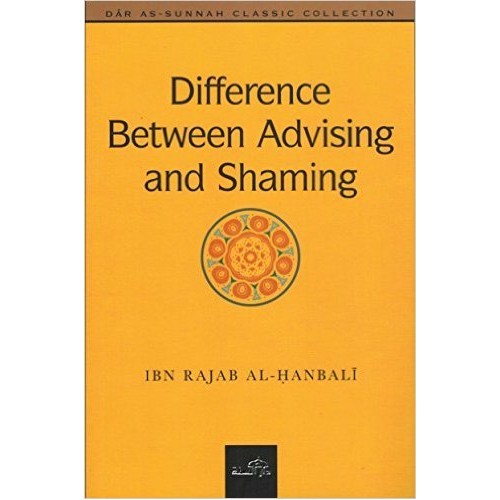
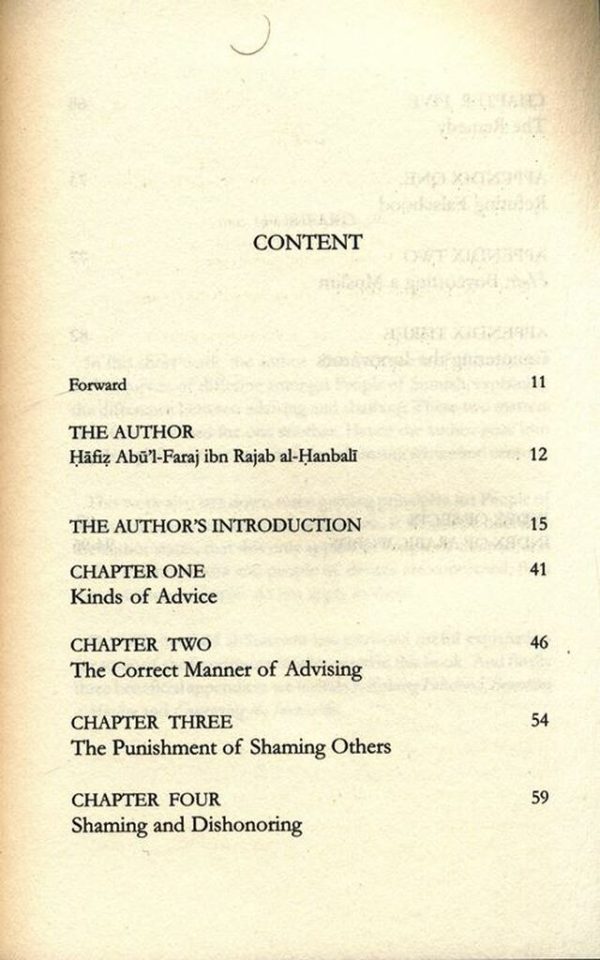
[This book] beautifully illustrates the difference between advising that is encouraged and shaming that is not permitted.
RM40.00
Disciplining The Soul
5 ★
5 ★
1 Rating
5 ★
1
4 ★
0
3 ★
0
2 ★
0
1 ★
0
(1)
Highlights:
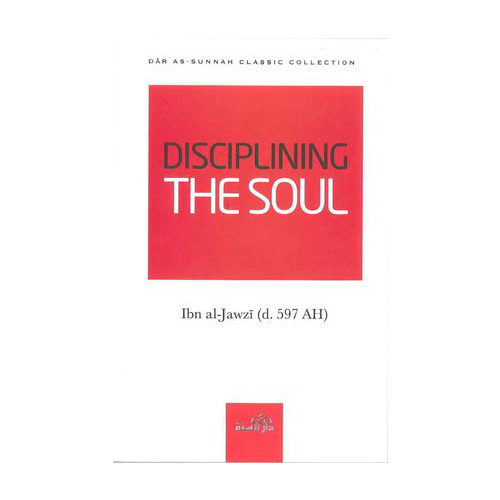
This masterpiece has been divided into thirty chapters to facilitate the reader’s comprehension.
RM54.00
Diseases Of The Hearts & Their Cures (Dar as Sunnah)
4 ★
4 ★
1 Rating
5 ★
0
4 ★
1
3 ★
0
2 ★
0
1 ★
0
(1)
Highlights:
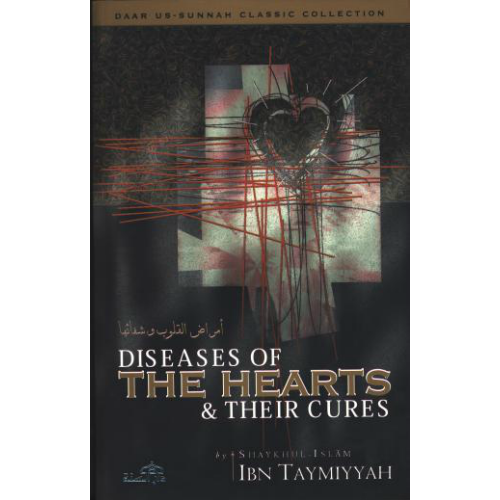
Translated by Abu Rumaysah “Know O beloved reader that it is most important to spend one’s time and energy in treating the heart, and hastening to correct and purify it from sickness and all sins. This is due to the heart occupying a great and lofty position in Islaam, for it is the place to which the Lord looks and the storehouse for tawheed, faith, and sincerity. Actions are distinguished, one from the other, with respect to their excellence in the Sight of Allah in accordance with the condition of the heart, not by their number or form, but rather due to the strength of the caller, his or her truthfulness, his or her sincerity and the extent to which he or she prefers Allah over himself or herself … Al-Haafidh ibn Hajr al-Asqalaanee, may Allah have mercy upon him and provide us with his knowledge, said: “The heart has been singled out for this because it is the leader of the body, and through the purification of the leader the subjects become purified, and with his corruption they become corrupted. So if you, O servant of Allah, with to cure your heart then it is upon you to be truthful with regards to seeking refuge with Allah and putting your trust in Him, to pray a great deal of superogatory prayers, to perform the actions of obedience to Allah frequently, to pray the night prayer while the people are sleeping, and to treat your heart by making it continuously stick to the remembrances and by befriending only the righteous … and to frequently recite the Qur’an. And Allah will indeed allow all of this to be preserved by him.”
RM54.00
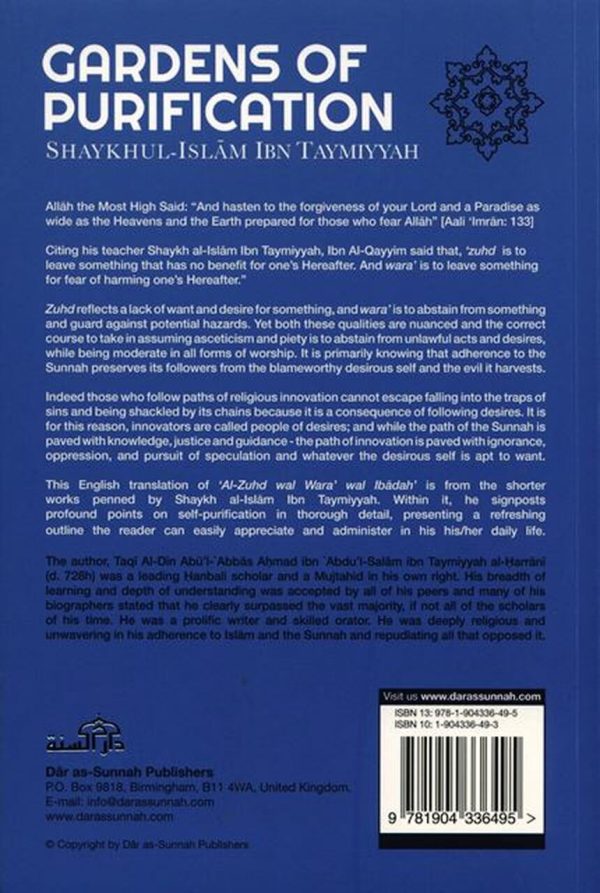
Gardens of Purification
5 ★
5 ★
1 Rating
5 ★
1
4 ★
0
3 ★
0
2 ★
0
1 ★
0
(1)
Highlights:
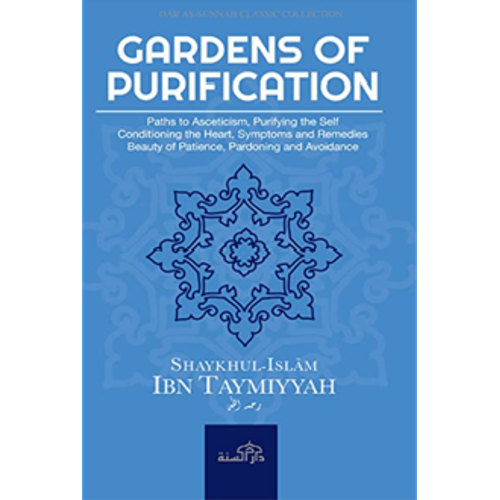
Paths to Asceticism, Purifying the Self. Conditioning the Heart, Symptoms and Remedies. Beauty of Patience, Pardoning and Avoidance
RM90.00
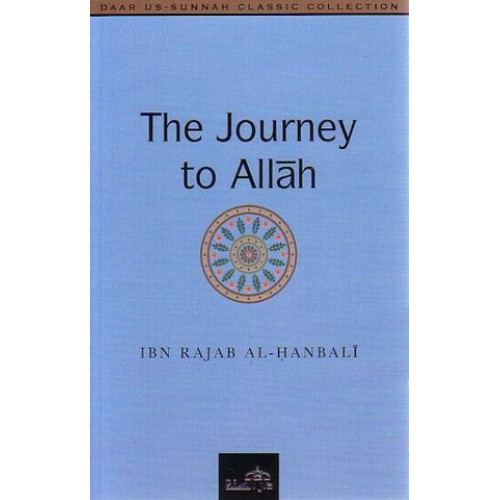
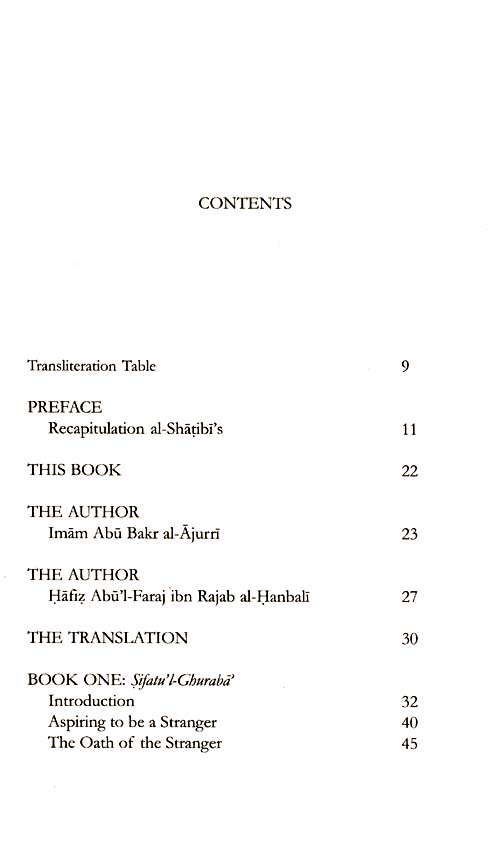
The Journey to Allah (P/B)
5 ★
5 ★
1 Rating
5 ★
1
4 ★
0
3 ★
0
2 ★
0
1 ★
0
(1)
Highlights:
Bukhari records on the authority of abu Hurayrah (raiyAllahu ?anhu) that the Prophet said, ?Your actions alone will not save any of you.? They asked, ?Messenger of Allah, not even you?? He replied, ?not even me, unless Allah were to envelop me in His mercy.
Be firm; steadfast and balanced; and journey [to Allah] in the beginning of the day, the end of the day, and a portion of the latter part of the night. Moderation, moderation! Through this you will attain your goal!?
He also recorded this hadith in another place with the wording, ?This religion is easy, none makes it hard upon himself except that it overwhelms him; therefore be firm, steadfast, and balanced; upon which have glad tidings! Seek help in this by journeying [to Allah] at the beginning of the day, at the end of the day, and a portion of the latter part of the night.?
He also records on the authority of ?A?ishah (raiyAllahu ?anhu) that the Prophet said, ?be firm, steadfast, and balanced upon which have glad tidings for indeed actions alone will not cause one to enter Paradise.? They asked, ?Messenger of allah, not even you?? He replied, ?not even me, unless Allah were to envelop me in His forgiveness and mercy.?
He also records on her authority that the Prophet said, ?be firm, steadfast, and balanced: know that your actions alone will not be a cause for your entry into Paradise and that the most beloved actions to allah are those that are done continuously and persistently, even if they be few.?
These noble ahadith detail a great and important principle from which stem many issues related to the journey to Allah while wayfaring along His Path.
Some of the Salaf said, ?The Hereafter consists either of allah?s forgiveness or the Fire; and this world is either a source of allah?s protection or a source of destruction.? On his deathbed, Muhammad ibn Wasi bid farewell to his companions saying, ?Peace be upon you, either to the Fire or to the forgiveness of allah.?
RM49.00
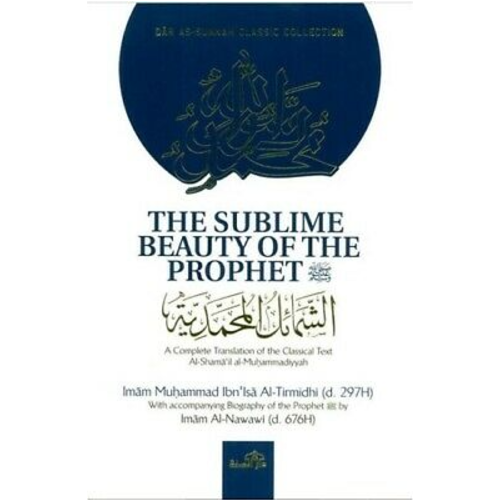
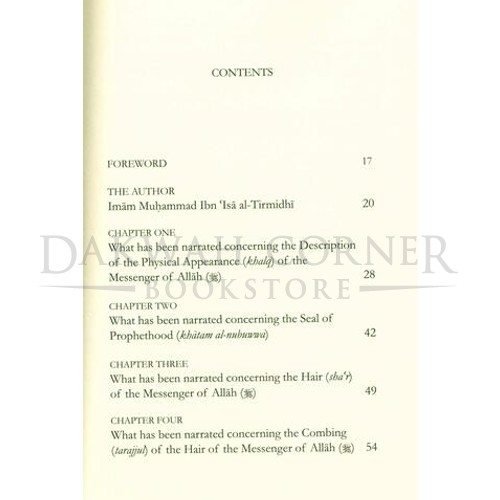
The Sublime Beauty Of The prophet :Al-shama’il Al-Muhammadiyyah
5 ★
5 ★
1 Rating
5 ★
1
4 ★
0
3 ★
0
2 ★
0
1 ★
0
(1)
Highlights:
Imaam Muhammad Ibn’Isā Al-Tirmidhi (d.297H) | With accompanying Biography of the Prophet by Imam Al-Nawawi (d.676H)
If we truly love Allah, the Most High, it is incumbent that we obey his chosen Messenger, the best of Mankind, and the seal of all Prophets. Allah, the Most High instructs him to inform the people: “Say, “If you love Allah, then follow me, Allah will love you and forgive you your sins. And Allah is Most Forgiving and Merciful.” Aali-Imran 3:31
The Messenger of Allah (peace and blessing be upon him) said; “None of you will truly believe until I am more beloved to him than his family, his wealth and all of mankind.” Muslim 67
This precious work, penned by the famous scholar Imam at-Tirmidhi, in which he collected hadith relating to the Messenger (peace and blessing be upon him). This landmark work shines a light on the beauty of the Prophet (peace and blessing be upon him). It describes his noble appearance, persona, and attributes. You will come to know the Messenger of Allah (peace and blessing be upon him) through the lens of his exalted companions. They were nurtured by him and spent their lives emulating him. He was their role model and an excellent example for all those who came after them.
Knowing the final Messenger (peace and blessing be upon him) is a requirement for every seeker of truth. This book is a must for every Muslim household, a text that should be studied in every school and madrassa
RM95.00